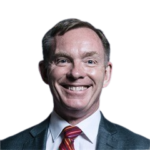
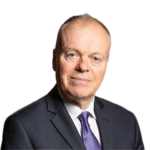
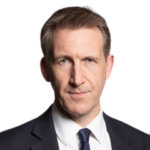
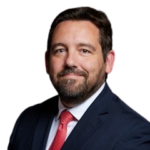
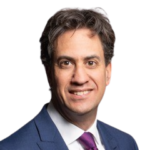
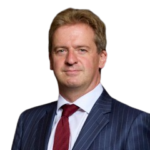
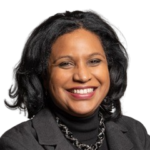
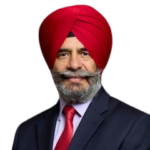
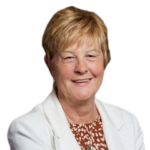
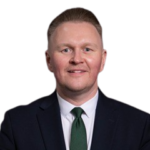
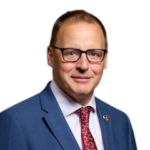
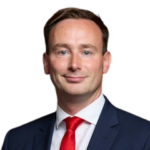
Labour
The Labour Party is currently the governing party in the United Kingdom. The party is broadly positioned as centre-left on the political spectrum and has historically been the political wing of the British trade union movement.
Labour entered government after the 2024 general election, ending 14 years of Conservative rule.
Andy Burnham serves as the leader of the Labour Party and prime minister of the United Kingdom of Great Britain and Northern Ireland (since July 2026).
Keir Starmer, who was elected as leader of the Labour Party in April 2020, resigned in June 2026 after two years as prime minister. Prominent recent leaders of the Labour Party include Jeremy Corbyn (2015-2020), Ed Miliband (2010-2015), Gordon Brown (2007-2010), and Tony Blair (1994-2007).
A breakdown of the party’s representation across national, regional and local bodies can be found in the following table.
House of Commons representation: The Labour Party returned 411 MPs in the 2024 general election. This number has reduced following by-election defeats, resignations and expulsions.
House of Lords representation: Labour is the second largest party in the House of Lords with over 200 peers.
Scottish Parliament representation: The Labour Party won 17 seats in the 2026 Scottish Parliament election – a net reduction of five.
Senedd Cymru representation: The Labour Party won nine seats in the 2026 Senedd Cymru election – a net reduction of 21.
The Labour leadership: from Starmer to Burnham
Sir Keir Starmer was elected as leader of the Labour Party in April 2020. The result, announced in a scaled-back virtual event due to the Covid-19 pandemic, saw Starmer defeat his rivals Rebecca Long-Bailey and Lisa Nandy overwhelmingly in the first round of voting.
Prior to entering politics, Starmer had a distinguished legal career as a human rights barrister and served as director of public prosecutions (DPP) and head of the Crown Prosecution Service (CPS) from 2008 to 2013, for which he was knighted in 2014. He was first elected as the MP for Holborn and St Pancras in 2015, later serving as shadow Brexit secretary on Corbyn’s frontbench.
During the campaign, Starmer claimed that Corbyn was “right” to position Labour as the “party of anti-austerity”. He outlined 10 pledges that collectively comprised a Corbyn-lite platform. Speaking after the result, Starmer said he would “engage constructively with the government, not opposition for opposition’s sake” during the Covid crisis.
Starmer’s election ultimately represented an ideological and strategic shift for the party. From 2020 until his election as prime minister in 2024, the Labour leader signalled a series of symbolic breaks with Corbyn’s tumultuous tenure. Having barred Corbyn from standing as a Labour candidate, Starmer celebrated the “changed” nature of his Labour Party.
The 2024 general election
The Labour Party’s manifesto for the 2024 general election included a vow not to “increase national insurance, the basic, higher, or additional rates of income tax, or VAT.” The party also pledged to cut NHS waiting times, recruit 6,500 new teachers and introduce free breakfast clubs in every primary school.
The 2024 general election resulted in a spectacular landslide victory for the Labour Party, bringing 14 years of Conservative government to a definitive end. Labour secured 411 seats and a commanding House of Commons majority of 174.
But Labour’s vote was spread widely and thinly throughout the country. The party’s landslide victory came on a vote share of 33.7% – the lowest vote share of any majority government in British history. Labour’s vote only increased by 1.6 points compared to their historic defeat in 2019.
Evaluation question
To what extent does this minimal increase in vote share suggest that the 2024 landslide was a result of Conservative collapse and the majoritarian electoral system – rather than a genuine endorsement of Labour’s platform?
In his first speech as prime minister, Starmer said his government would rebuild hope and opportunity in the UK “brick-by-brick” and would show voters that “politics can be a force for good.”
Labour in government
Upon entering government, Rachel Reeves, the first female chancellor of the exchequer, accused the previous Conservative government of leaving a £22 billion fiscal “black hole” in the country’s finances. As a consequence, Reeves announced the government’s intention to limit the winter fuel payment at the upcoming budget in October.
The centrepiece of the first Labour budget in 14 years was the largest tax-raising budget since 1993. The budget’s primary revenue-raising measure was a significant increase in business taxation, raising employers’ national insurance contributions by 1.2 points to 15% from April 2025 and lowering the threshold at which employers begin paying these contributions (on salaries above £9,100 to £5,000). These tax-raising measures sparked a fraught political debate over whether Labour had broken pledges set out in its manifesto.
The £40 billion worth of tax rises created room for increased spending on public services and investment. Reeves announced the health budget would receive a £22.6 billion increase in day-to-day spending and a £3.1 billion increase in capital investment over the next two years.
Overall, the budget left £9.9 billion worth of fiscal headroom – the buffer between the government’s fiscal rules and spending/tax plans (or money available for additional spending).
In February 2025, Starmer unveiled a commitment to raise defence spending to 2.5% of GDP from April 2027. In a surprise commons statement, the prime minister argued that ongoing threats to national security required “some extremely difficult and painful choices”; the UK’s aid budget would be reduced from 0.5% of gross national income to 0.3% in 2027, Starmer stated, “fully funding the investment in defence”.
Anneliese Dodds, the international development minister, resigned her post over the decision. She argued that the move would “remove food and healthcare from desperate people – deeply harming the UK’s reputation”.
At the spring statement in March 2025, the Office for Budget Responsibility (OBR) revised the UK’s 2025 growth forecast down from 2% to 1%. This reversal of fortunes left Reeves with a £4.1 billion fiscal gap and forced her to announce £14 billion worth of spending cuts to adhere to her own rules.
The plan to cut the welfare and disability benefits bill by nearly £5 billion, including a crackdown on eligibility for personal independence payment (Pip), triggered a significant backlash among Labour MPs.
Setbacks and backlash under Starmer
The local elections in May 2025 represented Starmer’s first major electoral test, occurring approximately 10 months after Labour’s general election triumph. In England, where elections were held in 23 councils, Labour won only 98 seats. This represented a net loss of 187 seats for the party and the loss of control of one council. The party’s estimated national vote share in England was 14%.
Labour also lost the Cambridgeshire and Peterborough mayoralty to the Conservatives.
On top of this, Labour placed second in the Runcorn and Helsby by-election. Reform UK’s Sarah Pochin was elected with a majority of just six votes over the Labour candidate in second place. It represented the narrowest majority in a UK parliamentary by-election since World War II. The by-election was triggered after incumbent MP Mike Amesbury pleaded guilty in January to assaulting a constituent after a row in the street on 26 October 2024.
In the wake of the local elections, the government announced that it would row back on its decision to limit winter fuel payments; the policy had proved wildly unpopular and was blamed for Labour’s polling downturn. Some commentators referred to the policy as Labour’s “original sin”.
Then, in July 2025, the government was forced into a dramatic climbdown over its flagship welfare reform bill. Faced with a significant backbench rebellion that threatened his first commons defeat, Starmer sanctioned a series of sweeping eleventh-hour concessions. In the days leading up to the vote, a rebel ‘reasoned amendment’ to the Universal Credit and Personal Independence Payment Bill secured over 120 signatures from Labour MPs.
Starmer initially described the rebellion as “noises off” – a comment that saw his political judgement placed under renewed scrutiny. In the end, just 90 minutes before MPs were due to vote, the disability minister announced that plans to restrict Pip would be delayed until after a review of the benefit. The gutted bill passed by 335 to 260 votes – a majority of 75. At the time, Labour possessed a working majority of 165. A total of 49 Labour MPs voted against the bill’s second reading – a still sizeable rebellion given the scale of concessions made.
In September 2025, Angela Rayner resigned as deputy prime minister and secretary of state for housing, communities and local government, following an inquiry into her tax affairs related to the purchase of a flat in Hove. The resignation came after the prime minister’s independent adviser on ministerial interests, Sir Laurie Magnus, concluded that she had failed to meet the “highest possible standards of proper conduct”.
The resignation was a significant blow to Starmer. It removed one of Labour’s most high-profile figures from the political frontline, triggering both a cabinet reshuffle and an internal election to fill the vacant deputy leadership post.
On 25 October, former leader of the House of Commons Lucy Powell was elected as Rayner’s replacement as deputy leader. She defeated her rival, education secretary Bridget Phillipson, securing 54.3% of the vote. Powell had been sacked from her cabinet-attending commons leader post in the reshuffle that followed Rayner’s resignation.
Also in September 2025, it was announced that Peter Mandelson – the supposedly savvy “prince of darkness” – had been sacked as British ambassador to the United States of America. It came after a US congressional committee released a cache of documents from convicted child sex offender Jeffrey Epstein’s estate. The files revealed a relationship between Mandelson and Epstein that was deeper than had been public knowledge at the time of his appointment.
The Peter Mandelson vetting scandal caused considerable damage to the Labour Party in late 2025 and early 2026.
Starmer in crisis: from revolt to resignation
In the February 2026 Gorton and Denton by-election, triggered by the resignation of Andrew Gwynne, Labour placed third. Significantly, the result marked the first parliamentary by-election win in the Green Party’s history.
Green candidate Hannah Spencer won 14,980 votes, representing 40.7% of the total vote share. The Reform UK candidate, Matt Goodwin, secured 28.7%, while the Labour Party candidate, Angeliki Stogia, fell to a distant third with 25.4%. The last time Labour finished third in a by-election it was defending was in Mitcham and Morden in 1982.
The outcome overturned a 13,413-vote Labour majority from the 2024 general election – the sixth-largest Labour majority to fall at a by-election since the Second World War.
The Gorton and Denton by-election was arguably defined by the decision of Labour’s national executive committee (NEC) to block Andy Burnham’s candidacy. The committee voted 8-1 to block Burnham, the mayor of Greater Manchester.
At the time, Burnham was linked with a possible leadership challenge to Starmer. The former Labour MP had previously run in the 2010 and 2015 leadership elections, and under Starmer – especially during his tenure as prime minister – Burnham had emerged as a critic. In a remarkable intervention at Labour’s annual conference in 2025, Burnham criticised a “climate of fear” in the party.
The result of the Gorton and Denton by-election amounted to a significant setback for Starmer’s leadership – and exposed deep fractures in Britain’s established mould of politics. Together, the Greens and Reform accounted for nearly 70% of the vote. Symbolically, the outcome meant that Labour had been unseated in two by-elections in a row by “populist” or insurgent rivals: Reform UK in Runcorn and Helsby (May 2025) and the Greens in Gorton and Denton (February 2026).
The May 2026 elections inflicted more pain on the Labour Party.
In the 2026 Senedd elections, Welsh Labour suffered a historic defeat that ended 100 years of Labour control of Wales. The party was reduced to third place behind Plaid Cymru and Reform UK. Eluned Morgan, the incumbent first minister, became the first head of government to lose their seat in an election in British history.
In Scotland, Labour lost five seats as the Scottish National Party (SNP), led by John Swinney, was re-elected.
In the local elections across England, Labour lost control of 35 councils and nearly 1,500 councillors (approximately 60% of seats up for election). Under the BBC’s projected national vote share metric, Labour was estimated to have won just 17% of the vote.
These results, which were confirmed from 8 to 9 May, sparked an intense political crisis as Labour MPs lined up to call on Starmer to step down/set out a timetable for his departure. In total, over 90 MPs called for Starmer to step down as prime minister. Several serving frontbenchers, including ministers Jess Phillips and Miatta Fahnbulleh, resigned in order to do so.
On 14 May 2026, Wes Streeting resigned as health secretary. In his letter of resignation, the outgoing health secretary described the 2026 local and devolved parliament elections as “unprecedented”. He said that the rise of nationalism in all corners of Britain represented “an existential threat to the future integrity of the United Kingdom”.
On 16 May, Streeting stated that he would stand in a future Labour leadership election. The comments came as part of an appearance at the annual Progress/Progressive Britain conference in London. Streeting was also highly critical of his party’s record since at least 2015.
He stated: “We haven’t had a debate in the Labour Party about who and what we’re for in more than a decade. The moral emergency of antisemitism in our party left little room for intellectual renewal or policy debate on the centre left.
“We then had a dishonest leadership contest, followed by an overcautiousness in opposition. Interesting policy ideas couldn’t be floated because we were too afraid of what the Tories might say, so we said nothing. Instead of a willingness to challenge ideas and kick the tyres, debate was viewed as division and shut down.”
On 14 May, mere hours after Streeting’s resignation, Josh Simons, a former junior minister, announced that he would resign his Makerfield seat to enable Andy Burnham to stand as a candidate and return to parliament.
On 4 June, Burnham confirmed that he would seek to enter any future Labour leadership contest should he win the Makerfield by-election. The Greater Manchester mayor argued that “Wes Streeting seems to have launched a leadership contest, so if that is running I would seek to join it.”
During the Makerfield by-election campaign, Starmer suffered another considerable setback when John Healey resigned as defence secretary over a dispute regarding military spending and the defence investment plan (DIP) specifically. In his resignation letter to the prime minister, dated 11 June, Healey said the proposed defence investment plan “falls well short of what is required for defence and the country at this dangerous time”.
Voters in Makerfield went to the polls on 18 June in what was arguably the most consequential by-election in a generation.
Burnham secured 24,927 votes (54.8%) and a significant majority of 9,231, while the Reform UK candidate, Robert Kenyon, finished in second place with 15,696 votes (34.5%). Burnham’s Makerfield victory ensured that he was now eligible to stand in a leadership contest to succeed Starmer. In response, several Labour MPs called for the prime minister to step down, pushing the number of MPs publicly demanding Starmer’s resignation to over 100.
Starmer spent the weekend of 20-21 June at Chequers, the prime minister’s country retreat, to mull his political future.
In a statement on the morning of 22 June, Starmer confirmed his intention to resign.
Speaking on the steps of Downing Street, Starmer said it had been an honour to serve the “country I love”. His voice cracked as he paid tribute to his wife, Victoria, and his sons.
In the hours that followed Starmer’s address, Burnham confirmed that he would be standing for the Labour leadership. Almost immediately, Streeting endorsed Burnham and abandoned his own leadership bid. Burnham was sworn in as MP for Makerfield in the commons shortly after 2:30pm on 22 June.
Burnham begins
On 25 June, the Labour national executive committee (NEC) set out the leadership election timetable. Members of the parliamentary Labour Party (PLP) were told they could nominate a fellow Labour MP to stand for leader from 9 July to 15 July. Under the party’s rule book, any candidate would need to receive the support of 20% of the PLP (81 MPs) to stand in the contest.
On 29 June, in his first speech since Starmer announced his decision to resign as prime minister, Burnham promised a “new direction” for Britain. Speaking at the People’s History Museum in Manchester, Burnham vowed to establish a “No 10 of the North”, which he claimed would be “the nerve centre of a rewired Britain”.
On 8 July, Al Carns, the former defence minister, ruled out a leadership bid after weeks of speculation that he could stand. Carns told Sky News that a leadership contest was “not the best use of Labour’s time” and that in his view “we need to get on board” with Burnham. This intervention meant that Burnham was the only Labour MP to have declared his candidacy at the time nominations opened on 9 July.
On the evening of 9 July, it was announced that 322 MPs had officially endorsed Burnham – comfortably surpassing the 81-MP threshold. The Labour heir apparent was just one nomination shy of the 323 mark; once reached, no other candidate would be able to muster the 81 backers required to enter the race to replace Starmer.
On 13 July, the second day of nominations, a further 27 MPs backed Burnham – taking his total to 349.
On 15 July, Labour MP Neil Coyle – a supporter of Starmer and Burnham critic – nominated Catherine West to lead the party. During the May 2026 Labour leadership crisis, triggered by the local and devolved parliament elections, West had threatened to topple Starmer as a “stalking horse” candidate unless a more realistic rival emerged.
The episode ensured that Burnham’s elevation would not be wholly unanimous. In the end, Burnham secured a total 379 nominations out of a total 403 Labour MPs. He was formally introduced as the leader of the Labour Party in a special conference on 17 July 2026. In his first speech as Labour leader, Burnham pledged to serve “people and places who have been waiting too long for politics to let them hope again.”
On 20 July, Burnham entered Downing Street as prime minister, becoming the sixth person to hold the office in a decade. In a break with tradition, he delivered his first speech as prime minister outside No 10 without notes or the customary lectern, opting instead for a double microphone.
Burnham told the nation: “I know people at home are fed up with politics. I hear you and I want to be honest with you, we have not been good enough and we need to be better. We will be.
“We will make this moment a circuit-breaker for Britain, bringing forward the biggest changes in the last 40 years.”
Burnham’s inaugural act in office was to announce a national drive to end rough sleeping, declaring it would be his “first instruction” as prime minister.
The cabinet reshuffle, conducted through the afternoon and evening of 20 July, amounted to a sweeping clear-out of ministers closely associated with the Starmer government.
The appointment of John Healey as the new chancellor of the exchequer, succeeding Reeves, was a genuine surprise. It came after weeks of speculation framing the chancellorship as a binary choice between Ed Miliband and Shabana Mahmood – and a totemic battle between the “soft left” and Blue Labour wings of the party. Healey’s resignation as defence secretary in June 2026 over a defence funding row had pushed Starmer’s premiership to the brink.
Miliband was appointed as foreign secretary, while Mahmood remained at the Home Office.
Burnham’s closest allies were given top roles. Louise Haigh, who ran his Makerfield by-election campaign, was appointed first secretary of state, chancellor of the Duchy of Lancaster and Cabinet Office minister – formally ranking her above other secretaries of state.
Wes Streeting, whose abandoned leadership bid had cleared Burnham’s path, was made defence secretary.
Labour Party cabinet
Burnham selected his first cabinet following his appointment as prime minister on 20 July 2026.
The current cabinet is as follows:
- Prime minister, first lord of the Treasury, minister for the civil service, and minister for the union: Andy Burnham
- First secretary of state and chancellor of the Duchy of Lancaster: Louise Haigh
- Chancellor of the exchequer: John Healey
- Secretary of state for foreign, commonwealth and development affairs: Ed Miliband
- Secretary of state for the home department: Shabana Mahmood
- Secretary of state for defence: Wes Streeting
- Lord chancellor and secretary of state for justice: Alex Norris
- Secretary of state for business, innovation, science and trade: Jonathan Reynolds
- Secretary of state for health and social care: Yvette Cooper
- Secretary of state for education: Lucy Powell
- Secretary of state for energy security and net zero: Miatta Fahnbulleh
- Secretary of state for housing, communities and local government: Angela Rayner
- Secretary of state for work and pensions: Pat McFadden
- Secretary of state for transport: Heidi Alexander
- Secretary of state for environment, food and rural affairs: Angela Eagle
- Secretary of state for digital, culture, media and sport: Lisa Nandy
- Secretary of state for Northern Ireland: Sir Chris Bryant
- Secretary of state for Scotland: Douglas Alexander
- Secretary of state for Wales: Stephen Kinnock
- Minister for women and equalities: Bridget Phillipson
- Lord president of the council and leader of the House of Commons: Sir Alan Campbell
- Lord privy seal and leader of the House of Lords: Baroness Smith of Basildon
Also attending cabinet:
- Parliamentary secretary to the Treasury (chief whip): Anneliese Midgley
- Chief secretary to the Treasury: Emma Reynolds
- Attorney general: Ellie Reeves
- Minister for artificial intelligence: Kanishka Narayan
- Minister for intergovernmental relations and European relations: Hamish Falconer
- Minister of state for housing: Matthew Pennycook
What does the Labour Party stand for?
The Labour Party is broadly positioned on the centre-left of the British political spectrum, functioning as a broad alliance encompassing social democrats, democratic socialists and trade unionists. A core tenet of Labour’s traditional ideology has been the promotion of an active role for the state in ensuring economic prosperity and providing public services.
Labour’s contemporary “aims and values” are set out in Clause IV of its constitution (rule book).
The famous clause declares: “The Labour Party is a democratic socialist party. It believes that by the strength of our common endeavour we achieve more than we achieve alone, so as to create for each of us the means to realise our true potential and for all of us a community in which power, wealth and opportunity are in the hands of the many, not the few, where the rights we enjoy reflect the duties we owe, and where we live together, freely, in a spirit of solidarity, tolerance and respect.”
Evaluation question
To what extent can Tony Blair’s revision of Clause IV be defended as a necessary electoral modernisation, rather than a departure from the party’s foundational socialist principles?
Clause IV further commits Labour to building “a dynamic economy, serving the public interest”, in which “the enterprise of the market and the rigour of competition are joined with the forces of partnership and co-operation”.
This model, the clause states, can produce the “wealth the nation needs and the opportunity for all to work and prosper with a thriving private sector and high-quality public services”.
The clause also sets out Labour’s vision of “a just society”, one that “judges its strength by the condition of the weak as much as the strong”, as well as an “open democracy” and a “healthy environment”.
The current version of Clause IV aligns with the party’s modern social democratic profile, and its support for a gradualist, reformist path towards achieving greater social equality. Meanwhile, “democratic socialism”, while sharing many of these aims, places a stronger emphasis on more fundamental transformations of the economic system, historically including the common ownership of the means of production. This vision was articulated in the original Clause IV, before it was amended during Tony Blair’s tenure as Labour leader (1994-2007) to reflect a more market-oriented approach.
The Labour Party has been responsible for a series of landmark reforms. Under Clement Attlee’s government (1945–1951), Labour was the principal architect of the UK’s post-war welfare state and oversaw transformative measures, most notably the creation of the National Health Service (NHS).
More recently, during Blair’s tenure as prime minister, the party introduced the National Minimum Wage Act.
Labour is associated with liberal social attitudes. Harold Wilson’s Labour government outlawed racial discrimination in public places, relaxed divorce laws, established the right to equal pay for equal work between men and women, and legalised abortion. The New Labour governments were responsible for the Civil Partnerships Act 2004 and the Equality Act 2010. More recently, the party almost uniformly supported the Marriage (Same Sex Couples) Act 2013, which legalised same-sex marriage in England and Wales.
Labour has evolved from a position of internal dissension and instinctive euroscepticism on the European question (1950s-1970s) to becoming an almost uniformly europhile force. Most of the party’s leading contemporary figures, including Keir Starmer, Blair, Ed Miliband and Rachel Reeves, were staunch supporters of remaining in the European Union (EU) during the 2016 Brexit referendum.
Evaluation question
To what extent did this ideological shift towards an explicitly europhile stance contribute to the alienation of Labour’s traditional base in the 2016 to 2019 period?
Labour has historically been a strong proponent of constitutional reform. Blair’s tenure was marked by a series of constitutional innovations, including devolution, reform of the House of Lords and reform of the judiciary, notably through the establishment of the supreme court in 2009. Some elements within the party have also consistently supported electoral reform.
The contemporary Labour Party professes a strong commitment to tackling climate change. In its 2024 manifesto, the party described the climate and nature crisis as “the greatest long-term global challenge that we face.”
The Labour Party has historically been characterised as a “broad church”, encompassing a range of viewpoints from “third way” Blairism to more radical socialist elements. The party’s core ideological tenets are interpreted and emphasised in different ways by successive leaders, as well as by internal factions.
Labour traditions and factions
The Labour Party is composed of a range of factions, traditions and ginger groups, both historically and in its contemporary state.
The Labour left
The traditional Labour left embraces socialist principles, including widespread public ownership and wealth redistribution. It has typically supported an anti-imperialist foreign policy, alongside strong commitments to workers’ rights and social justice.
The Labour left, in its modern form, was closely associated with Tony Benn’s political campaigns in the 1970s and 1980s. It crystallised around the 1981 Labour deputy leadership election, when Benn challenged the incumbent, Denis Healey, on a platform of unilateral nuclear disarmament, sweeping nationalisation and withdrawal from the European Economic Community (EEC). Benn was only narrowly defeated by 0.852% of the electoral college vote.
The 1981 deputy leadership election came during Michael Foot’s leadership of the Labour Party. Foot, while firmly identified with the party left, was well-liked by Labour MPs and seen as capable of uniting the party. The Labour Party manifesto for the 1983 general election is nonetheless remembered as a relatively unrestrained statement of the contemporary left’s political demands. The manifesto – featuring commitments on unilateral nuclear disarmament, withdrawal from the EEC, the abolition of the House of Lords, higher personal taxation for the rich, and nationalisation – was famously branded “the longest suicide note in history”.
Jeremy Corbyn, a longstanding Bennite figure, won the Labour leadership in 2015 on an anti-austerity, anti-war platform. The result led directly to the formation of ‘Momentum’; this grassroots campaign vehicle was founded to support Corbyn’s political agenda and consolidate his position as leader.
The Socialist Campaign Group (SCG) remains the standard-bearer of the Labour left within the parliamentary party. Founded in 1982 by followers of Benn, the SCG has effectively nominated a candidate of the left for every leadership contest stretching back to at least 2007. SCG MPs have supported the campaigns of John McDonnell (2007), Diane Abbott (2010), Jeremy Corbyn (2015) and Rebecca Long-Bailey (2020).
Labour right (Third Way)
The Labour right is most associated with Tony Blair’s leadership of the party and the New Labour era. Blair embraced a rhetorical and ideological break with what he styled as “Old Labour”, embracing a platform of “modernisation”.
In this regard, New Labour championed an ideological “third way”, seeking to reconcile the market-oriented economics traditionally associated with the right of British politics, notably during Margaret Thatcher’s tenure as prime minister, with the values of social justice advanced by the political left. Blair undertook to exorcise Labour’s reputation for “tax and spend” politics and, to that end, famously pledged to adhere to the Conservative Party’s fiscal plans during his first years in office.
Labour First, founded in the 1980s and reformed in 1988, represents the “traditional right” of the party. The Labour First Parliamentary Network has styled itself as a “moderate” answer to the party left’s Socialist Campaign Group (SCG).
Labour First has longstanding ties with Progress/Progressive Britain, which was founded in 1996 to support Blair’s political project.
Labour’s ‘soft left’
Labour’s “soft left” tradition is generally represented as a bridge between the ideological poles of the party. This tradition emphasises pluralism and democratic reform within the party and the country at large.
Leading soft left figures include prime minister Andy Burnham and deputy leader Lucy Powell. Former Labour leaders Ed Miliband (2010-2015) and Neil Kinnock (1983-1992) are also seen as aligned with the soft left.
A split between the Labour “soft left” and so-called “hard left” elements occurred during the 1981 deputy leadership election. The Tribune Group, which was founded in 1964 to support the newspaper of the same name, was divided over whether to support Benn’s challenge. Around 20 Tribune Group MPs, including Kinnock, abstained in the final round of the 1981 contest.
As a result, Benn’s supporters founded the Campaign Group – which evolved into the SCG.
In 2017, Labour MP Clive Efford officially relaunched the Tribune Group with a new mission statement calling for “opportunity and aspiration” to be placed at the heart of the party’s programme. Efford said he had reformed the group to ensure that the centre-left of the PLP “have a space in which to put forward ideas and debate which has not been there under successive leaders”.
The Tribune Group was revived again in late 2025 under former frontbenchers Louise Haigh and Vicky Foxcroft. The group’s contemporary iteration has called on ministers to tackle the “failing status quo”.
Mainstream, a centre-left/soft left network within the Labour Party, was launched in September 2025 by the think tank Compass and the activist group Open Labour (a longstanding “soft left” group). Mainstream has described itself as a home for “Labour’s radical realists” and aims to influence the direction of the Labour government. It has called on the government to offer a “popular, principled and practical left politics for meaningful change.”
Blue Labour
The Blue Labour faction/tradition promotes what it describes as blue-collar and culturally conservative values, while maintaining a commitment to left-wing economic policies and workers’ rights.
Founded by Labour peer Lord Glasman in 2009, it gained prominence following Labour’s 2010 general election defeat, when it led the argument that Labour had lost touch with its traditional working-class base.
The tradition articulates a critique of both New Labour’s social liberalism and free-market globalisation. It has lobbied successive leaders to look beyond the party’s metropolitan heartlands by embracing a politics defined by “faith, family and flag”.
In 2025, a Blue Labour parliamentary caucus was founded with Dan Carden – a onetime ally of Jeremy Corbyn – as convenor.
The history of Labour’s ideological divisions
Bevanite vs Gaitskellite
A profound ideological split between the Labour left and Labour right burst into the open during Clement Attlee’s tenure as prime minister.
In the 1951 spring budget, Hugh Gaitskell, the newly appointed chancellor, responded to the economic burden imposed by the Korean War by levying prescription charges on glasses and false teeth. This provoked the resignations of Aneurin ‘Nye’ Bevan, the health minister credited with founding the NHS, and Harold Wilson as president of the Board of Trade.
At the time of the 1951 general election, this division and the surrounding psychodrama contributed to the sense that Labour was exhausted politically; Attlee’s government was summarily relieved of office. The Bevanite-Gaitskellite schism was inherited into opposition.
The 1955 Labour leadership election pitted the party’s “old guard”, represented by Herbert Morrison (aged 67), against the new generation, represented by Gaitskell and Bevan. Gaitskell initially supported Morrison’s candidacy, but chose to stand himself in order to thwart Bevan. In the ballot of Labour MPs held in December 1955, Gaitskell won 157 votes (58.8%), easily defeating Bevan, who secured 70 votes (26.2%).
In the 1950s, Labour went to war with itself over the issue of unilateral disarmament; a powerful grassroots movement pressed for a future Labour government to unconditionally give up its nuclear weapons. At Labour’s Brighton conference in 1957, this demand came in the form of the unilateralist resolution 24, which called on “the next Labour government to take the lead by itself refusing to test, manufacture, or use nuclear weapons, and that it will appeal to the peoples of the world to follow their lead.”
Bevan, appointed shadow foreign secretary in 1956 after reconciling with Gaitskell, was considered to be ideologically aligned with the resolution. However, in an electrifying address, the standard-bearer of the Labour left argued that “refusing to test, manufacture, or use nuclear weapons” would damage Britain’s interests, risking critical international alliances. In the speech’s most famous passage, Bevan said unilateralism would send a British foreign secretary “naked into the conference chamber.”
Michael Foot, a leading Bevanite disciple and his future biographer, broke with his mentor over the address. He would become a founding member of the Campaign for Nuclear Disarmament (CND) when it was established the following month, November 1957.
In 1959, Bevan was elected deputy leader of the Labour Party unopposed. He died on 6 July 1960 from stomach cancer, aged 62.
At the October 1960 Labour Party Conference in Scarborough, despite the Labour leader’s strong opposition, the conference delegates voted to adopt a policy of unilateral nuclear disarmament. The successful motion demanded that a future Labour government unconditionally give up its nuclear weapons. Gaitskell responded with a defiant speech, signalling that his leadership would not support the decision of conference. He vowed to “fight and fight and fight again to save the party we love.”
But Gaitskell’s refusal to abide by the will of conference precipitated the resignation of shadow cabinet minister Anthony Greenwood. Having declared that he could not serve under a leader who defied conference policy, Greenwood initially announced his own candidacy. But he soon withdrew in favour of Harold Wilson, the shadow chancellor.
Wilson, although not a unilateralist himself, feared losing his position as the standard-bearer of the left should he not stand. The result of the ballot among the PLP demonstrated that Gaitskell still commanded the confidence of the vast majority of Labour MPs. His victory by a margin of 166 votes to 81 effectively secured his mandate among MPs to continue the fight against the unilateralist policy. Wilson, however, had outperformed expectations in securing around one third of the vote; his performance consolidated his position as a leader on the left of the party.
Gaitskell set about reversing his party’s unilateralist policy, culminating in a vote at the 1961 Labour conference when delegates endorsed a policy of multilateral disarmament.
Gaitskell defeated another challenge from Anthony Greenwood in 1961 by an even larger margin of 171 votes to 69. Wilson was moved to the position of shadow foreign secretary in 1961. A year later, he challenged the incumbent deputy leader, George Brown, from the left.
By 1962, Gaitskell had consolidated his authority within the Labour Party. His position was strengthened by his powerful speech opposing Britain’s entry into the European Economic Community (EEC) at the Brighton conference. He warned that joining the EEC would mean “the end of a thousand years of history”.
On 18 January 1963, with Labour on the verge of returning to power, Gaitskell died suddenly, aged 56. Gaitskell’s death, caused by lupus, sent shockwaves through British politics. Wilson was elected as Gaitskell’s successor as Labour leader and led his party to victory in the 1964 general election.
Social democratic right and emergence of Bennism
Harold Wilson’s success in the 1963 leadership contest has been attributed to splits on the social democratic right of the party. George Brown, the incumbent deputy leader, is said to have run a divisive campaign; moreover, Wilson benefitted from a split in the party’s Gaitskellite wing between Brown and rival candidate Jim Callaghan.
These facts allowed Wilson to assume the mantle of unity candidate – a surprising development given his reputation heading into the race.
Wilson, who won four of the five general elections he contested, largely succeeded in managing Labour’s internal ideological divisions as leader. In office, his governments broadly pursued a Gaitskellite economic programme. Wilson’s shock resignation in 1976 led to the elevation of Callaghan as leader and prime minister.
In the 1976 Labour leadership election, Callaghan bested the Bevanite figure, Michael Foot, by 176 votes to 137. Foot later accepted the posts of leader of the House of Commons, a government role, and deputy Labour leader, a party role. Upon becoming prime minister, Callaghan told members of the Tribune and Manifesto groups, factions positioned on opposite wings of the party, that “none of you holds the Ark of the Covenant.”
The Conservative victory at the 1979 general election precipitated Callaghan’s resignation as prime minister.
In the 1980 leadership contest, Foot defeated the man widely seen as Callaghan’s social democratic heir, Denis Healey, by 139 votes to 129 in the final ballot. Ideologically, Foot was a leading figure on the left of the party. But the conciliatory elder statesman ultimately emerged as a compromise candidate. Healey was seen as a more combative figure; he reportedly alienated natural supporters in the Manifesto Group by warning them that they had “nowhere else to go”.
The contest came as a schism widened within Labour between an insurgent, increasingly influential grassroots movement associated with Tony Benn, and the social democratic tradition associated with Callaghan and Healey. Benn, who had stood in the 1976 leadership election, criticised those taking part in the contest. He argued that no election should take place until the party had agreed on a new method for choosing its leader. Delegates at Labour’s recent autumn conference had called for a special gathering to agree these procedures.
Grassroots pressure for procedural change culminated at the dramatic Wembley conference in January 1981. The leadership election procedure agreed by delegates apportioned the vote between the trade unions/affiliates (40%), the constituency parties (30%), and the Parliamentary Labour Party (30%).
This vote represented the final impetus for the creation of the breakaway Social Democratic Party (SDP). The famous Limehouse Declaration (January 1981) was issued as an immediate reaction to the Wembley rule changes. Over the course of 1981, 28 Labour MPs defected to the SDP – which now threatened to ‘break the mould’ of British politics. Many of the MPs and activists that formed the Social Democratic Party (SDP) during Foot’s tenure as Labour leader (notably Roy Jenkins) were previously proud Gaitskellites.
In 1981, Benn challenged Healey for the deputy leadership under the party’s new procedures. He secured an overwhelming majority of the constituency party vote (81.1%); however, Healey won a commanding majority of the PLP (65.9%) and the heavily weighted trade union/affiliated bloc (62.5%). Overall, Healey prevailed by just 50.4% to 49.6% in the second ballot.
Foot’s leadership was defined by the struggle to construct a credible alternative to Margaret Thatcher’s government, the SDP schism and continued ideological division. He ultimately resigned as leader following Labour’s defeat in the June 1983 general election.
Neil Kinnock vs Militant
In October 1983, Neil Kinnock was elected leader of the Labour Party in a first-round landslide at the party’s conference in Brighton. On the same day, Roy Hattersley was elected deputy leader. The leadership pairing was dubbed the “dream ticket” by commentators and the Labour faithful, who hoped it could unite the divided party. Benn had lost his Bristol South East seat at the 1983 general election and was therefore ruled out of the running.
Kinnock, the shadow education secretary, ran from the party’s Tribune left or ‘soft left’ – and presented himself as the candidate able to unite Labour’s warring factions. The simultaneous deputy leadership contest, given the party’s recent record of acrimonious internal bouts, was also seen as significant. Hattersley secured 67.3% of the electoral college vote, defeating Michael Meacher, the candidate of the left.
The Kinnock-Hattersley leadership was seen as representing a balanced ticket.
Kinnock’s leadership was shaped by his struggle against the party’s far-left. In October 1985, Kinnock launched a blistering attack on the so-called Militant tendency during a landmark speech at his party’s annual conference in Bournemouth. Kinnock famously excoriated Militant for causing “grotesque chaos” in its management of Liverpool City Council.
The most memorable passage of Kinnock’s speech directly condemned this action.
The Labour leader declared: “I’ll tell you what happens with impossible promises. You start with far-fetched resolutions.
“They are then pickled into a rigid dogma, a code, and you go through the years sticking to that, out-dated, misplaced, irrelevant to the real needs, and you end in the grotesque chaos of a Labour council – a Labour council – hiring taxis to scuttle round a city handing out redundancy notices to its own workers.”
He added: “I am telling you, no matter how entertaining, how fulfilling to short- term egos – I’m telling you, and you’ll listen – you can’t play politics with people’s jobs, and with people’s services or with their homes…
“Understand that, please, comrades. In your socialism, in your commitment to those people, understand it. The people will not, cannot, abide posturing. They cannot respect the gesture-generals or the tendency-tacticians.”
The speech was met with both heckles from Militant-aligned delegates and loud applause – resulting in a uniquely tense atmosphere. Kinnock’s address is today remembered as the beginning of a leadership crackdown on the Trotskyist group – and a moment of immense oratory.
The speech set about establishing Kinnock’s authority over a divided party. In retrospect, it has been seen as a signal of Labour’s newfound commitment to electability – a process later continued and consolidated by John Smith and Tony Blair, who succeeded Kinnock as party leaders.
In 1988, Benn launched a challenge against Kinnock’s leadership. The result was an overwhelming victory for Kinnock with 88.6% of the electoral college vote.
Kinnock, who led Labour into the 1987 and 1992 general elections, resigned following his second consecutive defeat.
What is Clause IV?
Labour’s ideological battles have frequently implicated the party’s totemic Clause IV commitment.
The original Clause IV, adopted in 1918, committed the party to securing for workers “the common ownership of the means of production, distribution, and exchange”.
It stated: “To secure for the workers by hand or by brain the full fruits of their industry and the most equitable distribution thereof that may be possible upon the basis of the common ownership of the means of production, distribution, and exchange, and the best obtainable system of popular administration and control of each industry or service.”
For decades, the clause was seen as a symbolic expression of the party’s democratic socialist identity.
In the wake of Labour’s defeat at the 1959 general election, Hugh Gaitskell argued that it should be revised. The 1959 Labour election manifesto had been somewhat equivocal on nationalisation. It said that nationalised industries “have played a great part in Britain’s postwar development” and proposed to extend public ownership to steel, but added that Labour had “no other plans for further nationalisation” except where an industry was found “after thorough enquiry, to be failing the nation”.
Addressing Labour conference in November 1959, Gaitskell said Clause IV implied a “continual misrepresentation”.
He declared: “It implies that we propose to nationalise everything, but do we? Everything? The whole of light industry, the whole of agriculture, all the shops – every little pub and garage? Of course not.”
Gaitskell called on Labour delegates to confirm their acceptance of a “mixed economy”. But the move provoked considerable opposition from the major trade unions and the left, and Gaitskell was forced to withdraw the proposal in March 1960. This symbolic row formed part of the backdrop to the November 1960 Labour leadership contest and Harold Wilson’s unsuccessful campaign.
Three decades later in the 1990s, following four successive general election defeats, senior Labour figures once again turned to Clause IV. The traditional totem was seen as an electoral liability that alienated moderate voters and tethered the party to an outdated “Old Labour” ideology.
Blair announced his intention to rewrite the clause in his first conference speech as leader. The move was a political gamble, triggering a fierce internal battle with the party’s left-wing and some trade unions. The Labour leader stood accused of abandoning Labour’s core principles.
Blair, however, framed the debate over revising Clause IV as a “process not of destruction but rebirth”, which would “replace an icon fashioned by human hands for one age, with the spirit that motivates us and which lasts for all ages.”
Speaking at a special party conference, the Labour leader said: “I wasn’t born into this party. I chose it. I’ve never joined another political party. I believe in it. I’m proud to be the leader of it and it’s the party I’ll always live in and I’ll die in.”
The revision of the original Clause IV was a landmark victory for Blair, signalling a symbolic break with “Old Labour” and doctrinaire socialism. The new clause committed the party to a “dynamic economy” and a society where “power, wealth and opportunity are in the hands of the many, not the few”.
The Defend Clause IV campaign responded: “There is little in Blair’s proposed new clause to which Liberal Democrats or even many Tories could not subscribe.”
In an August 2015 interview with the Independent on Sunday, Jeremy Corbyn suggested that he could consider bringing back the original Clause IV as part of a commitment to take some “necessary things” into public ownership.
He argued that Labour should not “shy away from public participation, public investment in industry and public control of the railways.”
A spokesperson later sought to play down Corbyn’s remarks; during his tenure as Labour leader from 2015 to 2020, no meaningful attempt was made to alter the revised text of Clause IV.
During the 2016 Labour leadership election, which was triggered by the bitter internal fallout following the 2016 Brexit referendum, Owen Smith called for a symbolic rewrite of Clause IV of Labour’s constitution, which advocated the “fight against inequality”.
Smith said: “I want to re-write clause four to put tackling inequality right at the heart of everything we do.”
Labour Party’s organisational structure
National Executive Committee (NEC)
The National Executive Committee (NEC) is the principal governing body of the Labour Party. It is responsible for setting the overall strategic direction of the party, oversees policy development processes and manages party finances.
The Labour Party rule book defines the primary purpose of the NEC as to “provide a strategic direction for the party as a whole and to maintain and develop an active party in the country, working in partnership with the party’s representatives in parliament, devolved administrations and local government to secure the party’s objectives.”
It also has a quasi-judicial function in administering disciplinary matters.
The NEC draws its membership from the cabinet, affiliated trade unions, the Parliamentary Labour Party, Constituency Labour Parties (CLPs), socialist societies, councillors and party representatives. The Labour leader, deputy leader and treasurer sit on the NEC as ex officio members.
Since the 1980s, the NEC’s significance as a decision-making body has declined. However, it remains the ultimate administrative authority of the party. In January 2026, the body controversially ruled that Andy Burnham, the Greater Manchester mayor, could not stand down from his post to fight the Gorton and Denton by-election as the Labour candidate.
National Policy Forum (NPF)
The National Policy Forum (NPF) is the body primarily responsible for the development of Labour Party policy. It comprises around 200 representatives from all sections of the Labour movement, including CLPs, the devolved legislatures, affiliated trade unions and socialist societies.
The NPF operates through a series of policy commissions that consult with party members, affiliates as well as external stakeholders to discuss policy submissions. It currently comprises six policy commissions, each co-convened by a member of the NEC and a cabinet minister.
Labour’s policy-making process runs on a five-year cycle. During the first three years, the NPF produces an annual report, which is submitted to the party’s annual conference for approval. In the fourth year, the NPF meets in full to agree the party’s policy platform, culminating in a final NPF report. The final stage of the process is known as the Clause V meeting, which decides and approves the party’s manifesto, drawing from the work of the NPF.
The work of the NPF is overseen by Labour’s Joint Policy Committee (JPC). The joint committee includes members of the NEC and NPF.
Annual conference
The Labour Party’s annual conference each autumn is attended by delegates representing the Labour movement (CLPs, affiliated trade unions, etc).
Clause VI of the Labour rule book states that the work of the party “shall be under the direction and control of party conference.”
The conference debates and votes on policy documents submitted by the NPF, as well as contemporary motions and constitutional amendments (rule changes) proposed by CLPs and affiliated organisations.
The conference also serves as a platform for speeches from senior party figures; the keynote address is delivered by the party leader. The gathering further serves as a forum for a wide range of fringe meetings, exhibitions as well as internal training events.
Constituency Labour Parties (CLPs)
The grassroots structure of the Labour Party is organised around Constituency Labour Parties; these are based on the existing parliamentary constituency boundaries. CLPs serve as the primary units for member activity, including local campaigns.
CLPs send motions and delegates to Labour conference, and play a role in the selection of parliamentary candidates for their constituency. CLPs also elect their own committees composed of officers.
Branch Labour Parties (BLPs) are a smaller unit, typically aligned with local authority ward boundaries.
Devolved party structures
Scottish Labour
Anas Sarwar was elected as leader of Scottish Labour in February 2021, succeeding Richard Leonard.
In the 2026 Holyrood election, Scottish Labour won 17 seats (out of 129), securing 19.2% of the constituency vote and 16.0% of the regional list vote. As a result, Scottish Labour is the second largest party in the Scottish Parliament.
Welsh Labour
Eluned Morgan was elected as leader of Welsh Labour in August 2024, succeeding Vaughan Gething. She held the title of first minister of Wales from 2024 to 2026.
In the 2021 Senedd Cymru (Welsh Parliament) election, Welsh Labour won 30 out of 60 seats, with 39.9% of the constituency vote and 36.2% of the regional list vote. The party has formed the executive in the Senedd since its establishment in 1999.
In the 2026 Senedd elections, Welsh Labour suffered a historic defeat that ended 100 years of Labour control of Wales. The party was reduced to third place behind Plaid Cymru and Reform UK. Morgan became the first head of government to lose their seat in an election in British history.
Northern Ireland
The Labour Party does not contest elections in Northern Ireland. It has a long-standing electoral pact with the Social Democratic and Labour Party (SDLP), its sister party.
When the Labour Party is in power, SDLP MPs traditionally sit on the government backbenches; however, SDLP MPs do not take the Labour whip at Westminster.
How does the Labour Party elect its leader?
The process for electing the leader of the Labour Party is set out in the party’s official rule book. (The deputy leader election rules follow the same format.)
A Labour leadership vacancy usually occurs in one of two ways. The leader may choose to step down following a general election loss or as a result of insurmountable criticism in the party at large.
If there is a vacancy
In the event of a vacancy, candidates (who must be MPs) need to secure nominations from 20% of Labour MPs. This threshold was increased from 10% following a rule change at the party conference in 2021.
A candidate also needs nominations from either 5% of Constituency Labour Parties (CLPs) or at least three affiliated organisations (of which at least two must be trade unions) whose combined membership is at least 5% of the total affiliated membership.
Candidates who reach the nomination threshold are then subjected to a vote of eligible party members and members of affiliated organisations. Members vote using the instant-runoff preferential voting system.
The party rule book states: “The votes shall be totalled and the candidate receiving more than half of the votes so apportioned shall be declared elected. If no candidate reaches this total on the count of first preference votes, a redistribution of votes shall take place according to preferences indicated on the ballot paper.”
This process is repeated, using third and fourth preferences if necessary, until one candidate secures over 50%.
The eligibility criteria for members are decided by the NEC.
A leadership challenge against an incumbent leader can be initiated annually before the party conference if supported by 20% of Labour MPs; the incumbent is automatically on the ballot in such a challenge.
If there is not a vacancy
There is also a mechanism that provides for internal challenges to an incumbent leader. Unlike in the Conservative Party, this does not take the form of a “no-confidence” vote in parliament. Instead, a leadership election can be triggered immediately if a prospective challenger secures the support of 20% of the Parliamentary Labour Party in advance of the party’s annual conference.
The party rule book states: “Where there is no vacancy, nominations may be sought by potential challengers. In this case any nomination must be supported by 20% of the commons members of the PLP.”
If a challenger reaches the nomination threshold, then the contest moves to a membership ballot.
An incumbent leader is automatically included on the subsequent ballot of members.
Recent leadership elections, rule changes and controversies
The leadership election rules have been a longstanding source of controversy in the Labour Party.
In July 2013, the then leader of the Labour Party, Ed Miliband, commissioned a review into the internal procedures of the party. The review, published in February 2014, recommended that the leadership should be elected using “one member one vote”, from an electorate consisting of members, affiliated supporters and a new category of registered supporters.
The registered supporter system allowed those who were not Labour members or affiliate members to participate in the contest after paying a fee.
These recommendations, approved by the NEC and ratified by Labour conference, abolished the existing electoral college system. In one form or another, the old electoral college had been used for Labour leadership contests since January 1981.
The new rules were first put to the test in the 2015 Labour leadership election, which followed Miliband’s resignation as leader.
In the end, Jeremy Corbyn – a rebellious backbencher for the previous 32 years – won 59.5% of the vote. Corbyn won 83.8% of the registered supporter vote, 57.6% of the affiliated supporters vote and 49.6% of the members vote. In excess of 112,000 individuals had joined as registered supporters after paying £3 (over a fifth of the full 552,000 electorate). Corbyn had only won a place on the ballot paper after a selection of Labour MPs lent their nomination to “broaden the debate”.
The most recent Labour leadership election held following a challenge to an incumbent took place in 2016. The contest was triggered by the bitter internal fallout that followed the 2016 Brexit referendum. A significant contingent of the Parliamentary Labour Party (PLP) accused Corbyn of mounting only an unenthusiastic case for ‘Remain’, leading to mass resignations from his shadow frontbench.
Both Angela Eagle and Owen Smith announced leadership bids. In total, Smith secured 162 MP and MEP nominations. Eagle accrued 72 nominations before dropping out of the race.
There was a procedural debate over whether Corbyn should automatically be included on the ballot paper. The last leadership challenge against an incumbent – the contest between Neil Kinnock and Tony Benn in 1988 – saw both candidates seek nominations. However, the NEC ruled on 12 July – by 18 votes to 14 – that Corbyn would be included on the ballot paper.
The result of the membership ballot, announced at a special conference in Liverpool, saw Corbyn win 313,209 votes (61.8%) to Smith’s 193,229 (38.2%). It came on a turnout of 77.6% of the more than 650,000 eligible members and supporters.
Following this contest, the central party commissioned a review of Labour’s leadership election procedures.
The review recommended that a candidate should qualify for the ballot if they secured either 10% of the combined total number of MPs/MEPs or 5% of the combined total number of MPs/MEPs in conjunction with 10% of CLPs or 10% of affiliated membership from at least three trade unions.
Both the NEC and Labour conference agreed to these changes.
The 2020 Labour leadership contest was triggered by Jeremy Corbyn’s resignation following Labour’s defeat at the 2019 general election.
Keir Starmer, the shadow Brexit secretary, received the most nominations from MPs and MEPs at 88. Rebecca Long-Bailey and Lisa Nandy won 33 and 31 nominations respectively.
In the membership vote, Starmer secured 275,780 votes (56.2%). Long-Bailey, seen as the heir apparent of Labour’s Corbynite wing, finished second. She won 135,218 votes (27.6%). Nandy secured 79,597 votes (16.2%).
The turnout, from a total of 784,181 eligible voters, was 62.6%.
The leadership rules were revised further in 2021. The threshold for nominations was raised to 20% of the PLP. The registered supporter system was also abolished.
The 2026 Labour leadership contest was triggered by Keir Starmer’s resignation as prime minister. Only one candidate, Andy Burnham, won the support of 20% of the PLP (81 MPs).
Labour Party membership
Labour Party accounts published in August 2025 showed that, in the year ending December 2024, the party had 333,235 members.
In February 2025, the figure was reported to stand at around 309,000.
These figures represent a notable decrease from the membership levels seen during Jeremy Corbyn’s tenure as leader.
Labour membership peaked in the early 1950s, when the party reported to have over one million members. Reported membership fell from 666,000 to 348,000 between 1979 and 1980.
The party suffered a fall in membership during New Labour’s tenure in office, before increasing after 2010 and rising rapidly throughout the Corbyn years. Labour membership reportedly hit 564,000 at the end of 2017.
In the 2020 leadership election, it was announced that 401,564 full members were eligible to vote.
Parliamentary candidate selection
The process for selecting Labour’s Parliamentary candidates typically involves several stages.
Any party member with at least twelve months of continuous membership who is also a member of an affiliated trade union is eligible to apply.
A longlist of potential candidates is drawn up centrally by a panel led by the NEC. This longlist is then passed to the relevant Constituency Labour Party, where a local selection committee narrows it down to a shortlist.
Shortlisted candidates participate in hustings events, and the final parliamentary candidate is chosen by a ballot of local party members.
In the event of a snap general election, this process is significantly truncated. A central panel typically takes on a more direct role, reviewing applications to meet the accelerated timetable.
The Labour Party rule book states: “In the event of a by-election, snap election or any other parliamentary selection where there is insufficient time for a normal selection process, a five-person panel shall be formed to undertake the shortlisting”.
Who votes for the Labour Party? (Demographics of support)
The following data is drawn from the study of the 2024 general election conducted by Ipsos.
Age: Labour led among all age groups except those aged 65 and over. Their highest vote share (47%) was among 25-34-year-olds. Labour’s vote share also increased among those aged 45 and above. However, the party’s vote share dropped by 21 points among 18-24-year-olds compared to 2019.
Gender: The gender gap between Labour and the Conservatives narrowed; Labour’s vote share rose by three points among men and one point among women. The party performed slightly better among younger women (45%) than younger men (36%); Ipsos attributed this gap to younger men being more inclined to support the Greens and smaller parties/independents.
Social class: Labour led among all social grades by relatively similar margins. The party led the Conservatives by 10 points in AB grade (higher and intermediate managerial, administrative and professional occupations) and by six points in the DE grade (semi-skilled and unskilled manual occupations; unemployed and lowest grade occupations).
Education: Labour secured strong support from graduates (43%). Among those with no formal qualifications, Labour received 28% of the vote; while the Conservatives led this group with 39%, Labour significantly narrowed the gap from 2019, when the distance stood at 36 points.
Ethnicity: Labour maintained a substantial lead among ethnic minority voters (46% vs 17% for the Conservative Party). However, Labour’s overall share among ethnic minority voters fell by 18 points since 2019, with gains for the Green Party and other minor parties. Among white voters, Labour led the Conservatives 33% to 26%, reversing a 19-point Conservative lead in 2019.
Brexit: In the 2024 election, among those who voted Remain in the 2016 EU referendum, Labour led the Conservatives by 46% to 18%. In 2019, Labour polled 48% among Remain voters compared with the Conservatives on 20%. Labour also made modest inroads among Leave voters, increasing its vote share from 15% to 19%.
Housing tenure: Labour continued to lead among renters. A significant shift occurred among mortgage holders, where a 10-point Conservative lead in 2019 transformed into a 17-point Labour lead in 2024. Ipsos mostly attributed this shift to a decline in the Conservative Party’s standing.
The emergence of the Labour Party
On 13 January 1893, a conference of delegates from socialist societies, trade unions and local labour groups gathered in Bradford to form the Independent Labour Party (ILP). The new party was formed in an atmosphere of growing disillusionment with the Liberal Party, which many in the labour movement felt was failing to adequately represent working-class interests in parliament.
The conference was attended by around 120 delegates, including the trade unionist Ben Tillett, the journalist Robert Blatchford, Karl Marx’s son-in-law Edward Aveling, author George Bernard Shaw, and German Socialist leader Edward Bernstein. Keir Hardie, who had won a seat in parliament as the independent MP for West Ham South the previous year, was elected its first chairman.
The ILP’s programme was explicitly socialist, with its primary objective being “to secure the collective ownership of the means of production, distribution and exchange”.
The 1895 general election marked the first challenge for the ILP. It fielded 28 candidates but failed to win any seats. Ramsay MacDonald, the future Labour prime minister, fought his first parliamentary election in Southampton. He won just 867 votes (4%) and finished fifth – in last place. Hardie, meanwhile, lost his seat after three years as MP for West Ham. In total, the party won 44,325 votes.
The party would go on to play a pivotal role in the founding of the Labour Representation Committee (LRC) in 1900, the forerunner of the modern Labour Party.
The LRC was formed after a special congress of 126 delegates, meeting on 27 February 1900, passed Hardie’s motion to establish “a distinct Labour group in Parliament, who shall have their own whips, and agree upon their policy, which must embrace a readiness to cooperate with any party which for the time being may be engaged in promoting legislation in the direct interests of labour.”
The LRC was effectively a federal body, uniting the financial and organisational power of the trade unions, the intellectual heft of the Fabian Society and the activist base of the ILP – among other socialist groupings.
Ramsay MacDonald was elected as the committee’s first secretary. The LRC’s initial electoral impact was modest. It supported 15 candidates in the 1900 general election, winning 62,698 votes (1.3%) and two MPs (Hardie and Richard Bell). Nonetheless, the committee laid the foundation for a fundamental realignment of British politics.
Between 1902 and 1903, the LRC acquired three additional MPs across a series of by-elections. Notably, the future Labour leader and founding delegate of the LRC, Arthur Henderson, won the 1903 Barnard Castle by-election with 3,370 votes (35.4%) – a majority of 47 over the Conservative candidate.
Henderson was the first candidate to win against both Conservative and Liberal candidates.
Labour candidates David Shackleton and Will Crooks won the Clitheroe (1902) and Woolwich (1903) by-elections respectively. Both were elected as Lib-Lab MPs.
These by-election campaigns and increased tension between the LRC and Liberal Party were crucial factors behind the formation of the secret Gladstone-MacDonald pact in 1903. Under the terms of this informal arrangement, agreed between Ramsay MacDonald and Liberal chief whip Herbert Gladstone, Liberal candidates would not stand against LRC candidates in 50 constituencies at the 1906 general election.
The pact greatly aided the political and electoral development of the LRC.
One senior Liberal realised the inherent risk of such an arrangement. The chairman of the Northern Liberal Association likened the idea behind the pact as akin to “nursing into life a serpent which would sting our party to death”.
Critically, Labour faced no obligation to stand down its candidates in seats on behalf of the Liberal Party.
The LRC secured 29 MPs at the 1906 general election. The Gladstone-MacDonald pact had provided organised labour with a crucial bridgehead in parliament. In the wake of the contest, the LRC was reconstituted as the Labour Party and Hardie was narrowly elected as its chairman. The ILP immediately affiliated with the Labour Party. By the end of 1910, there were 42 Labour MPs.
The Labour Party’s development was bolstered significantly by disputes within the Liberal Party and the expansion of suffrage under the 1918 Representation of the People Act.
Labour entered into an electoral pact with the Co-operative Party in 1927. The parties agreed not to stand against each other; candidates endorsed by both parties stand in elections under a joint description of “Labour and Co-operative Party.”
Who was the first Labour prime minister?
On 22 January 1924, James Ramsay MacDonald was appointed prime minister by King George V, becoming the first Labour politician to lead His Majesty’s government.
Labour’s path to power followed the general election of December 1923, in which the incumbent Conservative prime minister, Stanley Baldwin, lost his parliamentary majority. MacDonald and the Labour Party had won 191 seats; the Conservative Party secured 258 seats and the Liberals 158.
The Liberal Party, led by H. H. Asquith, held the balance of power in the hung parliament. At a party meeting on 18 December 1923, Asquith set out his decision to support a minority Labour government, arguing that if “a Labour government is ever to be tried in this country, as it will be, sooner or later, it could hardly be tried under safer conditions.”
Asquith hoped that the experience of an unstable Labour administration would discredit the party in the eyes of the electorate. The Liberals therefore supported a Labour amendment to the first king’s speech of the new parliament, which was carried by 328 votes to 256. The division precipitated Stanley Baldwin’s resignation as prime minister.
This breakthrough was met with trepidation by the establishment. Upon receiving MacDonald, King George V reportedly said: “Well, what are you socialists going to do about me?”
The new prime minister replied: “Nothing but try to serve Your Majesty and the country’s best interest.”
During its brief nine-month tenure, the first MacDonald ministry formally recognised the Soviet Union, helped broker the Dawes Plan on German war reparations, and passed the Housing (Financial Provisions) Act 1924 (or the Wheatley Housing Act) to increase the construction of council houses.
In late 1924, the government collapsed over MacDonald’s decision not to prosecute J. R. Campbell, the acting editor of the Workers’ Weekly, the official newspaper of the Communist Party of Great Britain (CPGB). The attorney general, Sir Patrick Hastings, had initially advised the prosecution of Campbell under the Incitement to Mutiny Act of 1797.
A Liberal motion calling for an investigation was passed by 364 votes to 198; MacDonald immediately requested the dissolution of parliament, leading to the 1924 general election.
During the election campaign, the Daily Mail published the infamous “Zinoviev letter” under the headline “Civil War Plot by Socialists Masters”. The letter, purportedly signed by Grigory Zinoviev, chairman of the Communist International, instructed the Communist Party of Great Britain to intensify its activities and exploit the Labour government’s attempts to forge closer diplomatic and economic relations between Britain and the Soviet Union.
The letter, later accepted as a fraud, inspired a surge in anti-socialist sentiment. Significantly, the anti-socialist vote coalesced around Baldwin’s Conservatives. The 1924 election saw the Labour Party lose 40 seats; Baldwin returned as prime minister at the head of a majority Conservative government, having gained 154 seats. Asquith’s Liberal Party was reduced to 40 seats – a net loss of 118.
Labour emerged as the largest party for the first time at the 1929 general election with 287 seats and 33.3% of the vote. In the hung parliament, the Liberals – now led by David Lloyd George – once again held the balance of power; Lloyd George tentatively agreed to prop up a minority Labour administration.
The second MacDonald ministry survived from 1929 to 1931 with ad hoc support from Lloyd George’s Liberal bloc. In return, the government introduced the Representation of the People (No. 2) Bill, which proposed the introduction of the alternative vote (AV) for elections to the House of Commons. However, MacDonald’s government split, fatally, over a proposed package of austerity measures. MacDonald initially sought to resign as prime minister, but was invited by King George V to lead a National Government including both Conservative and Liberal ministers.
The new, smaller emergency cabinet announced on 25 August was composed of 10 members. It featured MacDonald and three other senior Labourites, alongside four Conservatives and two Liberals.
The Labour Party denounced MacDonald’s decision as an act of betrayal. The first Labour prime minister, who first stood for the party at the 1895 election, was excoriated as a traitor and expelled by his erstwhile comrades.
The government constituted on 25 August 1931 was intended to be a temporary measure. But it lasted years beyond the general election in October 1931, which MacDonald was convinced to call by his new Conservative allies. Campaigning for a so-called “doctor’s mandate” to rescue Britain through the Great Depression, the 1931 election produced a crushing landslide victory for the National Government. The coalition captured two-thirds of the votes cast and won 554 (90.1%) of the 615 available commons seats.
MacDonald, the first Labour prime minister, bore witness to the near-total destruction of the party he had led into power; over 200 Labour MPs lost their seats.
MacDonald served as prime minister until June 1935, when he was succeeded by Baldwin. The National Government continued in one form or another, led for the latter part of its life by the dominant Conservative Party, until the collapse of Neville Chamberlain’s government in 1940.
In the collective memory of the Labour Party, MacDonald has never been fully rehabilitated for his alleged apostasy.
Notable Labour leaders: from Attlee to Corbyn
Clement Attlee
On 26 July 1945, King George VI appointed Clement Attlee as prime minister. Attlee’s appointment followed the declaration of the 1945 general election results; the election had been held on 5 July, but the count was delayed for three weeks to allow time for the collection and counting of votes from service personnel stationed overseas. When the results were finally announced, they revealed a stunning Labour landslide. Attlee’s party had won 393 seats, securing a parliamentary majority of 145.
Attlee had been elected as leader of the Labour Party 10 years previously in 1935. Taking office after the resignation of George Lansbury, a staunch pacifist, Attlee had initially been regarded as a caretaker/interim leader. Labour went on to win 154 seats at the 1935 general election – increasing its commons representation by 102.
Labour’s legitimacy as a political force was bolstered by its participation in the wartime national government from 1940 to 1945; Attlee served under Winston Churchill as deputy prime minister. And the party successfully captured the public mood with its radical manifesto, Let Us Face the Future. The party’s platform drew heavily on the principles of the 1942 Beveridge Report, which argued that the state should provide a safety net for its citizens from “cradle to grave”.
The Attlee government’s in-tray featured a series of daunting problems – including, but not limited to, demobilisation, righting a devastated economy, housing shortages, continued rationing and establishing Britain’s place in a fast-changing world. In response, over the next six years the first majority Labour government established the National Health Service (NHS), created a “cradle to grave” welfare state, nationalised around 20% of the economy, constructed new towns, and began the process of decolonisation – most notably granting independence to India in 1947.
Under Attlee’s leadership, Britain was also one of the founding members of Nato in 1949.
Over time, however, notable divisions emerged over the introduction of prescription fees in the NHS and Britain’s commitment to the Korean War. Harold Wilson and Nye Bevan were among those to resign in April 1951 in protest at the introduction of prescription fees.
The Labour Party lost 78 seats at the 1950 general election; Attlee’s majority was cut from 146 seats to just 5. Crucially, the Conservative Party – still led by Churchill – had largely accepted the new economic consensus shaped by the Attlee government.
Labour left office in the wake of the 1951 election, with the party’s transformative 1945 programme mostly implemented. Attlee remained leader of the opposition until his resignation in December 1955.
Tony Blair
Tony Blair was elected leader of the Labour Party on 21 July 1994, succeeding John Smith, who died suddenly from a heart attack in May.
Blair campaigned on a platform of change, unapologetically embracing the cause of ‘modernisation’ and vowing to go further than his predecessors. His main rival for the modernising mantle, shadow chancellor Gordon Brown, chose not to stand in the contest. This arrangement, finalised at the Granita restaurant in London, has entered Labour folklore; it was widely understood to involve an agreement that Blair would later hand over the premiership to Brown. This informal bargain – known as the ‘Granita pact’ – helped shape the strained Blair-Brown relationship during the New Labour years.
Under Blair’s stewardship from 1994 to 1997, Labour pivoted to the political centre ground. The party abandoned its historic commitment to mass nationalisation and embraced a business policy platform. This approach was symbolised by Blair’s revision of Clause IV.
At the 1997 general election, Blair led Labour to a historic landslide victory, securing a 179-seat majority. Labour’s highly disciplined and professional campaign, masterminded by Peter Mandelson, was memorably encapsulated by its anthem: D:Ream’s Things Can Only Get Better.
Blair enjoyed a mostly unchallenged political supremacy across his first term as prime minister (1997-2001). Mere months after the 1997 election, Blair demonstrated his instinctive understanding of modern media and public sentiment with his response to the death of Diana, Princess of Wales. He described Diana as “the people’s princess”.
One of Blair’s most significant achievements came in April 1998 with the Good Friday Agreement (GFA). Following marathon multi-party talks in Belfast, the GFA (also known as the Belfast Agreement) established a new political framework for Northern Ireland. Its central pillar was the creation of a devolved Northern Ireland Assembly and a power-sharing executive, inviting unionists and nationalists to govern together. Announcing the deal, Blair declared that “the irresistible force of the political leaders” had finally moved an “immovable object”.
During his tenure as prime minister, Blair embraced a programme of constitutional reform and modernisation. Referenda in Scotland and Wales led to the formation of two devolved legislatures; the Greater London Authority Act 1999 established the London mayoralty; and the House of Lords Act 1999 reduced the number of hereditary peers from around 750 at the time to 92.
Blair’s government was also responsible for the Human Rights Act 1998 and the Freedom of Information Act 2000.
Some years later, the Constitutional Reform Act 2005 created an independent supreme court to serve as the UK’s final court of appeal, a role historically held by the appellate committee of the House of Lords.
Blair’s decision to support the US-led invasion of Iraq defines his legacy for many critics. On 18 March 2003, following one of the most momentous debates in modern parliamentary history, MPs authorised military action by 412 votes to 149. A mass ministerial walkout failed to materialise, but the government suffered a total of seven resignations – including that of Robin Cook as leader of the House of Commons. The leak of the attorney general’s confidential legal advice regarding the legality of the Iraq war proved a damaging story during the 2005 general election campaign.
In the wake of the 2005 election, with Labour’s majority significantly reduced, Blair initially vowed to serve a full third term. But on 5 September 2006, 17 Labour MPs signed a letter asking Blair to resign. Reports indicated that dozens more were willing to support this call.
A co-ordinated move by Gordon Brown’s allies followed, including the resignation of several junior government ministers. Blair was forced to announce that the party’s upcoming conference would be his last; then, on 25 September 2006, at the scene of Blair’s final conference, Brown declared his candidacy for the leadership.
As the new prime minister, Brown enjoyed a successful honeymoon period. He won praise for his handling of a series of crises, including terrorist attacks in London and Glasgow, an outbreak of foot-and-mouth disease and severe national flooding. Brown’s strong ratings fuelled speculation in the autumn of 2007 that he would call a snap general election to secure his own mandate. But the prime minister, faced with polling that showed Labour could lose seats, backed down.
Brown’s premiership was subsequently dogged by accusations of indecision. His response to the 2008 global financial crash, however, won international plaudits and is regarded as his finest hour.
Brown remained in office until the 2010 general election, which resulted in a hung parliament and the end of 13 years of New Labour government.
Jeremy Corbyn
Jeremy Corbyn, the veteran left-wing MP for Islington North, was elected as leader of the Labour Party on 12 September 2015.
The leadership contest was triggered by Ed Miliband’s resignation after the 2015 general election, which resulted in a majority Conservative government. Corbyn, the chosen representative of the Socialist Campaign Group of left-wing Labour MPs, initially struggled to secure a place on the ballot paper. To stand, prospective candidates needed to win the nominations of 15% of the parliamentary Labour Party (PLP) – 35 MPs at that time. In the end, Corbyn was nominated by 36 fellow MPs; several parliamentarians supported his candidacy to “broaden the debate”.
Over the course of the campaign, which ran from August to September, Corbyn’s anti-austerity, anti-war platform won significant support from the Labour grassroots. The North London MP’s platform included comprehensive renationalisation, “tax justice”, unilateral nuclear disarmament, “people’s quantitative easing” and opposition to university tuition fees.
Corbyn secured a landslide victory in the first round of the membership vote, setting the stage for five years of intense factional conflict. His election pitted the parliamentary party against the Labour membership – an inherently unstable dynamic.
Evaluation question
How effectively do the Labour Party’s leadership election rules balance the will of the grassroots membership against the need for unity within the parliamentary party?
On 28 June 2016, Corbyn suffered an emphatic defeat in a vote of no confidence among Labour MPs. In total, 172 MPs voted against him – versus only 40 who publicly offered their support. The ballot marked the culmination of a full-scale revolt against Corbyn’s leadership in the wake of the UK’s vote to leave the European Union.
Corbyn, a veteran eurosceptic, was accused of mounting an unenthusiastic defence of the European project. In the subsequent leadership election, held over the summer of 2016, the left-wing incumbent comfortably defeated rival “moderate” Owen Smith.
But Corbyn’s relationship with the PLP remained fundamentally broken. His standing was secured by the 2017 general election, when an unexpectedly effective and energetic Labour campaign induced electoral gains amounting to 30 seats. Corbyn responded to the result by calling for Theresa May to resign as prime minister. Speaking from his election count, the Labour leader declared: “Politics has changed. Politics isn’t going back into the box where it was before. What’s happened is people have said they’ve had quite enough of austerity politics.”
However, relations between Corbyn and Labour MPs soured markedly over the course of the 2017-2019 parliament. In February 2019, eight Labour MPs resigned from the party to form a new parliamentary bloc called The Independent Group (later Change UK), citing Jeremy Corbyn’s leadership, the party’s handling of antisemitism allegations and its position on Brexit. The coordinated move was the most significant schism in the Labour party since the formation of the Social Democratic Party in 1981.
Corbyn resigned as Labour leader in the wake of the 2019 general election, which saw Labour collapse to 202 seats. It marked the party’s worst result since 1935.




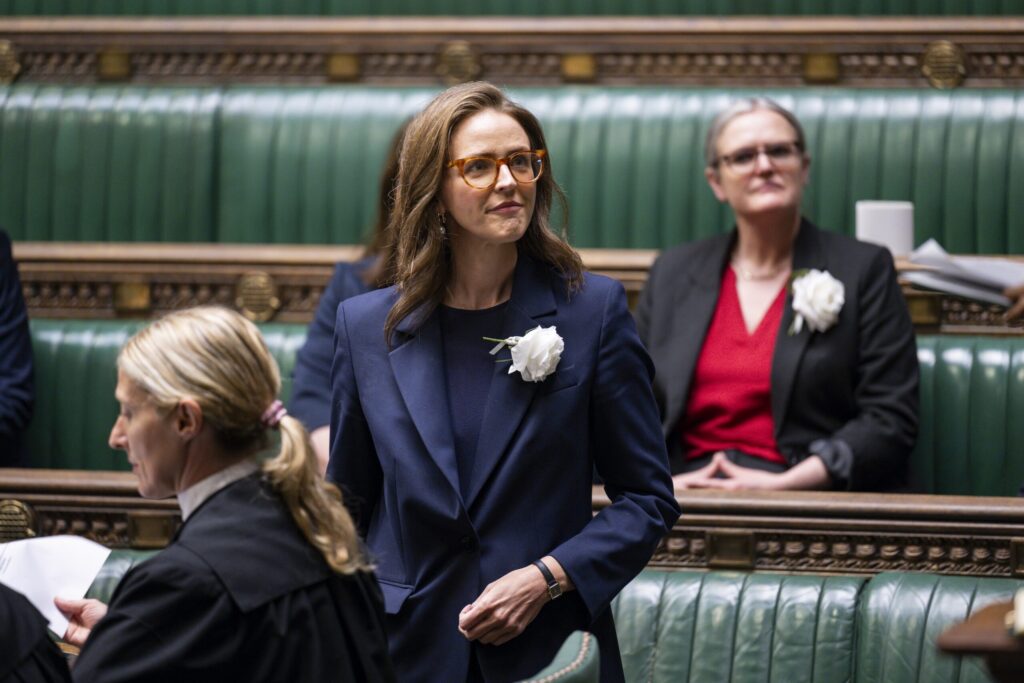

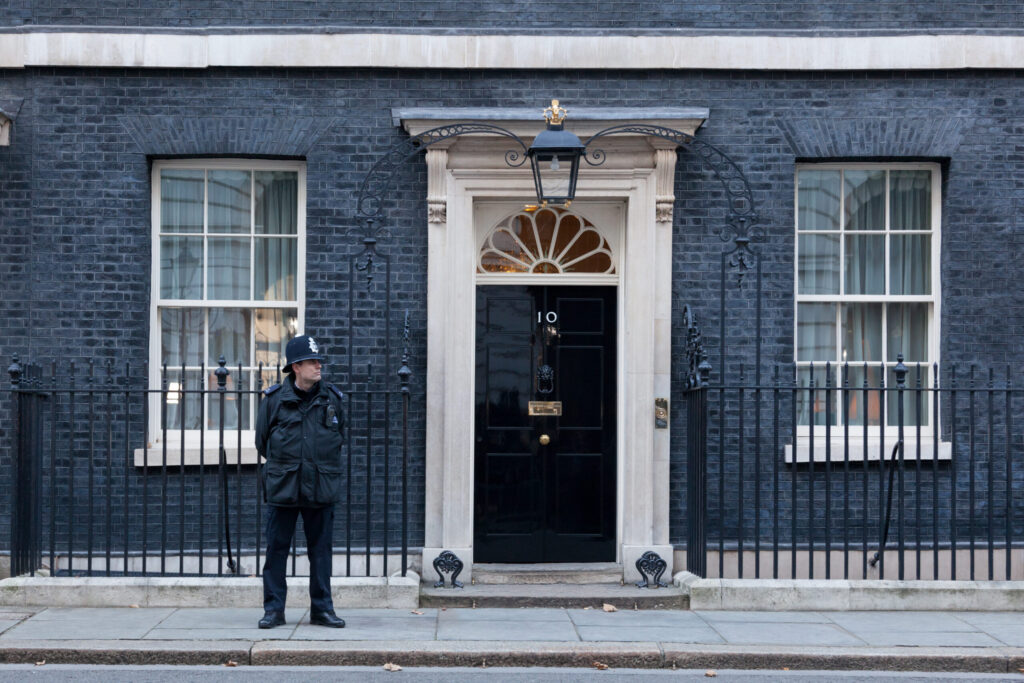
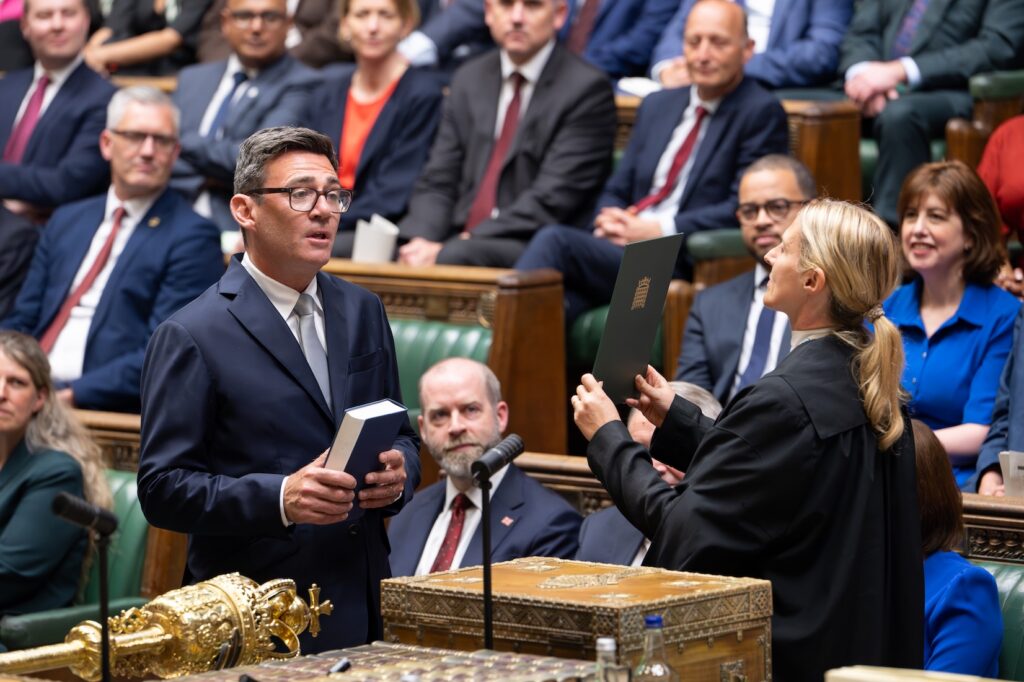
- Investigate the conflict between Jeremy Corbyn and the Parliamentary Labour Party from 2015 to 2019.
- Examine the battle between Denis Healey and Tony Benn in the 1981 Labour deputy leadership election and its wider political significance.
- Research the formation of the Social Democratic Party (SDP) following the 1981 Wembley conference. Further assess the electoral damage it inflicted on the Labour Party during the 1983 and 1987 general elections.
- Research the political and economic context of the formation of the National Government under Ramsay MacDonald in August 1931. How did it shape the Labour Party’s development?
- Research the political climate surrounding the collapse of the first Labour government in 1924, considering the impact of the fraudulent Zinoviev letter on public opinion.
- Evaluate the view that Labour and the Conservatives continue to command the political landscape.
- ‘Two-party dominance in Britain is a thing of the past.’ Analyse and evaluate this statement.
- ‘The United Kingdom is now a fragmented multi-party democracy trapped within a two-party electoral system.’ Analyse and evaluate this statement.
- ‘The most significant limits on a prime minister’s power come from within their own party.’ Analyse and evaluate this statement.
- Evaluate the view that political participation in the UK has fallen to crisis levels.
- First past the post (FPTP) → Labour’s 2024 “super-majority” was achieved on the lowest vote share of any majority government in UK history. The party benefited from the majoritarian mechanics of first past the post and a geographically targeted campaign strategy. The Labour leadership is not committed to electoral reform.
- House of Lords reform → The party has historically championed reform of the upper chamber. The House of Lords (Hereditary Peers) Act 2026 represents the most recent stage in this process, effectively completing the removal of hereditary peers first begun by Tony Blair in 1999.
- Green → The Green Party has emerged as a political threat to the Labour Party from the left, particularly in urban and university constituencies. In the 2024 general election, the Greens finished in second place in 40 seats, 39 of which were won by Labour.
- Reform UK → The 2024 general election established Reform UK as a threat to the Labour Party in its historic heartlands. Reform UK finished in second place in 98 constituencies, 89 of which were won by Labour. This threat was further underscored by the May 2025 Runcorn and Helsby by-election, where Reform UK gained a seat from Labour, albeit by a narrow margin of just six votes.