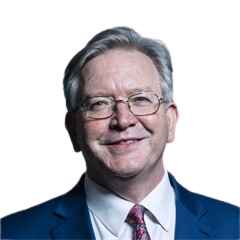
Peter Dowd is the Labour MP for Bootle, having first been elected at the 2015 general election.
In the 2024 general election, Dowd received 26,729 votes, representing 68.7% of the vote share. The Reform UK candidate received 4,746 votes (12.2%), while the Green Party candidate secured 3,904 votes (10.0%). Dowd was duly elected with a majority of 21,983 (56.5%).
The Bootle constituency is located in Merseyside, on the coast north of Liverpool. It includes the communities of Bootle, Crosby, Waterloo, Seaforth, Litherland, Netherton, Orrell, and Ford.
The constituency has been represented by Labour MPs continuously since 1945 and is historically considered one of the party’s safest seats in the UK – a title it officially secured following the 2024 general election. Only the constituency of Chorley, represented by House of Commons speaker Sir Lindsay Hoyle, was won with a larger majority (60.6%). (Tradition dictates that the commons speaker goes unchallenged by major political parties at elections.)
Dowd’s immediate predecessor was Joe Benton (Labour). Notable previous MPs for the area include Simon Mahon (Labour), who was Peter Dowd’s great-uncle, and Bonar Law (Conservative), who served as Conservative Party leader while representing the seat from 1911 to 1918.
Political Career
Dowd is a member of the panel of chairs (since June 2020). The panel of chairs is made up of MPs chosen by the House of Commons speaker, typically at the beginning of every parliament, to chair public bill committees and other commons general committees. In this capacity, Dowd also chairs debates in Westminster Hall and may also act as temporary chair during a committee of the whole House.
Dowd served in the shadow cabinet under Jeremy Corbyn as shadow chief secretary to the Treasury from February 2017 to April 2020. Prior to this, he was shadow financial secretary to the Treasury from October 2016 to February 2017.
In the 2022-2023 parliamentary session, Dowd presented the Working Time Regulations (Amendment) Bill to parliament, which proposed to reduce the maximum working week from 48 hours per week to 32 hours per week and to provide for overtime pay.
Introducing the bill, under the 10-minute rule procedure, Dowd told the commons: “The UK is currently taking part in the biggest ever experiment of a four-day week, with no loss of pay for workers.”
He added: “It may seem counterintuitive that working fewer hours results in greater productivity, but there is already mounting evidence that proves the hypothesis. Wherever in the world a four-day week with no loss of pay has been trialled, it has been a win-win for both workers and employers.
“Productivity has improved, and so has the wellbeing of workers.”
Dowd is listed as a member of the all-party parliamentary groups (APPGs) for the Liverpool city region, children who need palliative care, the Falkland Islands, genetic, rare and undiagnosed conditions, and Italy among others.
Dowd delivered his maiden speech on 28 May 2015 during a debate on home affairs and justice. In it, he said: “The rule of law is the very structure that underpins the human rights of all, regardless of their race, creed, sexuality, political colour or country of origin, however inconvenient that might be for some. You cannot pick and mix with human rights laws.
“Over the centuries, this House has been a living, breathing monument to the rule of law and the cause of human rights. In that regard, it must stay its hand or for ever regret a retreat into a moral lacuna that gives succour to the very regimes we seek to influence for the better, as we did after the last war.”
Political Views
Leadership elections and loyalty
Labour deputy leadership 2025: Dowd was one of 117 Labour MPs who nominated Lucy Powell for the party’s deputy leadership in September 2025. The election followed the resignation of Angela Rayner, who stepped down as deputy prime minister and deputy party leader after an investigation into her tax affairs. It marked the first time since 2007 that Labour had held a deputy leadership contest while in government.
Powell, the former leader of the House of Commons, was seen as a candidate representing the party’s “soft left”; she was support by leading soft left figures including Ed Miliband and Andy Burnham. She secured 117 nominations from the Parliamentary Labour Party (PLP), above the 80 required, and went on to win the election – defeating Bridget Phillipson with 54.3% of the vote.
Labour leadership 2020: Dowd was one of 33 Labour MPs who nominated Rebecca Long-Bailey for the party’s leadership in early 2020. The election was triggered by the resignation of Jeremy Corbyn following the party’s defeat in the 2019 general election, which resulted in Labour’s fewest seats in the House of Commons since 1935.
Long-Bailey, then the shadow business secretary, was widely regarded as the continuity candidate for the party’s left/Corbynite wing. Long-Bailey finished second with 27.6% of the vote, losing to Keir Starmer, who won a decisive victory in the first round with 56.2%.
Labour leadership 2015: Dowd was one of 68 Labour MPs who nominated Andy Burnham for the party’s leadership in June 2015. The election followed the resignation of Ed Miliband after the party’s defeat in the 2015 general election. It was the first contest held under the “one member, one vote” system, which replaced the previous electoral college.
Burnham, the shadow health secretary, was initially considered the frontrunner. He secured 68 nominations from the Parliamentary Labour Party (PLP), comfortably exceeding the 35 required to reach the final ballot. He ultimately finished second in the contest with 19% of the vote, losing to Jeremy Corbyn in the first round.
Corbyn loyalty list: In March 2016, Dowd was labelled as “neutral but not hostile” by the Corbyn leadership in a leaked list which categorised Labour MPs by their perceived loyalty.
Factional identity and party tradition
Tribune group (2017): Dowd was listed among the supporters of the Tribune parliamentary group — a caucus generally described as representing the party’s “soft left”.
The Tribune group was initially formed in 1964 to support the newspaper of the same name. It served as a prominent forum for those parliamentarians situated on the left of the Labour Party – but it split over Tony Benn’s campaign for the deputy leadership in 1981. Benn’s supporters founded the Campaign group – which evolved into the Socialist Campaign Group (SCG). Today, the Bennite SCG is strongly associated with the Labour left tradition.
During the 1980s, the Tribune group emerged as a more natural home for those on Labour’s “soft left”.
In 2017, Efford officially re-launched the group with a new mission statement calling for “opportunity and aspiration” to be placed at the heart of the party’s programme. Efford said he had reformed the group to ensure that the centre-left of the Parliamentary Labour Party (PLP) “have a space in which to put forward ideas and debate which has not been there under successive leaders”.
He added: “The view of Labour MPs at the moment tends to be that too much are just Blairites who want to stab Jeremy Corbyn in the back. We want to show that is not where we are, and that we want to develop our own ideas that represent the centre-left of the party.”
Brexit and Europe
Brexit referendum: Dowd supported the Remain campaign in the 2016 referendum on Britain’s membership of the European Union (EU), and therefore disagreed with a majority of constituents, 54.8% of whom voted to Leave.
Article 50: In February 2017, Dowd voted in favour of the European Union (Notification of Withdrawal) Bill. The legislation empowered the prime minister to notify the Council of the European Union of the UK’s intention to withdraw, formally triggering the process set out in Article 50 of the Treaty on European Union. MPs supported the bill by 498 votes to 114 at second reading.
Brexit trade deal: In December 2020, Dowd was among the 37 Labour MPs to rebel against the leadership’s position on the EU (Future Relationship) Bill – which enabled the government to implement and ratify its post-Brexit trade deal with the EU. Keir Starmer, the newly elected Labour leader, argued that while the trade deal negotiated by Boris Johnson’s government was “thin” and flawed, the only alternative at that late stage was a “no-deal” exit. To enforce the leadership’s position, a three-line whip was imposed. Dowd abstained over the bill. One Labour MP, Bell Ribeiro-Addy, voted against the bill.
Electoral reform
Electoral reform amendment: In May 2026, Dowd was one of over 70 Labour MPs who signed an amendment to the Representation of the People Bill, calling on the government to establish a “national commission on electoral reform”. Tabled by Alex Sobel as chair of the fair elections APPG, the amendment aimed to force a rethink of the first past the post voting system.
At the time, Sobel described FPTP as “one of the biggest examples of a broken status quo in UK politics.” He invited colleagues to join this “common sense call to take a fresh look at how parliament is elected in modern Britain.”
Welfare
Welfare vote (July 2025): Dowd voted against the government’s flagship welfare bill at second reading. The vote came after ministers agreed to significant concessions to avoid defeat via a mass rebellion of Labour MPs on 1 July 2025.
Welfare vote (July 2015): Alongside almost one quarter of his colleagues, Dowd voted against the Conservative government’s Welfare Reform and Work Bill at second reading – defying the party whip which instructed Labour MPs to abstain. This decision to abstain, taken by interim Labour leader Harriet Harman, caused a furious backlash within the party, particularly from its left wing. It became a defining issue in the ongoing leadership contest. Jeremy Corbyn was the only candidate to vote against the bill. Overall, 48 Labour MPs voted against the proposed legislation.
Assisted dying
Dowd voted in favour of the Terminally Ill Adults (End of Life) Bill, better known as the assisted dying bill, at second reading (November 2024). On the third reading of the Terminally Ill Adults (End of Life) Bill (Assisted Dying Bill) in June 2025, Dowd did not record a vote.
Social values and conscience issues
Abortion decriminalisation (2025): Dowd voted in favour of a backbench amendment to the Crime and Policing Bill that sought to decriminalise abortion in England and Wales in June 2025. The amendment, which was passed by a majority of 242 votes, removed women from the threat of prosecution for ending a pregnancy at any stage. As an issue of conscience, MPs were allowed to vote according to their personal beliefs.
Foreign policy and security
Trident renewal (2016): Dowd voted in favour of a government motion calling for the renewal of the Trident nuclear deterrent system in July 2016. The motion, which was passed by 472 votes to 117, committed the UK to constructing a new fleet of submarines to carry the nation’s nuclear weapons. Labour was split over the issue with 140 of its 230 MPs going against leader Jeremy Corbyn and backing the motion.
Syria airstrikes (2015): Dowd voted against a government motion to extend UK airstrikes against Isis from Iraq into Syria in December 2015. The motion, which was passed by 397 votes to 223 after a ten-hour debate in the House of Commons, authorised the RAF to conduct strikes against Isis targets in Syria.
Sanctioned (Russia): In April 2022, Dowd was among the group of MPs placed on a sanctions list by the Russian government. The measure barred them from entering Russia and was presented by Moscow as a retaliatory response to the UK’s stance on the invasion of Ukraine.
Palestine
Ceasefire vote (November 2023): Dowd was among 56 Labour MPs to vote in favour of a Scottish National Party (SNP) amendment to the King’s Speech in the House of Commons calling for an “immediate ceasefire” in Gaza – defying the instruction set out by the party’s frontbench. Labour had tabled its own motion, making a more moderate appeal for a “humanitarian pause” in the conflict and ordered its representatives to support that stance.
Before Politics
Born in Bootle on 20 June 1957, Dowd was educated at local primary and secondary schools and at Hugh Baird College.
He later earned an undergraduate degree from the University of Liverpool and a postgraduate degree from Lancaster University.
Dowd served as a Merseyside County councillor from 1981 to 1986 for the Hawthorne ward.
He was elected to Sefton Council in 1991, representing the Derby ward until 2003 and then the St Oswalds ward until 2015.
During his time on Sefton Council, he served as leader of the Labour group and was leader of the council from 2011 to 2015.
He also chaired the Merseyside Fire Authority in the 1990s.
Personal Life
Dowd comes from a large working-class family in Bootle with a history of Labour Party activism.
In October 2020, his daughter Jennie died at the age of 31 following a cycling collision.
https://x.com/Keir_Starmer/status/1316382285709668353
Trivia
Two of Dowd’s great-uncles, Simon Mahon and Peter Mahon, also served as Labour MPs.
Simon Mahon served as the Labour MP for Bootle from 1955 to 1979.
Peter Mahon served as the Labour MP for Preston South from 1964-1970.
In 1968, the Mahon brothers threatened to resign the whip after they took exception to remarks made by Douglas Houghton, chairman of the Parliamentary Labour Party (PLP), that large families were a form of “social irresponsibility”.
The then prime minister, Harold Wilson, later issued a statement clarifying that Houghton’s views were not party policy.
Upon losing his seat at the 1970 general election, Peter Mahon sought the Labour party nomination in the Liverpool Scotland by-election. (Simon was the MP for the neighbouring seat, Bootle). Peter Mahon was not selected as the Labour candidate. A vociferous opponent of attempts to relax abortion laws, having “talked out” Liberal MP David Steel’s Abortion reform bill in 1966, Peter Mahon stood as an independent “Labour and Anti-Abortion” candidate – a pitch for the constituency’s considerable Catholic vote. He finished third on 981 votes (10.3%).
Expelled from Labour, Peter Mahon joined the Liberal Party in 1973, subsequently sitting as a Liberal councillor on Liverpool City Council and Liverpool Metropolitan District Council.
Peter Mahon’s grandson, Peter Garrett (therefore Dowd’s second cousin) is a former research director of LIFE. He resigned from the Labour Party in 2000 in opposition to the party’s stance on human cloning.
Garrett stood in the 2000 Preston by-election as the Christian Peoples Alliance (CPA) candidate, securing 416 votes (2.0%).


Peter Dowd: ‘Together, MPs can build a parliament that understands grief’
2 December 2025