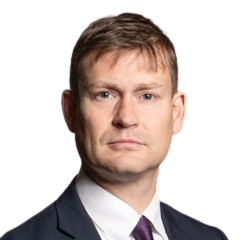
Justin Madders is the Labour MP for Ellesmere Port and Bromborough, having first been elected to parliament at the 2015 general election for the predecessor constituency of Ellesmere Port and Neston.
In the 2024 general election, Madders received 24,186 votes, representing 57.6% of the vote share. The Reform UK candidate, Michael Alreed, received 7,278 votes (17.3%), while the Conservative candidate, Lee Evans, secured 5,210 votes (12.4%). Madders was duly elected with a majority of 16,908 votes.
The Ellesmere Port and Bromborough constituency spans the border of Cheshire and Merseyside on the Wirral Peninsula. It includes the town of Ellesmere Port and communities such as Bromborough and Eastham from the former Wirral South constituency. It is an area with significant industry, including the Stanlow oil refinery and the Vauxhall Motors car plant.
The constituency was created for the 2024 general election, largely replacing the former Ellesmere Port and Neston seat (held by Labour’s Andrew Miller from 1992-2015 and Justin Madders from 2015-2024) and incorporating parts of the abolished Wirral South seat. The predecessor Ellesmere Port and Neston seat had been held by Labour since 1992, having previously been Conservative from 1983-1992.
Political Career
Madders currently serves as parliamentary under-secretary of state in the Department for Transport. He was appointed to this role in July 2026, following the Labour leadership contest and Andy Burnham’s elevation as prime minister.
Madders served as parliamentary under-secretary of state for employment rights at the Department for Business and Trade from July 2024 to September 2025. He left this post as part of Keir Starmer’s first ministerial reshuffle as prime minister, triggered by Angela Rayner’s resignation as deputy prime minister.
Commenting after the reshuffle, Madders told a Trades Union Congress (TUC) conference fringe meeting: “Lets not pretend that my departure… and Angela’s departure, is not something that the business community has been cheering quite loudly for”
He added: “I haven’t been given a reason for my dismissal but people will draw their own conclusions. I hope it wasn’t because of my own personal performance.”
In opposition, Madders served in several shadow ministerial roles under Labour leaders Jeremy Corbyn and Keir Starmer. He was shadow minister for employment rights and protections / future of work (September 2023 – July 2024), shadow minister for business and industrial strategy (July 2018 – March 2019 and December 2021 – September 2023), and shadow minister for health and social care (September 2015 – March 2019 and April 2020 – December 2021).
Madders resigned as a shadow health and business minister in March 2019 after voting against a confirmatory or second Brexit referendum, defying the Labour whip in the process. The Labour leadership whipped its MPs to abstain from voting on an amendment, tabled by the Independent Group of former Labour and Conservative MPs, to call a second referendum.
In a statement at the time, Madders said: “I knew when I voted the way I did I might have to go so I have to live with the consequences of that. The vote in question was on whether we should have a referendum on whether we choose to leave the EU on Theresa May’s deal, with us not leaving at all if we rejected that.
“I had been asked to abstain on the vote but felt I had to register my objection to that proposal. I do not think the prime minister’s deal is a good one and so couldn’t see any merit in putting something to a referendum that had already been rejected twice by parliament.”
He added: “Having stood on a manifesto at the 2017 election that said I accepted the outcome of the referendum, supporting a referendum on the basis suggested would not have been an honourable or consistent thing to do.”
Madders has sat as a member of the House of Commons business and trade select committee (2025-2026) and petitions committee (2015).
Madders delivered his maiden speech on 9 June 2015 during a debate on the European Referendum Bill.
In it, he said: “I recall speaking to five women who had all worked in the same shop over a few months. All had been denied their pay for periods ranging from between one and six weeks, but not one of them could afford to proceed with an employment tribunal claim. Our rights are only as good as our ability to exercise them, and I do hope a serious appraisal of the fee system takes place as a matter of urgency.”
Before entering parliament, Madders was a councillor on the former Ellesmere Port and Neston borough council from 1998 to 2009. He served as leader of the council from 2007 until its abolition in 2009 (when it merged into Cheshire West and Chester council).
He subsequently served as leader of the Labour opposition group on the successor Cheshire West and Chester council.
Political Views
Leadership elections and loyalty
Labour deputy leadership 2025: Madders was one of 117 Labour MPs who nominated Lucy Powell for the party’s deputy leadership in September 2025. The election followed the resignation of Angela Rayner, who stepped down as deputy prime minister and deputy party leader after an investigation into her tax affairs. It marked the first time since 2007 that Labour had held a deputy leadership contest while in government.
Powell, the former leader of the House of Commons, was seen as a candidate representing the party’s “soft left”; she was supported by leading soft left figures including Ed Miliband and Andy Burnham.
Madders chaired Powell’s campaign.
Powell ultimately secured 117 nominations from the Parliamentary Labour Party (PLP), above the 80 required, and went on to win the election – defeating Bridget Phillipson with 54.3% of the vote.
Labour leadership 2020: Madders was one of 31 Labour MPs who nominated Lisa Nandy for the party’s leadership in early 2020. The election was triggered by the resignation of Jeremy Corbyn following the party’s defeat in the 2019 general election, which resulted in Labour’s fewest seats in the House of Commons since 1935.
Nandy, the MP for Wigan, argued that the party needed a “bridge” to reconnect with traditional working-class voters in northern England. She finished third in the contest with 16.2% of the vote.
Labour leadership 2015: Madders was one of 68 Labour MPs who nominated Andy Burnham for the party’s leadership in June 2015. The election followed the resignation of Ed Miliband after the party’s defeat in the 2015 general election. It was the first contest held under the “one member, one vote” system, which replaced the previous electoral college.
Burnham, the shadow health secretary, was initially considered the frontrunner. He secured 68 nominations from the Parliamentary Labour Party (PLP), comfortably exceeding the 35 required to reach the final ballot. He ultimately finished second in the contest with 19% of the vote, losing to Jeremy Corbyn in the first round.
Labour leadership 2016: Madders was one of 162 Labour MPs who nominated Owen Smith for the party’s leadership in July 2016. The election was triggered by a challenge to Jeremy Corbyn following the EU referendum, which led to a wave of shadow cabinet resignations and a vote of no confidence supported by 172 MPs. Smith, the former shadow work and pensions secretary, was ultimately defeated by Corbyn, who won with an increased mandate of 61.8% of the vote.
Factional identity and party tradition
Tribune group: In November 2025, Madders was among the seven Labour MPs who set out to revive the parliamentary Tribune Group – an influential caucus representing the party’s “soft left”. Led by Louise Haigh and Vicky Foxcroft, the group was relaunched to provide an organised voice for the centre-left wing of the parliamentary Labour Party (PLP).
The Tribune group was initially formed in 1964 to support the newspaper of the same name. It served as a prominent forum for those parliamentarians situated on the left of the Labour Party – but it split over Tony Benn’s campaign for the deputy leadership in 1981. Benn’s supporters founded the Campaign group – which evolved into the Socialist Campaign Group (SCG). Today, the Bennite SCG is strongly associated with the Labour left tradition.
During the 1980s, the Tribune group emerged as a more natural home for those on Labour’s “soft left”.
In 2017, the group was relaunched by veteran Labour MP Clive Efford with a mission statement calling for “opportunity and aspiration” to be placed at the heart of the party’s programme. Efford said he had reformed the group to ensure that the centre-left would “have a space in which to put forward ideas and debate which has not been there under successive leaders”.
Madders was listed among the supporters of the group’s relaunch in 2017.
Madders was among those who again relaunched the group in November 2025. Its leading figures included Madders, Haigh, Foxcroft, Debbie Abrahams, Beccy Cooper, Sarah Owen and Yuan Yang.
In a January 2026 article for LabourList, co-written by this collective, the MPs argued that the party leadership had not “clarified who we stand for, clarity is just as often gained by who we stand against.”
The article added: “So what does a centre-left economic vision look like in practice? First, an economy that serves people, communities, and the common good. That’s why measures like bringing our railways back into public ownership matter.
“When we own essential natural monopolies such as these, we can demand the service we deserve and protect ourselves from predatory practices…
“Labour wins when – as the Tribunes of Rome were charged with doing – it protects and leads the people. We are here to help the Party to remember that mission and to deliver on it.”
Brexit and Europe
Brexit referendum: Madders supported Remain in the 2016 Brexit referendum, and therefore disagreed with a majority of his constituents, 58.3% of whom voted to Leave.
Article 50: In February 2017, Madders voted in favour of the European Union (Notification of Withdrawal) Bill. The legislation empowered the prime minister to notify the Council of the European Union of the UK’s intention to withdraw, formally triggering the process set out in Article 50 of the Treaty on European Union. MPs supported the bill by 498 votes to 114 at second reading.
Welfare
Welfare vote (July 2025): Madders voted in favour of the government’s flagship welfare bill at second reading. The vote came after ministers agreed to significant concessions to avoid defeat via a mass rebellion of Labour MPs on 1 July 2025.
Assisted dying
Madders voted against the Terminally Ill Adults (End of Life) Bill, better known as the assisted dying bill, at both second reading (November 2024) and third reading (June 2025).
Social values and conscience issues
Abortion decriminalisation (2025): Madders voted in favour of a backbench amendment to the Crime and Policing Bill that sought to decriminalise abortion in England and Wales in June 2025. The amendment, which was passed by a majority of 242 votes, removed women from the threat of prosecution for ending a pregnancy at any stage. As an issue of conscience, MPs were allowed to vote according to their personal beliefs.
Foreign policy and security
Trident renewal (2016): Madders voted in favour of a government motion calling for the renewal of the Trident nuclear deterrent system in July 2016. The motion, which was passed by 472 votes to 117, committed the UK to constructing a new fleet of submarines to carry the nation’s nuclear weapons. Labour was split over the issue with 140 of its 230 MPs going against leader Jeremy Corbyn and backing the motion.
Syria airstrikes (2015): Madders voted against a government motion to extend UK airstrikes against Isis from Iraq into Syria in December 2015. The motion, which was passed by 397 votes to 223 after a ten-hour debate in the House of Commons, authorised the RAF to conduct strikes against Isis targets in Syria.
Sanctioned (Russia): In April 2022, Madders was among the group of MPs placed on a sanctions list by the Russian government. The measure barred them from entering Russia and was presented by Moscow as a retaliatory response to the UK’s stance on the invasion of Ukraine.
Before Politics
Born on 22 November 1972, Madders grew up in the Ellesmere Port area of Cheshire. He was the first member of his family to attend university.
He studied law (LLB) at the University of Sheffield. He qualified as a solicitor in 1998, specialising in employment law.
Personal Life
Madders is married and has three children.
He lives in Little Sutton, Cheshire.
Trivia
Madders was defeated by George Osborne when he stood as the Labour candidate for the Tatton constituency at the 2005 general election. He placed second with 23.5% of the vote.
Justin Madders has not written for Politics.co.uk.