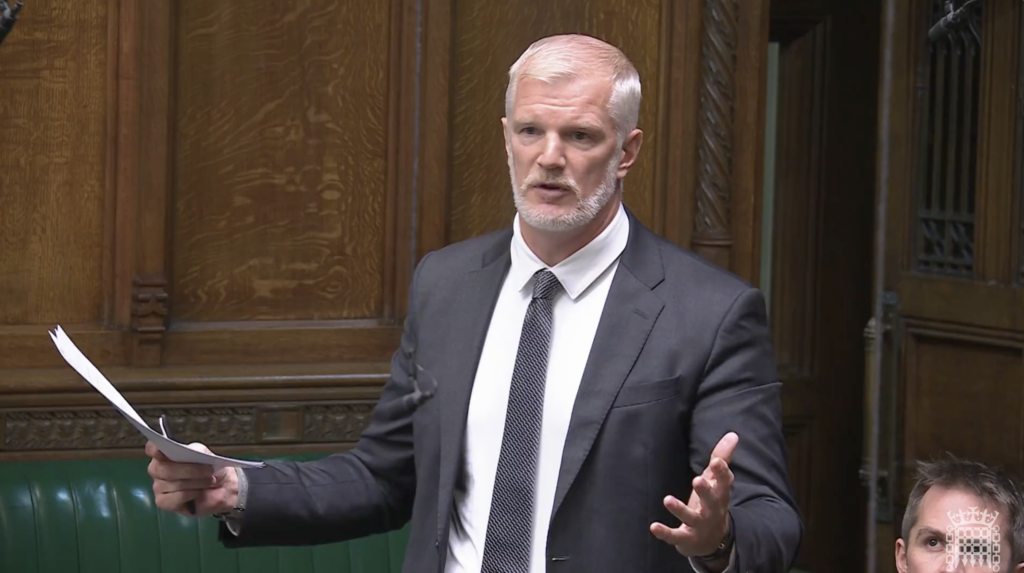
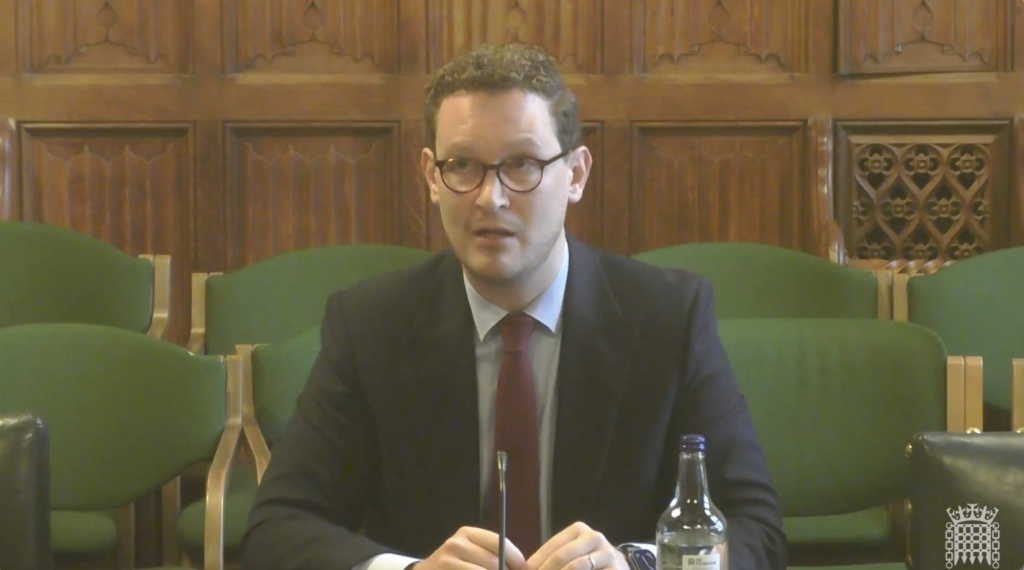
Darren Jones has said he was told “all the time” by officials that there were things he could not do “because of the constitution”.
Jones, who served as chief secretary to the prime minister from September 2025 to July 2026, delivered evidence to the House of Commons public administration and constitutional affairs committee (Pacac) on Tuesday as part of the committee’s inquiry into “mission-led government.”
The Labour MP said that officials would regularly cite the constitution when he sought to change how government worked. “I would often reply with, ‘The constitution’s unwritten. So if I decide to do something, it changes. Therefore, why can’t I do it?”
Jones said he was “a fan of an unwritten constitution because, in theory, it provides flexibility, albeit within the norms of how we should expect government to work”.
The former cabinet minister, who left government after Andy Burnham’s appointment as prime minister, said he tried to “abolish the Cabinet Office three times, but failed.”
In a throwaway remark, he added that he was not “allowed to abolish the Cabinet Office.”
Asked by Pacac chair Simon Hoare whether an office of the prime minister would make a difference to driving change, Jones said: “I think so… if it’s done properly.”
He said his “main frustration was that there was too much in the Cabinet Office, really, but also Number 10 as a business unit was a sealed unit. It didn’t work with Cabinet Office people”.
Opening the session, Hoare asked when mission-led government “got its death certificate – because nobody talks about it anymore.”
Jones said the missions approach was effectively an “exercise of prioritisation and trying to get the system to tackle some big challenges that maybe it hadn’t done for a long time.”
But he conceded that, in practice, “it didn’t work for a number of reasons.”
He said “the money we assigned to missions ended up going to departments anyway because mission boards, we were told, couldn’t be constitutionally accountable to parliament in the same way the departments are”.
Once departments had the money, he added, “the departments decided how to spend the money, and so collaboration wasn’t as easy as it maybe should have been”.
Jones stated: “I think constitutional norms and a tendency to protect the way the system works eventually stopped it from being effective, in my view.”
He said he did not blame the apparent failure of the government’s strategy “on Keir Starmer or, quite frankly, any minister”.
Jones maintained that the missions boards structure produced “a lot of process… but it didn’t actually deal with the fundamental constitutional barriers to radical change of the state.”
He added: “I think that’s my second point, which is that the civil service is reluctant to change, and ministers who have an average lifespan of maybe two years or so can only achieve so much in that time period.
“So I think that the incentives and accountability structures for the senior civil service to make sure that they’re delivering the political priorities of the government of the day is an area where we’ve got to do much, much more work because – I started some of that in government – but I know that there’s much more to be done.”
Jones said that when he was chief secretary to the Treasury (2024-2025), he asked to integrate departments’ finance systems so ministers could see how money was being spent, instead of relying on the current system of monthly spreadsheets.
He said he was told “you can’t do that because constitutionally the departments are accountable to parliament; they’re not accountable to the Treasury”. He said he had to “push and push and push” to get a pilot, and that it was deprioritised after he left the Treasury in September 2025.
He stated: “The idea that civil servants can say to you, well, we interpret the constitution, and we are telling you, the democratically elected ministers, that this is not possible, I don’t think is sufficient…
“So, in practice, how did I do it? I had to get the cabinet secretary to write a letter to every other permanent secretary to say that the prime minister and the chancellor [Rachel Reeves] and I had said this was going to happen.
“I had to make sure the money was in the spending review for it to happen, and I tabled a written ministerial statement here so that it was on the public record and no one could get rid of it. And that was my greatest hope – it meant that constitutionally I was allowed to have integrated financial reporting across government.
“But it’s just barmy. Of course we should see how money is being spent across government in a more granular way, and using technology to better spot problems. We spend enormous amounts of money.
“We can’t just rely on a monthly Excel spreadsheet being uploaded to an IT system.”
Asked whether the default position was to ignore him if officials did not want to do something, Jones simply responded: “Yes.”
On the future of the missions, Jones remarked that Burnham “has a different set of priorities”.
He said and that they “will still be delivered under the bonnet by the government… but I think the political focus has changed with a new a new administration.”