Reform UK
Reform UK is a right-wing populist political party in the United Kingdom.
Originally founded as the Brexit Party in 2018, Reform has evolved into an insurgent force in British politics, threatening the standing of the established Labour and Conservative parties. The party’s emergence has coincided with a realignment on the British right.
Reform UK’s evolution from a single-issue entity focused on achieving Brexit to a broader political movement addressing a range of domestic grievances has been marked by notable electoral successes, particularly in the 2019 European Parliament elections (as the Brexit Party), the 2024 general election (as Reform) and the 2025 local elections.
The party won five seats at the 2024 election. Its representation has since increased to eight as a result of defections from the Conservative Party.
House of Commons representation: Eight.
House of Lords representation: Zero.
Scottish Parliament: Reform UK won 17 seats in the 2026 Scottish Parliament election.
Senedd Cymru: Reform UK won 34 seats in the 2026 Senedd Cymru election.
Directly elected mayors: Two. Andrea Jenkyns and Luke Campbell were elected as the mayors of Greater Lincolnshire and Hull & East Yorkshire respectively in May 2025.
Nigel Farage and the Reform UK leadership
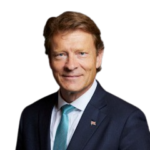
Reform UK was led by Richard Tice, founder and co-chairman of the pro-Brexit campaign groups Leave.EU and Leave Means Leave, from March 2021 to June 2024. In the latter stages of the 2019-2024 parliament, Reform UK experienced a marked rise in its stature, establishing it as a significant threat to the Conservative government led by Rishi Sunak.
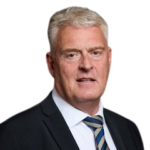
In March 2024, Reform gained its first MP in the form of Lee Anderson, who had been suspended from the Conservative Party for comments made about the mayor of London, Sadiq Khan. In a GB News interview, Anderson, the former deputy chairman of the Conservative Party, had claimed that “Islamists” had “got control” of the mayor.
With Reform UK polling at around 13%, Tice hailed Anderson as Reform’s “champion of the Red Wall”. The defection underlined the threat Reform UK posed to the Conservative Party as a rival ‘insurgent’ party on the right of British politics – one untainted by any record in government.
Evaluation question
Does the absence of a governing record serve as an electoral asset at a time of political disillusionment – or does it still invite scrutiny over a lack of experience?
Tice was still leader of Reform UK in late May 2024, when Sunak defied expectations and called a snap election in a surprise statement in the pouring rain outside 10 Downing Street on 22 May.
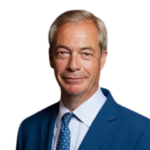
The return of Nigel Farage
The snap election sparked considerable speculation that Farage, the “honorary president” of Reform UK, could return to frontline politics. Farage initially stated he would not stand in the 2024 general election. In a statement posted to X, the former UK Independence Party (Ukip) leader said he was “fully supportive of Richard Tice’s leadership”, urging voters to “put their trust in him and Lee Anderson”.
Farage, a declared supporter of Donald Trump, said that he wanted to be free to campaign in the US presidential election. “Important though the general election is”, he wrote, “the contest in the United States of America on November 5 has huge global significance.”
But Farage soon U-turned, declaring his candidacy for the constituency of Clacton and announcing that he would take over as leader of Reform UK. Farage said that he had changed his mind on the campaign trail and wanted to lead a “political revolt”. Tice, a long-standing ally of Farage, willingly stood aside, assuming the position of party chairman.
The 2024 general election resulted in a historic breakthrough for Reform UK. Farage himself was elected in Clacton, and the party secured a total of five MPs. Speaking at his election count, Farage vowed: “We’re coming for Labour – be in no doubt about that.”
Reform UK received 4,117,610 votes, representing 14.3% of the national total. Despite being the third most popular party (on national vote share), its support was spread broadly and thinly across the country. Significantly, Reform UK placed second in 98 constituencies; in 89 of those contests, it finished behind Labour.
Reform benefitted from an omnishambolic Conservative campaign. According to analysis by Ipsos, Reform won 23% of those voters who backed the Conservative Party, then led by Boris Johnson, at the 2019 general election.
Evaluation question
Does Reform UK function as a genuine governing alternative or simply as a vehicle for registering dissatisfaction with the Conservative Party?
Reform’s parliamentary party initially consisted of five MPs: Farage (Clacton), Tice (Boston and Skegness), Anderson (Ashfield), Rupert Lowe (Great Yarmouth), and James McMurdock (South Basildon and East Thurrock). In the wake of the election, Tice assumed the post of deputy leader and Anderson was appointed as chief whip. Zia Yusuf, a former banker who sold his tech company for more than £200 million, was appointed as party chairman. The Reform donor was later revealed to still be a member of the Conservative Party at the time of his appointment.
2025 local elections
At the local elections on 2 May 2025, Reform UK achieved a series of significant breakthroughs. It won 677 council seats, accounting for around 41%; gained majority control of 10 councils outright; and also secured victory in two mayoralties, Greater Lincolnshire and Hull and East Yorkshire.
These results marked the first time that Reform UK had won majority control of any council, and the first time that the party had achieved control of any mayoralty.
Evaluation question
How far does gaining executive power at the local level threaten the party’s populist appeal by forcing it to make unpopular administrative compromises?
Andrea Jenkyns, a former Conservative MP, was elected as the Reform mayor of Greater Lincolnshire. Luke Campbell, a former Olympic boxing champion, was elected as the Reform mayor of Hull and East Yorkshire.
Among the councils where Reform UK assumed overall control were Derbyshire (42 of 64 seats), Kent (57 of 81), Doncaster (37 of 55), Durham (65 of 98), Lancashire (53 of 84), Nottinghamshire (40 of 64 seats), and Lincolnshire (44 of 70).
The party’s estimated national vote share in England was 30%.
Reform also won the Runcorn and Helsby by-election, precipitated by Mike Amesbury’s resignation as an MP. Sarah Pochin, the Reform UK candidate and former Conservative councillor, won by a margin of just six votes over Labour’s Karen Shore. After Lowe’s suspension, this restored the party’s standing to five MPs.
Internal division and controversies
The party’s early months in parliament were marked by both rapid expansion, especially in the party’s membership, and internal friction.
In March 2025, the party leadership accused Lowe of bullying staff and making verbal threats against Yusuf. The party announced it had referred the matter to the police. The explosive allegations were made just one day after Lowe had publicly criticised Farage in a Daily Mail interview. Lowe, who had been touted as a future Reform leader by tech tycoon Elon Musk, argued Reform needed a “proper plan”, more policy and official spokespeople.
In a joint statement by Yusuf and Reform’s chief whip, Lee Anderson, they said they were “obligated to disclose that the party received complaints from two female employees about serious bullying” in Lowe’s offices. Lowe immediately denied the allegations, describing them as “entirely untrue”. He claimed the accusations were a fabrication, orchestrated by the party leadership in response to his challenge to Farage’s authority. In May 2025, the Crown Prosecution Service (CPS) announced that no charges would be brought against Lowe.
Lowe announced the formation of a new political organisation called Restore Britain in June 2025. The group’s advisory board included senior Tory figures such as Conservative MP Gavin Williamson and former London mayoral candidate Susan Hall. Lowe announced that Restore Britain would transition from a pressure group into a national political party on 13 February 2026.
In June 2025, Yusuf resigned as party chairman after Pochin, in her first intervention at prime minister’s questions, called for the burka to be banned “in the interests of public safety”. Yusuf, a self-described “British Muslim patriot”, initially took to social media, saying he had “learnt about the question and the party’s position re: it not being policy for the first time on my X feed”. He described Pochin’s line of inquiry as “dumb”.
Yusuf then announced his resignation, saying that working to get the party elected was no longer “a good use of my time”. However, mere days later, the former party chairman announced he would return to the political frontline to lead Reform’s “Doge team”. This brief was modelled on the Department of Government Efficiency set up by Donald Trump as US president and led by Elon Musk. David Bull, a former medical doctor and broadcaster, was appointed as Yusuf’s replacement as Reform chair.
In July, Reform was once again reduced to four MPs after James McMurdock resigned the party whip. McMurdock’s narrow victory in the 2024 general election by 98 votes was a significant surprise – even to Farage. The Reform UK leader described McMurdock as a “paper candidate”, noting he had only joined the party in May. After his election, it emerged that, aged 19, McMurdock served 21 days in a young offenders’ institution for assaulting a former girlfriend. In July 2025, McMurdock gave up the Reform whip after questions arose over his previous business dealings. The Sunday Times raised questions over tens of thousands of pounds worth of loans he took out under a Covid-19 support scheme.
Conservative defections
Reform has attracted a considerable number of Conservative defections since the 2024 general election. Initially, defections were mostly confined to lower-profile former Conservative MPs and ex-allies of Boris Johnson – including Ben Bradley, Nadine Dorries, Jonathan Gullis and Andrea Jenkyns.
Danny Kruger, the sitting MP for East Wiltshire, somewhat bucked this trend upon his defection to Reform UK in September 2025. Kruger, who served as political secretary to Johnson during his tenure as prime minister, claimed the Conservative Party was “over”.
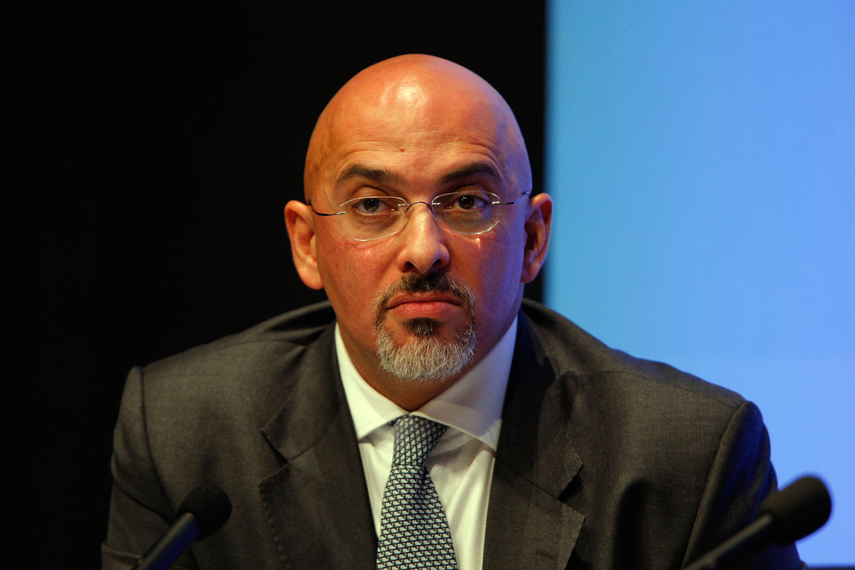
Then, on 12 January 2026, the Reform-Tory defection trend reached a new height when former chancellor Nadhim Zahawi announced his move to Reform UK. Zahawi said that the Conservative leader, Kemi Badenoch, had the “baggage of a defunct brand”.
Evaluation question
Can a populist insurgent party absorb establishment figures like former chancellors without alienating its core anti-establishment voting base?
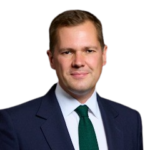
Three days later, Badenoch announced that Robert Jenrick – her enduringly ambitious leadership rival – had been suspended from the party; Badenoch cited “clear, irrefutable evidence” of the shadow justice secretary’s intention to defect. Later that day, Farage unveiled Jenrick as the latest Reform UK MP. Jenrick, a former immigration minister, said most Tory MPs were “in denial” or “being dishonest” about what successive Conservative governments had done to Britain.
Andrew Rosindell, formerly a shadow Foreign Office minister, defected to Reform on 18 January. In a statement, Rosindell said that the “views and concerns of constituents such as mine in Romford have been consistently ignored for far too long”.
Suella Braverman, the former home secretary, joined Reform UK on 26 January. Braverman accused Badenoch of forcing her out as part of a “witch-hunt against rightwingers”.
As a result of these defections, the party’s parliamentary representation has increased to eight.
Evaluation question
To what extent do high-profile defections of senior Conservative figures to Reform UK signal a genuine, permanent realignment on the British right – as opposed to survival tactics on the part of longstanding career politicians?
In February 2026, Reform UK unveiled its own so-called “shadow cabinet” or frontbench. Jenrick was announced as “shadow chancellor”, Braverman was appointed as “shadow education secretary”, Richard Tice as “shadow business, trade and energy secretary”, and Zia Yusuf as “shadow home secretary”.
At the time, Farage stated: “With Labour’s growing instability, and Keir Starmer’s leadership on the verge of collapse, it is vital we prepare seriously for government.
“I am bringing together a strong, disciplined and experienced team ready to rebuild Britain. The British people deserve a real alternative. Today we are demonstrating that Reform UK is ready to provide it.”
2026 elections
At the 2026 local elections in England, Reform UK won 1,454 council seats. It was defending just two of these seats. The party won control of 14 councils.
Reform emerged as the second largest party in Senedd Cymru after the 2026 election, winning 34 MSs (members of the Senedd). The party also won its first seats in the Scottish Parliament (17).
Reform placed second in the sensational Makefield by-election, held on 18 June. The result represented Reform’s second consecutive by-election loss after the party also finished as the runner-up in the February 2026 Gorton and Denton by-election.
Andy Burnham, the Labour candidate in Makerfield, benefited from divisions and blunders on the right of British politics.
Reform’s campaign descended into disarray following the discovery of its candidates past social media posts, which included lewd comments about Carol Vorderman, Covid-19 conspiracies and an assertion that Russia was “within their rights” to annex Crimea. Robert Kenyon, the party’s candidate, responded to the reports in an interview with the BBC. He said he had “not made sexual remarks about Carol Vorderman”, but had responded to someone else’s post with a “crass joke”.
Reform also faced a challenge on its right flank from Restore Britain.
Restore Britain fielded Rebecca Shepherd, a 53-year-old local businesswoman, as its candidate. During the by-election campaign, Elon Musk shared a social media post from Restore leader Rupert Lowe with the caption: “Restore Britain”. Both Labour and Reform activists noted an uptick in support for Restore on the doorstep as the campaign progressed.
Reform won a total of 15,696 votes (34.5%), while Shepherd and Restore Britain received 3,111 votes (6.8%). Burnham was elected with a resounding 24,927 votes (54.8%) and a majority of 9,231.
Responding to the result, Farage blamed Reform’s defeat on a desire among voters to defenestrate Keir Starmer. He also issued a plea for Restore voters to back Reform instead, as the main “challenger party to the left”.
In a video posted to social media, Farage said: “In many ways, he’s a popular local mayor, just as Boris Johnson was a popular mayor in London just a few years ago. But what really happened here is it was ‘vote Burnham, get Starmer out’.”
He added: “There’s a couple of thousand voters there who would normally have gone out and voted Reform, that voted Restore. And I would say directly to them, what do you want?
“We are the challenger party to the left in this country. And I would urge you to think again, I really, really would.”
2026 Clacton by-election
Reform’s standing took a hit in the first half of 2026 amid a series of stories concerning Farage’s finances.
In April 2026, the Guardian reported that Farage “was given £5 million by the crypto billionaire Christopher Harborne shortly before announcing he would stand in the 2024 British general election.” In an apparent attempt to get ahead of the report, Farage confirmed in a Daily Telegraph interview that he had received the gift, but insisted it was to cover the costs of his personal security.
Reform UK maintained that no rules had been broken.
On 13 May, shortly after the 2026 local elections, the parliamentary standards commissioner announced a new inquiry into whether Farage broke commons rules by accepting the £5 million gift and not declaring it.
On 4 July, the Sunday Times reported that Farage had received support from George Cottrell, including security and social media staff who worked on Farage’s online content, in the year before his election as an MP. Cottrell, who admitted a count of wire fraud in the US in 2017, was a longstanding ally of Farage.
Reform UK again insisted that no rules had been broken.
These developments came as the prime minister, Keir Starmer, announced his resignation, handing over to Burnham.
On 7 July, Farage announced his resignation from the House of Commons and confirmed he would stand in the subsequent Clacton by-election.
In a video statement, Farage took aim at the “mainstream media” and the “establishment”, insisting he had done “nothing wrong”. He said the by-election would give voters a chance to “stick two fingers up to the establishment”.
Farage’s sensational statement was met with a united front from the major parties, who successively took the decision not to stand in Clacton. This stance cleared the field for Count Binface, Britain’s best-known satirical candidate, to emerge as Farage’s most prominent challenger. In an interview with the Daily Mail on 9 July, Farage admitted being wrong-footed by the decision of the major parties not to stand in the contest. Asked if he had considered the possibility of fighting as the only candidate from a major political party, Farage responded: “No, of course not.”
On 13 August 2026, Farage was returned as the MP for Clacton, winning 22,239 votes (63.3%) against a field of 34 candidates – the largest ever assembled for a single UK parliamentary contest. Binface won 9,455 votes (26.9%), while Farage secured a majority of 12,784 – an increase of 4,379 on his 2024 result.
Farage did not attend the count at Clacton leisure centre to hear the declaration of the result. This meant he was the first winning parliamentary candidate not to attend their declaration since Bobby Sands, the imprisoned hunger striker and member of the Provisional Irish Republican Army (IRA), who won the 1981 Fermanagh and South Tyrone by-election.
The Clacton contest seemed to weigh on Reform’s standing in national polling.
On 14 August, polling guru Sir John Curtice told BBC Radio 4’s Today programme: “In the immediate wake of the decision… support for Reform did noticeably fall in the national polls, from around just under 27% to about 24%, which is where it still is this morning.”
Full list of Reform UK MPs
- Nigel Farage, MP for Clacton and leader of Reform UK (elected July 2024)
- Richard Tice, MP for Boston and Skegness and deputy leader of Reform UK (elected July 2024)
- Lee Anderson, MP for Ashfield and Reform UK chief whip (defected March 2024)
- Sarah Pochin, MP for Runcorn and Helsby (elected May 2025)
- Danny Kruger, MP for East Wiltshire (defected September 2025)
- Robert Jenrick, MP for Newark (defected January 2026)
- Andrew Rosindell, MP for Romford (defected January 2026)
- Suella Braverman, MP for Fareham and Waterlooville (defected January 2026)
What does Reform UK stand for?
Reform UK is a right-wing, populist political party. It is positioned to the right of the established Conservative Party on the political spectrum.
In his foreword to Reform’s 2024 general election manifesto, Farage said the party would “stand up for British culture, identity and values”.
He added: “We will freeze immigration and stop the boats. Restore law and order. Repair our broken public services. Cut taxes to make work pay. End government waste and deliver our fully funded plan for zero NHS waiting lists.
“We will unlock Britain’s vast energy treasure of oil and gas to slash energy bills, beat the cost-of-living crisis and unleash real economic growth.”
Farage referred to Reform’s campaign document as a “contract with the people” because “when I say manifesto you think lie”.
Reform UK’s constitution, approved by its annual conference in September 2024, further sets out the party’s objectives and principles. The constitution commits the party to espousing policies that “promote and encourage those who aspire to improve their personal situation and those who seek to be self-reliant, whilst providing protection for those genuinely in need”.
The constitution also commits the party to policies that “ensure proper control over the United Kingdom’s borders” and “strengthen the rule of law”.
Immigration
The Reform contract called for a freeze on “non-essential” immigration and argued that those who arrive in the UK illegally should be “detained and deported”.
The document added: “Strict limits on immigration are the only way to relieve the pressure on our housing, public services, increase wages and protect our culture, identity and values. Essential skills, mainly around healthcare, must be the only exception.”
Reform is in favour of leaving the European Convention on Human Rights (ECHR) and reforming the Human Rights Act, which it says will bolster the party’s bid to tackle illegal immigration.
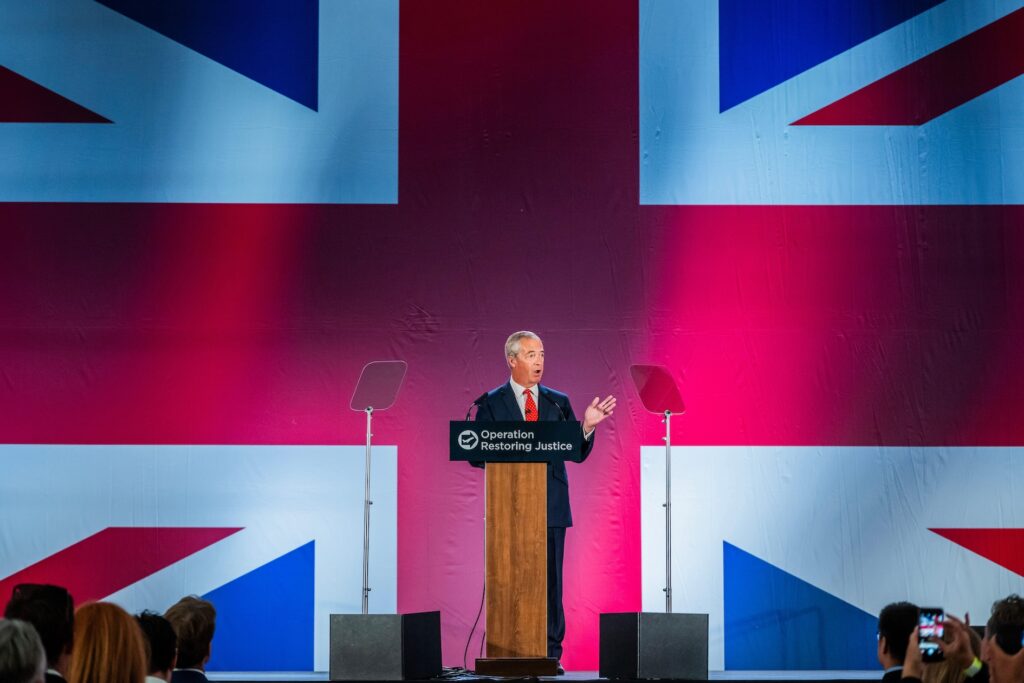
In August 2025, Farage said that Reform would deport 600,000 migrants over five years if it won power at the next general election. Under the plan, dubbed Operation Restoring Justice, Reform would make £2 billion available to offer payments or aid to countries like Afghanistan to take back migrants.
Reform touts Operation Restoring Justice as a “five-year emergency programme intended to identify, detain and deport illegal migrants in the United Kingdom.”
The party has unveiled the Illegal Migration (Mass Deportation) Bill, which would create a legal duty for the home secretary to remove those who have come to the UK illegally. According to the Operation Restoring Justice policy document, the proposed legislation would also disapply the 1951 Refugee Convention, the UN Convention Against Torture, and the Council of Europe Anti-Trafficking Convention (ECAT).
Economic policies
Reform is also in favour of sweeping tax cuts. The 2024 contract called for increasing the income tax personal allowance to £20,000 and the higher-rate income tax threshold to £70,000, as well as abolishing stamp duty on property sales under £750,000 and inheritance tax for estates valued below £2 million.
Additionally, the party planned an immediate cut in corporation tax from 25% to 20%, with a further reduction to 15% within the first three years of a parliamentary term.
Reform’s fiscal sums came in for considerable criticism at the time of the 2024 general election. The Institute for Fiscal Studies (IFS) suggested the true cost of Reform’s economic programme could be “tens of billions of pounds per year” greater than the party’s estimates.
The IFS added: “Even with the extremely optimistic assumptions about how much economic growth would increase, the sums in this manifesto do not add up.”
Evaluation question
Does a populist party need to present mathematically rigorous fiscal policies, or is the ideological signalling of tax cuts sufficient for its immediate political goals?
Keir Starmer has labelled the party’s fiscal plans as “Liz Truss 2.0”. Speaking in May 2025, Starmer said Reform’s “fantasy” policies would “crash the economy”.
Euroscepticism
Euroscepticism has been central in Reform’s development as a political force and remains core to the party’s values. Reform UK argues that the full potential of Brexit has been squandered by successive Conservative governments.
The Reform contract for the 2024 election described Brexit as the “opportunity of a lifetime” and pledged to rescind “over 6,700 retained EU laws”.
Culture policies
Reform UK is a culturally conservative party and enthusiastically engages in what are sometimes termed “culture wars”. The party’s 2024 contract argued that “woke ideology” had infiltrated “our public institutions.”
It added: “Transgender indoctrination is causing irreversible harm to children.”
The party also called for all “Diversity, Equality and Inclusion (DE&I) roles and regulations to stop two-tier policing” to be scrapped, and promoted plans for a “patriotic curriculum”.
The contract stated: “Any teaching about a period or example of British or European imperialism or slavery must be paired with the teaching of a non-European occurrence of the same to ensure balance.”
Evaluation question
To what extent does this pledge to mandate a patriotic curriculum conflict with the party’s broader ideological commitment to diminishing the role of the state?
Zia Yusuf, the Reform chairman, has since spoken of plans to “remoralise” young people, who he said were being taught to “hate their country”.
Environment and net zero
Reform UK is vehemently opposed to the UK’s net zero targets. In April 2025, Farage said that net zero could be the next Brexit, “where parliament is so hopelessly out of touch with the country”. The party’s 2024 contract set out plans to scrap net zero, which it said would “save the public sector over £30 billion per year for the next 25 years”.
Richard Tice, the deputy leader of Reform, has repeatedly referred to “net stupid zero”.
In place of current green initiatives, Reform UK intends to increase drilling for oil and gas and “fast-track” the licensing of new North Sea gas and oil projects.
Zia Yusuf, in his capacity as Reform chairman. called North Sea oil reserves a “gift from God” and argued that not exploiting these reserves is a “catastrophic act of self-harm” for the British economy. He has also described the UK’s target of achieving net zero emissions by 2050 as “religious madness”.
Government waste
Reform has campaigned prominently on ending “government waste”. Following the May 2025 local elections, Reform announced the creation of an Elon Musk-style government efficiency unit, which would examine all council spending in areas they control. In February 2026, Reform-controlled Kent County Council acknowledged that the party’s flagship “Doge” scheme failed to uncover significant waste.
Constitutional reform
Reform has articulated its support for a relatively wholesale programme of constitutional change. The party’s 2024 contract called for the House of Lords to be replaced with a “more democratic smaller alternative”, and expressed support for a referendum on replacing the current first past the post (FPTP) electoral system.
The contract stated: “Large numbers of voters have no representation in parliament and new parties are shut out of the political system. Voter turnout could be some 10% higher with PR. A referendum is needed.”
However, Reform has appeared to backtrack on its support for electoral reform. In February 2025, Farage pointed out that “first past the post can be your enemy, but there comes an inversion point at which it becomes your friend”. Farage said that looking at the polls, Reform was “literally at that inflection point”.
Evaluation question
How should the party’s shifting stance on proportional representation be interpreted: as a recognition of the majoritarian system’s benefits, or as a self-interested departure from its reform agenda?
In September 2025, Farage said he was still in favour of reforming the House of Lords as it had “become a bit of an abomination”.
Speaking to PoliticsHome, the Reform leader said: “Constitutional reform is, without doubt, needed but can it be at the top of the agenda for a Reform government given all the other problems the country is facing? No. Is it important? Yes.”
Reform UK controversies
Foreign policy and Ukraine war
Reform has come in for criticism over the evolution of its stance on Russia’s invasion of Ukraine. Farage’s political opponents regularly point out that in a 2014 interview he said he “admired” Russian president Vladimir Putin as an “operator”.
A decade later, during the 2024 general election campaign, Farage suggested the West “provoked” Russia’s invasion of Ukraine by expanding the European Union and Nato military alliance eastwards. Farage told the BBC that he had been arguing since the 1990s that “the ever eastward expansion” of the Nato military alliance and the EU was giving Putin “a reason to… say they’re coming for us again and to go to war”.
He added: “We provoked this war. Of course, it’s [Putin’s] fault.”
James Cleverly, the then home secretary, accused Farage of “echoing Putin’s vile justification for the brutal invasion of Ukraine”.
Farage and Reform have since sought to distance themselves from such stances. In February 2025, Richard Tice said his party stood “united” in support of Ukraine and against the “monstrous tyranny of that most evil, evil villain, Putin.”
However, the imprisonment of the former Welsh Reform leader and onetime Brexit Party MEP, Nathan Gill, over taking pro-Russia bribes, led to a further deluge of criticism. Ed Davey, the Liberal Democrat leader, responded that a “traitor was at the very top of Reform UK, aiding and abetting a foreign adversary.”
In October 2025, Farage argued that Britain should shoot down Russian jets if they enter Nato airspace. Speaking to Bloomberg News, Farage called Putin “a very bad dude”. The Labour Party chair, Anna Turley, accused Farage of “panicking and desperately trying to backtrack” on his views about Putin.
Ties to Trump
Nigel Farage has longstanding ties to Donald Trump, who was inaugurated as president of the United States for a second term in January 2025. Farage first spoke at a Trump rally in August 2016, when he urged Republicans to “get out there campaigning” to drum up support for the party’s nominee. Trump introduced Farage as the man who “brilliantly” led the Brexit charge in the United Kingdom.
In November 2016, Trump said Farage should be appointed as the British ambassador to the United States.
In June 2019, Trump described Farage as a “very smart person” and advised the government to “bring him in” for Brexit negotiations.
During the 2024 general election campaign, Farage initially announced that he would not return to frontline politics in order to support Trump’s third consecutive presidential campaign. In a statement, Farage said he intended to “help with the grassroots campaign in the USA in any way that I can.”
More recently, Farage has sought to distance himself from Trump, apparently responding to evidence that his perceived proximity to the US president is a political liability.
In March 2025, Farage distanced himself from Trump’s approach to Ukraine ceasefire talks, saying that Russia appeared to be “getting far too much”.
Covid vaccines
A speaker at Reform UK’s party conference in September 2025 aired the claim that the Covid vaccine caused cancer in the royal family. Aseem Malhotra, a British cardiologist and known vaccine sceptic, said that a leading oncologist had told him that “the Covid vaccines have been a factor, a significant factor in the cancer of members of the royal family”. The contribution drew immediate condemnation.
Malhotra was introduced by David Bull, Reform’s chairman, who described Malhotra as the man who “worked with me to write Reform UK’s health policy”.
Wes Streeting, the health secretary, called on Farage to “apologise and sever all ties with this dangerous extremism.”
According to a Guardian report, published in December 2025, the leaders of four of the 12 Reform-controlled councils have publicly criticised vaccinations. Linden Kemkaran, the leader of Kent County Council, suggested in September 2025 that the party should hold an inquiry into whether Covid vaccines were linked to cancer.
Reform’s 2024 contract appeared to commit the party to establishing an “excess deaths and vaccine harms public inquiry.”
The contract added: “Excess deaths are nearly as high as they were during the Covid pandemic. Young people are over-represented.”
Reform UK’s organisational structure
British political parties are traditionally constituted as unincorporated associations composed of a membership. The Brexit Party (later Reform UK), however, was founded in 2018 as a private limited company with Nigel Farage as director and majority shareholder.
Evaluation question
To what extent does Reform UK’s structure as a corporate entity, rather than a traditional membership association, concentrate disproportionate power in the hands of its leadership?
Richard Tice has described the party as an “entrepreneurial political start-up”.
This corporate arrangement concentrated significant power in Farage’s hands. This structure allowed Farage to assume Reform’s leadership during the 2024 general election campaign.
The party was able to run candidates in elections as it was registered, like all other official political parties, with the Electoral Commission.
In the wake of the election campaign, Reform’s leadership outlined its intention to move away from the party’s origins as a corporate entity. In February 2025, it was announced that Farage had relinquished control of Reform UK, and that the party would be taken over by a newly registered business called Reform 2025 Ltd. Under this structure, Farage and Tice no longer hold shares. Companies House listed Farage and Yusuf as directors of Reform 2025 Ltd at the time of the announcement.
This restructuring, ostensibly aimed at affording Reform members greater control, formed part of a drive to professionalise and democratise the party.
In September 2024, the Reform membership voted in favour of a resolution approving a new party constitution.
Under the constitution, the key features of which are outlined below, the party maintains a corporate backbone. Article 2.3 says the party exists as a “Limited Liability Company registered with Companies House (Registration Number: 11694875) in accordance with the Companies Act 2006.”
The party leader and chairman
Under the constitution, the leader’s term of office is five years, and they may be elected for successive terms.
Article 7.1 outlines that the leader “shall give political direction to the party and shall be responsible for the development of the party’s policies with the agreement of the board.”
Article 6.5 says that the leader is responsible for appointing the party treasurer, secretary, chairman and deputy leader. They may also “make such other appointments as he thinks fit”. The role and responsibilities of the deputy leader are defined by the leader.
The Reform chairman is responsible for administration and direction of the party organisation. Under Article 4.6 of the constitution, the chairman can “refuse to admit any person to membership” or refuse to renew the membership of any person. They are also responsible for chairing meetings of the board, party conference, the annual business meeting, and extraordinary general meetings. Unless they are an elected member of the board, they only hold a casting vote.
The party chairman, with the agreement of the party leader and board, may appoint a vice chairman from the board to preside in their absence.
The party board
Reform UK is governed by the board, which serves as the principal management and administrative authority of the party “in particular for the purposes of company law”, according to the Reform constitution. The board is responsible for managing funds, approving policies and manifestos, and conducting disciplinary procedures.
Under Article 6.3 of the Reform constitution, the board is composed of the party leader, the party chairman, three members appointed by the leader (two of whom must hold elected office), and three members elected by the wider membership.
The party treasurer and secretary are also ex-officio non-voting members of the board.
The board has wide-ranging powers to make rules that govern the party, including over the conduct of elected officials and members. The board can make rules “concerning the refusal of or exclusion from membership of persons or classes of persons whose admittance to membership of the Party would, in its opinion, be inimical to the interests of the party.”
The board is required to meet at least two times a year. A member of the board can be expelled if a resolution is agreed by two-thirds of fellow board members.
Elected members of the board must be on the party’s list of “approved candidates for elections to public office and offices within the party”.
Party conference
The annual conference serves as the party’s annual general meeting. It is open to all members.
Crucially, any motions or resolutions passed at Reform’s annual conference only have an advisory force.
Article 5.3 of the Reform constitution states: “Motions carried shall only have advisory force and will be listed for discussion by the board within 3 months of the motion having been carried.”
Devolved structures
Reform UK in Scotland
In 2021, Michelle Ballantyne, a former Conservative MSP, joined Reform UK and was appointed its leader in Holyrood. In the 2021 Scottish Parliament election, Reform UK did not win any seats.
In December 2025, the Conservative shadow minister, Lord Offord, defected to Reform as part of a party rally held in Falkirk. Farage welcomed Offord as “somebody who I think will have a transformative effect on our party here in Scotland”.
In January 2026, Farage appointed Offord as the leader of Reform UK Scotland.
Reform UK won 17 seats in the 2026 Scottish Parliament election.
Reform UK Wales
Former Brexit Party MEP Nathan Gill led Reform UK Wales from March 2021 to May 2021. The party failed to win any seats in the 2021 Senedd Cymru election, securing just 1.6% of the constituency vote (17,405 votes) and 1.1% of the regional list vote (11,730 votes).
In February 2026, Farage named former Conservative councillor Dan Thomas as Reform UK’s leader in Wales. Farage also unveiled James Evans, a former Conservative shadow cabinet minister, as a new Reform recruit.
Reform UK won 34 seats in the 2026 Senedd Cymru election. The party, the second largest in the Senedd, nominated Thomas as Welsh first minister. He was defeated in the roll-call ballot by Plaid Cymru’s Rhun ap Iorwerth.
In his inaugural contribution, Thomas said that his party would act as a “robust opposition”, vowing to “break up the cosy consensus that has presided over 27 years of managed decline in this country.”
He stated: “I would like to remind Plaid Cymru that this chamber has a pro-union majority, and Reform will work with all pro-union parties to block taxpayers’ money being spent on an independence commission.
“The future of a prosperous Wales lies within a successful United Kingdom, and Reform will ensure that that union prevails.”
Northern Ireland
In March 2024, Reform UK formed an electoral pact with the Traditional Unionist Voice (TUV), led by Jim Allister. This alliance emerged following the Democratic Unionist Party’s (DUP) decision to re-enter the power-sharing executive at Stormont, a move opposed by the TUV.
It was agreed Reform would not stand candidates in Northern Ireland at the 2024 United Kingdom general election. The alliance was spearheaded by Ben Habib, the then deputy leader of Reform UK, who, like Allister, was vehemently opposed to the post-Brexit arrangements in Northern Ireland.
Reform UK and Traditional Unionist Voice signed a formal memorandum of understanding on 16 March 2024. The agreement committed both parties to “cooperate in providing and mutually supporting candidates in Northern Ireland” on the basis of a shared platform.
The memorandum emphasised vaguely Thatcherite principles, including the defence and “strengthening of the Union between Great Britain and Northern Ireland”, the “completion” of Brexit to ensure that the United Kingdom enjoys “full independence and economic freedom”, the implementation of “robust” immigration controls, and the establishment of a tax system designed to “reward work”.
On these terms, TUV candidates in the 2024 general election appeared under a joint Reform UK-TUV logo.
Nigel Farage, however, upon returning to the political frontline, appeared to distance himself from the alliance by endorsing some DUP MPs. Notably, Farage endorsed Ian Paisley Jr, against whom Allister was standing in the North Antrim constituency.
Allister responded that the TUV party entered an electoral arrangement with Reform UK “in good faith” and called Farage’s stance “disappointing”.
Allister later argued that Farage had made “dubious” comments about Northern Ireland. The TUV leader said Farage’s contribution to the Brexit debate was “unparalleled” – but referenced “some idiosyncrasies that come to the surface from time to time”.
Allister told BBC Radio Ulster‘s Talkback programme: “There have been one or two dubious utterances relating to Northern Ireland, ‘the Northern Ireland thing’, and indeed some previous comments about Irish unity and matters like that”.
Allister ultimately unseated Paisley Jr in North Antrim, winning 28.3% of the vote. As a TUV MP, Allister decided not to take the Reform whip, instead saying he would support the party in areas of mutual interest.
Leadership challenges and votes of no confidence
A leadership election is held in the event of a vacancy, upon the completion of the party leader’s term in office, or upon the passing of a vote of no confidence. The party board is responsible for setting the election rules, including as they relate to eligibility and nomination.
Under the constitution, such a contest is required to be held within 90 days of the completion of a leader’s term in office.
In the event of a resignation, the outgoing leader must inform the party chairman, who then summons an emergency meeting of the board within 28 days.
A contested election for the leadership is decided by a simple majority of the votes cast by those who have been members of the party at least 180 days before the election is called.
A motion of no confidence in the party leader can be triggered in two specific ways. If the party has more than 100 MPs, 50% of the parliamentary party can request a motion by writing to the chairman. Alternatively, 50% of all members can petition the chairman in writing “requesting a motion of no confidence.”
A successful vote of no-confidence creates a leadership vacancy, precipitating an internal election.
Reform UK membership
In December 2025, Reform claimed to be the largest political party in Britain, overtaking Labour. The party made this claim upon passing 268,000 members.
Reform claimed to pass the Conservative Party’s membership total in December 2024. Farage hailed this milestone as a “historic moment”, while Zia Yusuf said Reform had broken the “centuries-long stranglehold on the centre-right of British politics by the Tories”.
Farage’s statement sparked a row with Kemi Badenoch, the new Tory leader, who suggested that Reform’s membership figures were fabricated. Badenoch said Reform’s membership ticker was “coded to tick up automatically”.
She added: “This kind of fakery gets found out pretty quickly, although not before many are fooled.”
In response, Farage offered to invite “one of the Big 4 firms in to audit” Reform’s membership as long as the Conservative Party did the same. He subsequently confirmed that Reform’s “membership numbers are correct and have now been verified by the media”.
Farage stated: “Kemi Badenoch says she wants to rebuild trust in politics. She should start by apologising to me.”
Under the Reform constitution, Article 4.16.1 prevents members from doing any act which “brings the party into disrepute” or “is intended to damage the Party’s interests.”
Parliamentary candidate selection
The process for selecting candidates is managed through a list of approved individuals.
Reform’s board maintains strict oversight over the selection process. Those who wish to be placed on the list must make a written application, which must disclose “any material fact, political or personal that has or may have a bearing on their suitability for selection as a candidate.”
Candidates who are approved remain under a “continuing duty” to disclose any facts which may affect their suitability to stand as a candidate.
Under Article 12.5, the Reform chairman can suspend any candidate if they “will or may damage the reputation or interests of the party.”
In the event of a by-election, the candidate selection is made directly by the party leader “in consultation with the constituency association or branch.”
Restore Britain
Restore Britain is a right-wing political party in the United Kingdom, led by Rupert Lowe, the former Reform MP for Great Yarmouth.
After Lowe’s tenure with Reform UK ended contentiously in March 2025, he established Restore Britain. It originally launched as a pressure group and political movement on 30 June 2025. Lowe then announced its transition to a registered political party in February 2026.
The party serves as an electoral challenger to Reform UK on the right, positioning itself as a harder-line alternative. Commentators, noting the party’s stridently nationalist, socially conservative and economically libertarian platform, have referred to Restore as “far-right”.
Evaluation question
To what extent can Restore Britain be considered a credible challenge to Reform UK on the right of British politics?
Restore’s stated objectives include reversing mass migration.
Lowe argues that demographic changes are unacceptable and pledges to reverse immigration trends.
Restore’s official literature states: “Mass immigration has been a disaster for Britain. It has left us poorer, less safe, and less culturally and socially cohesive. By 2030 native British births will account for fewer than 50% of total births in Britain. By 2070, native Brits will be an absolute minority.
“In order to avert this, Restore Britain will reverse mass immigration. If a legally resident foreign national is unable to speak English, lives in social housing, claims benefits, refuses to work, fails to integrate, commits crime or actively hates our way of life and wishes to do us harm, they will be deported.”
The party adds: “If that means millions go, then millions go.”
Restore has also called for the abolition of the asylum system and all indefinite leave to remain (ILR) benefits.
The party’s policy dictates that any foreign national who covers up or enables abuse would face automatic deportation, stating: “If a foreign national mother, sister, or wife knew about the abuse and failed to report it, they will be treated as accessories and stripped of any right to remain.”
Restore advocates the abolition of inheritance tax. A Restore Britain policy paper argues that abolishing the tax would ensure “that the wealth created by hard-working Britons can be passed on to their loved ones rather than confiscated by the state.”
The party calls for the Equality Act 2010 to be repealed in full.
Restore generally embraces a so-called “anti-woke” agenda.
It has called for the BBC to be defunded, the niqab to be banned in public spaces, halal and kosher slaughter methods to be prohibited, a referendum on the death penalty, and legalising pepper spray for self-defence.
In February 2026, party officials stated that Restore membership had reached 100,000 individuals.
Who votes for Reform UK? (Demographics of support)
The following data is drawn from the study of the 2024 general election conducted by Ipsos.
Age: At the 2024 general election, Reform increased its share of the vote in every age bracket (compared to the Brexit Party in 2019). But support for Reform UK tends to be stronger among older age groups.
Reform won 17% and 19% of the vote among the 45-54 and 55-64 age groups respectively. Comparatively, the party won an estimated 8% of the vote among 18-24-year-olds.
Gender: Reform UK performed better among men (17%) than women (13%) at the 2024 general election.
Education: Reform performed best among those with no qualifications (18%). Support for the party fell sharply among voters with a degree or higher (7%).
At the 2025 local elections, Curtice calculated that support for Reform averaged 43% in wards where more than half of adults had “few, if any, educational qualifications”. The party polled 19% “where more than two in five” had a degree. Reform’s lowest share of the vote (3.7%) reportedly came in the Parks ward in Oxford.
Social class: Reform UK won 25% of the vote in the C2 social grade (skilled manual occupations) and 17% of the vote among the DE social grade (semi-skilled and unskilled manual occupations, as well as the unemployed). Comparatively, the party won 9% of the vote among the AB social grade (higher and intermediate managerial, administrative, professional occupations).
These data suggests Reform performed better among working-class voters.
At the 2025 local elections, leading pollster Sir John Curtice estimated that Reform UK won an average of 39% of the vote in heavily working-class wards but only 19% in the most middle-class ones.
Ethnicity: Reform secured 16% of the vote among white voters, compared with just 3% among ethnic minority voters as a whole and just 1% among Black voters, according to Ipsos.
Brexit: Reform UK won 29% of those who voted Leave in the 2016 referendum on Britain’s membership of the EU. The party placed second among those who voted Leave, behind the Conservatives on 38%.
Reform, the former Brexit Party, secured only 3% of the vote among those who voted to remain in the EU in the 2016 Brexit referendum.
History and emergence as a significant force
The rise of Nigel Farage
Nigel Farage has been a prominent figure in British politics for at least two decades.
Farage was a founding member of the UK Independence Party (Ukip) in 1993, having previously been associated with the eurosceptic Anti-Federalist League (AFL). The AFL was formed by academic Alan Sked to oppose the signing of the Maastricht Treaty, the foundation treaty of the EU.
Farage, a commodities trader, had voted for the Green Party in the 1989 European election due to their eurosceptic policies.
In the 1990s, Ukip operated mostly on the margins of British politics. It was initially overshadowed by the Referendum Party, led by James Goldsmith, which stood candidates in 547 constituencies at the 1997 general election, winning 811,849 votes (2.6%). Ukip stood 193 candidates and secured 105,722 votes (0.3%).
The Referendum Party’s decline after Goldsmith’s death in 1997 created space for Ukip’s political and electoral development.
Farage became Ukip chairman in 1998, shortly before the party secured three seats in the 1999 European parliament elections. Aided by the parliament’s proportional electoral system, Ukip secured three seats – including one for Farage.
Farage sought to sharpen Ukip’s image by appropriating populist and anti-establishment positions, including on immigration. This strategic initiative put him at odds with Sked. The party founder believed that Ukip’s embrace of ultraconservative messaging would narrow its electoral appeal and dilute its euroscepticism. Sked resigned from Ukip in 1997.
At the 2004 European parliament elections, Ukip increased its representation to 12 MEPs.
In 2006, David Cameron, the recently elected leader of the Conservative Party, referred to Ukip as consisting of “fruitcakes”, “loonies” and “closet racists”. Farage demanded an apology. “Let him tell us anything that we have said that could be construed as remotely racist, otherwise we demand an apology”, he said.
At the 2010 general election, Ukip won 919,546 votes (3.1%).
Ahead of polling day, Farage had stood down as leader to focus on his campaign for the Buckingham constituency – which was then represented by commons speaker John Bercow. By convention, the major parties do not contest the speaker’s seat at election time. Farage, who was badly injured in an aircraft crash on polling day, finished third with 8,410 votes (17.4%). He later admitted it was a “miscalculation” to try and unseat Bercow.
Peak Ukip and subsequent decline
Ukip achieved its electoral peak at the 2014 European parliament elections. The party secured 27.5% of the vote, winning 24 of the UK’s 73 seats in the European parliament. This represented an 11-seat increase on its 2009 performance and marked the high point of its electoral success.
Mere months later, Ukip gained its first MP in the form of Conservative defector Douglas Carswell. Carswell triggered a by-election in his Clacton constituency – and won it. He was followed by Mark Reckless, the MP for Rochester and Strood.
At the 2015 general election, Farage’s party secured 12.6% of the vote, finishing third in terms of votes cast, but only one seat (Carswell in Clacton). Farage, having failed to win the South Thanet constituency, initially stepped down as leader, but found his resignation rejected by Ukip’s national executive committee.
From 2010 to 2015, Ukip exerted considerable centrifugal pressure on the Conservative Party. This relationship was a critical factor in shaping Cameron’s 2013 pledge to hold an ‘in-out’ referendum on EU membership.
Farage was technically segregated from the official Vote Leave campaign during the 2016 referendum, which was headed by Dominic Cummings. But Ukip nonetheless played a significant role in the referendum campaign, as a pro-‘leave’ outrider that could appeal to voters with messaging Cummings was reluctant to embrace. Ukip’s “Breaking Point” poster, which depicted Syrian refugees near the Croatia-Slovenia border in 2015, drew condemnation from the official Britain Stronger in Europe and Vote Leave campaigns.
After the Brexit vote in 2016, with Farage seeking to step back as Ukip leader, the party descended into bitter internal disputes. Under the leadership of Paul Nuttall, Ukip won only 1.8% of the vote at the 2017 general election. In a June 2017 interview, Farage said he regretted the “reluctance” of Ukip to evolve and rebrand following the Brexit referendum.
He told Sky News: “I don’t think there’s any secret about the fact that in my last 18 months as leader I was very frustrated at the reluctance of the party to change.
“I wanted to completely rebrand it and [make it like the populist, anti-establishment] Five Star party in Italy.”
In 2018, Gerard Batten was elected unopposed in Ukip’s fourth leadership contest in 18 months. Batten shifted the party’s focus towards criticising Islam, and forged close ties with far-right activist Tommy Robinson. This move prompted a wave of resignations, including that of Farage.
Farage said Batten was “obsessed” with Islam and argued that “Ukip wasn’t founded to be a party based on fighting a religious crusade”.
The Brexit Party
During Theresa May’s tenure as prime minister, Farage repeatedly hinted at a possible political comeback. Speaking in the wake of the 2017 general election, the former Ukip leader said he would have “no choice” but to return to frontline politics if he felt Brexit was threatened.
In August 2018, after May outlined her Brexit strategy in a cabinet meeting at Chequers, Farage announced that he would take part in a battle-bus tour by campaign group Leave Means Leave. The pro-Brexit organisation, which emerged from the EU referendum campaign, was co-founded by Richard Tice in July 2016. Farage had previously worked with Tice, who began donating to Ukip in 2013, on the Leave.EU campaign.
The Brexit Party was incorporated on 23 November 2018. Catherine Blaiklock, a former Ukip economics spokesperson, served as the party’s initial leader. Blaiklock applied to register the new party with the Electoral Commission on 11 January 2019, saying it would be ready to fight any snap general election.
On 20 January, Farage said that Blaiklock had founded the party with his “full knowledge” and “full support”. Asked what role he would take in the new party, Farage told the Sun on Sunday: “It’s very early days.”
The comments came after May’s Brexit deal was rejected by 432 votes to 202 in the House of Commons – the largest defeat for a sitting government in modern parliamentary history – on 15 January.
On 5 February, the Brexit Party was officially recognised by the Electoral Commission with Blaiklock as leader. Writing in the Telegraph, Farage said he would stand as a Brexit Party candidate if Britain had not left the EU in time for the European parliament elections in May.
The Brexit Party constitution was eventually obtained following a freedom of information request. The party’s constitution defined its objectives in vaguely Thatcherite terms, asserting that it would seek to “diminish the role of the state”, lower the burden of taxation, and strengthen and guarantee the “essential, traditional freedoms and liberties of all people in the United Kingdom.”
The Brexit Party’s placeholder constitution said the United Kingdom should “only be governed by her own citizens” and “cease to be a member of the European Union.”
The FoI disclosure also revealed that the Electoral Commission initially told Blaiklock that her proposed constitution “appears to be the same as the constitution for the UK Independence Party.”
The commission added: “My initial view is that the constitution that you have provided does not adequately show the structure and organisation of the party. This is partly because it appears to be the structure of another party and partly as it will likely be difficult for a new party to entirely adopt such a large structure from point of registration – it would therefore not demonstrate the structure of your party.”
Blaiklock responded with amendments.
The commission further questioned who would be the overall leader of the party, given media reports that Farage could soon assume overall control. The commission said: “If this were the case, then it is not clear that the proposed leader is the overall leader of the party, as required by [Political Parties, Elections and Referendums Act 2000].”
Moreover, the proposed constitution stated that an extraordinary general meeting (EGM) and “no-confidence” vote in the leader could only be called by members if 50% of the party’s branches voted for it. However, the commission noted that, at the time of registration, the party had zero branches.
Overall, the correspondence suggested the party’s registration was handled with significant haste. Blaiklock repeatedly submitted the party’s “financial scheme” with the grey template text still inside. Multiple “FINAL VERSION” emails were sent before the scheme satisfied the commission.
As Blaiklock battled for registration, Ukip’s concerns that the Brexit Party name was too similar to its description (“UKIP Make Brexit Happen”) were dismissed by the commission.
A second “meaningful vote” on May’s Brexit deal was held in March 2019. MPs again rejected the withdrawal agreement by 391 votes to 242. On 20 March, May’s government sent a letter to Donald Tusk, the president of the European Council, asking for an extension of the Article 50 period until 30 June 2019.
A third meaningful vote on May’s deal was rejected by 286 votes to 244 on 29 March. As a result, May announced she would seek a further extension to the Article 50 process. The UK and EU ultimately agreed to extend Article 50 until 31 October 2019.
This meant the UK would fight the European Parliament elections.
On 20 March, Blaiklock resigned as leader of the Brexit Party after reports emerged that she had repeatedly posted and reposted racist social media messages. The posts reportedly came from an account that Blaiklock deleted shortly after she founded the Brexit Party.
In a statement, she said: “The out-of-character comments that I made on social media some time ago were unacceptable in tone and content. After speaking to Nigel Farage, I realise that my comments fall well short of what is expected in any walk of life.
“I have accordingly tendered my resignation as party leader.”
Two days later on 22 March, Farage announced he would take over from Blaiklock as Brexit Party leader.
On 12 April 2019, Farage officially launched the Brexit Party, unveiling an “impressive list” of 70 candidates for the upcoming elections. The list included Tice, as well as Annunziata Rees-Mogg, the sister of Conservative MP Jacob Rees-Mogg; Paul Nuttall, the former Ukip leader; Ann Widdecombe, the former Conservative MP and minister; Rupert Lowe, the former chairman of Southampton Football Club; Ben Habib, a British-Pakistani businessman; Nathan Gill, the former leader of Ukip in Wales; and Martin Daubney, the former editor of the men’s lifestyle magazine Loaded.
Farage declared: “This party is not here just to fight the European elections… this party is not just to express our anger – 23 May is the first step of the Brexit Party. We will change politics for good.”
Tice was appointed to the role of party chairman.
The Brexit Party topped the European Parliament elections in Britain with 31.6% of the vote, securing 29 seats. It emerged as the largest single party in the European parliament. The Conservatives suffered their worst national election result since the 1832 Great Reform Act, finishing in fifth place with just 9.1% of the vote and four MEPs (down 15).
On 24 May, between polling day and the declaration of results, Theresa May announced her intention to resign as prime minister. She was succeeded by Boris Johnson as Conservative leader and prime minister in July 2019. Blaiklock reportedly applied to join the Tories on the day Johnson became leader; her application was rejected.
The months from July 2019 to October 2019 represented some of the most tumultuous of the Brexit years. Johnson, having unlawfully prorogued parliament and begrudgingly applied for a further Brexit extension, forced through a vote on holding a general election in December.
In the wake of the European Parliament elections, Farage vowed to stand Brexit Party candidates at a future general election. On 1 November, launching the Brexit Party’s campaign, Farage called on Johnson to “build a leave alliance” and drop his renegotiated deal with the EU. Otherwise, he said, the Brexit Party would “contest every single seat in England, Scotland and Wales.”
On 11 November, Farage announced that the Brexit Party would stand down its candidates in the 317 constituencies won by the Conservatives at the 2017 general election. The decision came amid fears that Farage’s party could split the pro-Brexit vote. Farage had previously announced that he would not stand at the general election, saying he could “serve the cause better” campaigning across the country.
In the end, the Brexit Party stood 275 candidates, winning zero seats and 2.0% of the vote.
Reacting to the general election result, a Conservative majority of 80 seats, Farage said: “This victory for Boris was hugely helped by us and is far better than the Marxist Corbyn and a second referendum.”
From the Brexit Party to Reform UK
During the 2019 general election campaign, Farage said the Brexit Party would change its name to the “Reform Party” after the UK left the European Union. The restyled party would campaign for changes to the voting system and the abolition of the House of Lords, Farage said.
The Reform name was a conscious reference to the Reform Party of Canada, which, under the leadership of Preston Manning from 1987 to 2000, supplanted the established Progressive Conservative Party as the largest party of the right in Canada. The Canadian Reform Party and the Progressive Conservatives eventually merged, creating a new more populist-flavoured conservative party.
One year later in November 2020, Farage and Richard Tice wrote a joint article for the Telegraph, announcing that the Brexit Party would be relaunched as “Reform UK”. Under this new name, subject to approval from the Electoral Commission, the party would oppose Covid-19 lockdown measures.
Tice and Farage wrote: “We are showing the courage needed to take on consensus thinking and vested interests on Covid. But there are so many areas of public life that can be improved to benefit ordinary people. That is why we will campaign for Reform.”
The Reform UK rebrand was approved by the Electoral Commission in January 2021.
On 11 January, the party gained its first elected representative when the former Conservative MSP, Michelle Ballantyne, joined as leader of the Scottish wing of Reform UK.
Farage stepped down as Reform leader in March 2021 and was replaced by Tice. Farage took on the role of “honorary president” of the party. David Bull was appointed as deputy leader, and Nathan Gill became the leader of Reform UK Wales.
In May 2021, the party performed poorly in the Scottish Parliament, Senedd, London Assembly, and assorted mayoral elections. Ballantyne lost her seat in the Scottish Parliament, having only received 779 votes (0.2%). Ballantyne later quit as Reform UK leader in Scotland.
Tice, who stood in the Havering and Redbridge constituency in the London Assembly election, won only 5,143 votes (3.1%). Reform won only 1.0% of the vote in the London-wide list.
Tice and Reform supported the candidacy of Laurence Fox, the leader of the short-lived Reclaim Party, in the London mayoral election. Farage also endorsed Fox, an actor, who went on to win 1.9% of the vote.
In the English local elections, Reform gained just two councillors. The party lost its deposit in the Hartlepool by-election, winning only 368 votes (1.2%).
The party won 1.6% of the constituency vote and 1.1% of the regional list vote in the Senedd election.
The rise of Reform UK
Reform UK began to achieve greater prominence in late 2022. In November 2022, writing for the Telegraph as Reform’s honorary president, Farage said Tice was preparing to stand a full slate of candidates at the next general election.
In May 2023, Farage said he regretted standing aside for Conservative incumbents at the 2019 general election and was thinking “very hard” about returning to frontline politics.
During Rishi Sunak’s tenure as prime minister, Reform UK established itself as a vocal threat to the right of the Conservatives. Farage had expressed support for the so-called “mini-budget” of September 2022, which was championed by Liz Truss as prime minister.
In October 2023, Ben Habib was appointed as co-deputy leader of Reform UK alongside David Bull. Habib stood as the party’s candidate in the Wellingborough by-election on 15 February 2024, winning 13% of the vote.
At the time, the party under Tice’s leadership was polling at around 10% of the vote nationally. The party’s appeal was defined by its stances on both legal and illegal immigration. As prime minister, Sunak had made “stop the boats” one of his five pledges for government.
Habib was the leading force behind the TUV-Reform pact, announced in March 2024. Under the pact, Reform and the TUV, a hardline unionist party in Northern Ireland, pledged to announce “agreed candidates” for constituencies in Northern Ireland at the upcoming general election.
Reform underperformed nationally in the 2024 local elections; the party contested 323 seats, winning 14. However, subsequent analysis found that the party squeezed the Conservative vote in areas such as Hartlepool, Plymouth and Sandwell.
On 22 May 2024, Sunak defied Westminster’s expectations and called a general election for the summer. Farage, who claimed Sunak called the election to scupper his plans to return to frontline politics, initially announced that he would not stand in the general election as a Reform candidate. The former party leader claimed that a six-week campaign was not “long enough to find a constituency seat and campaign around the country”.
Farage’s subsequent U-turn helped inspire a parliamentary breakthrough for the party. The party secured its first MP with Lee Anderson’s defection in March; it went on to win a total of five MPs at the 2024 general election. Anderson was re-elected in Ashfield; Farage and Tice, who reassumed the post of party chairman, won the seats of Clacton and Boston and Skegness respectively.
In the wake of the general election, Farage unilaterally ousted the party’s two deputy leaders, Bull and Habib. Zia Yusuf, a multi-millionaire donor to the party, was appointed party chairman; Tice took on the role of deputy leader.
Habib officially quit Reform on 28 November 2024, citing concerns over the party’s structure as well as “fundamental differences” with Farage. In June 2025, Habib announced the formation of a new political party, Advance UK, positioned to the right of Reform.
Habib announced that Advance UK would de-register as a political party in June 2026 and threw his support behind Rupert Lowe’s Restore Britain.




- Research the impact of the Reform Party of Canada in the 1990s, assessing the extent to which its strategy of squeezing the traditional centre-right vote provides a blueprint for Reform UK’s approach to the Conservative Party.
- Compare the electoral threat posed by the Referendum Party at the 1997 general election with the impact of Reform UK at the 2024 general election.
- Research the parliamentary defections from the Conservative Party to Reform UK. Analyse the ideological and strategic motivations behind these moves and their impact on the balance of power on the British right.
- Evaluate the view that Labour and the Conservatives continue to command the political landscape.
- ‘Two-party dominance in Britain is a thing of the past.’ Analyse and evaluate this statement.
- ‘The United Kingdom is now a fragmented multi-party democracy trapped within a two-party electoral system.’ Analyse and evaluate this statement.
- Evaluate the view that political participation in the UK has fallen to crisis levels.
- Multi-party politics → Evolving from the single-issue Brexit Party, Reform UK operates as a right-wing populist insurgent force. Its prominence is a challenge to the established parties and reflects the fragmentation of the party-system.
- Conservatives → The steady stream of high-profile Conservative defections, including former cabinet ministers like Robert Jenrick and Suella Braverman, suggests that Reform may have broken the Conservative monopoly on the right. The question of whether the two parties can coexist, compete, or eventually merge is likely to define the future shape of right-wing politics in Britain.