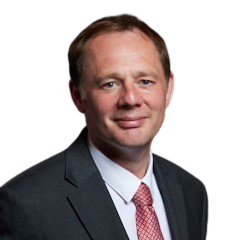
Richard Baker is the Labour MP for Glenrothes and Mid Fife, having first been elected to parliament at the 2024 general election.
In the 2024 general election, Baker won 15,994 votes, representing 44.3% of the vote. The Scottish National Party (SNP) candidate, John Beare, received 13,040 votes (36.1%), while the Reform UK candidate, Ian Smith, secured 3,528 votes (9.8%). Baker was duly elected with a majority of 2,954.
The Glenrothes and Mid Fife constituency was renamed as such (previously Glenrothes) ahead of the 2024 general election. The seat was held by Labour from 2005 until 2015, then by the SNP from 2015 to 2024.
Baker’s immediate predecessor was Peter Grant of the SNP. Grant represented the seat from 2015 to 2024.
Political Career
Baker is a member of the House of Commons public administration and constitutional affairs committee (since October 2024). PACAC examines how the country is run, covering both the machinery of government and the UK’s constitutional rules. It is the principal select committee to which Cabinet Office ministers are accountable.
In May 2026, Baker publicly called for Keir Starmer, the prime minister, to step down/set out a timetable for his departure. The move followed the 2026 local elections and devolved elections to the Scottish Parliament and Senedd Cymru.
Baker serves as a member of the all-party parliamentary groups (APPGs) for defibrillators (co-chair), digital communities and Estonia.
Baker delivered his maiden speech on 23 July 2024 in a debate on immigration and home affairs.
In it, he said: “I am a new member in this parliament, but I was privileged to serve in the Scottish Parliament for 12 years… I believe that there are still too few opportunities for members of each of our UK parliaments to work together on many matters of shared responsibility and interest. I hope that there can be greater collaboration between all our parliamentarians in the course of the next five years.”
He added: “My father-in-law Jim was a proud member of the National Union of Mineworkers. When I stood for election to this place in 2015, he gave me a miner’s lamp to bring with me to Westminster if I won, to remind me what I was here to do…
“10 years later, the lamp will be with me here in Westminster, and it will remind me why I am here: to deliver the change that our country needs and to show that, through political action, we can deliver the stronger, fairer society that so many people in my constituency gave so much to achieve.”
Before entering the parliament at Westminster, Baker served as a member of the Scottish Parliament (MSP) for the North East Scotland region from 2003 until 2016. When first elected, he was the youngest sitting MSP. During his time as an MSP, he held roles in the Scottish Labour shadow cabinet, including shadow cabinet secretary for justice and shadow cabinet secretary for finance.
Baker unsuccessfully contested the Aberdeen North constituency in the 2015 UK general election, losing to the SNP candidate Kirsty Blackman.
Baker also contested the Scottish Labour Party deputy leadership election in 2015, placing third. He won 30.4% of the vote in the first round.
Baker resigned his Scottish Parliament seat in January 2016 to take up a role with the charity Age Scotland.
Political views
Leadership elections and loyalty
Labour deputy leadership 2025: Baker was one of 117 Labour MPs who nominated Lucy Powell for the party’s deputy leadership in September 2025. The election followed the resignation of Angela Rayner, who stepped down as deputy prime minister and deputy party leader after an investigation into her tax affairs. It marked the first time since 2007 that Labour had held a deputy leadership contest while in government.
Powell, the former leader of the House of Commons, was seen as a candidate representing the party’s “soft left”; she was supported by leading soft left figures including Ed Miliband and Andy Burnham. She secured 117 nominations from the Parliamentary Labour Party (PLP), above the 80 required, and went on to win the election – defeating Bridget Phillipson with 54.3% of the vote.
Electoral reform
Fair elections APPG: Baker is listed as a member of the all-party parliamentary group (APPG) for fair elections – a cross-party group of MPs and peers that campaigns for electoral reform. The group’s stated aims include replacing the first past the post (FPTP) voting system with a form of proportional representation, eliminating “dark money” and “undemocratic influence” from politics, and countering disinformation.
Electoral reform amendment: In May 2026, Baker was one of over 70 Labour MPs who signed an amendment to the Representation of the People Bill, calling on the government to establish a “national commission on electoral reform”. Tabled by Alex Sobel as chair of the fair elections APPG, the amendment aimed to force a rethink of the first past the post voting system.
At the time, Sobel described FPTP as “one of the biggest examples of a broken status quo in UK politics.” He invited colleagues to join this “common sense call to take a fresh look at how parliament is elected in modern Britain.”
Proportional representation bill: In December 2024, Baker voted in favour of the Elections (Proportional Representation) Bill – introduced by Liberal Democrat frontbencher Sarah Olney under the 10-minute rule procedure. The bill sought to “introduce a system of proportional representation for parliamentary elections and for local government elections in England”.
A total of 138 MPs supported the bill – with 136 opposed. Notably, 59 Labour MPs backed Olney’s bill.
Introducing the bill, Olney told the House: “First past the post is a broken and unfair system. This summer, the Labour party won a landslide election victory, securing 63% of seats in the House of Commons in return for just 34% of the vote.
“The system leaves millions of voices unheard and creates a divisive, adversarial political climate where collaboration is discouraged and accountability is often sidestepped.”
Welfare
Welfare ‘reasoned amendment’ (June 2025): Baker was one of the over 120 Labour MPs to sign the reasoned amendment to the government’s flagship welfare bill which aimed to reject the proposed legislation.
The amendment, in the name of senior Labour MP Dame Meg Hillier, objected to the fact that the bill had not been subject to a “formal consultation with disabled people” and that “250,000 people will be pushed into poverty” as a result of it, according to a government impact assessment.
The motion also called on the government to wait for the publication of the review into the Personal Independence Payment (Pip), helmed by minister Sir Stephen Timms, and the independent review, conducted by Sir Charlie Mayfield, into how the employment of disabled people could be boosted.
In an article for The House magazine, Baker explained his decision to support the amendment.
He wrote: “A key factor in my decision to support the reasoned amendment to the Universal Credit and Personal Independence Payments Bill was that I wanted to see far greater involvement of disabled people in the key decisions which will affect their future.
“Many disabled people’s organisations remain concerned about the reduction in payments for new claimants of the health element of Universal Credit, even as the standard rate increases for all claimants. However, an important change secured in the amended Bill is the commitment to involve disabled people’s organisations in shaping future reforms.
“This inclusion must go beyond PIP and the Timms Review and into the heart of reform of employability policy too.”
Welfare vote (July 2025): Baker voted in favour of the government’s flagship welfare bill at second reading. The vote came after ministers agreed to significant concessions to avoid defeat via a mass rebellion of Labour MPs on 1 July 2025.
Assisted dying
Baker voted against the Terminally Ill Adults (End of Life) Bill, better known as the assisted dying bill, at both second reading (November 2024) and third reading (June 2025).
Before Politics
Born Richard James Baker on 29 May 1974 in Edinburgh, his father was an Episcopalian priest and his mother a teacher.
He attended St Bees School, a school in Cumbria, and graduated from the University of Aberdeen.
He served as president of the National Union of Students (NUS) Scotland from 1998 to 2000, having previously been senior vice-president of Aberdeen University Students’ Association (1995-1996).
Before becoming an MSP, he worked as the Scottish press officer for the charity Help the Aged.
Personal Life
Baker is married to Claire Baker, who has served as a Labour MSP. They have one daughter.
His father-in-law, Jim, was a member of the National Union of Mineworkers.
Baker is godson to the former Episcopalian Bishop of Aberdeen, Bruce Cameron.
Trivia
Baker was the youngest sitting MSP when first elected to the Scottish Parliament in 2003.
Richard Baker has not written for Politics.co.uk.