Green
The Green Party of England and Wales (GPEW), commonly referred to as the Green Party, has steadily emerged from the fringes of British politics to establish itself as an increasingly recognised, albeit smaller, political entity.
It represents a broad environmentalist and progressive platform, advocating for a transition to a “zero-carbon society”, the renationalisation of public services and significant political reform. The party has achieved notable electoral progress in recent years, particularly at the local government level, culminating in a historic gain of four MPs in the 2024 general election. For the first time, the Greens expanded their parliamentary footprint beyond their long-held seat in Brighton, gaining three additional seats in Bristol Central, North Herefordshire, and Waveney Valley.
In September 2025, Zack Polanski was elected as the leader of the party, securing 84.1% of the membership vote. Under Polanski, a member of the London Assembly (AM) and self-declared “eco-populist”, the party has shifted towards a model of solo leadership, having previously adopted a co-leadership model.
Ellie Chowns, who stood in the 2025 Green leadership election, currently serves as the party’s parliamentary leader.
Notable recent leaders of the Green Party include Carla Denyer and Adrian Ramsay (2021-2025), Siân Berry and Jonathan Bartley (2018-2021), and Caroline Lucas, who served two terms (2008-2012 and 2016-2018), the latter as co-leader with Bartley. Natalie Bennett also served as leader from 2012 to 2016.
House of Commons representation: Five. The Greens returned four MPs in the 2024 general election, increasing their standing to five after winning the 2026 Gorton and Denton by-election.
House of Lords representation: Two. Baroness Jones of Moulsecoomb and Baroness Bennett of Manor Castle.
Scottish Parliament representation: The Green Party of England and Wales does not stand in Scottish parliamentary elections. The Scottish Greens, its sister party, won 15 MSPs in the 2026 Scottish Parliament election – a net increase of seven.
Senedd Cymru representation: The Green Party of England and Wales won two seats in the 2026 Senedd Cymru election – a net increase of two.
The Green Party since 2010
Caroline Lucas and the 2010 breakthrough
The 2010 general election marked a historic breakthrough for the Green Party of England and Wales. Caroline Lucas, the party’s then leader, was elected as the MP for Brighton Pavilion, becoming the first Green MP in Westminster history. Her victory ended the party’s status as a purely extra-parliamentary force.
Lucas secured 31.3% of the vote in Brighton Pavilion, defeating the incumbent Labour MP, David Lepper, and overturning a notional Labour majority of over 5,000. Nationally, the Green Party’s vote share stood at 1.0% at the 2010 general election, having contested roughly 50% of the seats.
Lucas, elected as the first official leader of the Greens in September 2008, previously served in the European Parliament as an MEP for South East England, having first won election to the continental legislature in 1999.
In her maiden speech on 26 May 2010, during a debate on the environment, Lucas acknowledged an “additional responsibility… to speak not only as the new member of parliament for Brighton Pavilion, but also as the first representative of the Green Party to be elected to Westminster.”
She added: “The Green Party traces its origins back to 1973, and the issues highlighted in its first Manifesto for a Sustainable Society – including security of energy supply, tackling pollution, raising standards of welfare and striving for steady state economics – are even more urgent today.
“If our message had been heeded nearly 40 years ago, I like to think we would be much closer to the genuinely sustainable economy that we so urgently need, than we currently are today.
“We fielded 50 candidates in the 1979 general election as the Ecology Party, and began to win seats on local councils. Representation in the European Parliament and the London Assembly followed.
“Now, after nearly four decades of the kind of work on doorsteps and in council chambers which I am sure honourable members are all too familiar, we have more candidates and more members, and now our first MP.”
Lucas established herself as an active parliamentarian.
From 2010 to 2015, the Greens sought to capitalise on the disenchantment felt by Liberal Democrat voters at the party’s decision to enter into coalition with the Conservative Party. In the 2012 London mayoral election, the Green candidate, Jenny Jones, placed third on 4.5% of the vote, leapfrogging the Liberal Democrats who were reduced to fourth.
Under Lucas, the Greens moved beyond single-issue environmentalism towards a comprehensive left-wing platform. Lucas stepped down as Green leader in 2012 to focus on her parliamentary duties. She was succeeded by Natalie Bennett, an Australian-British journalist.
Bennett strengthened the Green Party’s standing as an explicitly anti-austerity alternative on Labour’s left flank. Speaking at the 2012 Green conference, Bennett called on members to “ask not what the trade unions can do for us. Ask what we can do for the trade unions.”
In the 2014 European Parliament elections, fertile territory for the party on account of the proportional electoral system, the Greens won 6.9% and increased their representation to three seats. The party once again surpassed the Liberal Democrats, who placed fourth with 6.6% of the vote and one seat.
Bennett oversaw a surge in party membership and an expansion of its representation at local government level. Opinion polls ahead of the 2015 general election suggested the Greens could surpass the Liberal Democrats in national vote share, with at least one survey placing the party on 8%. This period of advancement was characterised as a “Green surge” by commentators.
Evaluation question
Did the “Green surge” under Natalie Bennett prove that there is a permanent appetite for an anti-austerity party to the left of Labour?
The Greens won 3.8% of the vote at the 2015 general election – the party’s highest ever national vote share. However, this surge in support translated into no additional seats. Lucas was re-elected in Brighton Pavilion with an increased majority of 7,967 over Labour, but the Greens failed to make breakthroughs elsewhere. The party contested 538 seats in 2015, a significant increase on 310 in 2010.
Bennett stood in Holborn and St Pancras, one of the party’s key target seats. She finished third behind the Conservative candidate and former director of public prosecutions (DPP), Sir Keir Starmer, who was standing for the Labour Party. Bennett won a total of 7,013 votes (12.8%).
Bennett came to national prominence in the campaign, appearing alongside David Cameron and Ed Miliband in the televised party leaders’ debates. However, she was forced to apologise to party members for a car-crash LBC Radio interview, which she attributed to a “mental brain fade”.
The Brexit years
In 2016, after Bennett announced that she would not seek re-election as leader, Caroline Lucas returned to the leadership in a co-leadership arrangement with Jonathan Bartley.
The Green Party campaigned for Remain in the 2016 referendum on Britain’s membership of the European Union (EU). The party struggled to make strides during Jeremy Corbyn’s tenure as leader of the Labour Party.
Under Lucas and Bartley’s co-leadership, the Greens stood in 457 seats in the 2017 general election, securing 1.6% of the overall vote. Lucas once again increased her majority in Brighton Pavilion (to 14,699).
Lucas stood down from the co-leadership in 2018 and was succeeded by Siân Berry, a member of the London Assembly and former mayoral candidate. Under Berry and Bartley’s co-leadership, the Greens achieved their best-ever local election result in 2019, doubling their number of council seats from 178 to 372.
Berry and Bartley led the Greens into two national elections in 2019. The first, the European Parliament elections, were dominated by Brexit as the campaign’s central, defining issue. The election took place because the prime minister, Theresa May, had been forced to request a further extension to the Article 50 negotiating period (until 31 October 2019) and proved unable to pass a deal.
The Greens, alongside the Liberal Democrats and new Brexit Party, benefitted from a deep public backlash against the two main parties. The Green parties collectively secured their best-ever national result, winning more than two million votes (12.1%) and seven seats (up four).
At the 2019 general election, the Greens embraced a limited election pact with Plaid Cymru and the Liberal Democrats, which saw the parties stand aside in dozens of constituencies to boost their partners’ chances. The deal covered 60 constituencies across England and Wales.
Of the 60 constituencies, 10 had Green candidates only, including Brighton Pavilion, Bristol West, Bury St Edmunds, Cannock Chase, and Vale of Glamorgan.
This followed the Brecon and Radnorshire by-election in August 2019, which saw the Greens and Plaid Cymru stand aside in favour of the Liberal Democrats, with whom they shared an anti-Brexit stance. The Lib Dem candidate, Jane Dodds, narrowly defeated the Conservative candidate by 1,425 votes.
The Green Party’s manifesto for the 2019 general election endorsed a “people’s vote” or second Brexit referendum. The party’s vote share rose modestly to 2.7%, but it once again failed to secure a second MP. Lucas’ majority in Brighton Pavilion increased to 19,940.
The Denyer-Ramsay co-leadership
In October 2021, Carla Denyer and Adrian Ramsay were elected as Green co-leaders on a platform of “professionalising” the party’s electoral machine. Denyer and Ramsay, both longtime activists who have served as councillors, defeated Amelia Womack and Tamsin Omond by 6,273 votes to 3,902.
Ramsay served as Green deputy leader from 2008 to 2012.
Denyer and Ramsay’s tenure as Green co-leaders coincided with a period of significant electoral advancement.
In the 2022 local elections, the Green Party made a net gain of 71 seats. A year later, the Greens gained overall control of their first council, Mid Suffolk District Council, in the 2023 local elections. Mid Suffolk had previously been a minority Tory administration, reflecting the Greens’ appeal in rural areas. The party gained more than 200 councillors across England, winning a record 481 council seats nationwide. It became the largest party on East Hertfordshire District Council, Lewes District Council and Warwick District Council.
The Greens achieved their best-ever local elections results in 2024, winning a projected national vote share of 13% and a net gain of 74 seats. This took the party’s total presence in local government to 838. In Bristol, the party fell narrowly short of taking overall control, winning 34 of the 70 seats.
In June 2023, Lucas announced her intention to stand down as an MP at the subsequent general election. In a statement she outlined a plan to focus on “the challenges that drive me – the nature and climate emergencies”.
Under Denyer and Ramsay’s leadership, the Greens won a historic four seats at the 2024 general election. The result followed years of targeted campaigning, focusing the party’s resources on four specific constituencies, Brighton Pavilion, Bristol Central, Waveney Valley and North Herefordshire.
In Bristol Central, building on the party’s recent success in local government contests, Denyer defeated the incumbent Labour MP, Thangam Debbonaire, with 24,539 votes (56.6%) and a majority of 10,407. At the time, Debbonaire served on the Labour frontbench as shadow culture secretary.
Siân Berry successfully defended Brighton Pavilion following Lucas’ retirement, winning 28,809 votes (54.8%) and a majority of 14,290.
The party also secured notable breakthroughs in two rural areas. Ramsay won Waveney Valley with 20,467 votes (41.7%) and a majority of 5,593 over the second-placed Conservative candidate. Ellie Chowns won in North Herefordshire with 21,736 votes (43.2%) and a majority of 5,894 over the incumbent Conservative candidate.
Overall, Green parties in the United Kingdom secured 6.8% of the national vote – their highest ever share at a general election. The GPEW and its sister parties finished second place in 40 constituencies; in all but one of these 40 seats, the Greens finished second to Labour.
The Green Party continued its upward trajectory during the local elections on 1 May 2025. The party secured a net gain of 44 councillors, bringing its total across England and Wales to approximately 900. The party’s estimated national vote share in the 2025 local elections was 11%.
Zack Polanski and the Green leadership
Zack Polanski was elected leader of the Green Party of England and Wales in September 2025. In a decisive result, Polanski secured 84.1% of the membership vote, succeeding the co-leadership duo of Carla Denyer and Adrian Ramsay.
Polanski defeated a co-leadership joint ticket of Ramsay and Chowns. Denyer decided to step back from the leadership, choosing to focus on being the “best MP I can be, in parliament and in Bristol Central.”
Chowns was subsequently chosen by her Green colleagues in parliament to serve as the party’s parliamentary leader.
The election of Polanski, who had served as deputy leader of the Greens since September 2022, precipitated a shift away from the co-leadership model. Under the party’s rules, two deputy leaders were elected, namely Mothin Ali and Rachel Millward.
Polanski’s landslide election represented an overwhelming endorsement of his “eco-populist” platform.
Announcing his candidacy, Polanski stated: “We’re not visible enough. I don’t want to see our membership grow incrementally. I want to see us be a mass movement. There’s something here around eco-populism: still being absolutely based in evidence, science and data – and never losing that – but telling a really powerful story.”
By October 2025, mere weeks after Polanski’s election, the Greens officially reached over 120,000 members, surpassing both the Liberal Democrats and the Conservative Party.
Under Polanski’s leadership, the Greens have grown into a markedly more visible force – and a serious political threat to the Labour Party from the left. In late 2025, Lloyd Russell-Moyle, a former Labour MP, and Jamie Driscoll, the former Labour mayor of North of Tyne, defected to the Greens.
Opinion polls in January 2026 placed the party on as high as 17%. According to an Ipsos survey, published at the start of 2026, Polanski’s net favourability rating stood at -15 – better than all national political leaders with the exception of the Liberal Democrat leader, Ed Davey.
The Green Party’s surge since September 2025 has been linked to Polanski’s canny communications strategy and progressive disillusionment with the Labour Party under Keir Starmer as prime minister.
The Green Party won the Gorton and Denton by-election, held on 26 February 2026, in a historic victory. The outcome marked the first parliamentary by-election win in the Green Party’s history. Hannah Spencer, the party’s candidate, also established herself as the first Green MP to represent a constituency in the North of England.
Spencer won 14,980 votes, representing 40.7% of the total vote share. The Reform UK candidate, Matt Goodwin, secured 28.7%, while the Labour Party candidate, Angeliki Stogia, fell to a distant third with 25.4%. The last time Labour finished third in a by-election it was defending was in Mitcham and Morden in 1982.
The result of the Gorton and Denton by-election amounted to a significant setback for Starmer’s leadership – and exposed deep fractures in Britain’s established mould of politics. Together, the Greens and Reform accounted for nearly 70% of the vote.
In her victory speech, Spencer celebrated the defeat of “the parties of billionaire donors”.
She declared: “I didn’t grow up wanting to be a politician. I’m a plumber. And two weeks ago, during all this, I also qualified as a plasterer. Because even in chaos, even under pressure, I get things done. I am no different to every single person here in this constituency. I work hard. That’s what we do…
“We have shown we don’t have to accept being turned against each other. We can demand better. Together. We have shown we don’t have to fight dirty to fight for change. We ran a hopeful campaign backed by thousands of volunteers and activists. We defeated the parties of billionaire donors.
“Something exciting is happening – and I invite you to be part of it. Come and join the Green party so we can spread hope and win everywhere else across the country too. Our strength will grow as more and more of us come together.”
At the 2026 local elections, the Green Party won 587 council seats and five councils. The party also won a place in the Senedd Cymru/Welsh Parliament (two seats) for the first time.
What does the Green Party stand for?
The Greens are an environmentalist and progressive political party positioned on the left of British politics.
The party’s foundational ideological beliefs are set out in its official core values and “philosophical basis”. This latter document outlines the aims and beliefs of the party, providing the basis on which all its policies are agreed.
The opening to the Green Party’s philosophical basis states: “A system based on inequality and exploitation is threatening the future of the planet on which we depend, and encouraging reckless and environmentally damaging consumerism.
“A world based on cooperation and democracy would prioritise the many, not the few, and would not risk the planet’s future with environmental destruction and unsustainable consumption.”
The Greens’ 10-point statement of core values commits the party to “social and environmental justice, which supports a radical transformation of society for the benefit of all, and for the planet as a whole.”
The party’s 2024 general election manifesto, branded with the slogan “Real hope. Real change”, focused heavily on the cost of living and affordability. The manifesto foreword, penned by co-leaders Carla Denyer and Adrian Ramsay, argued that despite Britain’s wealth, “nurses are using food banks, our children’s schools are crumbling, a roof over our heads is all too often unaffordable, and a hospital appointment or a dentist is like gold dust.”
Denyer and Ramsay called for the creation of a “greener, fairer country… in which we are all safer, happier and more fulfilled.”
They added: “The solutions to the climate crisis are the same as those needed to end the cost of living and inequality crises, making the future not just more liveable but fairer for us all too.”
Climate crisis and transition
Traditionally, the Green Party’s political programme has been defined by its attitude towards the environment and climate change. The issue remains at the heart of the party’s policy programme.
The 2024 Green manifesto argued that the government’s climate targets did not “reflect the urgency of the climate crisis or what is required by global justice.” The party called for a transition to a zero-carbon society “as soon as possible, and more than a decade ahead of 2050.”
The party’s energy policy for the 2024 election called for 70% of electricity to be generated from wind by 2030 and a “solar rooftop revolution by mandating the use of solar panels on all new homes, where possible and appropriate.”
The Greens support a ban on all new fossil fuel extraction, including the cancellation of licences for projects like Rosebank.
The party is also staunchly anti-nuclear, viewing it as a “distraction” that is “expensive and slower to develop than renewables.”
Economy
The Green Party’s core values contend that the success of a society cannot be measured “by narrow economic indicators”. The party calls for new indicators that “take account of factors affecting the quality of life for all people: personal freedom, social equity, health, happiness, human fulfilment along with biodiversity and ecosystem health and stability.”
The Greens identify as an “anti-austerity” party.
The party’s 2024 manifesto called for a “green economic transformation”, which it said required an average of £40 billion per year in investment.
To fund this, the party proposes a fundamental shift in the UK tax system, targeting wealth and pollution. It called for an annual wealth tax of 1% on individual assets above £10 million and 2% on assets above £1 billion, and a carbon tax of £120 per tonne on fossil fuel emissions, rising to £500 per tonne within 10 years to “make polluters pay”.
The Greens support the introduction of a universal basic income (UBI), as well as the nationalisation of the water companies, railways and the “big five” retail energy companies.
The 2024 manifesto stated that elected Green MPs would “support reduced working hours and moving towards a four-day working week.”
In October 2025, Green members passed a conference motion calling for the party “to seek the effective abolition of private landlordism”.
Evaluation question
To what extent could policies like this alienate the moderate wing of the party, potentially threatening its success in rural seats?
Europe and international affairs
The Green Party is a staunchly europhile force. It opposed Brexit during the 2016 referendum campaign and later campaigned for a second vote on the terms of Britain’s withdrawal. Caroline Lucas, the former Green Party leader and MP, was a co-founder of the official People’s Vote campaign. The 2019 Green manifesto described the party as “proudly pro-European” and said it was “unequivocally campaigning for Britain to Remain in the EU.”
The party currently advocates for rejoining “as soon as the domestic political situation is favourable.” As a first step “towards full EU membership”, the party supports joining the EU customs union and restoring the free movement of people.
The 2024 Green manifesto said the UK’s foreign policy should be based on “shared commitments to democracy, peace, global solidarity and the protection of human rights”.
The manifesto called for the recognition of the state of Palestine and an end to “all UK arms exports to and military cooperation with Israel, which make the British government complicit in… war crimes.”
The party has called for the dismantling of “our nuclear weapons, cancelling the Trident programme and removing all foreign nuclear weapons from UK soil.”
The 2024 Green manifesto recognised that Nato “has an important role in ensuring the ability of its member states to respond to threats to their security”, but called for reform. This came after the Green Party’s 2023 conference voted to abandon its opposition to Nato, agreeing the rhetorical formulation that appeared in its 2024 manifesto. The vote was seen as a reaction to Russia’s war on Ukraine.
While it is not Green policy, Zack Polanski, the party’s leader since September 2025, has called for the UK to leave Nato. “Donald Trump has so much domination within Nato that I don’t believe it’s possible to reform Nato from within”, Polanski told the Guardian in January 2026.
Social policy
The party is also associated with liberal social attitudes.
The 2024 Green manifesto expressed support for the decriminalisation of personal drug use.
The party also supports gender self-identification, allowing transgender and non-binary people to be “legally recognised in their chosen gender through self-declaration.”
Constitutional reform
The Green Party advocates for a fundamental overhaul of the British state.
The 2024 Green manifesto described the political system as “out of date and badly broken”. The party also links the “crisis in our democracy” with the climate crisis.
It states: “People strongly support more investment in health services, cheaper and more accessible public transport, and the action necessary to protect people and planet.
“But self-interested corporations and vested interests mean we are not seeing the action we need. The Green Party understands that the climate crisis and the crisis in our democracy are linked.”
The party has called for a “Fair Politics Act” to end the need for voter ID, replace the first past the post electoral system with proportional representation (PR) for all parliamentary and council elections, and extend the franchise to 16- and 17-year-olds for all elections and referendums.
The Green Party also advocates for the total replacement of the House of Lords with a “fully elected second chamber”, and a constitutional commission to initiate a “vital national conversation” on a new, written constitutional settlement for the United Kingdom.
Green traditions and factions
Like all British political parties, the Green Party of England and Wales encompasses a range of internal traditions, ideological tendencies and organised factions.
These internal tensions are sometimes categorised using fruit-based metaphors. “Watermelons” are green on the outside but red in the middle – representing the eco-socialist left. “Mangoes” are green on the outside but orange in the middle, representing a more centrist, Liberal Democrat-adjacent worldview.
The watermelons versus ‘Countryfile Tories’
The Green Party contains an enduring ideological-strategic divide between its more radical, left-wing elements and a comparatively moderate, rural-oriented wing.
Historically, the party has balanced the interests of “Deep Green” conservationists – sometimes referred to as “Countryfile Tories” – with urban radicals. The “Countryfile” tradition tends to emphasise environmental protection, conservation and rural identity; the urban wing of the party is generally more outspoken about social justice, redistribution and structural economic reform.
The electoral success of co-leaders Carla Denyer and Adrian Ramsay was, in part, a consequence of their parallel appeal. Denyer built her political base in Bristol, a younger, university-centred city where the party’s principal rival has been the Labour Party. Ramsay, by contrast, emerged from Norfolk/Suffolk, a more rural and demographically older part of the country, where the Greens’ electoral competition is traditionally provided by the Conservative Party.
The four seats the party won at the 2024 general election are split evenly across this rural-urban divide. Denyer was elected in Bristol Central, unseating the incumbent Labour MP, and Siân Berry held the historic Green stronghold of Brighton Pavilion. Conversely, both Ramsay (Waveney Valley) and Ellie Chowns (North Herefordshire) won election in historically Conservative strongholds.
Denyer’s decision to step down in 2025 and the leadership contest that followed exposed this faultline. Ramsay sought re-election on a co-leadership ticket alongside Chowns. They were pitted against the party’s deputy leader, Zack Polanski, a member of the London Assembly.
Polanski’s explicitly “eco-populist” (watermelon-style) platform was popular with the party membership. Chowns and Ramsay argued that the Greens would not be able to “outshout” Reform with populist-style messaging.
During the campaign, Chowns commented: “We’re not here to hold signs. We’re here to hold power.”
Ramsay argued that the “British people have had enough with populist approaches to politics that seek to simplify everything, that are all about chasing the next headline, the next set of likes, rather than real substance.”
During an LBC Radio debate, Ramsay struggled to say whether he personally liked Polanski. Under repeated questioning, Ramsay responded that they had “worked together” and he “enjoyed working with Zack”. Iain Dale, the LBC Radio host and debate moderator, told Ramsay he could not “even bring yourself to say that you like Zack Polanski”.
Ramsay responded: “Zack is a valued colleague; I like working with Zack.”
The leadership election represented a choice for Green Party members about how they intended to confront the Labour government – whether through established institutional channels and conventional political methods, or by adopting more potentially imaginative, populist-style tactics.
Polanski’s leadership has precipitated an ideological and methodological deviation in Green Party strategy. Polanski has set up his party as a receptacle for progressive disenchantment with Labour, criticising Keir Starmer and the government from the left. The Green leader has said he would “roll out the red carpet” for left-wing MPs such as Zarah Sultana (now of Your Party) and Clive Lewis (Labour).
In a statement responding to Polanski’s election, Ramsay and Chowns congratulated the new Green leader and thanked “him for running such a strong and passionate campaign.”
They added: “Our party is in the strongest position in its history. We’re winning record numbers of seats, reaching people in every community and from across the political spectrum, and showing that Green politics is rooted in the issues that truly matter.
“As MPs, we remain fully committed to playing our part: holding this government to account and championing the policies needed for a fairer, greener and more liveable future.”
Greens Organise (GO)
Founded in September 2024, Greens Organise has emerged as the most influential modern faction within the party. GO was established by a cohort of Green activists and defectors from the Labour left, including former Jeremy Corbyn spokesperson Matt Zarb-Cousin and London Assembly member Zoë Garbett. Garbett ran as the Green candidate in the 2024 London mayoral election.
Zarb-Cousin has described the party’s new base as “disaffected, left-wing, former Corbyn supporters”.
GO’s constitution calls for “an internationalist and eco-socialist transformation of society so that resources are held in common and society is run in the interests of people, not profit”.
While GO is not officially affiliated with Zack Polanski, the two share activists, a political identity and a populist ethos.
The group has been compared to Momentum in the Labour Party and the role it played during Corbyn’s tenure as leader.
Green Left
Green Left is the party’s older anti-capitalist and eco-socialist ginger group. Launched in June 2006, the faction’s manifesto, the Headcorn Declaration, states that the group was founded on “the assumption that capitalism is a system that wrecks the planet and promotes war”.
Green Left has historically acted as a network for socialists and radicals to ensure the party remains a “‘bottom up’ political organisation where the principles of the membership are paramount”.
Green Left is officially listed as a “self-organising special interest group” within the wider party.
Green divisions over gender identity and sex-based rights
The most contentious debate experienced by the contemporary Green Party concerns gender identity and sex-based rights.
In March 2021, the Green conference voted in favour of gender self-identification.
The approved motion stated that the Greens believe “that trans, non-binary, genderqueer, third gender, and intersex people should have their gender legally recognised and be empowered to update their birth certificate and any other official documents, without medical or state encumbrance.”
Meanwhile, a motion which said women were discriminated against “solely upon their biological sex” was voted down.
The Young Greens, the party’s youth branch, supported the approved motion.
In July 2021, Berry cited the party’s dispute over gender self-ID among her reasons for stepping down as co-leader of the GPEW. Berry warned that she could “no longer make the claim” that the Green Party fully backed trans rights, following “the party’s choice of frontbench representatives”.
Berry was reportedly referring to Shahrar Ali, who served as a Green deputy leader from 2014 to 2016. In June 2021, Ali was appointed as the Green Party’s spokesperson for policing and domestic safety.
Ali, during his campaign for the Green Party leadership in 2020, released a statement which said that women were commonly defined as “an adult human female and, genetically, typified by two XX chromosomes”.
In July 2021, the Young Greens group passed a motion calling for the Green Party executive to consider terminating Ali’s appointment.
Ali stood for Green Party leadership election for a third time in 2021, placing third with 2,422 votes. During his 2021 leadership bid, Ali called for “a culture of open debate, where the taking of offence is not used as a means to prevent those who do wish to debate from doing so”.
He added: “I will defend and champion all the protected characteristics enshrined in the Equality Act 2010. This includes the sex-based rights of women and girls, some 52% of the population.”
Ali was removed from his spokesperson role in February 2022. A statement by Liz Reason, chair of the party’s executive, said that Ali was removed “from his role as party spokesperson for breaches of the speakers’ code of conduct.”
Ali vowed to “challenge this mistreatment under gender critical protected belief”.
In July 2022, Ali responded to a post by the campaign group Stonewall which said that research suggested that “children as young as two recognise their trans identity”.
Ali commented: “Off scale of safeguarding risk. Would we teach two-year-olds [the] concept of schizophrenia?”
In October 2022, members of the Scottish Green Party voted to suspend ties with the GPEW until the latter addressed “both issues of transphobia and respect for the Scottish Green Party”. The relevant motion claimed that disciplinary action from GPEW had been “lethargic, ineffective and inconsistent”.
Berry said she was saddened by the decision but added the party had “many problems left to solve”.
A spokesperson for GPEW said: “The Green Party of England and Wales values highly our relationship with our sister party, the Scottish Greens, and we are proud of the aims and values that we share in furthering Green policies across the UK.
“The Green Party of England and Wales is clear that trans rights are human rights and we are proud of our strong policies on trans inclusion.
“It is our priority to champion diversity and be a welcoming and inclusive party for all – that means campaigning for the rights of trans people, women and all oppressed groups, as the Green party has always done.”
This divide has had legal and financial consequences. In February 2024, Ali won a landmark discrimination case against the party. The court ruled that Ali’s removal as a Green spokesperson was “procedurally unfair” because the party identified no code breaches at his dismissal and amounted to direct discrimination under the Equality Act 2010. Ali was awarded damages of £9,100.
In September 2024, the Greens were ordered to pay £90,000 in costs.
Mere weeks later, Ali was excluded from the party for a fixed term of two years as a result of complaints made about him in 2022. This precipitated Ali’s second legal claim against the Green Party, which was launched in September 2025.
A PoliticsHome report published in October 2024 said the Greens had spent £1 million fighting legal battles against its own members over the past four years.
Displaced party members have coalesced under the “Greens in Exile” banner. The Greens in Exile group says it is composed of members who “have been forced out of the party through suspension, expulsion or resignation”. The group has also suggested that the party “is straying from its traditional ecological foundation” under Polanski’s leadership.
Another group associated with this divide is the Green Women’s Declaration (GWD). In the wake of the 2025 supreme court decision, which ruled that the definition of sex in the Equality Act 2010 should be interpreted as “biological” sex only, GWD questioned whether the party’s policy was compliant. Under the party’s rules, job-sharing leaders and deputy leaders are required to be “of a different gender” from each other. The Green Party constitution specifies that “gender is self-determined”.
Green Party organisational structure
The Green Party of England and Wales is governed by a constitution, which establishes the party’s internal structures, decision-making processes and the roles and responsibilities of its leadership and governing bodies.
The party’s principal objective, defined in Section 3 of the constitution, is the development and implementation of “ecological policies” consistent with its philosophical basis.
The party has two governing bodies, namely the Green Party Executive (GPEx) and the Green Party Council.
Green Party Executive (GPEx)
The Green Party Executive (GPEx) is responsible for the “day-to-day direction of the party and for executing the political strategy.”
GPEx is composed of the party’s leadership team (comprising the leader or co-leaders and the deputy leader or deputy leaders), the Young Greens co-chairs, an elected chair, and eight ordinary members. The chair and ordinary members are elected for staggered two-year terms during the party’s annual ballot. To be eligible, candidates for these positions must be “a member of the party for the two complete years preceding the date of close of nominations”.
The remit of the executive, which meets at least once every two months, includes implementing decisions taken by the party conference, financial oversight and fundraising. It must also appoint a national election agent and a party treasurer.
Green Party Council (GPC)
The Green Party Council (GPC) is the body responsible for “managing the party’s culture, wellbeing, and governance; creating the political strategy; and setting the political direction of the party between conferences.”
The GPC is tasked with supporting and advising the executive while holding it to account “for the delivery of the political strategy.” It also maintains overall responsibility for policy statements issued between conferences and the party’s democratic procedures.
The council has the “power to expel or suspend any person from membership and/or refuse membership to any person for a specified period if in its opinion it is in the party’s interest to do so.”
The council is made up of 36 ordinary members, each serving a three-year term. A total of 12 members are elected annually by the wider party membership under the single transferable vote (STV) system. The constitution also imposes a regional cap on the membership of the council, stipulating that no more than one-quarter of ordinary council members may hail from a single region.
Furthermore, the GPC includes a diversity mechanism whereby up to two additional seats may be created to ensure at least four representatives from the “global majority” serve on the body.
The voting membership of the council also includes the leadership team, and the leadership of the Wales Green Party, alongside the two Young Greens co-chairs. The council is also attended by the chair of the executive, the party treasurer, as well as the CEO and the convenors or co-convenors of the international committee and the trade union liaison committee.
The GPC, which meets at least four times a year, is presided over by two co-chairs – at least one of whom must be a woman or a non-binary person.
Party conference
The annual conference, held in the autumn, is described as the “supreme forum” of the Green Party.
The party can also hold an additional conference each spring, with a focus on “training workshops on local party organisation, campaigns, media, policy, electoral activism and other spheres of Green Party activity.”
All paid-up members attending the conference are eligible to vote on policy and constitutional amendments.
A full set of its policies, as approved by successive party conferences, is collectively entitled Policies for a Sustainable Society.
Leadership and co-leadership model
The Green Party is unique among major British political parties for its constitutional provision for a co-leadership model.
Under Section 8 of the Green constitution, the party may elect either a single leader and two deputy leaders, or two co-leaders and one deputy leader.
This leadership team is described as “the primary public faces of the party, responsible for presenting Green Party policy and promoting its electoral activity and campaigns to the public on a daily basis.”
The party’s rules are designed to ensure gender balance in the leadership team. If the leadership is held by a single individual, the two deputy posts must be a “job share” where at least one incumbent is a woman or non-binary person. Conversely, if two individuals stand for co-leader, at least one must be a woman or non-binary person.
How does the Green Party elect its leader/co-leaders?
The Green Party leadership team is elected every two years as part of the party’s annual ballot. The timings, however, have sometimes been modified by the party conference. The leadership election scheduled for 2024 was postponed until 2025 to avoid a conflict with the upcoming general election.
To be eligible for a Green leadership position, a candidate must have been a member of the party for at least three years – and secure the support of 20 fellow members to appear on the ballot.
The contest is conducted under the single transferable vote system.
Candidates can stand on joint co-leadership tickets, which must adhere to the party’s gender balance rules. In such cases, only one deputy leader is elected. Conversely, if the party elects a single leader, then two deputy leaders are elected (who must be of different genders).
A leadership position can be challenged outside of the biennial cycle if 10% of the Green membership petitions the GPC to recall the leader or co-leaders. In the event of a successful recall or a resignation, the deputy leaders (or the remaining co-leader) assume the role of acting leader until a by-election can be held. If both leadership and deputy leadership positions become vacant simultaneously, the chair of the Green Party Executive serves as the acting leader.
- 2025: Zack Polanski elected as a single leader, winning with 84.1% of the vote in round one.
- 2021: Carla Denyer and Adrian Ramsay elected as co-leaders, winning with 61.7% of the vote in round two.
- 2020: Siân Berry and Jonathan Bartley elected as co-leaders, winning with 61.8% of the vote in round two.
- 2018: Siân Berry and Jonathan Bartley elected as co-leaders, winning with 75.5% of the vote in round one.
- 2016: Caroline Lucas and Jonathan Bartley elected as co-leaders, winning with 86.0% of the vote in round one.
- 2014: Natalie Bennett elected as a single leader, running unopposed.
- 2012: Natalie Bennett elected as a single leader, winning with 59.3% of the vote in round three.
- 2010: Caroline Lucas elected as a single leader, running unopposed.
- 2008: Caroline Lucas elected as a single leader, winning with 92.4% of the vote in round one.
Green Party membership
Membership of the Green Party is “open to any person who subscribes to the object of the Party, and is not already a member of another political party”.
Since Zack Polanski’s election as GPEW leader, the party’s membership has skyrocketed.
At the time of the 2025 Green leadership election, the party’s membership stood at a reported 68,500. It soon jumped, owing to Polanski’s election and the political drama playing out in the left-wing “Your Party” between Jeremy Corbyn and Zarah Sultana. In September 2025, a reported 1,400 new members joined the Greens 24 hours after Corbyn clashed with Sultana over an apparently unapproved Your Party membership portal. This amounted to a 10% increase.
In early October 2025, the membership of the Green Party surpassed that of the Liberal Democrats after hitting a new high of 83,500. Later that month, on 12 October, the party’s membership surged past 100,000 – a 45% increase since Polanski was elected leader.
Mere days later on 19 October, Green membership hit 126,000, surpassing that of the Conservative Party.
Polanski responded: “Our membership boom reflects growing public frustration with the political status quo and a hunger for genuine alternatives.”
Devolved and regional structures
The Green Party of England and Wales maintains formal links with the autonomous Northern Ireland Green Party and the independent Scottish Green Party – as well as Comhaontas Glas (the Green Party of the Irish Republic).
The Wales Green Party
The Wales Green Party (Plaid Werdd Cymru) is a quasi-autonomous regional party.
Under Appendix B of the GPEW constitution, it is responsible for its own membership administration.
While it maintains its own leadership and internal governance, the GPEW council (GPC) retains the power to suspend the Wales Green Party autonomous status by a two-thirds majority if it fails to meet its constitutional obligations. This is subject to a confirmatory ballot of Welsh members.
Since December 2018, the Wales Green Party has been led by Anthony Slaughter, who was most recently re-elected to the post in 2024.
In the 2021 Senedd election, the Greens received 4.4% of the regional vote and 1.6% of the constituency vote. The party secured more regional votes than the Liberal Democrats and its best result since the dawn of devolution, but failed to secure a seat.
The Wales Green Party won two seats in Senedd Cymru for the first time in the 2026 election. Both Green MSs, Paul Rock and Anthony Slaughter, supported Plaid Cymru leader Rhun ap Ioworth in his elevation as first minister of Wales.
The London Assembly
The Green Party has maintained a consistent presence on the London Assembly since it was established in 2000. The party has been at least the joint third-largest party on the assembly since 2012.
At the 2024 London Assembly elections, the party won three seats. Those seats are held by the party’s serving leader, Zack Polanski, Zoë Garbett and Caroline Russell.
The Northern Ireland Green Party
The Northern Ireland Green Party, like the Scottish Greens, is an entirely separate institution to the GPEW. The Green Party in Northern Ireland (Green Party NI), a northern branch of the Green Party of the Republic of Ireland, has no representation in the Northern Ireland Assembly, having lost its seats in the 2022 assembly election.
Mal O’Hara assumed office as leader of the Green Party NI in August 2022.
The party is “non-aligned” and so does not take an official stance on the union or Irish unification.
The Scottish Green Party
The Scottish Green Party (SGP) is a fully independent political party, having separated from the former Green Party of the UK in 1990.
Unlike the devolved branches of other UK parties, therefore, the SGP exists autonomously, maintaining its own separate membership, constitution and policy-making processes.
The SGP supports Scottish independence.
In the 2021 Holyrood election, the Scottish Greens achieved their best-ever result, winning eight seats (out of 129) with 8.1% of the regional vote. However, their representation was reduced to seven after Alison Johnstone was elected presiding officer of the devolved legislature.
From 2021 to 2024, the Scottish Greens supported the Scottish National Party (SNP) in government through a power-sharing deal known as the Bute House Agreement. Two Green MSPs, Patrick Harvie and Lorna Slater, were appointed as ministers. Under the deal, Green ministers attended cabinet meetings at least twice a year.
The deal was in many ways a formal coalition. However, the SNP and Greens agreed several prominent exceptions to the principle of collective responsibility. The pact was referred to as a “cooperation agreement”.
Referring to the Greens in government, the agreement stated: “These ministers will, as a consequence of the agreed processes for cooperation and collaboration as set out in co-operation and collaboration, observe the principle of collective responsibility, except in respect of excluded matters.”
The SNP ended the agreement in April 2024, choosing to govern as a minority administration. This led to the downfall of Humza Yousaf as first minister.
The Scottish Greens voted to suspend ties with the GPEW in 2022, citing an unresolved dispute over alleged transphobia and disrespect for the devolution settlement. However, both Green parties have since rekindled ties in the wake of Zack Polanski’s election as leader of the GPEW.
In August 2025, Gillian Mackay and Ross Greer succeeded Harvie and Slater as co-leaders of the Scottish Greens.
The Scottish Greens won 15 MSPs in the 2026 Scottish Parliament election – a net increase of seven.
Who votes for the Green Party? (Demographics of support)
The following data is drawn from the study of the 2024 general election conducted by Ipsos.
Age: Support for the Green Party is strongest among young voters. In the 2024 election, the Greens placed second among voters aged 18-24 years old on 19%. The Liberal Democrats (third) secured 16% of this demographic; the Labour Party (first) won 41% of the 18-24-year-old vote.
The Greens improved their standing in the 18-24 years old demographic by a full 16 points, according to Ipsos.
Conversely, of the major parties, the Greens performed the worst among voters aged over 65, securing just 2% in this demographic.
Gender: The Greens secured equal levels of support among women and men, winning 7% of the vote from each group at the 2024 general election.
Education: The Greens performed best among those voters with a degree or higher (9%). Support for the party fell relatively sharply among voters with no qualifications (3%).
Social class: The Greens’ support showed relatively little variation across traditional social grades (AB to DE). The party won 7% of the vote among AB voters (higher and intermediate managerial, administrative and professional occupations), 8% among C1 voters (supervisory, clerical and junior managerial, administrative and professional occupations), and 5% among both C2 (skilled manual occupations) and DE voters (semi-skilled and unskilled manual occupations, as well as the unemployed).
Ethnicity: The 2024 election saw a notable shift among ethnic minority voters. Labour’s vote share fell by 18 points among ethnic minority voters overall compared to 2019. The Green Party was a notable beneficiary of this trend, increasing its support by 9 points within this demographic to 11%.
Focaldata records that the Green Party’s vote increased by 8 points to 11% among Asian voters specifically. Among this demographic, Labour’s vote share fell by 13 points to 43%.
Household tenure: The Green Party performed best among private renters (12%). Support for the party fell relatively sharply among homeowners (4%).
Brexit: The Greens won 8% of those who voted Remain in the 2016 referendum on Britain’s membership of the EU. The party won 3% of the vote among those who voted to leave the EU in the 2016 Brexit referendum.
History and emergence as a significant force
The Green Party’s history has been marked by electoral frustration, political obscurity and sustained periods of internal conflict – punctuated by intermittent surges in support.
Foundations: the PEOPLE party
The origins of the Green Party can be traced to a meeting of the so-called “Thirteen Club”, an environmental discussion group, on 13 November 1972 at the Bridge Pub in Napton, near Daventry. The group convened to discuss issues raised in such publications as the Club of Rome’s The Limits to Growth (March 1972) and Edward Goldsmith’s A Blueprint for Survival (January 1972). These tracts predicted social chaos and ecological collapse unless the unchecked quest for economic growth was abandoned. The latter referred to the “breakdown of society and the irreversible disruption of the life-support systems on this planet”.
The collective was especially perturbed by a 1970 interview in Playboy magazine with Paul R. Ehrlich, Stanford University’s professor of population studies. The interview was publicised as a “candid conversation with the outspoken population biologist and prophet of environmental apocalypse”. Ehrlich warned that growing resource scarcity would cause friction between nations, potentially escalating to “thermonuclear war”, and claimed that air pollution could alter weather patterns in ways that might “very easily lead to massive starvation in the United States within the next two decades.”
Ehrlich, the author of Eco-Catastrophe (1969), also predicted that “lead, zinc, and tin will probably be exhausted by the end of the century.”
The Thirteen Club soon split between those “who simply wanted to read and learn and others who felt more had to be done.” On 22 February 1973, a “Gang of Four” – solicitors Tony and Lesley Whittaker, and surveyors Michael Benfield and Freda Sanders – formed a new political party at 69 Hertford Street in Coventry to confront an imminent ecological crisis. Tony Whittaker had a political background as a former Conservative councillor.
The founding meeting of the new environmentalist “PEOPLE” party, the first of its kind in Europe, was attended by around 50 people. The party adopted a zero-growth or de-growth agenda, calling for a “transition to a stable society in which people and places matter, which recognises that the Earth’s resources are limited and that we must learn to live as part of nature, not as its master”.
PEOPLE was also supported by Edward Goldsmith, the founding editor and publisher of The Ecologist magazine. Goldsmith (uncle of future Tory MP Zac Goldsmith) merged his Movement for Survival group into the new party.
The new party’s electoral baptism occurred in the two general elections of 1974. In February, PEOPLE fielded seven candidates, including Lesley Whittaker in Coventry North West, where she secured 3.9% of the vote. Collectively, the party won 4,576 votes. Goldsmith, standing in the constituency of Eye, won 395 votes (0.73%).
In June 1974, PEOPLE adopted the neo-Malthusian A Manifesto for Survival and elected a National Executive Committee.
The manifesto argued that modern society was “sick”, owing to the “careless way in which we have let the obsessive quest for material things dominate the process of industrialisation.” It warned that such ambitions could “literally cost the Earth” and lead to total “social disintegration, famine, warfare over dwindling raw materials and the slow poisoning of the natural world.”
The document identified economic growth and population increase as the “twin evils” driving these crises. It called for a transition from a “growth-orientated society” to one whose guiding principles were “minimum disruption of ecological processes; maximum conservation of materials and energy; a population in which recruitment equals loss; and a social system in which the individual can enjoy [life]”.
It supported a population reduction to a “sustainable level” of approximately 30 million (down from 56 million at the time). To achieve this, among other policies, the manifesto proposed an ideal family size of one or two children and supported “freely available contraception and sterilisation.” (This maximum child policy was lifted directly from Ehrlich’s 1970 Playboy interview.)
PEOPLE also advocated “strict” immigration controls and the introduction of grants, incentivising emigration to countries with lower population densities.
The manifesto called for the replacement of the welfare system with a “national income scheme”, under which every resident of Britain would be “entitled to a basic subsistence allowance”. Simultaneously, a new Ministry of National Income and Taxation would set income and corporation tax scales to “encourage work and reward profits”, with any earnings above an agreed threshold taxed at 100%.
On top of this, a new state-run “task force” would employ anyone seeking work in projects “to deal with cosmetic environmentalism, clearing derelict land, creating parks and leisure areas, making canals serviceable, ensuring that footpaths are clear, demolishing disused factory buildings and unfit housing, and clearing and recycling the contents of scrapyards and dumps”.
In addition to these economic policies, PEOPLE called for unilateral dismantling of nuclear weapons and the effective abolition of the professional standing army in favour of a “compulsory national part-time militia”. The manifesto argued that “the resulting millions of trained potential guerrillas represents the ultimate deterrent to any would-be occupying power.”
Meanwhile, under the PEOPLE manifesto, all new buildings would be required by law to have solar panels, wind generators, on-site sewage treatment “to provide methane gas and humus”, and improved insulation.
The party also advocated withdrawal from the European Economic Community (the forerunner of the EU). It argued that the EEC would “hamper” Britain’s ability to adopt the necessary “survival policies”.
PEOPLE condemned the two-party system as an “historical accident” and criticised the parliamentary whip system as “the root of this particular evil.” The manifesto called for the introduction of a “compulsory register of the interests of Members of Parliament”.
The manifesto reflected ideological splits in PEOPLE between left- and right-wing elements, and authoritarian and more liberal tendencies.
At the October 1974 election, the new party’s vote share across four constituencies fell to 0.7%. This decline has been attributed to the entry of Liberal candidates into seats previously contested only by the major parties and PEOPLE.
The rise of Ecology
In 1975, the party rebranded as the Ecology Party and drafted a new Manifesto for a Sustainable Society (MFSS), which continues to this day as the official record of Green Party policy. Tony Whittaker later remarked that “PEOPLE didn’t communicate what we had hoped it would communicate”.
Whittaker explained: “What I wanted was something that the media could look up in their files so that, when they wanted a spokesman of the issue of ecology, they could find the Ecology Party and pick up the phone. It was as brutal and basic as that.”
Jonathan Tyler was elected as the party’s chairman in 1976 shortly before the Walsall North by-election, precipitated by the resignation of disgraced former Labour MP John Stonehouse. Standing as the Ecology candidate, Tyler won 181 votes (0.48%), placing eighth.
In the 1976 local elections, Ecology Party candidate John Luck won a seat on Rother District Council in East Sussex. The party’s campaign secretary, John Davenport, secured a seat on the Kempsey Worcestershire Parish Council.
The late 1970s marked a period of professionalisation, spearheaded by Tyler, David Fleming, and Jonathon Porritt. Porritt, who would become the party’s most recognisable public figure in the 1980s, joined in 1976 and worked to provide the party with an “attractive image and effective organisation.”
Porritt, the party’s deputy chairman at the time of the 1979 general election, was instrumental in the decision to field over 50 candidates (53). This platform, while requiring £50,000 worth of deposits, would see the party qualify for a five-minute party political broadcast. This £50,000 sum was significant for a party whose membership numbered only around 500.
The party’s manifesto for the 1979 election, The Real Alternative, stated: “Economic growth rests upon the unlimited consumption of resources, energy and land. It has generated ever rising material expectations that are increasingly difficult to satisfy.
“The warning lights are flashing. It is time to change direction now, before it is too late.”
The party’s programme maintained that Ecology had no “political connection with either Right or Left”. In practice, the Ecology manifesto advanced a series of progressive social policies and articulated a scathing critique of the capitalist economic model.
Porritt’s gamble paid off. Ecology (or “ECO”) averaged 1.5% in the seats it contested. The national exposure saw membership jump tenfold from 550 in 1978 to 5,000 in 1980.
This “first green surge” had significant implications for the character of the party. It attracted activists committed to alternative lifestyles and direct action, such as the Greenham Common peace camp. This development reinforced an emerging cleavage in the party between “decentralists”, who were instinctively sceptical of a traditional party hierarchy, and so-called “managerialists”, who supported a more conventional leadership structure.
The Ecology Party’s 1979 conference, held at Keele University, reportedly descended into chaos, as an influx of new members led to proposals and amendments being introduced spontaneously from the floor.
In 1980, the party’s executive committee opted for three co-chairs rather than a single figurehead who would serve as a de facto leader. The national executive committee was also renamed the Ecology Party Council. The structure provided something of a workable balance between the party’s managerialist and decentralist tendencies.
Sid Rawle, known as “The King of the Hippies”, won a place on the new party council at the 1980 conference.
In May 1983, the Northern Ireland Ecology Party was launched at a press conference held in the Europa Hotel, Belfast.
Ecology went into the 1983 general election allied with the Women for Life on Earth group. Rebecca Johnson of the Greenham Common Women’s Peace Camp stood against the defence secretary, Michael Heseltine, in Henley. She won 517 votes (1.1%). The Ecology Party, campaigning under the slogan of “Politics for Life”, averaged 1.0% of the vote across 106 constituencies.
In the 1984 European Parliament elections, the Ecology Party improved its performance, securing 2.6% of the vote in 16 constituencies. At around this time, Porritt withdrew from the political frontline to become director of Friends of the Earth.
Green rebranding and continental success
In September 1985, the party rebranded once more as the Green Party. This move followed the success of Die Grünen in West Germany, which had won representation (27 seats) in the Bundestag in the 1983 federal election. The rebrand was also a response to efforts by rival parties to co-opt the “green” label.
Tensions between the Greens’ centralising “realos” (realists) and decentralising “fundi” (fundamentalist) factions reemerged with the creation of the Party Organisation Working Group (POWG), which proposed constitutional amendments to create a more streamlined party hierarchy. The POWG scheme was ultimately defeated. Tyler, a leading proponent of the reforms, alongside fellow party organiser and economist Paul Ekins, responded by establishing the Maingreen group. Maingreen’s strategy, which included recruiting supporters from outside the party, provoked further internal resentment. Tyler and Ekins ultimately resigned their membership.
The realos-fundi split also reflected a broader ideological dispute between electoralist or pragmatist figures, who prioritised electoral viability and institutional effectiveness, and members aligned with more explicitly socialist and/or libertarian traditions.
The 1987 general election produced only modest gains. The Greens stood 133 candidates, averaging 1.3% of the vote.
In the May 1989 local elections, the party’s 646 candidates averaged 8.6%, raising expectations for the upcoming European elections.
The 1989 European Parliament elections were marked by a major breakthrough for the newly rebranded Green Party. The Greens, standing a full slate of 79 candidates, won 2,292,695 votes – 14.5% of the overall national vote. The Greens had only received 70,853 in the previous election (as the Ecology Party).
It was the highest share ever won by any European Green party in a national contest at that time. Significantly, the Greens placed third overall, outperforming the Social and Liberal Democrats (soon to be rebranded as the Liberal Democrats) in all but one seat and surpassing the party nationally. The SLD won only 944,861 votes (5.9%).
The Greens polled over 20% in 17 constituencies and placed ahead of the Labour party in six.
However, under the first past the post system then used for European Parliament contests in Great Britain, this record-breaking performance resulted in zero seats for the Green Party. By contrast, the West German Green Party secured eight seats with just 8.4% of the vote. Under the proportional representation systems used elsewhere in Europe, a vote share of 14.5% would have translated into roughly twelve MEPs.
The result pointed to the growing salience of environmental concerns among British voters. During the campaign, leading Green activist Sara Parkin came to national attention, and was treated by the media as the party’s de facto figurehead. Parkin had stood unsuccessfully against leading Thatcherite Keith Joseph in the 1979 general election, winning 813 votes (2.0%).
The party was a prominent opponent of the “Poll Tax”, introduced during Margaret Thatcher’s tenure as prime minister. (This is despite the party’s historic support for a similar “community levy” in its Manifesto for Survival.) And the Greens experienced a subsequent surge in membership, peaking at 18,523 in July 1990.
Decentralisation, division and decline in the 1990s
The 1990s were characterised by significant Green infighting.
Parkin later remarked that, in the wake of the 1989 European Parliament elections, the party “was not prepared to succeed”. Rather, it was in “the grips of all sorts of arguments about whether we should be a political party at all.”
She added: “They appointed 32 speakers after the election, and the media ended up losing interest. I think that may well have contributed to the sort of deflating in the early 1990s.”
At the turn of the decade, the party separated, amicably, into three autonomous entities: the Green Party of England and Wales (GPEW), the Scottish Green Party, and the Green Party Northern Ireland. The Wales Green Party became a quasi-autonomous body under the GPEW umbrella.
The splits reflected the movement’s overall commitment to decentralisation.
At around this time, however, a reformist faction launched the “Green 2000” initiative to streamline the decentralised party’s governance. The group, led by Parkin and supported by Porritt, called for the replacement of the large party council with a smaller executive. It was argued that the reforms would see Green MPs elected by the year 2000.
The decentralists contended that the changes were “towards the hierarchy and centralisation characteristic of conventional parties.”
The reform proposals were initially defeated at the party’s 1990 conference. But a year later in 1991, they were reintroduced (under the Green 2000 name) and endorsed by a four to one majority – aided by a series of proxy votes from those beyond the conference hall.
The reforms streamlined the party’s internal structure, reducing the number of principal speakers from six to two (one male and one female) while establishing a 10-member national executive committee. A 28-member regional council was also created to oversee and hold the executive to account. In addition, the changes replaced the decentralist three co-chairs structure with a single party chair.
The first 10-member national executive was dominated by Green 2000 supporters. Parkin and David Icke, a BBC sports presenter and ex-Coventry goalkeeper, initially rose to prominence as the party’s principal speakers.
The reformist push caused significant somatic damage to the party. Between 1990 and 1992, the party lost over half its members. Moreover, Icke went on to create considerable embarrassment for the party after claiming to be “the son of God” and predicting that the world would end in 1997. Icke, who joined the party in 1987, left in a blaze of negative publicity in 1991.
A ‘hybrid’ Green: Cynog Dafis and the Plaid pact
Despite this internal turmoil, the 1992 general election produced a parliamentary breakthrough of sorts. Cynog Dafis, a Welsh nationalist and committed environmentalist, was elected to parliament on a joint Plaid Cymru-Green platform.
Dafis reportedly “took every opportunity to announce the fact of the election of the UK’s first Green Party MP”.
He stood for election under the terms of the Llandysul Accord, which was signed by leading Plaid Cymru and Green Party politicians on 10 April 1991. The official “Candidate’s Undertaking” committed representatives of both parties to a joint campaign and a shared parliamentary programme built around environmentalism.
The pact was a response, in part, to the 1989 European Parliament elections, when the Green surge pushed Plaid Cymru into fourth place in several Welsh constituencies.
The ideological roots of the Plaid-Green alliance were provided by the parties’ shared decentralist philosophy and opposition to untrammelled economic growth. Dafis, a former schoolteacher and Welsh nationalist, viewed the small nation and local community as the essential units for a sustainable economy. In his 2005 Welsh Political Archive annual lecture on Plaid-Green cooperation, Dafis said he was inspired by Goldsmith’s A Blueprint for Survival.
But the formation of a Plaid-Green alliance also provoked resistance on ideological grounds. The pact represented a classic electoralist compromise, designed to advance Green representation but at the perceived cost of ideological purity. As a result, it became entangled in internal Green disputes.
A Green fundamentalist tendency opposed any accommodation with nationalism, citing its perceived incompatibility with environmentalist politics. Dafis himself faced a “ferocious attack” on these grounds when he appeared at the 1991 Green Party conference in Wolverhampton. Chris Busby, a Green member, was reportedly outraged that community councils in Gwynedd conducted their business in Welsh.
The joint campaign, operating under the slogan Gyda’n Gilydd – Working Together, stood in seven seats at the 1992 general election and secured a decisive victory for Dafis in Ceredigion and Pembroke North.
Dafis won 16,020 votes (31.3%), a 15 point increase from his 1987 performance, defeating the incumbent Liberal Democrat with a majority of 3,193. The combined Plaid-Green vote share at the 1987 general election was 8,669 (17.9%).
Ceredigion and Pembroke North was the only seat at the 1992 general election in which a candidate rose from fourth place to victory. And the 13.3 point swing from Lib Dem to Plaid Cymru-Green was the highest in the country.
Jonathon Porritt, the onetime chair of the Ecology Party, was among those who campaigned alongside Dafis in Ceredigion and Pembroke North. He spoke at a packed meeting in the Old College Hall, Aberystwyth, shortly before the poll.
In his commons maiden speech, delivered on 11 May 1992, Dafis acknowledged his Green roots. He looked ahead to the upcoming “Earth Summit” in Brazil, which 108 heads of state and government attended, predicting that the “measures likely to be taken by that conference in Rio will fall far short of what is necessary to save our planet.”
He added: “I do not think that I am using overly dramatic language when I use words such as ‘to save our planet’.”
Dafis singled out the “thoroughly irresponsible behaviour” of the United States, “which, with 5% of the world’s population, is responsible for 25% of the world’s CO2 emissions.”
Dafis argued that while economic growth is needed for the “poor peoples of the world”, it must be “sustainable in terms of the natural systems that make life possible or, at the very least, tolerable on planet earth.” He linked the “terrible drought in southern Africa” to the phenomenon of global warming, warning that current CO2 levels are “in all probability, unsustainable and may very well be causing deadly damage now.”
Dafis called for the prime minister, John Major, to go to Rio with a commitment to “reduce unilaterally and significantly CO2 emissions in Britain.” He said this would require a massive shift from fossil fuels to “non-polluting renewable sources such as wind, tide, wave and hydro.”
Speaking at the intersection of his Welsh nationalism and sustainability, Dafis lamented that Wales had historically seen its resources, such as “water and opencast coal mining”, extracted for the “financial benefit of powerful external forces”.
Dafis concluded by declaring: “It is my conviction that the establishment of a democratic parliament for Wales is the only satisfactory way to provide the right economic and social development for our country.”
The parliamentary work of the Plaid-Green MP was greatly aided by researcher Victor Anderson, an economist and Green member, and Ron Bailey, the Green Party’s national campaigns coordinator.
Dafis became a focus for Green campaigns, successfully promoting the Energy Conservation Bill, which he introduced under the 10-minute rule in 1993. The bill, which was picked up by the Liberal Democrats, eventually reached the statute book as the Home Energy Conservation Act 1995.
Dafis also championed the Road Traffic Reduction Bill (later act), which he introduced under the 10-minute rule in 1995, and served as an inaugural member of the House of Commons environmental audit committee.
Dafis later remarked that he was “acting as an instrument for the Green Party and the green movement in parliament.”
The Plaid-Green alliance was short-lived, however.
The Greens and Plaid Cymru could not come to an arrangement in time for the 1994 European Parliament elections. Rather, Chris Busby – an implacable Green opponent of the pact – was selected as the party’s candidate for Mid and West Wales. Busby’s selection symbolised the growing opposition to the accord among Welsh Greens.
Dafis responded by soliciting an endorsement from Jonathon Porritt for the Plaid Cymru candidate in Mid and West Wales. The Green Party Regional Committee (of which Chris Busby was a member) retaliated by suspending Porritt and demanding that Dafis cease describing himself as a Plaid Cymru-Green MP.
Porritt responded in an article for the Independent newspaper, published on 29 August 1994. He ridiculed those in the Green Party who wanted to “take on the task of Keeper of the Holy Green Grail, defining with involuntary arrogance what is or is not truly green.”
Porritt wrote: “By a process of remorseless exclusion, just about the only thing that is left is its own navel.”
By July 1995, with suspicions growing on both sides, the Plaid-Green pact was formally dissolved at a press conference. In a defiant joint statement, the parties celebrated five years of progressive cooperation, but conceded that the “destructive energies of an unrepresentative minority” had made the arrangement untenable.
Dafis contested the 1997 election solely as a Plaid Cymru candidate, returning to parliament with 16,728 votes (41.6%).
Recriminations and recovery: Green shoots
Dafis aside, the leading lights of the Green 2000 group oversaw an unsuccessful general election campaign in 1992. Although the party fielded more parliamentary candidates than ever before (256), Greens won only 1.3% of the vote. Predictions of a hung parliament and a resurgent Liberal Democrat party, led by Paddy Ashdown, probably squeezed the Green vote.
Two years later, notwithstanding the success of the Llandysul Accord, Porritt recognised that the 1992 election was “not a happy one for the Greens.”
In August 1992, Parkin announced that she would not stand again for the post of chair of the party’s executive. In her resignation letter, Parkin wrote that she saw “no point in squandering my time, energy and spirit fighting endless redundant skirmishes behind the Green Party barricades”, and that she had been “forced to the conclusion that the Green Party is a liability to green politics.”
Parkin had clashed with Derek Wall, a fellow party principal speaker and leading “fundamentalist”. Mallen Baker, a former Green co-chair, welcomed Parkin’s resignation, saying she had proved to be “politically incompetent” and “ineffectual”.
Baker, who was subsequently elected as a principal speaker, added: “Just because she is one of our best known faces and looks good on television does not mean she can be allowed to run the party badly.”
In the 1994 European Parliament elections, the Greens won only 3.2% of the vote – a remarkable downturn from the party’s performance in 1989.
After the 1992 election, the Greens shifted to a “Westminster through town halls” strategy, building a base of local councillors in strongholds like Oxford, Norwich and Brighton. In 1993, Caroline Lucas was elected as a Green councillor in Oxford. The party made further gains in 1995 and 1996.
Evaluation question
Does the “Westminster through town halls” reflect a viable strategy for minor parties operating under first past the post?
The party stood only 95 candidates in the 1997 general election, winning 1.4% of the vote on average.
The introduction of proportional representation for the 1999 European Parliament elections finally provided the Greens with their first national breakthrough. Lucas (South East England) and Jean Lambert (London) were elected as the UK’s first Green MEPs. Overall, the Greens averaged 6.3% of the vote.
This breakthrough was followed by seats in the London Assembly. Darren Johnson and Jenny Jones were elected in 2000 as the first Green AMs. Johnson stood as the Green Party’s London mayoral candidate in 2000 and 2004.
Robin Harper of the Scottish Greens became the UK’s first fully Green parliamentarian after he secured election to the new Scottish Parliament in 1999. A full seven Green MSPs were elected at the 2003 Holyrood election.
In the 2004 European Parliament elections, the Greens retained their representation and secured 948,588 votes (5.6%).
In the 2005 general election, Green candidate and principal speaker Keith Taylor won 22% of the vote in Brighton Pavilion – the party’s best-ever performance in a Westminster constituency. The result pushed the Liberal Democrats into fourth place. Nationally, the party secured more than 1% of the vote for the first time. The party won 256,020 votes in total, compared with 166,477 in 2001.
But the Greens still lost the £500 deposit in 177 seats across the UK where they failed to win 5% of votes – amounting to £88,500 overall.
The Green leadership referendum (2007)
In 2007, the Greens held an internal referendum on replacing its “principal speaker” model with a formal leader and deputy leader structure. (The proposed changes would allow for two co-leaders if a pair of candidates wanted to stand on a joint-ticket.) Previously, motions to introduce a formal leadership team had achieved a majority at Green conference, but fallen short of the necessary two-thirds majority for approving a constitutional change. Writing in the New Statesman in March 2007, Siân Berry, then serving as a principal speaker, argued that the absence of a clear figurehead had become a “barrier to communicating with people”.
In the event, 73% of members backed the creation of the leader and deputy leader positions – achieving the necessary two-third majority. On a turnout of 48.3%, 2,634 Green members voted in favour of the reforms, with 963 opposed.
Supporters of the pro-leader position included Berry, Lucas, Porritt, and Darren Johnson. Lucas, the female principal speaker of the party from 2003 to 2006, argued that the referendum offered the opportunity to “demonstrate that alternative models of leadership are possible – not top-down and authoritarian, but inspirational and persuasive.”
She added: “Given the scale and urgency of the Green message, we owe it to ourselves, and to the electorate, to make our Party as effective as we can – I believe that developing authentic leadership models is a major part of that process.”
Porritt, the onetime chair of the Ecology Party, contended that the Greens urgently needed “a clear, passionate and persuasive leader out there, doing the job in a way that both the public and the media can relate to much more easily than is the case today.”
Johnson, the male principal speaker from 2001 to 2003, characterised the lack of a single leader as “just a ridiculous barrier in terms of getting our really important message across”.
Derek Wall, then the male principal speaker, and Jenny Jones, a Green member of the London Assembly, were among those who resisted the move. Wall warned his party not to get “sucked in and domesticated” by adopting a conventional figurehead.
He added: “Socialism led to Stalin and Tony Blair. The Romans deposed their kings, built a republic and replaced it with empire. Jesus preached humility but under Constantine was used to christen an autocracy.
“The history of struggle is one of repetition, with radicals bought off, killed off or brainwashed into submission… Politics can be like a gerbil cage. You go up and up and up to the top slot but with compromises to get there you crash back like the fallen radicals.”
Wall maintained that if the Greens won “power but at the cost of our ideals, that really would be a catastrophe.”
Jones argued that the party in London had proved “that you don’t need a leader to get good media coverage.”
She said that the case for a leader represented a “naive and forlorn hope, offering an imaginary cure for our problems as a party, regardless of the real problems that will still need tackling.”
Jones added: “There is a real danger that electing a leader will weaken the party, reduce our commitment to green values, and substitute the ‘eco’ of serious ecological commitment with the dreary ‘ego’ of conventional, shallow, careerist British politics.”
Evaluation question
Was the shift from co-leadership to a single leader in 2007 a necessary step for political “visibility”, or a betrayal of the party’s decentralist principles?
The Green AM argued that the lack of a leader was “embedded in our founding principles of spurning hierarchies and encouraging participation”.
The Green Empowerment campaign outlined a full 10 reasons why adopting a formal leader would be a bad idea. It argued that electing the “wrong” leader – defined as someone “with no charisma, a loose cannon, out of line with policy, inflexible, reinforcing stereotypes” – would be a “disaster”, and that a single spokesperson would have “no constitutional powers so would have little respect from those inside or outside the party who expect a leader in the conventional sense of the word”.
Responding to the referendum result, Wall said the outcome had “put our future leaders on notice that the membership expects a more focused, more effective party, with a leadership team that is truly accountable to the membership in a real and effective manner.”
From PEOPLE to parliament
In September 2008, Lucas was overwhelmingly elected as the first leader of the Green Party of England and Wales with 92.4% of the vote.
At the same time, Adrian Ramsay was elected as the first deputy leader of the GPEW. (Two years later in 2010, Ramsay defeated a challenge from Wall, winning 73.4% of the vote.)
The party achieved some success in the 2008 London mayoral election. Berry placed fourth with 77,347 votes (3.2%).
At the 2010 general election, Lucas was elected as the MP for Brighton Pavilion, securing a majority of 1,252. Lucas had been selected, not without controversy, to stand in Brighton over Keith Taylor by a 55-45% margin.
Upon Lucas’ selection, one member responded: “The Greens have blown it. Half of us wanted Keith – and now we’ve been landed with an over-ambitious outsider who has parachuted herself into our city. I thought the Greens were better than this.”
Lucas’ 2010 victory marked the end of the party’s 37-year journey from a fringe movement formed in a Coventry pub to an elected force in the House of Commons.
Upon meeting the former “hybrid” Plaid-Green MP, Cynog Dafis, in 2011, he graciously relinquished any claim to her title, declaring: “I was a kind of hybrid, so I don’t really count.
“I am more than happy to say that Caroline Lucas is the first Green MP.”
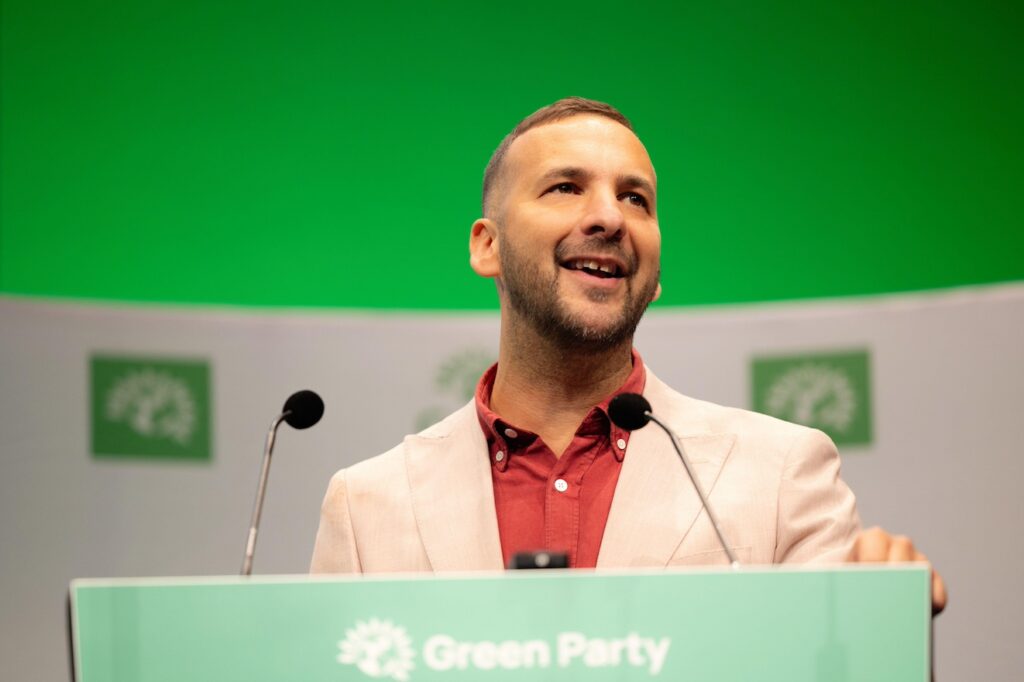

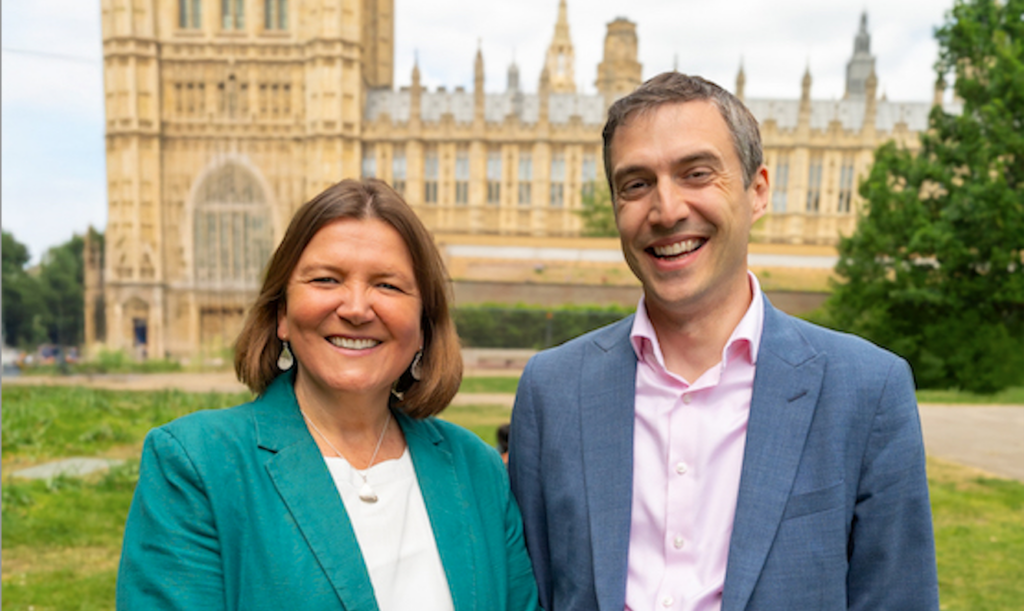
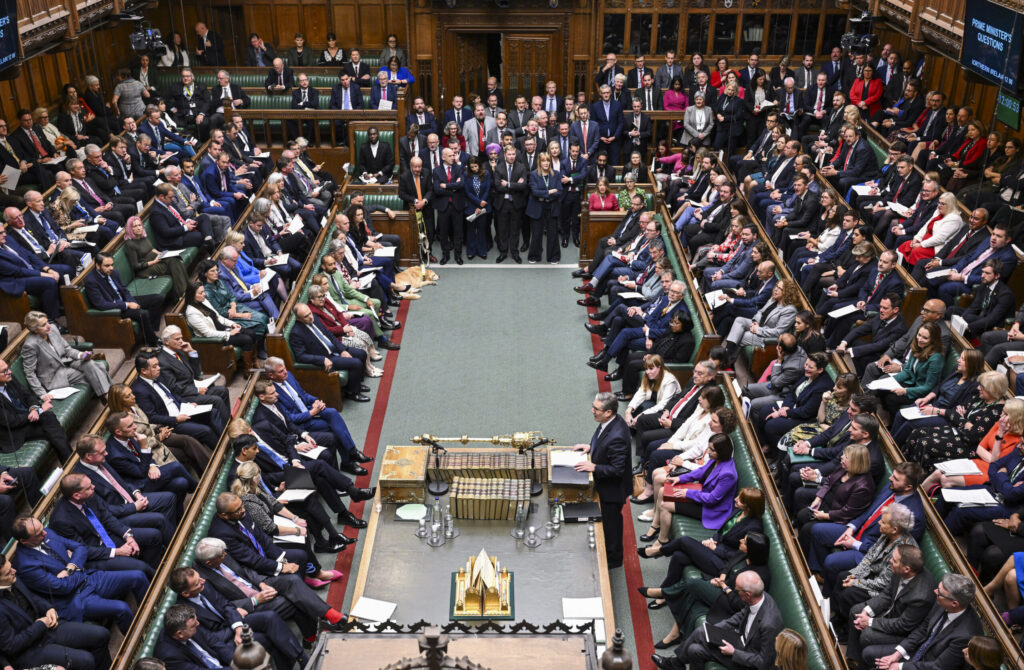
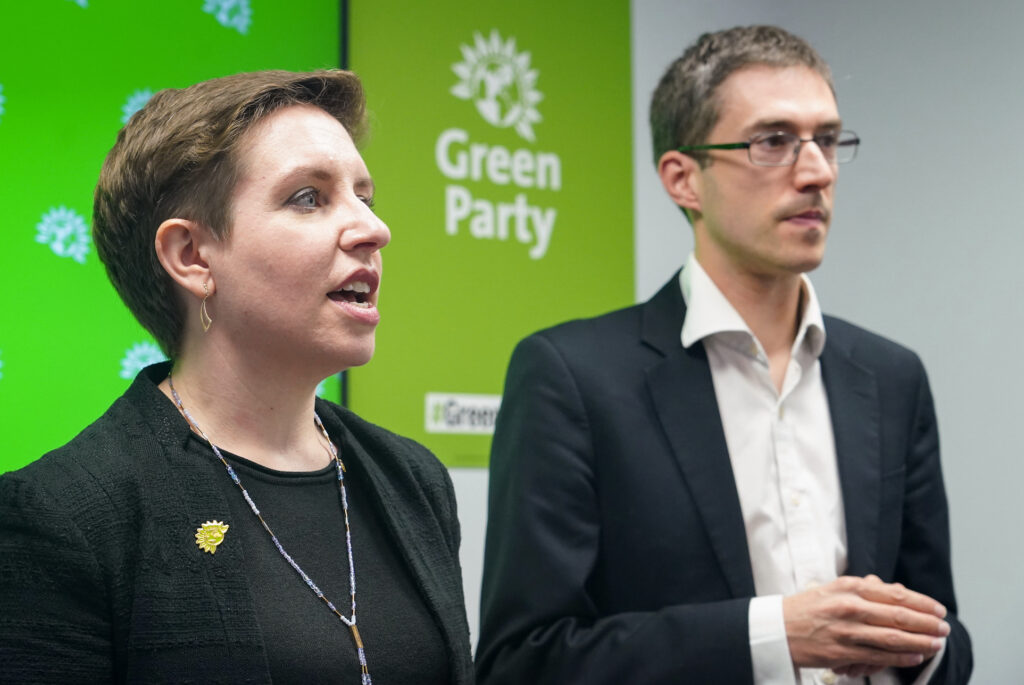


- Investigate the mechanics and political outcomes of the 1991 Llandysul Accord.
- Research the "zero-growth" and population reduction policies outlined in the 1974 A Manifesto for Survival, evaluating how these early neo-Malthusian ideas differ from the party’s contemporary focus.
- Compare the leadership styles and electoral successes of Caroline Lucas and Zack Polanski, evaluating how the party’s communication strategy has evolved.
- Evaluate the view that Labour and the Conservatives continue to command the political landscape.
- ‘Two-party dominance in Britain is a thing of the past.’ Analyse and evaluate this statem
- ‘The United Kingdom is now a fragmented multi-party democracy trapped within a two-party electoral system.’ Analyse and evaluate this statement.
- Evaluate the view that political participation in the UK has fallen to crisis levels.
- First past the post (FPTP) → The Green Party is a prominent critic of FPTP. In 2024, it took 485,000 votes to elect a single Green MP compared to just 24,000 for a Labour MP.
- Multi-party politics → The growth of the Greens reflects broader partisan dealignment and has contributed to the emergence of multi-party politics in Britain.
- Labour → The Greens have capitalised on progressive disillusionment with the Labour Party, attracting disaffected voters.
- Conservatives → The Green Party contains something of an ideological divide between urban radicals and a more moderate, rural-oriented wing often termed “Countryfile Tories”. This latter tradition was arguably relevant to the party’s performance in 2024, which saw it win seats from the Conservatives by appealing to voters who value environmental protection and rural identity. Notably, the party’s very founder, Tony Whittaker, was a former Conservative councillor.