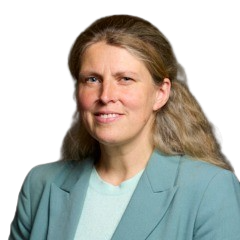
Rachael Maskell is the Labour and Co-operative MP for York Central, having first been elected to Parliament on 7 May 2015.
In the 2024 general election, Maskell won 24,537 votes, representing 56.6% of the vote. The Conservative candidate, Richard Hudson, received 5,383 votes (12.4%), while the Green Party candidate, Lars Kramm, secured 5,185 votes (12.0%). Maskell was duly elected with a majority of 19,154 votes.
The York Central constituency covers the historic city centre and surrounding areas, including the University of York. It is considered a safe Labour seat, held by the party since its creation in 2010 (and predecessor seats long before that).
Political Career
Maskell was one of four Labour MPs who had the party whip suspended in July 2025 after rebelling against the government, most notably on its flagship welfare bill. The group, which also included Neil Duncan-Jordan, Brian Leishman and Chris Hinchliff, were described as “persistent rebels” by party sources.
The prime minister, Keir Starmer, justified the suspensions by stating he was “determined” to change the country “for the better”.
Starmer said: “We had to deal with people who repeatedly break the whip. Because everyone was elected as a Labour MP on the manifesto of change and everybody needs to deliver as a Labour government.
“This is about what we’re doing for the country and that’s why I’m so determined to press forward with the reforms and the change that we need to bring about.”
Following four months sitting as independent MPs, the group had the whip restored on 7 November 2025. This followed what were described as “constructive discussions” with the chief whip, Jonathan Reynolds.
Speaking after her suspension, Maskell said had a “positive conversation” with the chief whip, adding: “He knows my heart and why I did what I did.”
Maskell added: “The reason why I voted the way I did was because I believe in fighting for people.
“I explained there are lines I can’t cross because of where I come from in politics with my faith.”
During Labour’s tenure in opposition, Maskell held several shadow ministerial roles, including shadow minister for digital, culture, media and sport (April 2020 – December 2021), shadow secretary of state for employment rights (January – April 2020), shadow minister for transport (July 2017 – January 2020), shadow secretary of state for environment, food and rural affairs (June 2016 – February 2017) and shadow minister for defence (September 2015 – June 2016).
Maskell resigned from the Labour frontbench twice between 2017 and 2021.
In February 2017, Maskell resigned as shadow environment secretary in order to vote against the European Union (Notification of Withdrawal) Bill. The legislation empowered the prime minister to notify the Council of the European Union of the UK’s intention to withdraw, formally triggering the process set out in Article 50 of the Treaty on European Union. MPs supported the bill by 498 votes to 114 at second reading. In voting against the bill, Maskell defied the party whip – one of 47 Labour MPs to do so.
In a statement, Maskell said: “The UK is no longer being offered a ‘people’s Brexit’ but a ‘Theresa May Brexit’, which goes far beyond just leaving the European Union, as voted on at the referendum last June. In voting against the legislation, I am representing the will of my constituents, ensuring their voice is heard in parliament.”
She added: “I believe that Theresa May’s Brexit ‘plan’ is creating an unjustifiable level of risk at a time of national and international uncertainty and volatility, with silence on national security measures, no mention of climate change mitigation or environmental protections, and no guarantee of good jobs or employment rights.”
In December 2021, Maskell stood down as a shadow civil society minister to vote against mandatory Covid-19 vaccinations for NHS staff, defying the Labour whip. She said in a statement that it was “no easy decision to vote against the whip, but when working people are being threatened with being dismissed because they are too fearful to take a vaccine, and legislation would have the opposite outcome to that of its intended purpose, then I have to stand with our incredible health and care workers and fight their corner”.
Maskell served on the House of Commons health and social care select committee from July to October 2015 and again from July 2022 to May 2024.
Maskell is listed as a member of the all-party parliamentary groups (APPGs) for adoption and permanence, ageing and older people. archeology, drugs, alcohol and justice, dying well and Sudan and South Sudan.
Maskell delivered her maiden speech on 2 June 2015, during a debate about health and social care.
In it, she said: “In 2015, we know that the vision for the NHS of the late member for Ebbw Vale [Aneurin”Nye” Bevan] is not being met, as growing social and financial inequalities manifest themselves in health inequality, and access to vital services is delayed and even denied as a direct result of the £3 billion structural reorganisation that the previous government introduced…
“There are many points that I could raise about York’s NHS: the failing funding formula, which gives York £117 less per patient; the A&E crisis, which is not unique to York; the crisis in the recruitment of staff, which is due to the pay freezes – 15% lost over the past five years – and the depleted public health services.
“Again, public health is key to our future health. But there is something more urgent, which is mental health. York is in the midst of a mental health breakdown.”
She added: “I bring a weighty plea in my maiden speech today, but I assure this House that my constituents deserve the very best and I will stop at nothing to ensure that they get it.”
Political views
Leadership elections and loyalty
Starmer stand down: In May 2026, Maskell publicly called for Keir Starmer, the prime minister, to step down/set out a timetable for his departure. The move followed the 2026 local elections and devolved elections to the Scottish Parliament and Senedd Cymru.
Labour leadership 2020: Maskell was one of four Labour MPs who nominated Clive Lewis for the party’s leadership in early 2020. The election was triggered by the resignation of Jeremy Corbyn following the party’s defeat in the 2019 general election, which resulted in Labour’s fewest seats in the House of Commons since 1935.
Lewis, the shadow minister for sustainable economics, withdrew from the contest shortly before the deadline, having fallen well short of the 22 nominations required to reach the next stage.
Maskell went on to support Emily Thornberry’s candidacy. Thornberry, then the shadow foreign secretary, was one of five candidates to reach the second stage of the contest. However, she was eliminated from the race on 15 February 2020 after failing to secure the required 33 nominations from Constituency Labour Parties (CLPs) or three affiliated groups.
This left Keir Starmer, Rebecca Long-Bailey, and Lisa Nandy as the three candidates on the final membership ballot.
Labour leadership 2015: Maskell was one of 68 Labour MPs who nominated Andy Burnham for the party’s leadership in June 2015. The election followed the resignation of Ed Miliband after the party’s defeat in the 2015 general election. It was the first contest held under the “one member, one vote” system, which replaced the previous electoral college.
Burnham, the shadow health secretary, was initially considered the frontrunner. He secured 68 nominations from the Parliamentary Labour Party (PLP), comfortably exceeding the 35 required to reach the final ballot. He ultimately finished second in the contest with 19% of the vote, losing to Jeremy Corbyn in the first round.
Corbyn loyalty list: In March 2016, Maskell was labelled as “core group” by the Corbyn leadership in a leaked list which categorised Labour MPs by their perceived loyalty. This label suggested the Corbyn leadership viewed Maskell as among its closest allies, even as an inner circle member.
Factional identity and party tradition
Maskell identifies as a Christian socialist.
In an article entitled The Christian Case for Socialism, published by Politics Network in August 2020, Maskell wrote: “I would never claim that the Christian faith can make a claim on any political ideology, as all can distract from the centrality of the hope that salvation through Jesus Christ alone can bring.
“However, it is true to say that many Christians through the years have been moved by the state of our nation to rise up, speak up, and to take up the cause of others, motivated to do so by their understanding of the practical application of their faith.”
She added: “Rooted in the Gospel message is Jesus, someone fearless in speaking truth, standing by the marginalised and challenging and changing society for a greater good. The politics of the left is interwoven with Christian principles through which to build a better society.”
Socialism26: In May 2026, Maskell was a signatory of Socialism26, a political initiative and pressure group launched by a coalition of Labour MPs and general secretaries from several major affiliated trade unions, including Unison, Aslef, the CWU, the TSSA and the FBU. The group described itself as advocating a “programme for change” intended to facilitate a “progressive political reset” within the Labour Party. It called for a return to traditional socialist values and greater internal party democracy.
The initiative was built upon a set of policy demands, including urging the government to “recognise the genocide in Gaza”, deliver full compensation for the “Waspi” women affected by state pension age changes, protect civil liberties and embrace intervention to lower energy bills.
Socialism26 described this programme as “the bare minimum to ensure that the public can see and feel the difference a socialist government makes to their lives.”
Mainstream: Maskell is also a member of Mainstream, a centre-left network within the Labour Party. The group was launched in September 2025 by the think tank Compass and the activist group Open Labour. It describes itself as a home for “Labour’s radical realists” and aims to influence the direction of the Labour government. It has called on the government to offer a “popular, principled and practical left politics for meaningful change.”
Compass has described the group as “an independent vehicle with the sole task of saving the Labour Party from its clear drift to the right and the unintended paving of the way to a Reform government.”
The group is backed by a number of senior Labour figures, including the mayor of Greater Manchester, Andy Burnham, and includes MPs and peers from various traditions within the party – from the left, soft left and the more progressive elements of New Labour.
Socialist Campaign Group: Maskell has been listed as a member of the Socialist Campaign Group (SCG) – the standard-bearer of the left wing within the Parliamentary Labour Party (PLP). Founded in 1982 by followers of Tony Benn, the group has traditionally advocated policies such as widespread public ownership, wealth redistribution and strengthened trade union rights.
Trade Union Group: Maskell is a member of the Trade Union Group of Labour MPs. This long-standing group, founded in 1926, serves as a link between the Labour party and the trade union movement, aiming to ensure that the voices of working people and their unions are represented in parliament.
Leader of the left letter: In May 2015, Maskell was among 10 newly elected Labour MPs who penned an open letter calling on the party to embrace a decisive break from New Labour. In the letter, the MPs called for a leader who will “challenge an agenda of cuts, take on the powerful vested interests of big business and will set out an alternative to austerity.”
Brexit and Europe
Brexit referendum: Maskell supported Remain in the 2016 Brexit referendum, and therefore agreed with a majority of her constituents, 61.2% of whom also voted to Remain.
Left-wing ‘people’s vote’: In March 2019, Maskell was among 20 signatories to a cross-party letter published in the Guardian that called for a second referendum and rubbished Brexit as a “massive assault” on working-class people.
The letter read:“We are campaigning to transform society, not for the status quo. We are against Brexit because it is a massive assault on working-class people, on the environment, on migrants and on the communities that the left aims to represent.”
Remain pledge: During the 2019 general election campaign, Maskell was one of 193 Labour candidates to sign the anti-Brexit “Remain pledge”, drawn up by the campaign group Remain Labour.
It stated: “Labour is committed to a confirmatory referendum, to give you the final say on Brexit. If elected as your Labour MP, I pledge to campaign to Remain in the EU.”
Electoral reform
Fair elections APPG: Maskell is listed as a member of the all-party parliamentary group (APPG) for fair elections – a cross-party group of MPs and peers that campaigns for electoral reform. The group’s stated aims include replacing the first past the post (FPTP) voting system with a form of proportional representation, eliminating “dark money” and “undemocratic influence” from politics, and countering disinformation.
Electoral reform amendment: In May 2026, Maskell was one of over 70 Labour MPs who signed an amendment to the Representation of the People Bill, calling on the government to establish a “national commission on electoral reform”. Tabled by Alex Sobel as chair of the fair elections APPG, the amendment aimed to force a rethink of the first past the post voting system.
At the time, Sobel described FPTP as “one of the biggest examples of a broken status quo in UK politics.” He invited colleagues to join this “common sense call to take a fresh look at how parliament is elected in modern Britain.”
Proportional representation bill: In December 2024, Maskell voted in favour of the Elections (Proportional Representation) Bill – introduced by Liberal Democrat frontbencher Sarah Olney under the 10-minute rule procedure. The bill sought to “introduce a system of proportional representation for parliamentary elections and for local government elections in England”.
A total of 138 MPs supported the bill – with 136 opposed. Notably, 59 Labour MPs backed Olney’s bill.
Introducing the bill, Olney told the House: “First past the post is a broken and unfair system. This summer, the Labour party won a landslide election victory, securing 63% of seats in the House of Commons in return for just 34% of the vote.
“The system leaves millions of voices unheard and creates a divisive, adversarial political climate where collaboration is discouraged and accountability is often sidestepped.”
Welfare
Welfare ‘reasoned amendment’ (June 2025): Maskell was one of the over 120 Labour MPs to sign the reasoned amendment to the government’s flagship welfare bill which aimed to reject the proposed legislation.
The amendment, in the name of senior Labour MP Dame Meg Hillier, objected to the fact that the bill had not been subject to a “formal consultation with disabled people” and that “250,000 people will be pushed into poverty” as a result of it, according to a government impact assessment.
The motion also called on the government to wait for the publication of the review into the Personal Independence Payment (Pip), helmed by minister Sir Stephen Timms, and the independent review, conducted by Sir Charlie Mayfield, into how the employment of disabled people could be boosted.
In May 2025, Maskell had signed a letter warning the government that the cuts were “impossible to support” and calling for a change in direction.
The letter, signed by 42 Labour MPs, read: “The planned cuts of more than £7bn represent the biggest attack on the welfare state since George Osborne ushered in the years of austerity and over 3 million of our poorest and most disadvantaged will be affected.
“Whilst the government may have correctly diagnosed the problem of a broken benefits system and a lack of job opportunities for those who are able to work, they have come up with the wrong medicine. Cuts don’t create jobs, they just cause more hardship.”
Welfare vote (July 2025): Maskell went on to vote against the bill at second reading. The vote came after ministers agreed to significant concessions to avoid defeat via a mass rebellion of Labour MPs on 1 July 2025.
Winter fuel payment EDM: In September 2024, Maskell signed an early day motion (EDM) expressing concern over the government’s proposed changes to the winter fuel payment. The motion called on the government to “postpone the ending of winter fuel payments and establish a comprehensive strategy to tackle fuel poverty, health inequality and low incomes among older people.”
Welfare vote (July 2015): Alongside almost one quarter of her colleagues, Maskell voted against the Conservative government’s Welfare Reform and Work Bill at second reading – defying the party whip which instructed Labour MPs to abstain. This decision to abstain, taken by interim Labour leader Harriet Harman, caused a furious backlash within the party, particularly from its left wing. It became a defining issue in the ongoing leadership contest. Jeremy Corbyn was the only candidate to vote against the bill. Overall, 48 Labour MPs voted against the proposed legislation.
Assisted dying
Maskell voted against the Terminally Ill Adults (End of Life) Bill, better known as the assisted dying bill, at both second reading (November 2024) and third reading (June 2025).
Social values and conscience issues
Abortion decriminalisation (2025): Maskell voted against a backbench amendment to the Crime and Policing Bill that sought to decriminalise abortion in England and Wales in June 2025. The amendment, which was passed by a majority of 242 votes, removed women from the threat of prosecution for ending a pregnancy at any stage. As an issue of conscience, MPs were allowed to vote according to their personal beliefs.
Foreign policy and security
Trident renewal (2016): Maskell voted against a government motion calling for the renewal of the Trident nuclear deterrent system in July 2016. The motion, which was passed by 472 votes to 117, committed the UK to constructing a new fleet of submarines to carry the nation’s nuclear weapons. Labour was split over the issue with 140 of its 230 MPs going against leader Jeremy Corbyn and backing the motion.
Syria airstrikes (2015): Maskell voted against a government motion to extend UK airstrikes against Isis from Iraq into Syria in December 2015. The motion, which was passed by 397 votes to 223 after a ten-hour debate in the House of Commons, authorised the RAF to conduct strikes against Isis targets in Syria.
Sanctioned (Russia): In April 2022, Maskell was among the group of MPs placed on a sanctions list by the Russian government. The measure barred them from entering Russia and was presented by Moscow as a retaliatory response to the UK’s stance on the invasion of Ukraine.
Palestine
LFPME: Maskell has been listed as a member of Labour Friends of Palestine and the Middle East (LFPME). The organisation’s stated aim is to promote peace and justice in the region through the application of international law and respect for human rights.
Ceasefire vote (November 2023): Maskell was among 56 Labour MPs to vote in favour of a Scottish National Party (SNP) amendment to the King’s Speech in the House of Commons calling for an “immediate ceasefire” in Gaza – defying the instruction set out by the party’s frontbench. Labour had tabled its own motion, making a more moderate appeal for a “humanitarian pause” in the conflict and ordered its representatives to support that stance.
Before Politics
Born Rachael Helen Maskell in Winchester on 5 July 1972, she grew up in Highcliffe-on-Sea.
She studied physiotherapy (BSc) at the university of East Anglia, graduating in 1994.
She worked as a care worker and then as an NHS physiotherapist for 20 years. She became a trade union official for Unite the union, serving as head of health. She was also a member of Labour’s national executive committee (NEC) representing Unite from 2011 to 2015.
Personal Life
Maskell is a Christian.
Her uncle was the criminologist Terence Morris, who campaigned for the abolition of the death penalty and advised Harold Wilson’s Labour government as an academic.
Trivia
Maskell is reportedly an enthusiastic cyclist. She rode to the Labour Party’s annual conference in 2015 Brighton in aid of the British Heart Foundation.
Rachael Maskell has not written for Politics.co.uk.