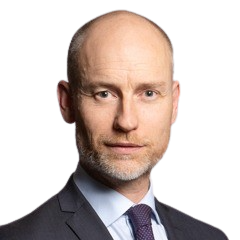
Stephen Kinnock is the Labour MP for Aberafan Maesteg, having first been elected for the predecessor seat of Aberavon at the 2015 general election.
In the 2024 general election for the new Aberafan Maesteg constituency, Kinnock received 17,838 votes (49.9%). The Reform UK candidate received 7,484 votes (20.9%), and the Plaid Cymru candidate secured 4,719 votes (13.2%). Kinnock was duly elected with a majority of 10,354.
The Aberafan Maesteg constituency is located in South Wales, covering areas within Neath Port Talbot and Bridgend county boroughs. It includes the town of Port Talbot (incorporating Aberavon), home to the large Tata steel works, and extends into former mining valleys including Maesteg.
The seat was created for the 2024 election, merging the majority of the Aberavon constituency (held by Labour since 1922 and once represented by Ramsay MacDonald) with parts of the former Ogmore and Bridgend seats (also traditionally Labour).
Political Career
Kinnock currently serves as secretary of state for Wales. He was appointed to this role in July 2026, following the Labour leadership contest and Andy Burnham’s elevation as prime minister.
Previously, Kinnock served as minister of state in the Department of Health and Social Care from July 2024 to July 2026.
Prior to the 2024 general election, which saw Labour returned to power after 14 years in opposition, Kinnock served as shadow minister for immigration from February 2022 to May 2024. He also held shadow minister roles covering defence (armed forces) (2021-2022) and Asia and the Pacific (Foreign Office team) (2020-2021).
In June 2016, Kinnock was among those to resign from the shadow frontbench in protest at Jeremy Corbyn’s leadership and his approach to the EU referendum. He stepped down as parliamentary private secretary (PPS) to Angela Eagle.
In his resignation letter, addressed to Corbyn, Kinnock wrote: “In light of the extremely disappointing outcome of the referendum caused, in part, by the half-hearted lacklustre role you played in the campaign, I have come to the conclusion that you are no longer able to lead our party.”
Kinnock was a member of the House of Commons European scrutiny committee (2015-2024), the committee on the future relationship with the European Union (2020-2021), and the Welsh affairs committee (2016-2018).
Kinnock delivered his maiden speech on 3 June 2015 during a debate on devolution and growth across Britain.
In it, he said: “It is hardly surprising that Aberavonites have drama in their blood when one considers the drama of the landscape in which they are born. Anthony Hopkins and Michael Sheen are just two of the local lads made good, but perhaps the most famous of Aberavon’s sons is Richard Burton, who is said to have mused that ‘the Welsh are all actors, it’s only the bad ones who become professional.’
“I am of course relieved to say he is not on record as having said the same thing about the Welsh and politicians.”
He added: “When I left south Wales as a young man, I took that spirit of public service with me. I have been lucky to have lived and worked in Brussels, St Petersburg, Sierra Leone, Switzerland and a number of other exotic foreign lands, including England. Having returned to my roots, I am very proud to describe myself as a global Welshman.
“I believe that Wales is a nation with the ability to punch far above its weight, and I hope I will have an opportunity to contribute to that worthy cause.”
Political Views
Leadership elections and loyalty
Labour deputy leadership 2025: Kinnock was one of 117 Labour MPs who nominated Lucy Powell for the party’s deputy leadership in September 2025. The election followed the resignation of Angela Rayner, who stepped down as deputy prime minister and deputy party leader after an investigation into her tax affairs. It marked the first time since 2007 that Labour had held a deputy leadership contest while in government.
Powell, the former leader of the House of Commons, was seen as a candidate representing the party’s “soft left”; she was support by leading soft left figures including Ed Miliband and Andy Burnham. She secured 117 nominations from the Parliamentary Labour Party (PLP), above the 80 required, and went on to win the election – defeating Bridget Phillipson with 54.3% of the vote.
Labour leadership 2020: Kinnock was one of 31 Labour MPs who nominated Lisa Nandy for the party’s leadership in early 2020. The election was triggered by the resignation of Jeremy Corbyn following the party’s defeat in the 2019 general election, which resulted in Labour’s fewest seats in the House of Commons since 1935.
Nandy, the MP for Wigan, argued that the party needed a “bridge” to reconnect with traditional working-class voters in northern England. She finished third in the contest with 16.2% of the vote.
Labour leadership 2015: Kinnock was one of 10 Labour MPs who nominated Mary Creagh for the party’s leadership in June 2015. The election followed the resignation of Ed Miliband after the party’s defeat in the 2015 general election and was the first to be held under a “one member, one vote” system.
Creagh, the shadow international development secretary, withdrew from the contest on 12 June after securing only 10 nominations from the Parliamentary Labour Party (PLP) – far short of the 35 required to reach the final ballot.
Kinnock subsequently supported Yvette Cooper’s campaign. Cooper, the shadow home secretary, secured 59 nominations from the Parliamentary Labour Party (PLP), comfortably exceeding the 35 required to reach the final ballot. She ultimately finished third in the contest with 17% of the vote.
Corbyn loyalty list: In March 2016, Kinnock was labelled as “core group negative” by the Corbyn leadership in a leaked list which categorised Labour MPs by their perceived loyalty. This label suggested the Corbyn leadership viewed Kinnock as a critic but not openly hostile.
Labour leadership 2016: Kinnock supported Angela Eagle for the party’s leadership in July 2016. The election was triggered by a challenge to Jeremy Corbyn following the EU referendum, which led to a wave of shadow cabinet resignations and a vote of no confidence supported by 172 MPs.
Eagle, the former shadow first secretary of state, was the first to formally launch a challenge against Corbyn. However, she withdrew from the race on 19 July after attracting fewer nominations than Owen Smith. Kinnock subsequently shifted his support to Smith.
Corbyn was ultimately re-elected with an increased mandate of 61.8% of the vote.
Factional identity and party tradition
Tribune group (2017): Kinnock was listed among the supporters of the Tribune parliamentary group – a caucus generally described as representing the party’s “soft left”.
The Tribune group was initially formed in 1964 to support the newspaper of the same name. It served as a prominent forum for those parliamentarians situated on the left of the Labour Party – but it split over Tony Benn’s campaign for the deputy leadership in 1981. Benn’s supporters founded the Campaign group – which evolved into the Socialist Campaign Group (SCG). Today, the Bennite SCG is strongly associated with the Labour left tradition.
During the 1980s, the Tribune group emerged as a more natural home for those on Labour’s “soft left”.
In 2017, Efford officially re-launched the group with a new mission statement calling for “opportunity and aspiration” to be placed at the heart of the party’s programme. Efford said he had reformed the group to ensure that the centre-left of the Parliamentary Labour Party (PLP) “have a space in which to put forward ideas and debate which has not been there under successive leaders”.
He added: “The view of Labour MPs at the moment tends to be that too much are just Blairites who want to stab Jeremy Corbyn in the back. We want to show that is not where we are, and that we want to develop our own ideas that represent the centre-left of the party.”
Brexit and Europe
Brexit referendum: Kinnock supported Remain in the 2016 referendum on Britain’s membership of the European Union (EU), and therefore disagreed with a majority of constituents, 60.1% of whom voted to Leave.
Article 50: In February 2017, Kinnock voted in favour of the European Union (Notification of Withdrawal) Bill. The legislation empowered the prime minister to notify the Council of the European Union of the UK’s intention to withdraw, formally triggering the process set out in Article 50 of the Treaty on European Union. MPs supported the bill by 498 votes to 114 at second reading.
In March 2019, as MPs held a series of non-binding “indicative votes” on alternative Brexit strategies, Kinnock joined forces with Conservative MP Nick Boles. They presented Motion (D), the “Common Market 2.0” or “Norway Plus” model.
Kinnock argued that a 52-48 result at the 2016 referendum did not represent a mandate to go about “wrecking the economy”. He said the vote was an “instruction to move house, but to stay in the same neighbourhood.”
Boles appealed to MPs to show leadership during the course of the votes.
He told the House: “Each of us today is a leader… In years to come, the question that our children and grandchildren will ask us is this: in that historic week when parliament took charge of the nation’s destiny, what did you do? Did you stand up and lead?
“Did you step forward to help reunite our country, or did you hang back in your party trench waiting to be told what to do and where to go?”
Boles said that if MPs chose “common market 2.0 this evening, the history books will record it as the moment that our country turned a corner and the part you played will be something of which you will be forever proud.”
Welfare
Welfare vote (July 2025): Kinnock voted in favour of the government’s flagship welfare bill at second reading. The vote came after ministers agreed to significant concessions to avoid defeat via a mass rebellion of Labour MPs on 1 July 2025.
Assisted dying
Kinnock voted in favour of the Terminally Ill Adults (End of Life) Bill, better known as the assisted dying bill, at both second reading (November 2024) and third reading (June 2025).
Social values and conscience issues
Abortion decriminalisation (2025): Kinnock voted in favour of a backbench amendment to the Crime and Policing Bill that sought to decriminalise abortion in England and Wales in June 2025. The amendment, which was passed by a majority of 242 votes, removed women from the threat of prosecution for ending a pregnancy at any stage. As an issue of conscience, MPs were allowed to vote according to their personal beliefs.
Foreign policy and security
Trident renewal (2016): Kinnock voted in favour of a government motion calling for the renewal of the Trident nuclear deterrent system in July 2016. The motion, which was passed by 472 votes to 117, committed the UK to constructing a new fleet of submarines to carry the nation’s nuclear weapons.
Labour was split over the issue with 140 of its 230 MPs going against leader Jeremy Corbyn and backing the motion.
Syria airstrikes (2015): Kinnock voted against a government motion to extend UK airstrikes against Isis from Iraq into Syria in December 2015. The motion, which was passed by 397 votes to 223 after a ten-hour debate in the House of Commons, authorised the RAF to conduct strikes against Isis targets in Syria.
Palestine
LFPME: Kinnock has been listed as a member of Labour Friends of Palestine and the Middle East (LFPME). The organisation’s stated aim is to promote peace and justice in the region through the application of international law and respect for human rights.
Before Politics
Born in Tredegar, Wales, on 1 January 1970, Stephen Kinnock is the son of Neil Kinnock, former leader of the Labour Party, and the late Glenys Kinnock (Baroness Kinnock of Holyhead), former MEP and government minister.
Stephen Kinnock joined the Labour Party at age 15. He attended Drayton Manor High School in London and studied Modern Languages at Queens’ College, Cambridge University. He subsequently gained a Master’s degree from the College of Europe in Bruges, Belgium (1992-1993).
Before entering parliament, Kinnock worked for the British Council for over 12 years, serving in various roles including as director in St Petersburg, Russia and later based in Brussels.
Following this, he worked at the World Economic Forum from 2009 to 2012, including as director, head of Europe and Central Asia.
He then worked as a managing director at the consultancy Xyntéo in London from 2012 until his election in 2015.
Personal Life
Stephen Kinnock met his wife, Helle Thorning-Schmidt, while they were both studying at the College of Europe in Bruges.
Thorning-Schmidt later became leader of the Danish Social Democrats and served as prime minister of Denmark from 2011 to 2015.
They married in 1996 and have two children. Their child Milo came out publicly as non-binary in 2022; Kinnock praised Milo’s courage and highlighted the importance of open discussion for families.
Trivia
Kinnock is fluent in five European languages (French, Spanish, Russian, Danish, in addition to English). He reportedly plays for the parliamentary football team.
Stephen Kinnock has not written for Politics.co.uk.