Plaid Cymru
Plaid Cymru, officially Plaid Cymru – The Party of Wales, is a social-democratic political party in Wales that advocates for Welsh independence. It is the largest party in Senedd Cymru (the Welsh parliament) and forms the Welsh government.
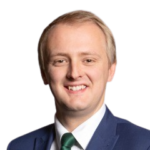
Rhun ap Iorwerth serves as leader of Plaid Cymru and first minister of Wales.
The party currently sits in opposition in the Senedd but was previously part of a co-operation agreement with the Welsh Labour government between 2021 and 2024.
House of Commons representation: At the 2024 general election, Plaid Cymru won four out of the 32 Welsh constituencies. This represented an increase of two on the party’s performance in 2019.
House of Lords representation: There are two Plaid Cymru peers in the upper chamber.
Representation in devolved assemblies/parliaments: Plaid Cymru won 43 out of 96 seats at the 2026 Senedd elections.
Who is the leader of Plaid Cymru?
The current leader of Plaid Cymru is Rhun ap Iorwerth. He was elected unopposed on 16 June 2023.
Ap Iorwerth was elected and sworn in as the new first minister of Wales on 12 May 2026. Ap Iorwerth’s confirmation formally ended 27 years of continuous Labour-led devolved governments.
In his foreword to the Plaid Cymru manifesto for the 2026 Senedd Cymru election, ap Iorwerth described the contest as the “most important since the dawn of devolution.”
He stated: “I am proud to present this Plaid Cymru manifesto, our plan for a modern, confident Wales – a Wales where all our people and communities can contribute to and share in our nation’s success.
“Plaid Cymru stands ready to form a new Welsh government with energy and a real determination to get to grips with the issues that matter to you. And we are clear on the most immediate priorities.”
Ap Iorwerth has served as the MS for Ynys Môn since a by-election in 2013. Before entering politics, he was a prominent broadcast journalist and presenter for BBC Wales. He stood unsuccessfully for the leadership in 2018.
The leadership became vacant after Adam Price resigned on 10 May 2023. His resignation followed the publication of a report entitled Prosiect Pawb, which found a culture of harassment, bullying and misogyny within the party. Rhun ap Iorwerth, who served as Plaid Cymru’s deputy leader from 2018 to 2023, vowed to make the organisation a “welcoming party where everyone feels safe”.
Under the party’s constitution, party leaders are subject to re-election every two years, but this is usually uncontested. In 2018, the party’s incumbent leader, Leanne Wood, was challenged by Price and ap Iorwerth.
Prominent recent past leaders include Wood (2012-2018), who was the party’s first female leader, and Ieuan Wyn Jones (2000-2012), who served as deputy first minister of Wales in a coalition government with Labour.
Liz Saville Roberts has served as Plaid Cymru’s leader in the House of Commons since 2017.
What does Plaid Cymru stand for?
Plaid Cymru’s constitution states its principal aim is to “secure independence for Wales in Europe.”
The party constitution also defines the party’s objectives around “decentralist socialism”, respect for different traditions and cultures, and creating “a bilingual society by promoting the revival of the Welsh language.”
In the foreword to Plaid Cymru’s manifesto for the 2024 general election, ap Iorwerth argued that being tied to Westminster meant “all risk and no reward” for Wales.
He added: “Our ambition can be seen in our confidence that Wales can and should run its own affairs as an outward looking independent nation.
“Plaid Cymru is a party for the whole of Wales. Our candidates are rooted in their communities and passionate about overcoming the challenges facing our economy and public services.”
The manifesto expressed Plaid Cymru’s support for a “Welsh green new deal” to create “rewarding, meaningful and fair work in the emerging green and net-zero sector”.
A central Plaid Cymru policy is the promotion of the Welsh language. The party believes that all learners should leave school able to speak both Welsh and English fluently. Plaid Cymru’s 2024 manifesto expressed support for a “Welsh Language Education Act, working towards universal Welsh medium education”.
Plaid Cymru has called for the abolition of the House of Lords, advocates lowering the voting age to 16 for all elections and supports “proportional representation so that a greater proportion of votes are used to elect representatives, rather than wasted.”
Plaid Cymru membership
Plaid Cymru had a reported membership of 10,000 in August 2022. This represented a rise from 8,000 members reported in April 2018.
In January 2012, the Guardian reported the party’s membership as standing at 7,863.
Plaid Cymru’s structure and party organisation
Under the Plaid Cymru constitution, the party’s conference is described as its “highest authority”. Plaid Cymru party conference is responsible for determining the party’s policy and electing its national officers and leadership.
The Plaid Cymru national council is responsible for approving the content and principles of election manifestos, implementing relevant conference decisions and setting the party’s strategy alongside its National Executive Committee (NEC).
The Plaid Cymru NEC is ultimately responsible for submitting the party’s strategy to the national council, and managing its political direction. The NEC is also responsible for miscellaneous administrative tasks such as managing the party’s organisation.
History of Plaid Cymru and emergence as a major force
On 5 August 1925, during the National Eisteddfod week in Pwllheli, Gwynedd, a group of six Welsh nationalists met to formally establish Plaid Genedlaethol Cymru (The National Party of Wales), later known as Plaid Cymru.
The party emerged from the fusion of two existing nationalist groups: Byddin Ymreolwyr Cymru (Army of Welsh Home Rulers) and Y Mudiad Cymreig (The Welsh Movement). Key figures at the founding meeting included the writer and academic Saunders Lewis, H. R. Jones, Ambrose Bebb, Lewis Valentine, and D. J. Williams.
Valentine was elected as the party’s first president, holding the post until 1926. Lewis served as president from 1926 to 1939.
Plaid Genedlaethol Cymru was unafraid to assert a distinct Welsh cultural and political identity. The setting of the National Eisteddfod, Wales’ premier cultural festival, reflected the party’s initial emphasis on cultural nationalism. The party adopted Welsh as its working language, and aimed to restore Welsh as the primary language of the nation.
In its early years, the party functioned more as a cultural and social pressure group than a conventional electoral machine. Its initial electoral impact was minimal; in the 1929 general election, its candidate in Caernarvonshire, Valentine, polled just 609 votes (1.6%).
Ideologically, the party was a broad church, attracting members from the left, right and centre, as well as both monarchists and republicans. Saunders Lewis, for example, was avowedly anti-socialist.
By the 1930s, the party had adopted the goal of securing self-government for Wales, or ‘dominion status’, akin to that achieved by the Irish Free State in 1922.
A defining moment for the party arrived in 1936 with the Tân yn Llŷn (Fire in Llŷn) incident. The British government, led by Stanley Baldwin, decided to build an RAF air base on the Llŷn Peninsula despite widespread protests. On 8 September 1936, Lewis, Valentine and Williams claimed responsibility for setting fire to the site. They were sentenced to nine months in prison.
The episode became a cause célèbre, heightening the party’s profile.
Speaking in court, Lewis defended the collective’s actions as “forced upon us… in obedience to conscience and to the moral law”.
He said his primary motive was the preservation of the Llŷn peninsula as “an essential focus of this Welsh culture.”
Lewis likened the “English government’s behaviour” to that of “the behaviour of this new anti-Christ throughout Europe”.
He declared: “If you find us guilty the world will understand that here also in Wales an English government may destroy the moral person of a nation, may shatter the spiritual basis of that nation’s life, may refuse to consider or give heed to any appeal even from the united religious leaders of the whole country, and then may use the law to punish with imprisonment the men who put those monstrous claims of anti-Christ to the test.”
Plaid Cymru officially adopted a neutral stance during the Second World War – partly on account of its pacifistic elements, partly due to its opposition to the British state.
However, while the party was associated with conscientious objection, several members – including leading figures like Ambrose Bebb – were outspoken in their support for the war.
Lewis’ antisemitism and apparent praise for Hitler became targets for the party’s opponents.
The British state is said to have monitored Plaid Cymru’s activities during the war.
In 1943, Lewis contested the University of Wales parliamentary seat at a by-election. He won 1,330 votes, or 22%. Gwenan Jones, the first woman to stand for Plaid Cymru in a general election, won 1,696 votes in the same University of Wales constituency two years later.
Plaid Cymru’s first parliamentary breakthrough came in 1966, when Gwynfor Evans, the party’s president since 1945, won the Carmarthen by-election.
The by-election was called following the death of the long-serving Labour MP, Lady Megan Lloyd George, daughter of the former Liberal prime minister. Carmarthen had been considered a relatively safe Labour seat, held by Lady Megan since 1957, and Harold Wilson’s Labour government had secured a landslide national victory just four months earlier. Labour fielded Gwilym Davies, a Welsh-speaking solicitor and former member of Plaid Cymru.
Gwynfor Evans, president of Plaid Cymru since 1945, focused his campaign on the perceived neglect of Wales by successive governments. The slogans “For a better Wales” and “For work in Wales” were respectively targeted at rural and industrial portions of the constituency.
Another slogan urged voters to “vote for a free Wales”.
Evans previously stood in Carmarthen at the 1964, placing third. He finished 13,805 votes behind Megan Lloyd George in the 1966 general election (March 1966).
As such, the July 1966 by-election produced a political earthquake. Evans secured 16,179 votes (39.0%), defeating Labour’s Gwilym Davies (13,743 votes, 33.1%) with a majority of 2,436. The swing from Labour to Plaid Cymru was a significant 12.0 points.
Evans’s victory was a watershed moment for Plaid Cymru. It marked the arrival of Welsh nationalism as a significant electoral force, and provided a major boost for the Welsh language movement. The Welsh Language Act 1967 followed months later.
Upon arriving in Westminster on 21 July, Evans requested to take the oath of allegiance in the Welsh language “in view of the great national awakening” exhibited in Carmarthen.
In his maiden speech, Evans suggested that the policy of successive governments to “assimilate the Welsh people” had reduced his nation “to ruin”.
He stated: “We had evidence in this chamber… that the English order has no place in it for a living Welsh nation. The rules of this English parliament prevent even the taking of the oath in the Welsh language.”
Evans’ Carmarthen breakthrough in 1966 was viewed in conjunction with the electoral advance of the Scottish National Party (SNP), which won a similarly symbolic by-election victory in Hamilton the following year.
The new nationalist members were greeted with significant hostility, but their victories were watched closely by Harold Wilson’s Labour government. The prime minister responded with the announcement of a royal commission in 1969, with a remit to consider Britain’s constitutional framework and devolution.
Reporting in 1973, the Kilbrandon commission recommended legislative devolution for Scotland and Wales in the form of elected assemblies. The findings led directly to the 1978 Scotland and Wales acts, and the failed referendums that followed.
In 1980, Evans pledged to “fast to the death” if the new Conservative government under Margaret Thatcher did not reverse its opposition to a Welsh language television channel. On this occasion, the lady was for turning.
Evans stepped down as Plaid Cymru president in 1981.
Throughout this period, Plaid Cymru continued to push for a devolved legislature in Wales.
The Welsh devolution referendum, held in 1997, was a key pledge of Tony Blair’s new Labour government.
The Yes for Wales campaign, led by the Welsh secretary Ron Davies, brought together Labour, Plaid Cymru and the Liberal Democrat politicians. The campaign argued that a Welsh assembly would provide Wales with a stronger voice and greater control over its domestic affairs.
Victory for the ‘Yes’ campaign was only secured by a majority of 6,721 votes: 50.3% to 49.7%.
In the first elections to the new Welsh assembly, held in 1999, Plaid Cymru placed second, winning 17 seats.
In the 2001 UK general election, the party won 14.3% of the vote in Wales. However, the party’s representation dropped from 17 seats to 12 in the 2003 assembly election. The party narrowly remained the second-largest party ahead of the Conservatives.
Following the 2007 assembly election, Plaid Cymru joined Labour in government under the “One Wales” coalition. Under the agreement, Plaid leader Ieuan Wyn Jones was made deputy first minister, serving under Labour’s Rhodri Morgan as first minister (and later Carwyn Jones). In total, three Plaid Cymru members sat in the cabinet as full ministers, including Jones, Elin Jones (rural affairs), and Rhodri Glyn Thomas (heritage). The agreement lapsed after the 2011 assembly election, when Plaid Cymru was reduced to the third-largest party in the assembly.
From December 2021 until May 2024, the Welsh Labour government operated with support from Plaid Cymru through a formal “co-operation agreement”. Unlike a formal coalition, Plaid Cymru remained in opposition and did not take up ministerial seats. Instead, the parties worked together on 46 specific policy areas, including free school meals and Senedd reform. Plaid appointed special advisers to serve in the offices of the Welsh government.
Plaid Cymru leader Adam Price said his party was “transforming itself from a traditional opposition party in the Westminster sense to something new and refreshingly different, a co-opposition party, co-operating where possible, while continuing to oppose, and to scrutinise and criticise where necessary”.
In May 2024, Plaid Cymru withdrew from the agreement. The party’s latest leader, ap Iorwerth said the decision was related to controversies surrounding the new first minister, Vaughan Gething, and what he called “a significant lack of judgement.” Gething ultimately resigned as first minister in July 2024, only four months after taking the job, after questions arose over a £200,000 campaign donation from a businessman convicted of environmental offences.
Gething, who denied any wrongdoing, was succeeded by Eluned Morgan.
Plaid Cymru won four seats and 194,812 votes (14.8%) at the 2024 general election.
In the 2025 Caerphilly by-election, Plaid Cymru emerged victorious. Lindsay Whittle, the Plaid Cymru candidate, was elected to the Senedd with 15,961 votes (47.4%) – a majority of 3,848 over the Reform UK candidate in second place. Labour was reduced to a poor third with just 11.0% of the vote.
Plaid Cymru emerged as the largest party after the 2026 Senedd Cymru election. In the event, Plaid Cymru won 444,665 votes (35.4%), which translated into 43 seats. Reform UK won 29.3% of the vote and 34 seats. The Conservative Party lost nine seats, securing seven, and the Green Party won a place in the legislature (two seats) for the first time. The Liberal Democrats retained their single seat.
Labour’s defeat amounted to a catastrophe. The party lost 21 seats, winning just nine. Eluned Morgan was not among those returned to the legislature.
Ap Iorwerth was nominated as the new first minister of Wales on 12 May in a historic roll call vote. He received the support of 42 MSs (40 from Plaid Cymru and two from the Green Party). Dan Thomas, the Welsh leader of Reform UK, received 34 votes, and Darren Millar of the Conservatives received seven.
The Labour members and the sole Liberal Democrat abstained. Ap Iorwerth therefore received a majority of the votes cast.
In his speech following the Senedd vote, ap Iorwerth said it was the “greatest privilege of my life to be elected first minister of the nation that means so much to me.” He paid tribute to his predecessor, Morgan, for her “resilience and determination”.
Ap Iorwerth quipped that he would soon learn whether asking questions “was, in fact, much more fun than answering them.”
The new first minister added: “Something has stirred in the soul of Wales – a new confidence, a new hope, a new, broader horizon, never to be narrowed again by the naysayers with other priorities in other places.
“From this historic moment onwards, every person in every part of our nation can know that the government of Wales is their government. And they will know that their government does not and will not impose on itself, or on our citizens, any limits on what our nation can achieve.”
Ap Iorwerth, having confirmed his intention to lead a minority administration, set about appointing ministers to fill his new minority government.
On 13 May, Sioned Williams was given the post of deputy first minister and cabinet minister for social justice and equality. Adam Price, the Plaid Cymru leader from 2018 to 2023, was appointed as cabinet minister for connectivity and energy.
Ap Iorwerth said his cabinet would “bring new energy, new ideas and a new direction to the way our nation is led.”
He added: “Our principles will be our guide as we seek practical solutions to the issues faced by communities the length and breadth of our country – and we will pursue our missions with the energy and urgency they demand.
“Our pledge is simple – to repay people’s trust in us as quickly as we can, bringing the nation together. A new era of leadership starts today.”