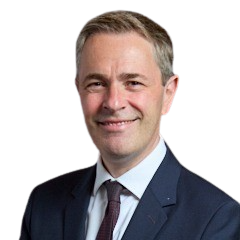
David Pinto-Duschinsky is the Labour MP for Hendon, having first been elected to parliament at the 2024 general election.
In the 2024 general election, Pinto-Duschinsky won 15,855 votes (38.4%). The Conservative candidate, Ameet Jogia, received 15,840 votes (38.4%), while the Reform UK candidate, Joshua Pearl, polled 3,038 votes (7.4%). Pinto-Duschinsky was duly elected with a majority of 15 – the smallest secured at the 2024 election.
The Hendon constituency is located in the London Borough of Barnet, in North London. The seat was held by Matthew Offord of the Conservative Party from 2010 to 2024; Labour previously held the seat from 1997 to 2010.
Political Career
Pinto-Duschinsky serves as a parliamentary private secretary (PPS) in the Department for Work and Pensions (since September 2025). A PPS acts as an unpaid parliamentary assistant, providing a link between the senior frontbencher and backbench MPs. The role is widely regarded as the first step on the ministerial ladder. Although they cannot speak for the government in debates, a PPS is bound by collective responsibility and becomes part of the so-called “payroll vote”, expected to support the official line in all divisions.
Pinto-Duschinsky also serves as a trade envoy to Switzerland and Liechtenstein (since January 2025). Appointed by the trade secretary, envoys are tasked with boosting British exports and attracting foreign investment. An envoy’s duties typically involve leading trade delegations, lobbying host governments on market access issues, and building relationships with overseas businesses.
In May 2026, Pinto-Duschinsky was among the over 100 Labour MPs who signed a joint statement insisting it was “no time for a leadership contest.” The letter was an intervention in the political crisis engulfing Keir Starmer’s premiership, after Labour suffered heavy losses in the 2026 local elections and devolved elections to the Scottish Parliament and Senedd Cymru. It was organised as a counterweight to a mounting rebellion that had seen high-profile figures, including some ministers, call for Starmer’s resignation.
The statement read: “Last week we had a devastatingly tough set of election results. It shows we have a hard job ahead to win back trust from the electorate.
“That job needs to start today – with all of us working together to deliver the change the country needs.
“We must focus on that. This is no time for a leadership contest.”
Pinto-Duschinsky was appointed as a government “business champion” for financial services and professional services in London – a role established in February 2025 to facilitate engagement between the Labour administration and the private sector. The position was part of a network of approximately 40 MPs appointed by the Department for Business and Trade to act as conduits for industry views on government policy. The grouping operated under the oversight of Dan Tomlinson, the national “mission champion” for growth.
The selection of champions was designed to leverage the professional expertise of the 2024 intake of MPs, and the role was seen as an early step on the Westminster ladder. However, the scheme was reportedly scrapped in July 2025 following a meeting at 10 Downing Street. According to a Guido Fawkes report, the business champions were told that their services were no longer required.
At the beginning of the parliament elected in 2024, Pinto-Duschinsky stood unsuccessfully for election as chair of the work and pensions committee. In the contest, the results of which were announced in September 2024, Pinto-Duschinsky secured 120 votes, placing third. They were eliminated in the first round.
They were ultimately defeated by Debbie Abrahams, who won the support of 304 colleagues.
In their official campaign statement, Pinto-Duschinsky said: “I have the right policy knowledge, delivery experience and inclusive approach to help the committee exercise effective and constructive scrutiny at a time when DWP will be undergoing significant change…
“I’ve seen first-hand the challenges people face getting the support they need seen through my work with jobseekers, as a volunteer at a foodbank, as a charity trustee and as the founder and chair of a not for profit that supports campaigners.”
Pinto-Duschinsky has sat as a member of the House of Commons work and pensions select committee (2024-2025).
Pinto-Duschinsky delivered his maiden speech on 3 September 2024, during a debate on the Passenger Railway Services (Public Ownership) Bill.
In it, he said: “You may have detected by now that I have a slight stammer. As a child, I could not even say my own name some days. Mind you, there are still people who have that trouble today – it is not their fault; it is part-Ashkenazi, part-Sephardi and wholly unpronounceable.
“But I know that I am not alone in overcoming a stammer: Bevan had one and overcame it by reciting the poetry of William Morris. In my case it was not poetry but the NHS that came to the rescue. Dedicated NHS speech therapists worked with me for years, which means that I can talk to you – that I could stand up in class, stand for parliament and be here today.”
Pinto-Duschinsk previously stood unsuccessfully as the Labour candidate for the Tatton constituency at the 2015 general election and for Hendon at the 2019 general election.
Political Views
Leadership elections
Labour deputy leadership 2025: Pinto-Duschinsky was one of 175 Labour MPs who nominated Bridget Phillipson for the party’s deputy leadership in September 2025. The election followed the resignation of Angela Rayner, who stepped down as deputy prime minister and deputy party leader after an investigation into her tax affairs. It marked the first time since 2007 that Labour had held a deputy leadership contest while in government.
Phillipson, the serving education secretary, was widely viewed as the candidate favoured by Downing Street and the party leadership. She secured 175 nominations from the Parliamentary Labour Party (PLP), comfortably exceeding the 80 required to reach the final ballot. She was ultimately defeated by Lucy Powell.
Factional identity and party tradition
Get Britain Working Group: Pinto-Duschinsky founded the Get Britain Working Group of Labour MPs – a caucus supportive of the Starmer leadership’s position on welfare. The group argued for a “new social contract built on employment and opportunity”, focusing on the rising number of people out of the workforce due to long-term sickness.
In an open letter, issued upon the group’s founding in March 2025, the group expressed its support for the government’s welfare measures set out in the Universal Credit and Personal Independence Payment Bill. The bill was subject to a significant revolt of over 120 Labour MPs – which forced ministers into a series of concessions shortly before its first vote in the House of Commons.
Ahead of the bill’s fraught second reading debate, the MPs wrote: “Our Labour values are built on a simple but powerful idea: that every individual, regardless of background or circumstance, should have the support they need to make the most of their lives.
“Everyone who is capable of working deserves the security, dignity and agency that employment offers. Of course, there are some people who are not able to work and they must be treated with compassion and respect. But for those that can, we must restore the pathways to opportunity which are currently so sparse for millions of people.
“It is exactly what a Labour government exists to do.”
Living Standards Coalition: Pinto-Duschinsky is a member of the Living Standards Coalition. Established in July 2025, the group’s stated aim was to develop and promote policy ideas that directly reduce everyday costs for households, particularly in areas such as food, energy, housing and childcare. In an open letter published upon its founding, addressed to Keir Starmer, the MPs wrote: “Our constituents will ask one question at the next election: did this Labour government make me better off?”
They added: “To raise living standards, we support government interventions that will help to increase incomes and lower costs.”
Brexit and Europe
Remain pledge: During the 2019 general election campaign, Pinto-Duschinsky was one of 193 Labour candidates to sign the anti-Brexit “Remain pledge”, drawn up by the campaign group Remain Labour.
It stated: “Labour is committed to a confirmatory referendum, to give you the final say on Brexit. If elected as your Labour MP, I pledge to campaign to Remain in the EU.”
Welfare
Welfare vote (July 2025): Pinto-Duschinsky voted in favour of the government’s flagship welfare bill at second reading. The vote came after ministers agreed to significant concessions to avoid defeat via a mass rebellion of Labour MPs on 1 July 2025.
Assisted dying
Pinto-Duschinsky voted against the Terminally Ill Adults (End of Life) Bill, better known as the assisted dying bill, at both second reading (November 2024) and third reading (June 2025).
Social values and conscience issues
Abortion decriminalisation (2025): Pinto-Duschinsky voted in favour of a backbench amendment to the Crime and Policing Bill that sought to decriminalise abortion in England and Wales in June 2025. The amendment, which was passed by a majority of 242 votes, removed women from the threat of prosecution for ending a pregnancy at any stage. As an issue of conscience, MPs were allowed to vote according to their personal beliefs.
Before Politics
Born David Johnathan Pinto-Duschinsky in June 1974, he is the son of academic and Holocaust survivor Michael Pinto-Duschinsky and educator Shelley Pinto-Duschinsky.
Pinto-Duschinsky attended Magdalen College School and studied at Pembroke College, University of Oxford. He was president of the Oxford Union in 1995.
Pinto-Duschinsky’s career centred on consultancy and government advisory roles.
He worked as a consultant at McKinsey & Company and later became a partner at the professional services firm Ernst & Young (EY).
Pinto-Duschinsky also served as a special adviser to Alistair Darling during his tenure as chancellor of the exchequer and as deputy director of the prime minister’s strategy unit under Gordon Brown.
Personal Life
Pinto-Duschinsky is married with children.
Pinto-Duschinsky has a speech impediment, which he raised in a February 2026 session of prime minister’s questions.
He stated: “I have a speech impediment, and so do 2 million adults and one in 12 children. It can rob people of their confidence, lead to discrimination and limit our opportunities in work and in public life. It is time to tear down those barriers.”
Pinto-Duschinsky asked the prime minister what the government was doing to “to help people with speech disabilities to get the support they need, so that their voices can be heard?”
In his 2024 maiden speech, Pinto-Duschinsky reflected on his father’s survival during the Holocaust.
He told the House: “2024 is the 80th anniversary of my father being smuggled out of the Munkács ghetto in what is today Ukraine. In April 1944, my infant father was herded, along with the rest of the Jewish population of the town and surrounding countryside, into the crowded, squalid ghetto, with thousands jammed into barely more than a handful of city blocks.
“But on 5 May 1944, a Christian woman pretending to be his mother spirited him out, just days before over 28,000 people – including, unfortunately, many members of my own family – were put on trains to Auschwitz, never to return. Small margins, Madam Chair; small margins and the kindness of strangers.
He added: “As a child refugee, my father landed in London and was given great opportunities by this great country. His story inspires me every day and reminds me of the importance of compassion, courage and the bonds that connect us all.”
Trivia
Pinto-Duschinsky holds the smallest majority (15 votes) of any MP elected in the 2024 general election.
David Pinto-Duschinsky has not written for Politics.co.uk.