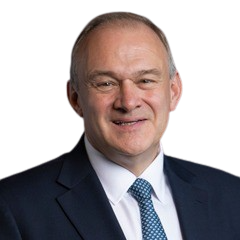
Vicky Foxcroft is the Labour MP for Lewisham North, having first been elected for the predecessor seat of Lewisham Deptford at the 2015 general election.
A former government whip, she resigned from her position in opposition to the government’s proposed welfare cuts in June 2025.
In the 2024 general election, Vicky Foxcroft won 25,467 votes, representing 57.7% of the vote. The Green Party candidate, Adam Pugh, received 9,685 votes (21.9%), while the Liberal Democrat candidate, Jean Branch, secured 3,284 votes (7.4%). Vicky Foxcroft was duly elected with a majority of 15,782 votes.
The Lewisham North constituency was created for the 2024 election, primarily formed from the abolished Lewisham Deptford seat. It covers areas including Lewisham, New Cross, and parts of Deptford in South East London. The area is considered a safe Labour seat. Foxcroft’s immediate predecessor as the MP for Lewisham Deptford was Joan Ruddock, a former Labour frontbencher.
Political Career
Foxcroft currently serves as parliamentary under-secretary of state in the Department for Digital, Culture, Media and Sport. She was appointed to this role in July 2026, following the Labour leadership contest and Andy Burnham’s elevation as prime minister.
Following the 2024 general election, which saw the Labour Party returned to power after 14 years in opposition, Vicky Foxcroft was appointed as a government whip (lord commissioner of HM Treasury). This role meant Foxcroft was partly responsible for enforcing party discipline and managing the government’s legislative agenda in the House of Commons. As a whip, Foxcroft’s primary duty was to ensure that the party’s MPs attended parliamentary votes and supported the government’s position.
Foxcroft resigned from this post in June 2025 in opposition to the government’s proposed welfare cuts, totalling £5 billion worth of savings.
In her resignation statement, addressed to the prime minister, Foxcroft wrote that she could not vote “for reforms which include cuts to disabled people’s finances”.
She stated: “I absolutely understand the need to address the ever-increasing welfare bill in these difficult economic times, but I have always believed this could and should be done by supporting more disabled people into work.
“I do not believe that cuts to personal independence payment (PIP) and the health element of Universal Credit should be part of the solution.”
Foxcroft admitted she has “wrestled” with the decision over whether to resign, but said: “Sadly it now seems that we are not going to get the changes I desperately wanted to see.
“I therefore tender my resignation as I know I will not be able to do the job that is required of me and whip – or indeed vote – for reforms which include cuts to disabled people’s finances.”
Foxcroft had served as shadow minister for disabled people from April 2020 to May 2024 on Keir Starmer’s Labour frontbench – a fact that informed the significance of her resignation. She previously served as an opposition whip from September 2015 until June 2019, and then as shadow minister for civil society from June 2019 to April 2020.
In November 2025, Foxcroft was among the seven Labour MPs who set out to revive the parliamentary Tribune Group – an influential caucus representing the party’s “soft left”. Led by Louise Haigh and Foxcroft, the group was relaunched to provide an organised voice for the centre-left wing of the parliamentary Labour Party (PLP).
The Tribune group was initially formed in 1964 to support the newspaper of the same name. It served as a prominent forum for those parliamentarians situated on the left of the Labour Party – but it split over Tony Benn’s campaign for the deputy leadership in 1981. Benn’s supporters founded the Campaign group – which evolved into the Socialist Campaign Group (SCG). Today, the Bennite SCG is strongly associated with the Labour left tradition.
During the 1980s, the Tribune group emerged as a more natural home for those on Labour’s “soft left”.
In 2017, the group was relaunched by veteran Labour MP Clive Efford with a mission statement calling for “opportunity and aspiration” to be placed at the heart of the party’s programme. Efford said he had reformed the group to ensure that the centre-left would “have a space in which to put forward ideas and debate which has not been there under successive leaders”.
Foxcroft was among those who again relaunched the group in November 2025. Its leading figures included Foxcroft, Haigh, Debbie Abrahams, Beccy Cooper, Justin Madders, Sarah Owen and Yuan Yang.
In a January 2026 article for LabourList, co-written by this collective, the MPs argued that the party leadership had not “clarified who we stand for, clarity is just as often gained by who we stand against.”
The article added: “So what does a centre-left economic vision look like in practice? First, an economy that serves people, communities, and the common good. That’s why measures like bringing our railways back into public ownership matter.
“When we own essential natural monopolies such as these, we can demand the service we deserve and protect ourselves from predatory practices…
“Labour wins when – as the Tribunes of Rome were charged with doing – it protects and leads the people. We are here to help the Party to remember that mission and to deliver on it.”
In June 2015, Foxcroft introduced the Representation of the People (Young Persons’ Enfranchisement and Education) Bill 2015-16. The private members’ bill sought to reduce the voting age to 16 for all UK elections and referendums and to make provision for education in citizenship and the constitution.
Foxcroft has sat as a member of the House of Commons culture, media and sport select committee (2025-2026).
Foxcroft delivered her maiden speech on 8 June 2015 during the Scotland Bill debate.
In it, she said: “Some might say that learning drama and performing arts was a perfect training ground to be an MP, but if anyone had said to me when I was 17 that I would be an MP, I would not have believed them because, quite honestly, politics was just not for the likes of me.
“That is still the opinion of too many young people, and it has to change. We need every young person – every person – to recognise that politics is not only for a political class, but for everyone. That is why I will continue to meet with young people from our schools, colleges and youth groups to get them involved in politics. Their voice matters; they are the future.”
She added: “For that reason, I want to use the opportunity afforded to me by winning a place in the ballot for private members’ bills on a bill calling for votes for 16 and 17-year-olds. I only secured 16th place in the ballot, but my voice must be heard, just as 16-year-olds should have their voices heard and their votes counted.”
Before entering parliament, Foxcroft served as a Labour councillor for the Brockley ward on Lewisham Council from 2010 to 2014.
Political views
Leadership elections and loyalty
Labour deputy leadership 2025: Foxcroft was one of 117 Labour MPs who nominated Lucy Powell for the party’s deputy leadership in September 2025. The election followed the resignation of Angela Rayner, who stepped down as deputy prime minister and deputy party leader after an investigation into her tax affairs. It marked the first time since 2007 that Labour had held a deputy leadership contest while in government.
Powell, the former leader of the House of Commons, was seen as a candidate representing the party’s “soft left”; she was support by leading soft left figures including Ed Miliband and Andy Burnham. She secured 117 nominations from the Parliamentary Labour Party (PLP), above the 80 required, and went on to win the election – defeating Bridget Phillipson with 54.3% of the vote.
Labour leadership 2020: Foxcroft was one of 31 Labour MPs who nominated Lisa Nandy for the party’s leadership in early 2020. The election was triggered by the resignation of Jeremy Corbyn following the party’s defeat in the 2019 general election, which resulted in Labour’s fewest seats in the House of Commons since 1935.
Nandy, the MP for Wigan, argued that the party needed a “bridge” to reconnect with traditional working-class voters in northern England. She finished third in the contest with 16.2% of the vote.
During the campaign, Foxcroft argued that Nandy, the MP for Wigan, was the candidate who best understood “why we lost so badly in our former heartlands” at the 2019 general election.
She added: “Lisa has already proven herself to be a savvy media performer, taking on the formidable Andrew Neil and showing that she is a force to be reckoned with at Labour hustings. It’s clear that the more people see of her, the more convinced they are that she is the woman for the job.”
Labour leadership 2015: Foxcroft nominated Yvette Cooper for the party’s leadership in June 2015. The election followed the resignation of Ed Miliband after the party’s defeat in the 2015 general election. It was the first contest held under the “one member, one vote” system, which replaced the previous electoral college.
Cooper, the shadow home secretary, secured 59 nominations from the Parliamentary Labour Party (PLP), comfortably exceeding the 35 required to reach the final ballot. She ultimately finished third in the contest with 17% of the vote.
Labour leadership 2016: Foxcroft was one of 162 Labour MPs who nominated Owen Smith for the party’s leadership in July 2016. The election was triggered by a challenge to Jeremy Corbyn following the EU referendum, which led to a wave of shadow cabinet resignations and a vote of no confidence supported by 172 MPs. Smith, the former shadow work and pensions secretary, was ultimately defeated by Corbyn, who won with an increased mandate of 61.8% of the vote.
Corbyn loyalty list: In March 2016, Foxcroft was labelled as “core group plus” by the Corbyn leadership in a leaked list which categorised Labour MPs by their perceived loyalty. This label suggested the Corbyn leadership viewed Foxcroft as a reliable supporter.
Factional identity and party tradition
Disability Labour: Foxcroft is listed as a patron of Disability Labour – a socialist society affiliated with the Labour Party that represents and supports disabled members. Founded in 1996, it campaigns for disability rights and to ensure that the perspectives of disabled people are central to the formulation of Labour Party policy.
Brexit and Europe
Brexit referendum: Foxcroft supported the Remain campaign in the 2016 referendum on Britain’s membership of the European Union (EU), and therefore agreed with a majority of constituents, 75.6% of whom also voted to Remain.
Article 50: In February 2017, Foxcroft voted against the European Union (Notification of Withdrawal) Bill. The legislation empowered the prime minister to notify the Council of the European Union of the UK’s intention to withdraw, formally triggering the process set out in Article 50 of the Treaty on European Union. MPs supported the bill by 498 votes to 114 at second reading. In voting against the bill, Foxcroft defied the party whip – one of 47 Labour MPs to do so.
Remain pledge: During the 2019 general election campaign, Foxcroft was one of 193 Labour candidates to sign the anti-Brexit “Remain pledge”, drawn up by the campaign group Remain Labour.
It stated: “Labour is committed to a confirmatory referendum, to give you the final say on Brexit. If elected as your Labour MP, I pledge to campaign to Remain in the EU.”
Welfare
Welfare ‘reasoned amendment’ (June 2025): Having resigned from her government post, Foxcroft was one of the over 120 Labour MPs to sign the reasoned amendment to the government’s flagship welfare bill which aimed to reject the proposed legislation.
The amendment, in the name of senior Labour MP Dame Meg Hillier, objected to the fact that the bill had not been subject to a “formal consultation with disabled people” and that “250,000 people will be pushed into poverty” as a result of it, according to a government impact assessment.
The motion also called on the government to wait for the publication of the review into the Personal Independence Payment (Pip), helmed by minister Sir Stephen Timms, and the independent review, conducted by Sir Charlie Mayfield, into how the employment of disabled people could be boosted.
Welfare vote (July 2025): Foxcroft voted in favour of the government’s flagship welfare bill at second reading. The vote came after ministers agreed to significant concessions to avoid defeat via a mass rebellion of Labour MPs on 1 July 2025.
Assisted dying
Foxcroft voted against the Terminally Ill Adults (End of Life) Bill, better known as the assisted dying bill, at both second reading (November 2024) and third reading (June 2025).
Foxcroft had supported similar legislation when it was considered by MPs in 2015. However, she admitted to changing her stance after serving as shadow minister for disabled people on the Labour frontbench.
She told PoliticsHome: “When I became shadow minister for disabled people, I engaged with a lot of disabled people and charities and they are really scared.
“I just do not think that you can ever go forward with something like this while you have a large amount of population that are terrified of it. And that is why I’m not in favour of it: because of fear, real fear.
Foxcroft argued that the disproportionate number of deaths of disabled people from Covid-19 had left many feeling “like an afterthought from this government on so many occasions”.
She added: “It’s not about this safeguard or that safeguard, it’s about how [disabled people] feel about the legislation and how they feel that it could be that slippery slope.”
Social values and conscience issues
Social media ban: In January 2026, Foxcroft was one of over 60 Labour MPs to sign a letter to the prime minister calling for the introduction of an Australia-style ban on social media access for children under the age of 16. Organised by Plymouth Moor View MP Fred Thomas, the initiative brought together a cross-factional coalition of backbenchers – spanning the Socialist Campaign Group, Tribune Group and Blue Labour – to demand action.
The letter called on Keir Starmer to “show leadership” by introducing a minimum age for social media access “to protect young people from the consequences of unregulated, addictive social media platforms”.
It stated: “We are all strong supporters of technology, and of this Labour government’s ambition to use tech to improve lives. But successive governments have done far too little to protect young people from the consequences of unregulated, addictive social media platforms.”
Foreign policy and security
Trident renewal (2016): Foxcroft voted against a government motion calling for the renewal of the Trident nuclear deterrent system in July 2016. The motion, which was passed by 472 votes to 117, committed the UK to constructing a new fleet of submarines to carry the nation’s nuclear weapons. Labour was split over the issue with 140 of its 230 MPs going against leader Jeremy Corbyn and backing the motion.
Syria airstrikes (2015): Foxcroft voted against a government motion to extend UK airstrikes against Isis from Iraq into Syria in December 2015. The motion, which was passed by 397 votes to 223 after a ten-hour debate in the House of Commons, authorised the RAF to conduct strikes against Isis targets in Syria.
Sanctioned (Russia): In April 2022, Foxcroft was among the group of MPs placed on a sanctions list by the Russian government. The measure barred them from entering Russia and was presented by Moscow as a retaliatory response to the UK’s stance on the invasion of Ukraine.
Palestine
LFPME: Foxcroft has been listed as a member of Labour Friends of Palestine and the Middle East (LFPME). The organisation’s stated aim is to promote peace and justice in the region through the application of international law and respect for human rights.
Before Politics
Born Victoria Jane Foxcroft on 9 March 1977 in Chorley, Lancashire, she studied drama and business studies at De Montfort University between 1996 and 2000.
Foxcroft joined the Labour Party in 1997 and has sat on the party’s National Policy Forum.
She worked as a trade union official from 2002 until her election in 2015, holding roles as a research officer, political officer and finance sector officer for the Amalgamated Engineering and Electrical Union (AEEU) and its successor unions Amicus and Unite the Union.
Personal Life
In October 2016, Foxcroft delivered a moving speech during a commons debate on baby loss.
She shared her experience of becoming pregnant at 16 and losing her daughter, Veronica, five days after birth due to complications involving the umbilical cord. She stated the experience had left her with a fear of having more children.
Foxcroft told MPs: “I guess that now is the time for me to talk about and pay tribute to my little angel, Veronica. When I was 16 years old, I became unexpectedly pregnant. At first, I was terrified and even debated having her adopted, but during my pregnancy something changed – I became so attached; I was excited; I was going to be the best mum ever.
“Me and my partner at the time named our baby girl Veronica. We could not wait to meet her. I went full term and was 10 days overdue, so they had to induce me. I was in labour for a long time. I was sick, tired and in a huge amount of pain.”
She added: “Veronica’s heartbeat was checked regularly and everything was fine, but once I was dilated, the staff checked for her heartbeat again and could not find it. This went on for about 20 minutes, checking with different machines because the staff were not sure whether the equipment was broken.
“Eventually, the doctor was called and I was rushed to the emergency room. I had to push, and forceps was used to get her out. The umbilical cord had been wrapped around her throat for the whole 20 minutes.
“She lived for five days, but we had to agree to the life machine being turned off. I got to hold her then for the first time until her heartbeat eventually stopped. She stayed alive for hours. I never wanted to let her go.”
Speaking to GB News in September 2021, Foxcroft spoke of her experiences of abuse.
She said: “I spent a large amount of our childhood moving about quite a lot, it made it hard to get a decent education. My mum suffered a lot of domestic abuse when we were younger and that’s part of the reason we had to move about so much.”
She added: “Sometimes domestic abuse is unfortunately also with sexual abuse. Sometimes, me and my sister were subject to that when we were younger.
“You’re too scared to say anything that’s happening to you in life because your mum’s also being beaten up and you don’t know what will happen if you go and raise things that have gone and happened in your life.”
Of the perpetrator, Foxcroft said: “He’s dead now. He had quite a brutal death. I have to say when we got interviewed by the police because of this, because we’re obviously an interested party, I felt really bad because I was so happy he died. I don’t often feel like that in my life.”
She explained: “I was like, he’s had a pretty brutal death and it makes me feel guilty that I feel happy about that. But when we were younger and everything got reported to the police, we got taken to a safe house. Me and my sister were separated from each other and it was awful. They had to separate us but for my sister she really didn’t understand it. She thought I was abandoning her.”
Trivia
In April 2021, during a session of prime minister’s questions, Foxcroft asked the then-prime minister, Boris Johnson, about the lack of a sign language interpreter in 10 Downing Street’s new press briefing room.
Foxcroft, first asked her question (“Why no interpreter in-room briefings, why is this not sorted?”) in British Sign Language (BSL), leaving the prime minister unable to understand her.
https://x.com/SkyNews/status/1382296709963874308
Foxcroft then told the House: “If the prime minister doesn’t understand, imagine how those who rely on British Sign Language feel at his press briefings: £2.6 million spent on the new press room, yet still no interpreter.
“What message does he think this sends to disabled people?”
Foxcroft had been learning sign since taking on her role as shadow minister for disabled people in April 2020.
Vicky Foxcroft has not written for Politics.co.uk.