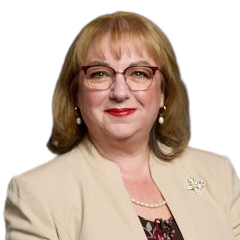
Sharon Hodgson is the Labour MP for Washington and Gateshead South, having first been elected for the predecessor seat of Gateshead East and Washington West at the 2005 general election.
In the 2024 general election, Hodgson won 17,682 votes, representing 47.8% of the vote. The Reform UK candidate, Paul Donaghy, received 10,769 votes (29.1%), while the Conservative candidate, Shaun Parsons, secured 4,654 votes (12.6%). Hodgson was duly elected with a majority of 6,913 votes.
The Washington and Gateshead South constituency was newly created for the 2024 election, drawing primarily from the abolished Washington and Sunderland West seat. It covers Washington in the City of Sunderland and southern parts of Gateshead. The area is considered safe Labour territory.
Hodgson’s immediate predecessor as the MP for Gateshead East and Washington West was Joyce Quin of the Labour Party, who represented the seat from 1997 to 2005
Political Career
Hodgson served as parliamentary under-secretary of state for public health and prevention from March to July 2026. She left government as part of the July 2026 reshuffle conducted by Andy Burnham upon his appointment as prime minister.
Hodgson served as a trade envoy to Japan from January 2025 to March 2026. Appointed by the trade secretary, envoys are tasked with boosting British exports and attracting foreign investment. An envoy’s duties typically involve leading trade delegations, lobbying host governments on market access issues, and building relationships with overseas businesses.
At the beginning of the parliament elected in 2024, Hodgson stood unsuccessfully for election as chair of the education committee. In the contest, the results of which were announced in September 2024, Hodgson secured 214 votes, placing second. They were eliminated in the second round. They were ultimately defeated by Helen Hayes, who won the support of 312 colleagues.
Hodgson served as chair of the House of Commons finance committee from March 2023 to May 2024. The finance committee is an internal body of the House of Commons responsible for overseeing the financial management of the House itself. Unlike a select committee, it does not scrutinise government departments. Instead, its remit is purely administrative and focused on the House’s own budget and expenditure.
Hodgson previously served as parliamentary private secretary (PPS) to the leader of the opposition, Keir Starmer, from May 2021 until her election as finance committee chair. A PPS acts as an unpaid parliamentary assistant, providing a link between the senior frontbencher and backbench MPs.
Hodgson has significant frontbench experience, serving in shadow ministerial and ministerial posts under successive Labour leaders. She was shadow minister for veterans from April 2020 to May 2021; shadow minister for public health from October 2016 to April 2020; shadow minister for children and families from October 2010 to October 2013, and again from May 2015 to June 2016; and shadow minister for women and equalities from October 2013 to September 2015.
In June 2016, Hodgson was among those to resign from the shadow frontbench in protest at Jeremy Corbyn’s leadership and his approach to the 2016 referendum on Britain’s membership of the European Union (EU).
In her letter of resignation, Hodgson said she was “not confident” Cobryn could provide the leadership required in the wake of the referendum campaign. She also expressed concern over Corbyn’s “ambivalence and lacklustre” approach to the campaign, saying he had “let down the many people who elected you in such large numbers to be our leader last summer.”
She wrote: “I fear your leadership could force Labour into fighting for its very existence rather than campaigning to form the next government. I am concerned that this will leave the people that we both came into politics to help and serve in a far worse position, abandoned for a generation.”
https://x.com/sharonhodgsonmp/status/747471523800322049
Hodgson went on to accuse Corbyn of “undermining” Labour MPs in a statement issued to members of her constituency Labour Party (CLP). She claimed she was “completely undermined” by John McDonnell, the then-shadow chancellor, after working on a manifesto policy around special educational needs and disabilities. She wrote that three days after the launch, McDonnell announced his support for another approach without consulting her.
Hodgson wrote: “Without consulting me, John had announced his support for a shadow neurodiversity minister and an autism manifesto.
“My office picked up John’s announcement on Twitter [now X], and subsequently raised the issue with him, requesting an opportunity to meet to discuss the matter further. After receiving no response, my team made several more attempts to reach out to John’s office, which were all met with no answer.”
Hodgson said she raised the issue with the leader’s office. But she added that instead of “support and an offer to resolve the problem, we were simply acknowledged with the sentence, ‘I appreciate the point’, and then told to expect an apology and clarification later, which never arrived.”
She added: “In all my time in parliament, I have never experienced such lack of communication or respect for a shadow minister’s work from a leader.
“To form a credible and effective opposition, a Leader must work with the PLP and respect the opinions of their shadow ministers.”
Hodgson was briefly an opposition whip from May to October 2010 in the interim/caretaker frontbench appointed after the 2010 general election. From June 2009 to May 2010, she was an assistant government whip. In these capacities, Hodgson was partly responsible for enforcing party discipline. As a whip, her primary duty was to ensure that her party’s MPs attended parliamentary votes and supported the frontbench’s position.
During the last Labour government, Hodgson also served as PPS Bob Ainsworth at the Ministry of Defence, Liam Byrne at the Home Office, and Dawn Primarolo at the Department of Health.
In June 2010, Hodgson introduced the Sale of Tickets (Sporting and Cultural Events) Bill. The bill was an early attempt to regulate the secondary ticketing market and protect fans from industrial-scale touting. It sought to ban the resale of tickets for profit and require greater transparency from sellers.
Speaking in the bill’s second reading debate, Hodgson told the House: “While I initially approached the bill from a fan’s perspective, I quickly got a better picture of the industry’s perspective as I met people who had got in touch about it, but I think the most strikingly unjustifiable part of the secondary market is the resale of charity tickets.”
It was met with objections from Conservative MPs, including Jacob Rees-Mogg and Sajid Javid. Rees-Mogg referred to the bill as a “harsh legislative measure”, while Javid appeared to defend the practice as “an excellent example of enterprise culture”.
Javid, who would go on to serve across several senior cabinet positions, argued that the bill “really does not understand the most basic laws of supply and demand.”
Hodgson’s primary legislative achievement is the Special Educational Needs (Information) Act 2008, which she proposed as a private member’s bill in December 2007. The act required the relevant secretary of state to publish information about children in England with special educational needs to enable government and campaigners to assess which local authorities are best meeting the identified needs of children.
Hodgson’s bill received royal assent on 21 July 2008, which made Hodgson just the fourth female MP that decade to pass such a bill.
Hodgson told the House at second reading: “Today, we can come closer to ensuring that special consideration for those with special educational needs is enshrined in statute…
“All our children should be able to use the talents they have to reach their full potential and build themselves a brighter future. This bill will be a step towards that, and I commend it to the House.”
Hodgson is a leading figure within Labour Friends of Israel (LFI). LFI is one of the most established and prominent advocacy groups within Labour, campaigning for a strong bilateral relationship between the UK and Israel and working to bolster ties with its sister party, Israeli Labor. The organisation advocates for a two-state solution, with a secure Israel alongside a “viable, democratic and independent” Palestinian state.
A senior MP, Hodgson served on the liaison committee from March 2023 to May 2024 – by virtue of her role as finance committee chair, the children, schools and families committee from November 2007 to May 2010, regulatory reform committee from July 2005 to May 2010, and European scrutiny committee from December 2005 to July 2006.
Hodgson is listed as a member of the all-party parliamentary groups (APPGs) for art, craft and design in education, the ‘First Do No Harm’ campaign (concerning mesh, Primodos and valproate), the Leamside Line, parents, school food and ticket abuse.
Hodgson delivered her maiden speech on 25 May 2005.
In it, she said: “Over the past eight years, Labour has demonstrated that it is both possible and desirable to harness both social justice and economic prosperity, helping to ensure that we have a fair market, which is the servant of the people, not the other way around.”
She added: “I am proud and privileged to represent the area where I was born and brought up, and where I intend to be a strong local voice for all my constituents, regardless of whom they voted for. I grew up in the 1980s in a one-parent family, surviving on benefits, until I went out to work to earn a living. I can tell you now, Madam Deputy Speaker, that it was not a good time to be poor.”
Political views
Leadership elections and loyalty
Labour deputy leadership 2025: Hodgson was one of 175 Labour MPs who nominated Bridget Phillipson for the party’s deputy leadership in September 2025. The election followed the resignation of Angela Rayner, who stepped down as deputy prime minister and deputy party leader after an investigation into her tax affairs. It marked the first time since 2007 that Labour had held a deputy leadership contest while in government.
Phillipson, the serving education secretary, was widely viewed as the candidate favoured by Downing Street and the party leadership. She secured 175 nominations from the Parliamentary Labour Party (PLP), comfortably exceeding the 80 required to reach the final ballot. She was ultimately defeated by Lucy Powell.
Labour leadership 2020: Hodgson was one of 31 Labour MPs who nominated Lisa Nandy for the party’s leadership in early 2020. The election was triggered by the resignation of Jeremy Corbyn following the party’s defeat in the 2019 general election, which resulted in Labour’s fewest seats in the House of Commons since 1935.
Nandy, the MP for Wigan, argued that the party needed a “bridge” to reconnect with traditional working-class voters in northern England. She finished third in the contest with 16.2% of the vote.
Labour leadership 2015: Hodgson nominated Yvette Cooper for the party’s leadership in June 2015. The election followed the resignation of Ed Miliband after the party’s defeat in the 2015 general election. It was the first contest held under the “one member, one vote” system, which replaced the previous electoral college.
Cooper, the shadow home secretary, secured 59 nominations from the Parliamentary Labour Party (PLP), comfortably exceeding the 35 required to reach the final ballot. She ultimately finished third in the contest with 17% of the vote.
Corbyn loyalty list: In March 2016, Hodgson was labelled as “core group plus” by the Corbyn leadership in a leaked list which categorised Labour MPs by their perceived loyalty. This label suggested the Corbyn leadership viewed Hodgson as a reliable supporter.
Labour leadership 2016: Hodgson supported Angela Eagle for the party’s leadership in July 2016. The election was triggered by a challenge to Jeremy Corbyn following the EU referendum, which led to a wave of shadow cabinet resignations and a vote of no confidence supported by 172 MPs.
Eagle, the former shadow first secretary of state, was the first to formally launch a challenge against Corbyn. During the campaign, Hodgson said it was “about time” Labour elected a woman leader.
However, Eagle withdrew from the race on 19 July after attracting fewer nominations than Owen Smith. Hodgson subsequently switched her support to Smith.
Corbyn was ultimately re-elected with an increased mandate of 61.8% of the vote.
Labour leadership 2010: Hodgson was one of 33 Labour MPs who nominated Ed Balls for the party’s leadership in May 2010. The election followed the resignation of Gordon Brown, who stepped down as prime minister and Labour leader after the 2010 general election.
Balls, the former children, schools and families secretary, was regarded as the ultimate “Brownite” candidate, having served as Brown’s chief economic adviser for a decade before entering parliament. He secured 33 nominations from the Parliamentary Labour Party (PLP), the minimum required to reach the final ballot. He ultimately finished third with 16% of the vote
Factional identity and party tradition
Tribune group (2017): Hodgson was listed among the supporters of the Tribune parliamentary group – a caucus generally described as representing the party’s “soft left”.
The Tribune group was initially formed in 1964 to support the newspaper of the same name. It served as a prominent forum for those parliamentarians situated on the left of the Labour Party – but it split over Tony Benn’s campaign for the deputy leadership in 1981. Benn’s supporters founded the Campaign group – which evolved into the Socialist Campaign Group (SCG). Today, the Bennite SCG is strongly associated with the Labour left tradition.
During the 1980s, the Tribune group emerged as a more natural home for those on Labour’s “soft left”.
In 2017, Efford officially re-launched the group with a new mission statement calling for “opportunity and aspiration” to be placed at the heart of the party’s programme. Efford said he had reformed the group to ensure that the centre-left of the Parliamentary Labour Party (PLP) “have a space in which to put forward ideas and debate which has not been there under successive leaders”.
He added: “The view of Labour MPs at the moment tends to be that too much are just Blairites who want to stab Jeremy Corbyn in the back. We want to show that is not where we are, and that we want to develop our own ideas that represent the centre-left of the party.”
Brexit and Europe
Brexit referendum: Hodgson supported the Remain campaign in the 2016 EU referendum, and therefore disagreed with a majority of constituents, 61.9% of whom voted to Leave.
Article 50: In February 2017, Hodgson voted in favour of the European Union (Notification of Withdrawal) Bill. The legislation empowered the prime minister to notify the Council of the European Union of the UK’s intention to withdraw, formally triggering the process set out in Article 50 of the Treaty on European Union. MPs supported the bill by 498 votes to 114 at second reading.
Welfare
Welfare vote (July 2025): Hodgson voted in favour of the government’s flagship welfare bill at second reading. The vote came after ministers agreed to significant concessions to avoid defeat via a mass rebellion of Labour MPs on 1 July 2025.
Assisted dying
Hodgson voted in favour of the Terminally Ill Adults (End of Life) Bill, better known as the assisted dying bill, at the second reading (November 2024). On the third reading of the Terminally Ill Adults (End of Life) Bill (Assisted Dying Bill) in June 2025, Hodgson did not record a vote.
Social values and conscience issues
Abortion decriminalisation (2025): Hodgson voted in favour of a backbench amendment to the Crime and Policing Bill that sought to decriminalise abortion in England and Wales in June 2025. The amendment, which was passed by a majority of 242 votes, removed women from the threat of prosecution for ending a pregnancy at any stage. As an issue of conscience, MPs were allowed to vote according to their personal beliefs.
Same-sex marriage (2013): In February 2013, Hodgson voted in favour of the Marriage (Same Sex Couples) Bill at its second reading. The landmark piece of legislation, which received its second reading by 400 votes to 175, legalised marriage for same-sex couples in England and Wales.
Social media ban: In January 2026, Hodgson was one of over 60 Labour MPs to sign a letter to the prime minister calling for the introduction of an Australia-style ban on social media access for children under the age of 16. Organised by Plymouth Moor View MP Fred Thomas, the initiative brought together a cross-factional coalition of backbenchers – spanning the Socialist Campaign Group, Tribune Group and Blue Labour – to demand action.
The letter called on Keir Starmer to “show leadership” by introducing a minimum age for social media access “to protect young people from the consequences of unregulated, addictive social media platforms”.
It stated: “We are all strong supporters of technology, and of this Labour government’s ambition to use tech to improve lives. But successive governments have done far too little to protect young people from the consequences of unregulated, addictive social media platforms.”
Foreign policy and security
Syria airstrikes (2015): Hodgson voted against a government motion to extend UK airstrikes against Isis from Iraq into Syria in December 2015. The motion, which was passed by 397 votes to 223 after a ten-hour debate in the House of Commons, authorised the RAF to conduct strikes against Isis targets in Syria.
Sanctioned (Russia): In April 2022, Hodgson was among the group of MPs placed on a sanctions list by the Russian government. The measure barred them from entering Russia and was presented by Moscow as a retaliatory response to the UK’s stance on the invasion of Ukraine.
Palestine
Palestinian recognition vote (2014): In October 2014, Hodgson voted in favour of recognising Palestine as a state. The motion, passed by 274 votes to 12, called on the government to “recognise the state of Palestine alongside the state of Israel as a contribution to securing a negotiated two-state solution”.
Before Politics
Born Sharon Hodgson in Gateshead on 1 April 1966. She attended Heathfield Senior High School and Newcastle College.
She worked as an accounts clerk and payroll administrator, including time at Northern Rock building society.
After being a full-time mother, she became a Labour Party organiser (1999-2002) and later worked for the charity Total Learning Challenge. From 2002 to 2005, she was the Labour link co-ordinator for the trade union UNISON.
Personal Life
Hodgson is married to Alan Hodgson. They have two children, a son and a daughter.
According to the Register of Members’ Financial Interests (published June 2025), she employs her husband, Alan, as her full-time office manager.
Hodgson has spoken publicly about living with Type 2 diabetes.
In a November 2016 Westminster Hall debate, Hodgson said: “I also want to disclose from the off that sadly I was diagnosed as a type 2 diabetic just a year ago, but through getting control of my diet and achieving weight loss, which is still ongoing, my diabetes is thankfully very well under control.
“This debate is therefore very close to my heart.”

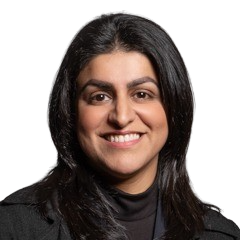

Sharon Hodgson: ‘Compensation for pelvic mesh and valproate scandal victims is long overdue’
2 April 2025