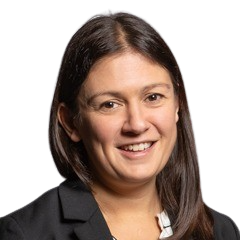
Lisa Nandy is the Labour MP for Wigan, having first been elected to parliament at the 2010 general election,
In the 2024 general election for the Wigan constituency, Nandy received 19,401 votes, representing 47.4% of the vote share. The Reform UK candidate, Andy Dawber, came second with 9,852 votes (24.1%), while the Conservative candidate, Henry Mitson, secured 4,310 votes (10.5%). Lisa Nandy was duly elected with a majority of 9,549.
Political Career
Nandy currently serves as secretary of state for digital, culture, media and sport. Nandy was retained in this role as part of the July 2026 cabinet reshuffle, following the Labour leadership contest and Andy Burnham’s elevation as prime minister.
Nandy was appointed as secretary of state for culture, media and sport in July 2024. Her appointment came after the incumbent shadow secretary of state for culture, media and sport, Thangam Debbonaire, lost her seat at the 2024 general election.
In April 2025, Nandy stated that she had changed her position on the monarchy. Having indicated during her 2020 leadership campaign that she would vote to abolish it, Nandy said her work with the royal family since then had led her to believe they were needed to help “deliver the benefits to Britain” in a turbulent world.
She stated: “I have changed my mind about that. I think, in principle I believe that people should have the power to decide who rules them. But I think the monarchy under the queen and under this current king command strong public support.
“I think right now, if you look at the turmoil going on in the world, then we do need a royal family who are able to help us to deliver the benefits to Britain. So I’m not afraid to say when I change my mind and I have changed my mind about that.”
Prior to the 2024 general election, which saw Labour returned to power after 14 years in opposition, Nandy held several senior shadow ministerial roles. Most recently, she was shadow minister for international development from September 2023 to May 2024.
Previously, Nandy served as shadow secretary of state for levelling up, housing, communities & local government from November 2021 to September 2023 and shadow foreign secretary from April 2020 to November 2021.
As shadow levelling up secretary, Nandy described the government’s levelling up white paper, published in February 2022, as “12 admissions of failure”.
Nandy told the commons: “After all the delays, all the slogans and all the big promises, is this it? Is this really it?
“The sum total of ambition for our coastal and industrial towns, our villages and our great cities is a history lesson on the rise of the Roman empire, and ministers scurrying around Whitehall, shuffling the deckchairs and cobbling together a shopping list of recycled policies and fiddling the figures.
“Is this really it?”
Nandy stood as a candidate in the 2020 Labour leadership election. She campaigned on a platform of bringing Labour “home” to its traditional heartlands after the party was routed at the 2019 general election.
Announcing her candidacy, Nandy told BBC Breakfast: “People have been telling us for some time that we can’t just keeping changing the man at the top, and determining the priorities and the solutions to the problems that they face from behind a desk in Victoria Street, Westminster or Whitehall.”
She added: “I have the duty to stand up for those people and see if Labour can become a national force again, rooted in our communities and capable of speaking with and for those people.”
Nandy ultimately finished third in the contest with 16.2% of the vote.
Under Jeremy Corbyn’s leadership of the Labour Party, Nandy was shadow secretary of state for energy and climate change from September 2015 to June 2016. Under Ed Miliband, she was shadow minister for charities and civil society from October 2013 to September 2015 and shadow minister for education from March to October 2013.
In June 2016, Nandy was among those to resign from the shadow frontbench in protest at Jeremy Corbyn’s leadership and his approach to the Brexit referendum.
In her resignation letter, Nandy said the Labour Party needed “leadership that can overcome not only divisions within political parties but across the country.”
She wrote: “I believe Tom Watson ought to take over as a caretaker leader to stabilise the party and to enable us to play a full part as the official opposition in one of the most difficult. periods this country has ever faced.
“I will always be proud to have worked for someone with such a passionate commitment to tackling climate change, to have been part of a team that gave Labour and Britain a strong voice during the Paris negotiations, and to have consistently challenged the government’s attempts to dismantle Britain’s clean energy schemes.”
Nandy subsequently co-chaired Owen Smith’s unsuccessful campaign to unseat and succeed Corbyn as Labour leader in the 2016 contest.
In January 2014, Nandy called on David Cameron as prime minister to apologise for the government’s actions during the 1984-1985 miners’ strike.
The question came as cabinet papers revealed that Thatcher called for contingency plans to be formulated over the use of military personnel to move coal stocks. At the time, Thatcher was presented with a list of “worst case” options, including power cuts and the prospect of placing British industry on a “three-day week”.
Nandy asked Cameron: “This month, cabinet papers have revealed that the Thatcher government sought to escalate the miners’ strike, close pits and undermine solidarity. The scars from that dispute run deep in communities such as Wigan, where some families have never recovered and where people have died while waiting for justice.
“Thirty years on, those communities deserve the truth and an apology. Why are they still waiting?”
The prime minister responded: “I have to say that if anyone needs to make an apology for their role in the miners’ strike, it should be Arthur Scargill for the appalling way in which he led that union.
“While we are at it, if we want to ask about other people’s roles, there was the role of the then leader of the Labour Party, who at the time never condemned the fact that they would not hold a ballot. So I think there are lessons for Labour to learn, and judging by their performance today, they have not learned any of them.”
Nandy served as a member of the House of Commons education committee from July 2010 to September 2012.
On 2 June 2010, Nandy delivered her maiden speech during a debate on education and health.
In it, she said: “It is with that sense of energy and ambition that I approach this parliament. I am ambitious for positive new solutions where they are so badly needed, but I am also ambitious for respect for those policies that have served us so well.
“We must continue to invest in social housing, including council housing, and we must strive for a level playing field in education if we want a society in which the choices we make are more important than what we are born into. Decent workplace rights and strong trade unions will always be the most fundamentally effective way to tackle fear about immigration.
“If we are serious about showing people that we are on their side, we should back the living wage and the minimum income guarantee. We must lift people up, not drive others down.”
Before entering parliament, Nandy served as a Labour councillor on Hammersmith and Fulham London Borough Council (2006-2010).
Political Views
Leadership elections and loyalty
Labour leadership 2015: Nandy was one of 68 Labour MPs who nominated Andy Burnham for the party’s leadership in June 2015. The election followed the resignation of Ed Miliband after the party’s defeat in the 2015 general election. It was the first contest held under the “one member, one vote” system, which replaced the previous electoral college.
Burnham, the shadow health secretary, was initially considered the frontrunner. He secured 68 nominations from the Parliamentary Labour Party (PLP), comfortably exceeding the 35 required to reach the final ballot. He ultimately finished second in the contest with 19% of the vote, losing to Jeremy Corbyn in the first round.
Corbyn loyalty list: In March 2016, Nandy was labelled as “core group plus” by the Corbyn leadership in a leaked list which categorised Labour MPs by their perceived loyalty. This label suggested the Corbyn leadership viewed Nandy as a reliable supporter.
Labour leadership 2016: Nandy was one of 162 Labour MPs who nominated Owen Smith for the party’s leadership in July 2016. The election was triggered by a challenge to Jeremy Corbyn following the EU referendum, which led to a wave of shadow cabinet resignations and a vote of no confidence supported by 172 MPs. Smith, the former shadow work and pensions secretary, was ultimately defeated by Corbyn, who won with an increased mandate of 61.8% of the vote.
Labour leadership 2010: Nandy was one of 63 Labour MPs who nominated Ed Miliband for the party’s leadership in May 2010. The election followed the resignation of Gordon Brown, who stepped down as prime minister and Labour leader after the 2010 general election.
Miliband, the former energy and climate change secretary, was seen as the candidate of the “soft left” and secured significant backing from affiliated trade unions. He secured 63 nominations from the Parliamentary Labour Party (PLP), exceeding the 33 required to reach the final ballot. Miliband went on to narrowly defeat his brother, David, in the final round by 50.7% to 49.3%.
Factional identity and party tradition
Tribune group (2017): Nandy was listed among the supporters of the Tribune parliamentary group – a caucus generally described as representing the party’s “soft left”.
The Tribune group was initially formed in 1964 to support the newspaper of the same name. It served as a prominent forum for those parliamentarians situated on the left of the Labour Party – but it split over Tony Benn’s campaign for the deputy leadership in 1981. Benn’s supporters founded the Campaign group – which evolved into the Socialist Campaign Group (SCG). Today, the Bennite SCG is strongly associated with the Labour left tradition.
During the 1980s, the Tribune group emerged as a more natural home for those on Labour’s “soft left”.
In 2017, Efford officially re-launched the group with a new mission statement calling for “opportunity and aspiration” to be placed at the heart of the party’s programme. Efford said he had reformed the group to ensure that the centre-left of the Parliamentary Labour Party (PLP) “have a space in which to put forward ideas and debate which has not been there under successive leaders”.
He added: “The view of Labour MPs at the moment tends to be that too much are just Blairites who want to stab Jeremy Corbyn in the back. We want to show that is not where we are, and that we want to develop our own ideas that represent the centre-left of the party.”
Brexit and Europe
Brexit referendum: Nandy supported Remain in the 2016 Brexit referendum, and therefore disagreed with a majority of her constituents, 63% of whom voted to Leave.
Article 50: In February 2017, Nandy voted in favour of the European Union (Notification of Withdrawal) Bill. The legislation empowered the prime minister to notify the Council of the European Union of the UK’s intention to withdraw, formally triggering the process set out in Article 50 of the Treaty on European Union. MPs supported the bill by 498 votes to 114 at second reading.
In October 2017, Nandy stated that attempting to reverse the Brexit result would be catastrophic for politics.
She told QMUL’s Mile End Institute: “There were people who came out to vote in this referendum who hadn’t voted for years. It was quite inspiring in a way, and I don’t say that lightly – I know that for many people this is an absolutely desperate situation that we find ourselves in.
“But it was inspiring because for a long time we’d written off that group of people. We thought they were apathetic – it turned out they weren’t apathetic, they were angry.”
She added: “I heard a roar of noise from a group of people who felt that over the last ten, twenty, thirty years, that life has got harder and less hopeful. Work has got less secure, money has got tighter, mortgages got harder to pay.
“They’re spending less time with their family and more of the things that they value – green spaces, decent high streets, libraries – are under threat or disappearing. They felt like this was the last line of defence for the things that matter, for people like me to wake up and listen and respond.”
Welfare
Welfare vote (July 2025): Nandy voted in favour of the government’s flagship welfare bill at second reading. The vote came after ministers agreed to significant concessions to avoid defeat via a mass rebellion of Labour MPs on 1 July 2025.
Assisted dying
Nandy voted in favour of the Terminally Ill Adults (End of Life) Bill, better known as the assisted dying bill, at second reading (November 2024). On the third reading of the bill in June 2025, Nandy did not record a vote.
Social values and conscience issues
Same-sex marriage (2013): In February 2013, Nandy voted in favour of the Marriage (Same Sex Couples) Bill at its second reading. The landmark piece of legislation, which received its second reading by 400 votes to 175, legalised marriage for same-sex couples in England and Wales.
Foreign policy and security
Trident renewal (2016): Nandy voted against a government motion calling for the renewal of the Trident nuclear deterrent system in July 2016. The motion, which was passed by 472 votes to 117, committed the UK to constructing a new fleet of submarines to carry the nation’s nuclear weapons. Labour was split over the issue with 140 of its 230 MPs going against leader Jeremy Corbyn and backing the motion.
Syria airstrikes (2015): Nandy voted against a government motion to extend UK airstrikes against Isis from Iraq into Syria in December 2015. The motion, which was passed by 397 votes to 223 after a ten-hour debate in the House of Commons, authorised the RAF to conduct strikes against Isis targets in Syria.
Syria airstrikes (2013): Nandy voted against the government’s motion on the principle of military intervention in Syria in August 2013. The government motion was defeated by 285 votes to 272, a move which effectively ruled out UK participation in any US-led military strikes.
Palestine
Palestinian recognition vote (2014): In October 2014, Nandy was one of 192 Labour MPs who voted in favour of recognising Palestine as a state. The motion, passed by 274 votes to 12, called on the government to “recognise the state of Palestine alongside the state of Israel as a contribution to securing a negotiated two-state solution”.
Before Politics
Born in Manchester on 9 August 1979, Nandy attended Parrs Wood High School and Holy Cross College in Bury. She studied politics at Newcastle University, graduating in 2001, and later gained a master’s degree in public policy from Birkbeck, University of London.
Nandy subsequently worked as a researcher and caseworker for Labour MP Neil Gerrard. She also worked as a researcher for the homelessness charity Centrepoint (2003-2005) and then as a senior policy adviser at The Children’s Society (2005-2010).
Personal Life
Nandy’s partner is Andy Collis, a public relations consultant. She has one son, who was born in 2015.
Her father is Dipak Nandy, an Indian-born Marxist academic known for his work on race relations and as the founding director of the Runnymede Trust.
Nandy’s mother, Luise Fitzwalter (née Byers), worked as a social worker and later as a producer for Granada Television’s current affairs programme World in Action.
Nandy’s maternal grandfather was Frank Byers, a Liberal MP and later leader of the Liberal Party in the House of Lords.
Trivia
While a student at Newcastle University, Nandy wrote a dating column for the student newspaper, The Courier.
As a teenager, Nandy was an avid fan of the band Take That and reportedly camped outside the house of band member Mark Owen. Nandy later said that Owen’s mum was “really nice and brought us cups of tea”.
Lisa Nandy has not written for Politics.co.uk.