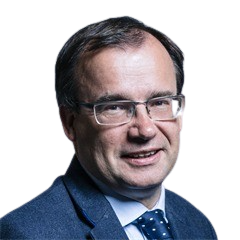
Gareth Thomas is the Labour and Co-operative MP for Harrow West, having first been elected to parliament at the 1997 general election.
In the 2024 general election, Thomas received 19,833 votes, representing 43.8% of the vote share. The Conservative candidate, Abbas Merali, received 13,191 votes (29.2%), while Pamela Fitzpatrick, an independent, secured 4,120 votes (9.1%). Thomas was duly re-elected with a majority of 6,642 votes.
The Harrow West constituency is located in North West London and includes areas such as Harrow town centre, Harrow on the Hill (containing Harrow School), Wealdstone, Rayners Lane, and Headstone.
Historically a safe Conservative seat (held 1945-1997), Thomas gained Harrow West for Labour in the 1997 landslide and has held it since. The constituency boundaries underwent changes for the 2024 election.
Political Career
Thomas served as parliamentary under-secretary of state for services, small business and exports at the Department for Business and Trade from July 2024 to September 2025.
Prior to the 2024 general election, which saw Labour returned to power after 14 years in opposition, Thomas served in several shadow ministerial roles. Under Keir Starmer, he served as Shadow Minister for International Trade from April 2020 until the 2024 election.
Under Jeremy Corbyn and Ed Miliband, Thomas was shadow minister for communities and local government (2016-2017), shadow minister for foreign and commonwealth affairs (2013-2015), a shadow Cabinet Office minister (2011-2013), a shadow business, innovation and skills minister (2010-2011), and a shadow international development minister (2010).
Thomas was also chair of the Co-operative Party from 2001 until 2019.
In 2018, Thomas introduced a 10-minute rule bill designed to test parliamentary support for a public vote on a final Brexit deal. Speaking to the Independent at the time, Thomas criticised Brexit “ideologues”.
He said: “Given that every analysis by the government shows Britain worse off under all possible variations of Brexit, and given claims of more funding for the NHS and other key services after we leave are now clearly false, the public should have the right to vote on whether to accept the final deal.”
He added: “A people’s vote would give the British people the chance to take back control over Brexit from a small cabal of Leave ideologues and instead to determine together our country’s economic, social and cultural futures.
“On an issue as significant as this for all our futures I believe the people of our country should have the final decision on whether the deal the government negotiates is good enough.”
In 2015, Thomas stood to become the Labour Party’s candidate in the 2016 election for mayor of London. He received sufficient nominations to make it to the final six nominees for the party’s mayoral candidate, but finished last place on the party’s final ballot with 1.2% of the vote. Sadiq Khan went on to become Labour’s mayoral candidate and serve as London mayor.
Unveiling his campaign, Thomas argued that London was practically a “city state” and that it needed more powers to govern itself.
He told the Evening Standard newspaper: “I’m keen to push more devolution of power to London and, crucially, to Londoners. We’re at a point now where the UK is no longer just a union of England, Scotland, Northern Ireland and Wales, but actually a union with the city state of London.”
He added: “We’re the centre of British wealth-creation and that’s rightly redistributed across the UK. But I do think Londoners deserve more in return. They deserve a better quality of life…
“I want to make sure that Londoners get their fair share of their city’s success. At the moment many don’t. We have some of the poorest wards in the UK and that issue has been largely ignored by Boris.”
During the last Labour government under Gordon Brown and Tony Blair, Thomas served as minister of state at the Department for International Development (DfID) (2008 – 2010) and jointly as minister of state for trade policy and consumer affairs at the department for business, enterprise and regulatory reform (BERR) (2008 – 2009).
Prior to this, Thomas was parliamentary under-secretary of state at DfID (2003 – 2008). After a June 2007 reshuffle, Thomas remained at international development whilst also being made part of the new BERR department.
Thomas became parliamentary private secretary (PPS) to Charles Clarke in 1999, a post he retained after the 2001 election before his rise into the ministerial ranks.
As a backbencher, he campaigned against fox hunting and against the demutualisation of building societies.
Thomas delivered his maiden speech on 16 May 1997.
In it, he stated: “The Conservative party has long since ceased to be a serious force in local government in Wales. During the past 18 years, Conservative rule has been exercised through an increasingly powerful and unaccountable Welsh Office and through an array of quangos, which, to a large extent, have been filled with persons sympathetic to the Conservative Party.
“A substantial majority of my constituents will welcome the commitment in the gracious speech to establish a Welsh Assembly to renew our democracy in Wales.
“I am pleased to note that the voting arrangements in respect of that assembly will contain a substantial element of proportionality. I am sure that due regard will be given to regional interests in Wales, particularly those of north Wales.”
Before entering parliament, he served as a Labour councillor on Harrow Council from 1990 to 1997, representing the Wealdstone ward.
Political Views
Leadership elections and loyalty
Labour deputy leadership 2025: Thomas was one of 175 Labour MPs who nominated Bridget Phillipson for the party’s deputy leadership in September 2025. The election followed the resignation of Angela Rayner, who stepped down as deputy prime minister and deputy party leader after an investigation into her tax affairs. It marked the first time since 2007 that Labour had held a deputy leadership contest while in government.
Phillipson, the serving education secretary, was widely viewed as the candidate favoured by Downing Street and the party leadership. She secured 175 nominations from the Parliamentary Labour Party (PLP), comfortably exceeding the 80 required to reach the final ballot. She was ultimately defeated by Lucy Powell.
Labour leadership 2020: Thomas was one of 22 Labour who nominated Emily Thornberry for the party’s leadership in early 2020. The election was triggered by the resignation of Jeremy Corbyn following the party’s defeat in the 2019 general election, which resulted in Labour’s fewest seats in the House of Commons since 1935.
Thornberry, then the shadow foreign secretary, was one of five candidates to reach the second stage of the contest. However, she was eliminated from the race on 15 February 2020 after failing to secure the required 33 nominations from Constituency Labour Parties (CLPs) or three affiliated groups. This left Keir Starmer, Rebecca Long-Bailey, and Lisa Nandy as the three candidates on the final membership ballot.
In February 2020, Thomas said the next Labour leader “should confirm they will not support nationalising the water and energy industries”.
He said in a statement: “Having that commitment in our manifesto helped us lose the General Election and has helped condemn consumers to another five years of rising bills, unaccountable bosses and huge profits to often overseas owners…
“Labour’s critique of water and energy privatisation remains powerful and the demand for change completely justified, but the solution we proposed was wrong, and the error cost us heavily.”
He added: “At the risk of understatement, after our worst defeat since 1935 a little imagination will be required to improve our chances. Given the sheer cost of our energy and water plans they are a good place to start. Instead of nationalisation let’s opt for the cheaper, the longer but the more radical option of putting the public and employees in charge.”
Labour leadership 2015: Thomas was part of a group of MPs who lent their nominations to ensure Corbyn, a veteran backbencher, reached the threshold of 35 required to appear on the ballot, intending to “broaden the debate.” Following Corbyn’s landslide victory with 59.5% of the vote, several of these MPs expressed regret.
Corbyn loyalty list: In March 2016, Thomas was labelled as “core group negative” by the Corbyn leadership in a leaked list which categorised Labour MPs by their perceived loyalty. This label suggested the Corbyn leadership viewed Thomas as a critic but not openly hostile.
Labour leadership 2016: Thomas was one of 162 Labour MPs who nominated Owen Smith for the party’s leadership in July 2016. The election was triggered by a challenge to Jeremy Corbyn following the EU referendum, which led to a wave of shadow cabinet resignations and a vote of no confidence supported by 172 MPs. Smith, the former shadow work and pensions secretary, was ultimately defeated by Corbyn, who won with an increased mandate of 61.8% of the vote.
Labour leadership 2010: Thomas was one of 81 Labour MPs who nominated David Miliband for the party’s leadership in May 2010. The election followed the resignation of Gordon Brown, who stepped down as prime minister and Labour leader after the 2010 general election.
Miliband, the former foreign secretary, was seen as closely aligned with the New Labour project – a Blairite figure. He secured 81 nominations from the Parliamentary Labour Party (PLP), comfortably exceeding the 33 required to reach the final ballot, but was narrowly defeated by his brother, Ed Miliband, in the final round by 50.7% to 49.3%.
Factional identity and party tradition
Tribune group (2017): Thomas was listed among the supporters of the Tribune parliamentary group – a caucus generally described as representing the party’s “soft left”.
The Tribune group was initially formed in 1964 to support the newspaper of the same name. It served as a prominent forum for those parliamentarians situated on the left of the Labour Party – but it split over Tony Benn’s campaign for the deputy leadership in 1981. Benn’s supporters founded the Campaign group – which evolved into the Socialist Campaign Group (SCG). Today, the Bennite SCG is strongly associated with the Labour left tradition.
During the 1980s, the Tribune group emerged as a more natural home for those on Labour’s “soft left”.
In 2017, Efford officially re-launched the group with a new mission statement calling for “opportunity and aspiration” to be placed at the heart of the party’s programme. Efford said he had reformed the group to ensure that the centre-left of the Parliamentary Labour Party (PLP) “have a space in which to put forward ideas and debate which has not been there under successive leaders”.
He added: “The view of Labour MPs at the moment tends to be that too much are just Blairites who want to stab Jeremy Corbyn in the back. We want to show that is not where we are, and that we want to develop our own ideas that represent the centre-left of the party.”
Brexit and Europe
Brexit referendum: Thomas supported Remain in the 2016 Brexit referendum, and therefore agreed with a majority of his constituents, 54.9% of whom also voted to Remain.
Article 50: In February 2017, Thomas voted in favour of the European Union (Notification of Withdrawal) Bill. The legislation empowered the prime minister to notify the Council of the European Union of the UK’s intention to withdraw, formally triggering the process set out in Article 50 of the Treaty on European Union. MPs supported the bill by 498 votes to 114 at second reading.
People’s vote support (2019): Thomas signed a January 2019 statement by Labour MPs calling for a “people’s vote” or second referendum. The statement, signed by 71 Labour MPs, read: “Defeat of the Tory [Brexit] deal in a public vote would give us all a chance to campaign for the anti-austerity policies and a Labour government that deals with the true causes of the Brexit vote, and a reformed Europe that works for all people.”
Remain pledge: During the 2019 general election campaign, Thomas was one of 193 Labour candidates to sign the anti-Brexit “Remain pledge”, drawn up by the campaign group Remain Labour.
It stated: “Labour is committed to a confirmatory referendum, to give you the final say on Brexit. If elected as your Labour MP, I pledge to campaign to Remain in the EU.”
Welfare
Welfare vote (July 2025): Thomas voted in favour of the government’s flagship welfare bill at second reading. The vote came after ministers agreed to significant concessions to avoid defeat via a mass rebellion of Labour MPs on 1 July 2025.
Assisted dying
On the second reading of the Terminally Ill Adults (End of Life) Bill, better known as the assisted dying bill, in November 2024, Thomas did not record a vote. He voted in favour of the bill at third reading.
Social values and conscience issues
Abortion decriminalisation (2025): Thomas voted in favour of a backbench amendment to the Crime and Policing Bill that sought to decriminalise abortion in England and Wales in June 2025. The amendment, which was passed by a majority of 242 votes, removed women from the threat of prosecution for ending a pregnancy at any stage. As an issue of conscience, MPs were allowed to vote according to their personal beliefs.
Same-sex marriage (2013): In February 2013, Thomas voted in favour of the Marriage (Same Sex Couples) Bill at its second reading. The landmark piece of legislation, which received its second reading by 400 votes to 175, legalised marriage for same-sex couples in England and Wales.
Foreign policy and security
Trident renewal (2016): Thomas voted in favour of a government motion calling for the renewal of the Trident nuclear deterrent system in July 2016. The motion, which was passed by 472 votes to 117, committed the UK to constructing a new fleet of submarines to carry the nation’s nuclear weapons. Labour was split over the issue with 140 of its 230 MPs going against leader Jeremy Corbyn and backing the motion.
Syria airstrikes (2015): Thomas voted in favour of a government motion to extend UK airstrikes against Isis from Iraq into Syria in December 2015. The motion, which was passed by 397 votes to 223 after a 10-hour debate in the House of Commons, authorised the RAF to conduct strikes against Isis targets in Syria.
Syria airstrikes (2013): Thomas voted against the government’s motion on the principle of military intervention in Syria in August 2013. The government motion was defeated by 285 votes to 272, a move which effectively ruled out UK participation in any US-led military strikes.
Iraq War authorisation vote (2003): In March 2003, Thomas voted in favour of the government motion authorising military action against Iraq. The vote, one of the most contentious in recent parliamentary history, gave the prime minister, Tony Blair, the authority to join the US-led invasion.
Sanctioned (Russia): In April 2022, Thomas was among the group of MPs placed on a sanctions list by the Russian government. The measure barred them from entering Russia and was presented by Moscow as a retaliatory response to the UK’s stance on the invasion of Ukraine.
Palestine
LFPME: Thomas has been listed as a member of Labour Friends of Palestine and the Middle East (LFPME). The organisation’s stated aim is to promote peace and justice in the region through the application of international law and respect for human rights.
Palestinian recognition vote (2014): In October 2014, Thomas was one of 192 Labour MPs who voted in favour of recognising Palestine as a state. The motion, passed by 274 votes to 12, called on the government to “recognise the state of Palestine alongside the state of Israel as a contribution to securing a negotiated two-state solution”.
Before Politics
Born in Harrow, London on 15 July 1967, Gareth Thomas attended Hatch End High School and later Lowlands College.
He studied Economics (BSc) at Aberystwyth University, graduating in 1988. He qualified as a teacher with a PGCE from Thames Polytechnic (1992) and later obtained a Master of Arts (MA) degree in Imperial and Commonwealth History from King’s College London 1996.
He worked as a teacher before pursuing a full-time political career.
Personal Life
Thomas lives in Harrow with his family.
Trivia
Thomas enjoys both rugby and football, and supports Arsenal FC.
On his official website, Thomas writes: “In spare moments I like to go running and am always training for my next go at the Harrow Half-Marathon.”
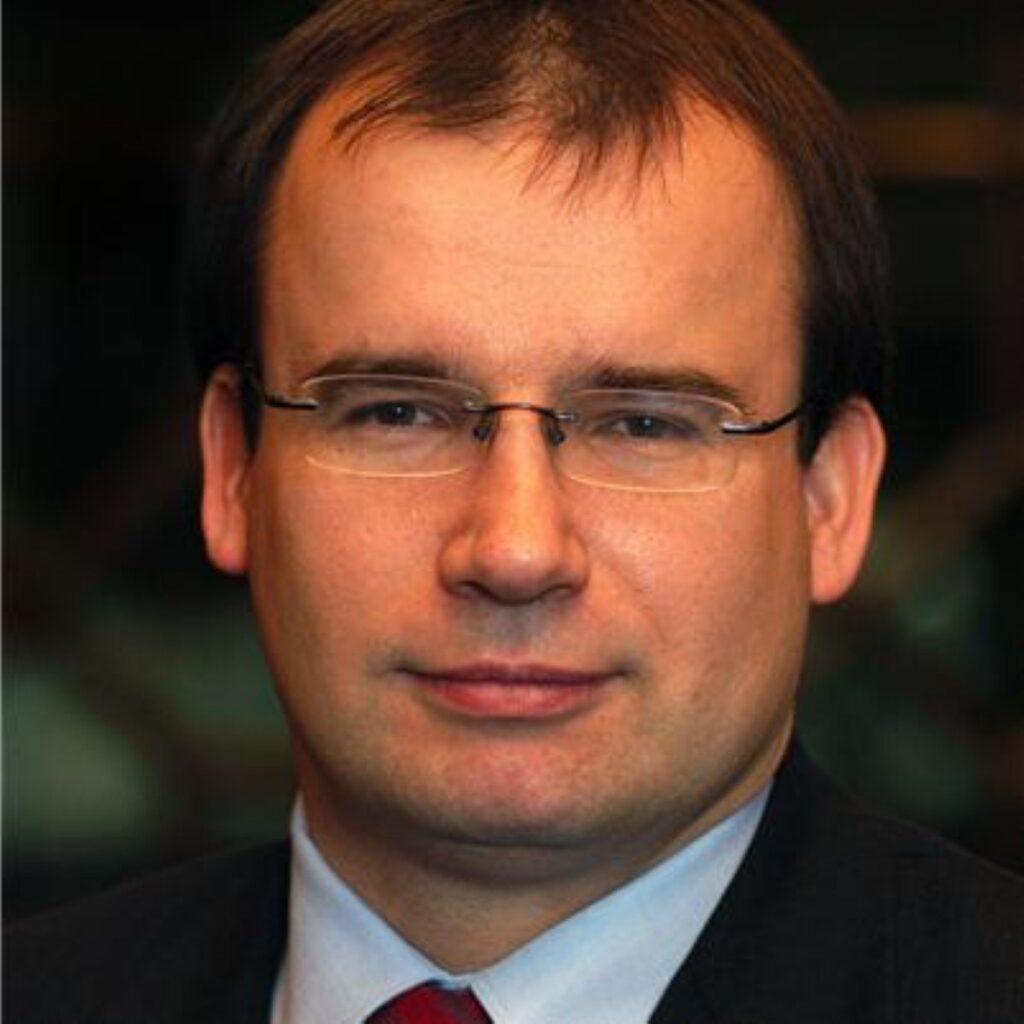



Global agreement on boosting covid supplies is critical for ending the pandemic – why is the UK blocking it?
3 December 2021