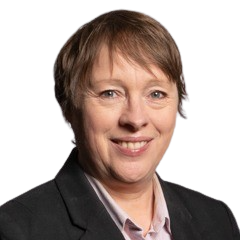
Maria Eagle is the Labour MP for Liverpool Garston, having represented the area and its predecessors since the 1997 general election. The constituency was recreated for the 2024 election, broadly replacing the Garston and Halewood constituency Eagle had represented since 2010.
Eagle currently serves as the minister of state for defence procurement and industry.
In the 2024 general election for the Liverpool Garston seat, Eagle received 24,510 votes (58.4%). The Reform UK candidate received 4,406 votes (10.5%), and the Liverpool Community Independents candidate secured 3,293 votes (7.8%). Eagle was duly elected with a majority of 20,104.
The Liverpool Garston constituency covers areas in the south of Liverpool, Merseyside. Communities within the seat and its direct predecessor include Garston, Speke, Woolton, Cressington, Allerton, and Belle Vale. The seat is considered safe for the Labour Party. Its predecessor constituency of the same name, Liverpool Garston (1950-2010), was held by Labour from 1983 to its abolition in 2010.
Political Career
Eagle served as minister of state for defence procurement and industry at the Ministry of Defence from July 2024 to September 2025.
Eagle has extensive frontbench experience, across government and opposition. Under the previous Labour governments, she served as minister of state for justice and equalities (2007-2010), and held parliamentary under-secretary of state roles in the Northern Ireland Office (2006-2007), parliamentary under-secretary for children (2005-2006) and parliamentary under-secretary of state for disabled people (2001-2005).
In opposition, Eagle held several shadow ministerial positions – including as a member of the shadow cabinet. She was shadow defence minister (September 2023-May 2024), shadow secretary of state for culture, media and sport (January 2016-June 2016), shadow secretary of state for defence (September 2015-January 2016), shadow secretary of state for environment, food and rural affairs (October 2013-September 2015), shadow secretary of state for transport (October 2010-October 2013), shadow justice and equalities minister (May 2010-October 2010), and shadow solicitor general (May 2010-October 2010).
Upon her appointment as shadow defence secretary in September 2015, Eagle conceded she was “a bit surprised” to receive the job. A consistent supporter of the UK’s nuclear weapons system, her stance jarred with that advocated over many decades by Jeremy Corbyn, the newly elected Labour leader.
In an interview with the New Statesman, published October 2015, Eagle said: “And that’s why I made sure I said to him, ‘Jeremy, you do realise that I believe in multilateral disarmament and that I’m pro-Trident, don’t you?’”
“And he said ‘Yes, he did realise that’, still offered me the job, and I thought on that basis: ‘OK, he knows that, he’s not going to be surprised by my views.’”
She added: “[Corbyn] wanted to know whether I was willing to undertake a review and I said ‘Yes’, obviously. We need to have a debate about these things. And on that basis he offered me the job and on that basis I took it.”
Eagle vowed to lead Labour’s review of defence policy, including its commitment to the Trident nuclear deterrent, “with a completely open mind” on “the basis of facts and figures”.
She said she would not rule out the possibility of endorsing unilateral nuclear disarmament. However, she described Corbyn indicating he would not countenance using a nuclear deterrent as not “helpful” to the policy process.
In September 2015, Eagle appeared to question Corbyn’s ability to become prime minister – due to his stance on the nuclear deterrent. Corbyn had been asked whether he would ever be prepared to push the nuclear button if it came to it. He replied: “No…
“187 countries don’t feel the need to have a nuclear weapon to protect their security, why should those five need it themselves?”
In response, Eagle told BBC Radio 4: “I think it undermines to some degree our attempts to try and get a policy process going. As far as I’m concerned we start from the policy we have.”
She added: “I don’t think that a potential prime minister answering that question like that, in the way in which he did, is helpful.”
In a January 2016 shadow cabinet reshuffle, Eagle was moved to the position of shadow culture secretary. She was replaced in her erstwhile defence post by Emily Thornberry, whose views on defence better aligned with the positions adopted by the Labour leadership.
In June 2016, Eagle was among those to resign from the shadow frontbench in protest at Corbyn’s leadership of the Labour Party and his approach to the 2016 referendum on Britain’s membership of the European Union (EU).
In her resignation letter, Eagle argued that Corbyn did not represent the “strong and effective leadership” that the country needed.
During her tenure as parliamentary under-secretary of state for disabled people, Eagle was responsible for steering the Disability Discrimination Act 2005 into law, which substantially expanded legal protections for disabled people. It is now incorporated in the Equality Act 2010.
In the 1997-2001 parliament, her first, Eagle successfully campaigned for a ban on fur farming, introducing a private member’s bill which was subsequently adopted by the government and became law in 2000 as the Fur Farming (Prohibition) Act 2000.
In 1999, Eagle was appointed as parliamentary private secretary (PPS) to the Department of Health and the serving secretary of state John Hutton. A PPS acts as an unpaid assistant to a minister, providing a link between the senior frontbencher and backbench MPs.
Eagle served as a member of the House of Commons justice committee from March 2020 to April 2024, and the public accounts committee from July 1997 to November 1999.
In 2008, Eagle was nominated for Stonewall “politician of the year” for her work to support equality for lesbian, gay and bisexual people.
She delivered her maiden speech on 17 June 1997. In it, she said: “Despite the efforts being made, however, regeneration is never an easy task. Some basic problems must be tackled by the government, and I shall address one of the most basic problems in my constituency, which the government can and should tackle – the provision of adequate housing.”
She added: “I believe passionately in the strength, sense and ability of ordinary people to shape and transform their lives, given half a chance.
“I have a particular belief in the capacity of Liverpudlians to do that. Their solidarity, community spirit and adaptability are demonstrated every day on the estates to which I have referred. Let us ask them what they want to do, and listen to the answers.”
Eagle previously stood unsuccessfully as the Labour candidate for Crosby in the 1992 general election, finishing second to incumbent Malcolm Thornton on 17,461 votes (25.7%).
Political Views
Leadership elections and loyalty
Oppose leadership election: In May 2026, Eagle was among the over 100 Labour MPs who signed a joint statement insisting it was “no time for a leadership contest.” The letter was an intervention in the political crisis engulfing Keir Starmer’s premiership, after Labour suffered heavy losses in the 2026 local elections and devolved elections to the Scottish Parliament and Senedd Cymru. It was organised as a counterweight to a mounting rebellion that had seen high-profile figures, including some ministers, call for Starmer’s resignation.
The statement read: “Last week we had a devastatingly tough set of election results. It shows we have a hard job ahead to win back trust from the electorate.
“That job needs to start today – with all of us working together to deliver the change the country needs.
“We must focus on that. This is no time for a leadership contest.”
Labour deputy leadership 2025: Eagle was one of 117 Labour MPs who nominated Lucy Powell for the party’s deputy leadership in September 2025. The election followed the resignation of Angela Rayner, who stepped down as deputy prime minister and deputy party leader after an investigation into her tax affairs. It marked the first time since 2007 that Labour had held a deputy leadership contest while in government.
Powell, the former leader of the House of Commons, was seen as a candidate representing the party’s “soft left”; she was support by leading soft left figures including Ed Miliband and Andy Burnham. She secured 117 nominations from the Parliamentary Labour Party (PLP), above the 80 required, and went on to win the election – defeating Bridget Phillipson with 54.3% of the vote.
Labour leadership 2020: Eagle was one of 82 Labour MPs who nominated Keir Starmer for the party’s leadership in early 2020. The election was triggered by the resignation of Jeremy Corbyn following the party’s defeat in the 2019 general election, which resulted in Labour’s fewest seats in the House of Commons since 1935.
Starmer’s 82 nominations were the highest of any candidate. The shadow Brexit secretary won a decisive victory in the first round with 56.2% of the vote, defeating Rebecca Long-Bailey and Lisa Nandy.
Labour leadership 2015: Eagle nominated Yvette Cooper for the party’s leadership in June 2015. The election followed the resignation of Ed Miliband after the party’s defeat in the 2015 general election. It was the first contest held under the “one member, one vote” system, which replaced the previous electoral college.
Cooper, the shadow home secretary, secured 59 nominations from the Parliamentary Labour Party (PLP), comfortably exceeding the 35 required to reach the final ballot. She ultimately finished third in the contest with 17% of the vote.
Corbyn loyalty list: In March 2016, Eagle was labelled as “core group negative” by the Corbyn leadership in a leaked list which categorised Labour MPs by their perceived loyalty. This label suggested the Corbyn leadership viewed Eagle as a critic but not openly hostile.
Labour leadership 2016: Eagle supported her sister, Angela Eagle, for the party’s leadership in July 2016. The election was triggered by a challenge to Jeremy Corbyn following the EU referendum, which led to a wave of shadow cabinet resignations and a vote of no confidence supported by 172 MPs.
Angela Eagle, the former shadow first secretary of state, was the first to formally launch a challenge against Corbyn. However, she withdrew from the race on 19 July after attracting fewer nominations than Owen Smith. Maria Eagle subsequently switched her support to Smith.
Corbyn was ultimately re-elected an increased mandate of 61.8% of the vote.
Labour leadership 2010: Eagle was one of 63 Labour MPs who nominated Ed Miliband for the party’s leadership in May 2010. The election followed the resignation of Gordon Brown, who stepped down as prime minister and Labour leader after the 2010 general election.
Miliband, the former energy and climate change secretary, was seen as the candidate of the “soft left” and secured significant backing from affiliated trade unions. He secured 63 nominations from the Parliamentary Labour Party (PLP), exceeding the 33 required to reach the final ballot. Miliband went on to narrowly defeat his brother, David, in the final round by 50.7% to 49.3%.
Brexit and Europe
Brexit referendum: Eagle supported the Remain campaign in the 2016 EU referendum, and therefore agreed with a majority of constituents, 52% of whom also voted to Remain.
As shadow culture secretary, during the 2016 referendum campaign, Eagle warned that leaving the EU would bring “uncertainty” to the creative industries and “hinder cross-border collaborations” in the arts.
She pointedly criticised John Whittingdale, her opposite number as culture secretary and Brexiteer, for “indulging his long-standing eurosceptical obsessions.”
In an April 2016 speech, she stated: “Why would we willingly walk away from the opportunities that lie within the EU? Why would we risk the uncertainty that leaving the EU would bring to the creative industries?”
She added: “Putting up barriers between people only hinders cross-border collaborations that make the arts and culture sectors as vibrant as they are. In what way could the creative industries possibly benefit from reducing their ability to share ideas and talent?”
Article 50: In February 2017, Eagle voted against the European Union (Notification of Withdrawal) Bill. The legislation empowered the prime minister to notify the Council of the European Union of the UK’s intention to withdraw, formally triggering the process set out in Article 50 of the Treaty on European Union. MPs supported the bill by 498 votes to 114 at second reading. In voting against the bill, Eagle defied the party whip – one of 47 Labour MPs to do so.
People’s vote support (2019): Eagle signed a January 2019 statement by Labour MPs calling for a “people’s vote” or second referendum. The statement, signed by 71 Labour MPs, read: “Defeat of the Tory [Brexit] deal in a public vote would give us all a chance to campaign for the anti-austerity policies and a Labour government that deals with the true causes of the Brexit vote, and a reformed Europe that works for all people.”
Remain pledge: During the 2019 general election campaign, Eagle was one of 193 Labour candidates to sign the anti-Brexit “Remain pledge”, drawn up by the campaign group Remain Labour.
It stated: “Labour is committed to a confirmatory referendum, to give you the final say on Brexit. If elected as your Labour MP, I pledge to campaign to Remain in the EU.”
Welfare
Welfare vote (July 2025): Eagle voted in favour of the government’s flagship welfare bill at second reading. The vote came after ministers agreed to significant concessions to avoid defeat via a mass rebellion of Labour MPs on 1 July 2025.
Assisted dying
Eagle voted in favour of the Terminally Ill Adults (End of Life) Bill, better known as the assisted dying bill, at both second reading (November 2024) and third reading (June 2025).
Social values and conscience issues
Same-sex marriage (2013): In February 2013, Eagle voted in favour of the Marriage (Same Sex Couples) Bill at its second reading. The landmark piece of legislation, which received its second reading by 400 votes to 175, legalised marriage for same-sex couples in England and Wales.
Foreign policy and security
Trident renewal (2016): Eagle voted in favour of a government motion calling for the renewal of the Trident nuclear deterrent system in July 2016. The motion, which was passed by 472 votes to 117, committed the UK to constructing a new fleet of submarines to carry the nation’s nuclear weapons.
Labour was split over the issue with 140 of its 230 MPs going against leader Jeremy Corbyn and backing the motion.
Syria airstrikes (2015): Eagle voted in favour of a government motion to extend UK airstrikes against Isis from Iraq into Syria in December 2015. The motion, which was passed by 397 votes to 223 after a 10-hour debate in the House of Commons, authorised the RAF to conduct strikes against Isis targets in Syria.
Syria airstrikes (2013): Eagle voted against the government’s motion on the principle of military intervention in Syria in August 2013. The government motion was defeated by 285 votes to 272, a move which effectively ruled out UK participation in any US-led military strikes.
Iraq War authorisation vote (2003): In March 2003, Eagle voted in favour of the government motion authorising military action against Iraq. The vote, one of the most contentious in recent parliamentary history, gave the prime minister, Tony Blair, the authority to join the US-led invasion.
Palestine
Palestinian recognition vote (2014): In October 2014, Eagle voted in favour of recognising Palestine as a state. The motion, passed by 274 votes to 12, called on the government to “recognise the state of Palestine alongside the state of Israel as a contribution to securing a negotiated two-state solution”.
Before Politics
Born in Bridlington, East Riding of Yorkshire, on 17 February 1961, Eagle was educated at Formby High School in Merseyside. She studied philosophy, politics and economics (PPE) at Pembroke College, Oxford University, graduating in 1983.
She worked in the voluntary sector between 1983 and 1990, focusing on campaigning for better public transport. She then attended the College of Law in London, qualifying as a solicitor in 1990.
Returning to Liverpool, she worked as a solicitor until her election in 1997, practising at Brian Thompson & Partners, Goldsmith Williams, and Stephen Irving & Co. Her specialisms included personal injury, housing law, and employment law.
Personal Life
Eagle’s identical twin sister, Dame Angela Eagle, is also a Labour MP (first elected in 1992). They were the first set of female twins to be elected to the parliament.
Trivia
Eagle has said that if she was given a pound for every time she was confused for her sister “I’d be very rich.”
Like her sister, Eagle played chess for Lancashire and England as a junior.
Eagle describes herself as a “lapsed cricketer” – but she is said to enjoy watching test match cricket.


33 years on, we need a Hillsborough Law now more than ever
4 February 2022