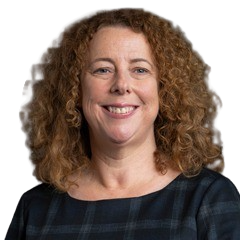
Gill German is the Labour MP for Clwyd North, having first been elected to parliament at the 2024 general election.
In the 2024 general election, German received 14,794 votes (35.5%). The Conservative candidate, Darren Millar, received 13,598 votes (32.7%), while the Reform UK candidate, Jamie Orange, secured 7,000 votes (16.8%). German was elected with a majority of 1,196 votes.
The Clwyd North constituency is located in North Wales. It was newly created ahead of the 2024 election, formed from parts of the former Clwyd West and Vale of Clwyd seats. The MPs for the main predecessor seats were David Jones (Conservative, Clwyd West) and James Davies (Conservative, Vale of Clwyd).
Political Career
German served as a parliamentary private secretary (PPS) in the Wales Office from September 2025 to July 2026. A PPS acts as an unpaid parliamentary assistant, providing a link between the senior frontbencher and backbench MPs.
German left government as part of the July 2026 reshuffle conducted by Andy Burnham upon his appointment as prime minister.
German is a member of the House of Commons Welsh affairs select committee (since January 2025) – the committee that examines the UK government’s policy and spending as it relates to Wales. Its primary role is to scrutinise the work of the secretary of state for Wales and the Wales Office.
In May 2026, German was among the over 100 Labour MPs who signed a joint statement insisting it was “no time for a leadership contest.” The letter was an intervention in the political crisis engulfing Keir Starmer’s premiership, after Labour suffered heavy losses in the 2026 local elections and devolved elections to the Scottish Parliament and Senedd Cymru. It was organised as a counterweight to a mounting rebellion that had seen high-profile figures, including some ministers, call for Starmer’s resignation.
The statement read: “Last week we had a devastatingly tough set of election results. It shows we have a hard job ahead to win back trust from the electorate.
“That job needs to start today – with all of us working together to deliver the change the country needs.
“We must focus on that. This is no time for a leadership contest.”
In February 2026, German described Starmer as a “good and decent” man.
She added: “It is the man I heard speak passionately on this in a North Wales community hall many years ago, the man I saw lead us to a historic election victory and the man I see work tirelessly day in, day out as prime minister now.”
German has sat as a member of the work and pensions committee (2024-2025).
German is listed as a member of the all-party parliamentary groups (APPGs) for children in Wales, film and broader screen and Nepal.
German delivered her maiden speech on 16 October 2024 during a debate on the carer’s allowance.
In it, she said: ” Make no mistake, my route into politics came straight through my classroom. A teacher of the very youngest, I saw children fizzing with potential coming through my door, only to see that potential dimmed in later years by struggle and circumstance.”
She added: “I saw a lack of economic growth hinder the lives of their families. Most stark of all, as the years went on, I saw the children I had once taught now grown, with children of their own and those same struggles continuing.”
Before entering parliament, German was elected as a Labour councillor on Denbighshire County Council in 2022. She was deputy leader of the council from 2022 to 2024.
Political Views
Leadership elections
Labour deputy leadership 2025: German was one of 117 Labour MPs who nominated Lucy Powell for the party’s deputy leadership in September 2025. The election followed the resignation of Angela Rayner, who stepped down as deputy prime minister and deputy party leader after an investigation into her tax affairs. It marked the first time since 2007 that Labour had held a deputy leadership contest while in government.
Powell, the former leader of the House of Commons, was seen as a candidate representing the party’s “soft left”; she was supported by leading soft left figures including Ed Miliband and Andy Burnham. She secured 117 nominations from the Parliamentary Labour Party (PLP), above the 80 required, and went on to win the election – defeating Bridget Phillipson with 54.3% of the vote.
Welfare
Welfare vote (July 2025): German voted in favour of the government’s flagship welfare bill at second reading. The vote came after ministers agreed to significant concessions to avoid defeat via a mass rebellion of Labour MPs on 1 July 2025.
Assisted dying
German voted in favour of the Terminally Ill Adults (End of Life) Bill, better known as the assisted dying bill, at both second reading (November 2024) and third reading (June 2025).
In a statement issued after second reading, German said: “I have been convinced that the bill is sufficiently tight to provide appropriate safeguards to both give choice and protection to adults who are terminally ill and near the end of life.
“I have also been convinced that even the best palliative care cannot ease the great suffering and anguish experienced by many people and their families.
Social values and conscience issues
Abortion decriminalisation (2025): German voted in favour of a backbench amendment to the Crime and Policing Bill that sought to decriminalise abortion in England and Wales in June 2025. The amendment, which was passed by a majority of 242 votes, removed women from the threat of prosecution for ending a pregnancy at any stage. As an issue of conscience, MPs were allowed to vote according to their personal beliefs.
Before Politics
German attended Prestatyn High School. She studied English literature at the University of Sheffield and obtained a Post Graduate Certificate in Education (PGCE) at the University of Leeds.
German was a primary school teacher from 2000 to 2021.
Before becoming an MP, she worked as a development officer on a Welsh government project.
Personal Life
German raised her children, Sam and Josie, in North Wales.
Trivia
German expressed opposition to a leadership contest in the May 2026 government crisis.
Gill German has not written for Politics.co.uk.