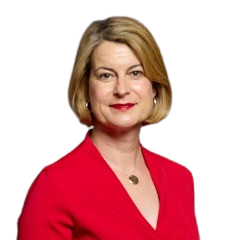
Helen Hayes is the Labour MP for Dulwich and West Norwood, having first been elected to parliament at the 2015 general election.
In the 2024 general election, Hayes received 27,356 votes (60.3%). The Green Party candidate received 8,567 votes (18.9%), and the Conservative candidate secured 3,873 votes (8.5%). Helen Hayes was duly elected with a majority of 18,789.
The Dulwich and West Norwood constituency is located in inner South London, covering parts of the boroughs of Lambeth and Southwark. It includes the communities of Dulwich, West Norwood, Herne Hill, Gipsy Hill, and parts of Brixton. The area is ethnically diverse, with a significant proportion of residents of Afro-Caribbean heritage, and has a substantial amount of social housing.
The constituency was created in 1997 and has been held continuously by the Labour Party, and is considered a safe Labour seat. The area recorded one of the highest Remain votes in the UK (77.1%) in the 2016 referendum on Britain’s membership of the European Union (EU)
Hayes’ immediate predecessor as the MP for Dulwich and West Norwood was the late Dame Tessa Jowell, the former culture secretary, who represented the seat from 1997 to 2015.
Political Career
Hayes has served as chair of the commons education committee since September 2024. The education committee scrutinises the work of the Department for Education (DfE) and its associated public bodies.
By virtue of this role, Hayes sits on the liaison committee – the “super committee” composed of the cross-party chairs of all the other commons select committees. It has a broad oversight role, but is best known for its questioning of the prime minister in sessions that take place two or three times a year.
Prior to the 2024 general election, which saw Labour returned to power after 14 years in opposition, Hayes served on her party’s frontbench in a series of shadow ministerial roles. She was shadow minister for children and early years from December 2021 to July 2024, and briefly shadow Cabinet Office minister from April 2020 to December 2020.
In December 2020, Hayes was among the 37 Labour MPs to rebel against the leadership’s position on the EU (Future Relationship) Bill – which enabled the government to implement and ratify its post-Brexit trade deal with the EU. Keir Starmer, the newly elected Labour leader, argued that while the trade deal negotiated by Boris Johnson’s government was “thin” and flawed, the only alternative at that late stage was a “no-deal” exit. To enforce the leadership’s position, a three-line whip was imposed. Hayes abstained over the bill, resigning her post as shadow Cabinet Office minister. One Labour MP, Bell Ribeiro-Addy, voted against the bill.
In a statement, issued December 2020, Hayes set out the speech she would have given in the debate on the bill – had she been successful in the ballot.
Hayes described the post-Brexit trade agreement as a “bad deal for the UK” and the slight 5-hour-long debate time as “nothing short of a national disgrace”.
She added: “In 2016, my constituents voted overwhelmingly to Remain in the EU, and many still feel a deep sense of pain and loss at the referendum result and the reality of Brexit…
“The question today is whether the prime minister’s deal secures the best possible future relationship with the EU and whether it is the fullest expression of our ambition and our values. Clearly, it is not. It is the only trade deal in our history which does not bring us closer to our trading partners but increases our isolation…
” I accept that the deal is better than the no deal Brexit which the Prime Minister recklessly threatened, and I will not therefore oppose it.
“But this is the prime minister’s deal, a weak and thin Tory deal, the withered fruit of a negotiation conducted in a spirit of bombastic, ideological superiority rather than a spirit of cooperation, collaboration and internationalism. A different negotiation would and should have yielded a far better outcome.
“It has been a privilege to serve as shadow Cabinet Office minister for the past nine months. I accept that in deciding not to follow the whip, I can no longer serve on the opposition frontbench and with much regret I have offered my resignation today.”
https://x.com/helenhayes_/status/1344293896411602944
Prior to her stint as shadow Cabinet Office minister, Hayes served as opposition whip from January 2020 to April 2020 – in the immediate aftermath of the 2019 general election.
Hayes has introduced private members’ bills focused on public health, safety and housing rights:
- The Offensive Weapons Bill, introduced in January 2024, sought to tackle knife crime by closing a legal loophole to ban dangerous weapons such as “zombie knives” and machetes that are not already covered by existing legislation.
- The Electronic Cigarettes (Branding, Promotion and Advertising) Bill, introduced September 2023, was a response to the rise in youth vaping and aimed to ban child-friendly branding, flavours, and marketing for e-cigarettes to make them less appealing to children.
- The Social Housing (Emergency Protection of Tenancy Rights) Bill, introduced February 2022, sought to protect victims of domestic abuse or gang violence by giving them the right to retain their secure tenancy when forced to move to a new social home for their own safety.
- The Planning (Affordable Housing and Land Compensation) Bill, introduced February 2019, aimed to redefine “affordable housing” to be linked to local incomes and to reform land compensation rules to make it cheaper for councils to acquire land for new housing.
In a September 2021 article for The House magazine, Hayes argued that the planning system was failing to deliver “genuinely affordable homes” because the official definition of “affordable” is disconnected from what people can actually afford.
In an August 2016 article for LabourList, Hayes urged her fellow Labour MPs to unite in support of the Homelessness Reduction Bill, a private member’s bill she was co-sponsoring. She argued that the existing legislation from 1977 was outdated and failing to protect vulnerable people, as councils were only legally required to help those in “priority need”.
She wrote: ” I want to see as many Labour MPs standing alongside me as possible to make sure it doesn’t get talked out in the chamber. It’s time for us to grasp this opportunity, to finish the job that was started in 1977.
“It would be a tragedy if we were to miss this chance for social reform. On this most fundamental of issues the Labour Party must stand united.”
The Planning (Affordable Housing and Land Compensation) Bill, Hayes wrote, would “ensure that our planning system can deliver the outcomes communities urgently need, especially genuinely affordable social housing, by closing important loopholes.”
Hayes was a member of the commons environmental audit committee from February 2021 to March 2023, and the housing, communities and local government committee from July 2015 to November 2019.
Hayes delivered her maiden speech on 23 June 2015 during a debate on devolution and growth across Britain. In it, she said: “After a significant worsening of the housing crisis under the previous government, I am dismayed that the gracious speech offers so few solutions.”
She added: “We have a crisis. We need political leadership and a fully formed plan to address it, not a piecemeal approach that looks at only one aspect of the housing sector. We need short-term measures, especially in London, to regulate the private rented sector.
“We need every local authority in London, irrespective of political colour, to make a full commitment to delivering new genuinely affordable homes and to be held to account for doing so.”
Hayes served as a Labour councillor for the College ward on Southwark Council from 2010 until March 2016.
Political Views
Leadership elections and loyalty
Labour deputy leadership 2025: Hayes was one of 117 Labour MPs who nominated Lucy Powell for the party’s deputy leadership in September 2025. The election followed the resignation of Angela Rayner, who stepped down as deputy prime minister and deputy party leader after an investigation into her tax affairs. It marked the first time since 2007 that Labour had held a deputy leadership contest while in government.
Powell, the former leader of the House of Commons, was seen as a candidate representing the party’s “soft left”; she was support by leading soft left figures including Ed Miliband and Andy Burnham. She secured 117 nominations from the Parliamentary Labour Party (PLP), above the 80 required, and went on to win the election – defeating Bridget Phillipson with 54.3% of the vote.
Labour leadership 2020: Hayes was one of 82 Labour MPs who nominated Keir Starmer for the party’s leadership in early 2020. The election was triggered by the resignation of Jeremy Corbyn following the party’s defeat in the 2019 general election, which resulted in Labour’s fewest seats in the House of Commons since 1935.
Starmer’s 82 nominations were the highest of any candidate. The shadow Brexit secretary won a decisive victory in the first round with 56.2% of the vote, defeating Rebecca Long-Bailey and Lisa Nandy.
Labour leadership 2015: Hayes was one of 10 Labour MPs who nominated Mary Creagh for the party’s leadership in June 2015. The election followed the resignation of Ed Miliband after the party’s defeat in the 2015 general election and was the first to be held under a “one member, one vote” system.
Creagh, the shadow international development secretary, withdrew from the contest on 12 June after securing only 10 nominations from the Parliamentary Labour Party (PLP) – far short of the 35 required to reach the final ballot.
Corbyn loyalty list: In March 2016, Hayes was labelled as “neutral but not hostile” by the Corbyn leadership in a leaked list which categorised Labour MPs by their perceived loyalty.
Labour leadership 2016: Hayes was one of 162 Labour MPs who nominated Owen Smith for the party’s leadership in July 2016. The election was triggered by a challenge to Jeremy Corbyn following the EU referendum, which led to a wave of shadow cabinet resignations and a vote of no confidence supported by 172 MPs. Smith, the former shadow work and pensions secretary, was ultimately defeated by Corbyn, who won with an increased mandate of 61.8% of the vote.
Brexit and Europe
Brexit referendum: Hayes supported the Remain campaign in the 2016 EU referendum, and therefore agreed with a majority of constituents, 77.1% of whom also voted to Remain.
Article 50: In February 2017, Hayes voted against the European Union (Notification of Withdrawal) Bill. The legislation empowered the prime minister to notify the Council of the European Union of the UK’s intention to withdraw, formally triggering the process set out in Article 50 of the Treaty on European Union. MPs supported the bill by 498 votes to 114 at second reading. In voting against the bill, Hayes defied the party whip – one of 47 Labour MPs to do so.
Remain pledge: During the 2019 general election campaign, Hayes was one of 193 Labour candidates to sign the anti-Brexit “Remain pledge”, drawn up by the campaign group Remain Labour.
It stated: “Labour is committed to a confirmatory referendum, to give you the final say on Brexit. If elected as your Labour MP, I pledge to campaign to Remain in the EU.”
Electoral reform
Electoral reform amendment: In May 2026, Hayes was one of over 70 Labour MPs who signed an amendment to the Representation of the People Bill, calling on the government to establish a “national commission on electoral reform”. Tabled by Alex Sobel as chair of the fair elections APPG, the amendment aimed to force a rethink of the first past the post voting system.
At the time, Sobel described FPTP as “one of the biggest examples of a broken status quo in UK politics.” He invited colleagues to join this “common sense call to take a fresh look at how parliament is elected in modern Britain.”
Welfare
Welfare ‘reasoned amendment’ (June 2025): Hayes was one of the over 120 Labour MPs to sign the reasoned amendment to the government’s flagship welfare bill which aimed to reject the proposed legislation.
The amendment, in the name of senior Labour MP Dame Meg Hillier, objected to the fact that the bill had not been subject to a “formal consultation with disabled people” and that “250,000 people will be pushed into poverty” as a result of it, according to a government impact assessment.
The motion also called on the government to wait for the publication of the review into the Personal Independence Payment (Pip), helmed by minister Sir Stephen Timms, and the independent review, conducted by Sir Charlie Mayfield, into how the employment of disabled people could be boosted.
Welfare vote (July 2025): Hayes voted in favour of the government’s flagship welfare bill at second reading. The vote came after ministers agreed to significant concessions to avoid defeat via a mass rebellion of Labour MPs on 1 July 2025.
Speaking during the bill’s second reading debate, Hayes welcomed the eleventh-hour concessions to the proposed legislation – which she referred to as “substantial changes”.
In particular, she called the commitment to “co-produce” a review of the system with disabled people “significant and welcome”.
Hayes told the House: “We are now reaching for solutions at the final hour, which should have been better considered over a longer period of time as part of a rational and respectful response to feedback.
“I regret the situation deeply, and I say to ministers that, whatever happens today and in the coming days, there must be a profound change in the approach to engagement with MPs, whose primary duty is to their constituents and especially to those who rely on the services we design and govern.”
Assisted dying
Hayes voted against the Terminally Ill Adults (End of Life) Bill, better known as the assisted dying bill, at both second reading (November 2024) and third reading (June 2025).
In a statement setting out her position, issued after the bill’s second reading, Hayes expressed a series of concerns, including the lack of a formal national conversation on the end of life, the “postcode lottery” of palliative care and crisis in social care, the risks relating to safeguarding and coercion (both direct and indirect), and the “deep fears” of some frail and disabled people about this legislation.
She said: “As a consequence of these concerns, and with some regret, because I know how much this decision means to my constituents who are strongly in favour of the principle, I could not reconcile myself to vote in favour of the current bill and I voted against it.”
Social values and conscience issues
Abortion decriminalisation (2025): Hayes voted in favour of a backbench amendment to the Crime and Policing Bill that sought to decriminalise abortion in England and Wales in June 2025. The amendment, which was passed by a majority of 242 votes, removed women from the threat of prosecution for ending a pregnancy at any stage. As an issue of conscience, MPs were allowed to vote according to their personal beliefs.
Social media ban: In January 2026, Hayes was one of over 60 Labour MPs to sign a letter to the prime minister calling for the introduction of an Australia-style ban on social media access for children under the age of 16. Organised by Plymouth Moor View MP Fred Thomas, the initiative brought together a cross-factional coalition of backbenchers – spanning the Socialist Campaign Group, Tribune Group and Blue Labour – to demand action.
The letter called on Keir Starmer to “show leadership” by introducing a minimum age for social media access “to protect young people from the consequences of unregulated, addictive social media platforms”.
It stated: “We are all strong supporters of technology, and of this Labour government’s ambition to use tech to improve lives. But successive governments have done far too little to protect young people from the consequences of unregulated, addictive social media platforms.”
Foreign policy and security
Trident renewal (2016): Hayes voted in favour of a government motion calling for the renewal of the Trident nuclear deterrent system in July 2016. The motion, which was passed by 472 votes to 117, committed the UK to constructing a new fleet of submarines to carry the nation’s nuclear weapons. Labour was split over the issue with 140 of its 230 MPs going against leader Jeremy Corbyn and backing the motion.
Syria airstrikes (2015): Hayes voted against a government motion to extend UK airstrikes against Isis from Iraq into Syria in December 2015. The motion, which was passed by 397 votes to 223 after a ten-hour debate in the House of Commons, authorised the RAF to conduct strikes against Isis targets in Syria.
Palestine
Palestinian recognition letter (July 2025): In July 2025, Hayes was among the over 254 MPs to sign a cross-party letter calling for the government to immediately recognise the state of Palestine. The letter called on the prime minister and foreign secretary to recognise Palestine at the UN Conference then taking place in New York.
Before Politics
Born Helen Elizabeth Hayes in Liverpool on 8 August 1974, she attended Ormskirk Grammar School. She studied at Balliol College, Oxford University.
After university, she worked in town planning, co-founding and becoming managing partner of the company Urban Practitioners. She later became a partner at the major London-based architectural practice Allies and Morrison.
Personal Life
Hayes is married and has two children.
She is a trustee of the Turner Contemporary art gallery in Margate.
Trivia
Hayes’ sister-in-law, Rachel Jupp, is the editor of BBC One programme Panorama.
Helen Hayes has not written for Politics.co.uk.