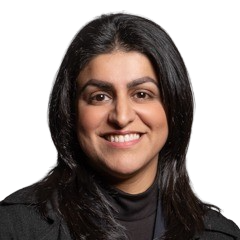
Shabana Mahmood is the Labour MP for Birmingham Ladywood, having first been elected to parliament at the 2010 general election.
In the 2024 general election, Mahmood received 15,558 votes, representing 42.5% of the vote share. The independent candidate, Akhmed Yakoob, received 12,137 votes (33.2%), while the Green Party candidate, Zoe Challenor, secured 3,478 votes (9.5%). Mahmood was duly elected with a majority of 3,421 votes.
The Birmingham Ladywood constituency covers inner-city areas of Birmingham in the West Midlands. The 2023 boundary review altered the constituency, transferring the Aston ward out and adding the Alum Rock and Balsall Heath West wards, among other changes.
The constituency, historically one of the safest Labour seats in the country, has been held by the party since the Second World War with the exception of a 1969 by-election when Wallace Lawler won the seat for the Liberal Party. It was previously represented by former Labour cabinet minister Clare Short (1983-2010). Mahmood’s majority dropped markedly in 2024 to an independent candidate campaigning heavily over the Gaza conflict.
Political Career
Mahmood was appointed to the post of home secretary in the September 2025 ministerial reshuffle. She was retained in this role following the July 2026 cabinet reshuffle conducted by Andy Burnham upon his appointment as prime minister.
Mahmood previously served as lord chancellor and secretary of state for justice from July 2024 to September 2025.
Mahmood’s appointment as home secretary represented a significant promotion. Her tenure has been characterised by a more hardline approach on immigration – a policy emphasis that has won praise from Labour politicians allied with the Blue Labour tendency. It has, however, formed the focus of criticism among progressive elements of the parliamentary Labour Party.
In a March 2026 speech, Mahmood argued that the “privilege of living in this country forever is earned, and not automatic.”
She added: “This government will never step back from our responsibility to provide refugee status to those fleeing war and persecution. But we will now restore this to the intention of the 1951 convention that refugee status is a temporary sanctuary – a safe haven until a return home is possible.”
Mahmood warned of the consequences if the state failed to control the country’s border
She stated: “That loss of control breeds fear, and when fearful, people turn inwards. Their vision of this country narrows: Their patriotism turns into something smaller, something darker, an ethno-nationalism emerges…
“If we cannot deal with so visible a failure, what can the state achieve at all?
“It is within that context that I am embarking on some of the most significant reforms to migration – both legal and asylum – in a generation. On legal migration, that means ensuring we are attracting those who can and will contribute to this country.”
Mahmood also serves as chair of Labour’s national executive committee (NEC).
Mahmood served in the shadow cabinet as shadow secretary of state for justice from September 2023 to July 2024 and Labour’s national campaign coordinator from May 2021 to September 2023.
Under Ed Miliband’s leadership, Mahmood held several junior shadow ministerial posts between 2010 and 2015, including shadow minister for prisons (2010-2011), higher education (2011-2013), and shadow financial secretary to the treasury (2013-2015).
Following the 2015 general election, Mahmood was briefly appointed as shadow chief secretary to the Treasury by interim leader Harriet Harman. However, she resigned from the Labour frontbench in September 2015 following Jeremy Corbyn’s election as leader.
In a statement, Mahmood said: “The Labour Party is and always has been a broad church.
“Jeremy and I have a shared commitment to equality and social justice and we have campaigned on many of the same issues – such as Palestinian rights, and the refugee crisis.
“On a number of important economic issues however we strongly disagree which is why in this case it is best for the Labour Party and the new team that I have stepped aside.”
Privately, she is reported to have told Corbyn: “I’ll be miserable, and I’ll make you miserable as well.”
Mahmood served on the House of Commons public accounts committee (2017-2021), the international trade committee (2016-2017), and the work and pensions committee (2010).
Mahmood delivered her maiden speech on 8 June 2010 during a debate on economic affairs and work and pensions.
In it, she said: “Birmingham, Ladywood is one of the most multicultural areas in the country. More than 50% of our population is non-white and we have a proud multicultural tradition. I have been privileged to meet many people from all race and faith backgrounds during my time as a candidate and now as a member of parliament.
“Each such meeting has reiterated to me that while the people of my constituency might have come from different places, the destination they seek is the same – a place of greater opportunity and the same chance as everyone else to succeed.”
She added: “I am a Brummie born and bred, so the fact that I now represent a constituency that is the heart of Birmingham is a source of great honour and it is a privilege.”
Political Views
Leadership elections and loyalty
Labour leadership 2015: Mahmood nominated Yvette Cooper for the party’s leadership in June 2015. The election followed the resignation of Ed Miliband after the party’s defeat in the 2015 general election. It was the first contest held under the “one member, one vote” system, which replaced the previous electoral college.
Cooper, the shadow home secretary, secured 59 nominations from the parliamentary Labour Party, comfortably exceeding the 35 required to reach the final ballot. The Labour MP ultimately finished third in the contest with 17% of the vote.
Mahmood reportedly ran Cooper’s campaign.
In an article for the Huffington Post at the time, Mahmood wrote: “We lost the election. And it hurts. But the worst thing we can do now is to descend into in-fighting, squabbles and rows. We need a debate about the future of the party and the future of our country. At times that debate will be fierce – it should be.
“There are big questions about how we put together a plan for economic growth – based around high quality jobs in growing, thriving high tech businesses and advanced manufacturing firms.
“There are big questions too about how we developed the skilled workforce we need for the future, how we create a childcare system that gives families more choice about how they bring up their children and how we build an NHS that can keep up with growing demand.
“And we will disagree – it would be odd if we didn’t. This is a leadership contest, after all.
“But what we mustn’t do is get drawn into unpleasant anonymous briefing and counter-briefing either between campaign teams or across the parliamentary party. It’s macho. It hurts only ourselves and it’s what the Tories want us to do. They would love it if Labour went back to a time when factions tore strips off each other in late night bars.”
Corbyn loyalty list: In March 2016, Mahmood was labelled as “core group negative” by the Corbyn leadership in a leaked list which categorised Labour MPs by their perceived loyalty. This label suggested the Corbyn leadership viewed Mahmood as a critic but not openly hostile.
Labour leadership 2016: Mahmood was one of 162 Labour MPs who nominated Owen Smith for the party’s leadership in July 2016. The election was triggered by a challenge to Jeremy Corbyn following the EU referendum, which led to a wave of shadow cabinet resignations and a vote of no confidence supported by 172 MPs. Smith, the former shadow work and pensions secretary, was ultimately defeated by Corbyn, who won with an increased mandate of 61.8% of the vote.
Labour leadership 2010: Mahmood was one of 63 Labour MPs who nominated Ed Miliband for the party’s leadership in May 2010. The election followed the resignation of Gordon Brown, who stepped down as prime minister and Labour leader after the 2010 general election.
Miliband, the former energy and climate change secretary, was seen as the candidate of the “soft left” and secured significant backing from affiliated trade unions. He secured 63 nominations from the Parliamentary Labour Party (PLP), exceeding the 33 required to reach the final ballot. Miliband went on to narrowly defeat his brother, David, in the final round by 50.7% to 49.3%.
Factional identity and party tradition
Blue Labour: Mahmood is associated with the Blue Labour tradition. Founded by Labour peer Lord Glasman in 2009, the Blue Labour creed champions what it terms the politics of “faith, family and flag”, embracing a form of social conservatism with a progressive or left-wing economic policy. Blue Labour articulates a critique of both New Labour’s social liberalism and free-market globalisation.
Following her appointment as home secretary, Glasman celebrated Mahmood as “clearly the leader of our part of the party”.
In an interview with former Conservative cabinet minister and Spectator editor Michael Gove in May 2025, Mahmood said she identified with the socially conservative Blue Labour group.
She told the Spectator: “I have a natural affinity for the faith, flag and family element of Blue Labour.
“Blue Labour is a group of people that call for more communitarian politics, a recognition of our rights and responsibilities to each other… The politics they argue for is very rooted in the day-to-day concerns of working people across our country…
“If you were trying to put me in a box, you would say social, small-c conservative.”
She added: “I look at a community that I represent, which is 70 per cent non-white. If you ask my constituents, they want a fair, managed migration system.
“They think there should be rules. Most of them will say they came in on the basis of really quite strict rules that they followed to come to this country to work and make a life for themselves.
“They want that sense of fairness for everybody that might come now or in the future. I just don’t know why we’ve got ourselves in a tangle talking about migration controls on the Left of politics, because it’s really pretty fundamental to the way a lot of our voters think.”
Tribune group (2017): Mahmood was listed among the supporters of the Tribune parliamentary group – a caucus generally described as representing the party’s “soft left”.
The Tribune group was initially formed in 1964 to support the newspaper of the same name. It served as a prominent forum for those parliamentarians situated on the left of the Labour Party – but it split over Tony Benn’s campaign for the deputy leadership in 1981. Benn’s supporters founded the Campaign group – which evolved into the Socialist Campaign Group (SCG). Today, the Bennite SCG is strongly associated with the Labour left tradition.
During the 1980s, the Tribune group emerged as a more natural home for those on Labour’s “soft left”.
In 2017, Efford officially re-launched the group with a new mission statement calling for “opportunity and aspiration” to be placed at the heart of the party’s programme. Efford said he had reformed the group to ensure that the centre-left of the Parliamentary Labour Party (PLP) “have a space in which to put forward ideas and debate which has not been there under successive leaders”.
He added: “The view of Labour MPs at the moment tends to be that too much are just Blairites who want to stab Jeremy Corbyn in the back. We want to show that is not where we are, and that we want to develop our own ideas that represent the centre-left of the party.”
Brexit and Europe
Brexit referendum: Mahmood supported Remain in the 2016 Brexit referendum, and therefore agreed with a majority of her constituents, 64.4% of whom also voted to Remain.
Article 50: In February 2017, Mahmood voted in favour of the European Union (Notification of Withdrawal) Bill. The legislation empowered the prime minister to notify the Council of the European Union of the UK’s intention to withdraw, formally triggering the process set out in Article 50 of the Treaty on European Union. MPs supported the bill by 498 votes to 114 at second reading.
Welfare
Welfare vote (July 2025): Mahmood voted in favour of the government’s flagship welfare bill at second reading. The vote came after ministers agreed to significant concessions to avoid defeat via a mass rebellion of Labour MPs on 1 July 2025.
Assisted dying
Mahmood voted against the Terminally Ill Adults (End of Life) Bill, better known as the assisted dying bill, at both second reading (November 2024) and third reading (June 2025).
In a letter to constituents, Mahmood warned that assisted dying would place the country on a “slippery slope towards death on demand”.
She wrote: “Sadly, recent scandals – such as Hillsborough, infected blood and the Post Office Horizon – have reminded us that the state and those acting on its behalf are not always benign. I have always held the view that, for this reason, the state should serve a clear role. It should protect and preserve life, not take it away. The state should never offer death as a service.
“It cannot be overstated what a profound shift in our culture assisted suicide will herald. In my view, the greatest risk of all is the pressure the elderly, vulnerable, sick or disabled may place upon themselves.
“Faced with expensive or insufficient care, some may feel they have become too great a burden to their family, friends and society at large. In doing so, they would not be choosing death because that is what they want for themselves but because they think that others might want it for them.”
Social values and conscience issues
Same-sex marriage (2013): In February 2013, Mahmood voted in favour of the Marriage (Same Sex Couples) Bill at its second reading. The landmark piece of legislation, which received its second reading by 400 votes to 175, legalised marriage for same-sex couples in England and Wales.
Foreign policy and security
Trident renewal (2016): Mahmood voted in favour of a government motion calling for the renewal of the Trident nuclear deterrent system in July 2016. The motion, which was passed by 472 votes to 117, committed the UK to constructing a new fleet of submarines to carry the nation’s nuclear weapons. Labour was split over the issue with 140 of its 230 MPs going against leader Jeremy Corbyn and backing the motion.
Syria airstrikes (2015): Mahmood voted against a government motion to extend UK airstrikes against Isis from Iraq into Syria in December 2015. The motion, which was passed by 397 votes to 223 after a ten-hour debate in the House of Commons, authorised the RAF to conduct strikes against Isis targets in Syria.
Syria airstrikes (2013): Mahmood voted against the government’s motion on the principle of military intervention in Syria in August 2013. The government motion was defeated by 285 votes to 272, a move which effectively ruled out UK participation in any US-led military strikes.
Palestine
LFPME: Mahmood has been listed as a member of Labour Friends of Palestine and the Middle East (LFPME). The organisation’s stated aim is to promote peace and justice in the region through the application of international law and respect for human rights.
In June 2021, Mahmood described herself as a “passionate and determined supporter of Palestinian rights”.
She said: “I am, and always have been, a passionate and determined supporter of Palestinian rights and my parliamentary record on this issue speaks for itself. My support extends fully to citizens in the Occupied Palestinian Territories who have had themselves or their families displaced or injured by Israel’s military action in the region.
“I am also a longstanding member of Labour Friends of Palestine and the Middle East.”
Palestinian recognition vote (2014): In October 2014, Mahmood was one of 192 Labour MPs who voted in favour of recognising Palestine as a state. The motion, passed by 274 votes to 12, called on the government to “recognise the state of Palestine alongside the state of Israel as a contribution to securing a negotiated two-state solution”.
Before Politics
Born in Birmingham on 17 September 1980, Mahmood grew up in the Small Heath area of the city. Her parents are of Pakistani origin from the Mirpur district of Azad Kashmir. She lived with her family in Taif, Saudi Arabia, from 1981 to 1986, where her father worked as a civil engineer.
She attended Small Heath School and later King Edward VI Camp Hill School for Girls in Birmingham. She studied law at Lincoln College, University of Oxford, where she was president of the Junior Common Room.
After university, she completed the Bar Vocational Course at the Inns of Court School of Law in London. She qualified as a barrister, specialising in professional indemnity law.
Personal Life
Mahmood is Muslim.
In an interview with the Sunday Times in 2024, she said: “My faith is the centrepoint of my life and it drives me to public service, it drives me in the way that I live my life and I see my life.”
Trivia
Mahmood was one of the first three female Muslim MPs elected to the UK parliament in 2010, alongside Rushanara Ali and Yasmin Qureshi.
Shabana Mahmood has not written for Politics.co.uk.