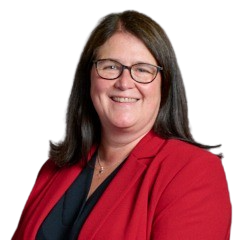
Rachel Hopkins is the Labour MP for Luton South and South Bedfordshire, having first been elected to parliament at the 2019 general election for the predecessor seat of Luton South.
In the 2024 general election, Hopkins won 13,593 votes, representing 35.4% of the vote. The Conservative candidate, Mark Versallion, received 6,735 votes (17.5%), while independent candidate Attiq Malik secured 5,384 votes (14.0%). Hopkins was duly elected with a majority of 6,858 votes.
The Luton South and South Bedfordshire constituency was newly created for the 2024 election, largely replacing the former Luton South seat. It includes central and southern Luton along with some villages in South Bedfordshire. The area has been represented by Labour since 1997.
Hopkins’ immediate predecessor as the MP for the former Luton South seat was Gavin Shuker, who represented the constituency from 2010 to 2019. Shuker was among the seven Labour MPs who resigned from the party in protest at Jeremy Corbyn’s leadership and went on to form the Independent Group (TIG) (later Change UK). He stood in the 2019 election for Luton South as an independent candidate, finishing third on 3,893 votes (9.2%).
Political Career
Hopkins currently serves as an assistant government whip. She was appointed to this role in July 2026, following the Labour leadership contest and Andy Burnham’s elevation as prime minister.
Hopkins served as a parliamentary private secretary (PPS) in the Ministry of Defence (2024-2026). A PPS acts as an unpaid parliamentary assistant, providing a link between the senior frontbencher and backbench MPs.
Hopkins resigned as a PPS in June 2026 after John Healey, the defence secretary, stepped down. She left her frontbench post over a dispute regarding military spending and the defence investment plan (DIP) specifically. In his resignation letter to the prime minister, Healey said the proposed defence investment plan “falls well short of what is required for defence and the country at this dangerous time”.
Hopkins resigned alongside Healey, armed forces minister Al Carns and her fellow MoD PPS Pamela Nash.
Hopkins is a member of the House of Commons modernisation committee (since December 2025). The modernisation committee is a cross-party committee of MPs that considers reforms to House of Commons procedures, standards, and working practices.
Hopkins is also a member of the speaker’s committee on the Electoral Commission. The committee is the statutory body of MPs that oversees the work and budget of the UK’s independent elections watchdog, the Electoral Commission.
Hopkins served on the Labour frontbench as shadow minister for veterans and defence from July 2022 until November 2023, when she resigned to vote for an Scottish National Party (SNP) amendment to the King’s speech calling for an “immediate ceasefire” in Gaza – defying the instruction set out by the party’s frontbench. Labour had tabled its own motion, making a more moderate appeal for a “humanitarian pause” in the conflict and ordered its MPs to support that stance.
In a statement setting out she voted for the SNP amendment, written alongside Luton South MP Luton South, Owen said that they “voted with our conscience”.
The Luton MPs stated: “Today we voted for an amendment to the King’s Speech calling for a ceasefire on all sides, to see the immediate end to violence against innocent civilians, the release of hostages and the vital access of humanitarian aid into Gaza.
“These calls are reflected by the overwhelming majority of the British public and respected organisations such as the UN, International Rescue Committee, Save the Children, Islamic Relief and faith leaders ranging from the Pope to our local Mosque leaders.
“We have worked every parliamentary avenue on these aims and have voted with our conscience, which is a feeling we share with our diverse town and constituents who want to see peace across the Middle East.”
Hopkins was previously shadow minister for the Cabinet Office from December 2021 to July 2022.
Hopkins also served as parliamentary private secretary (PPS) to the shadow defence secretary (John Healey) and the shadow women and equalities secretary (Marsha de Cordova) in 2020 and 2021.
In October 2020, Hopkins resigned as PPS to the shadow women and equalities secretary in order to vote against the Covert Human Intelligence Sources (Criminal Conduct) Bill – defying the party’s instruction to abstain. The proposed legislation in question, often referred to as the “spycops bill”, was introduced by the Conservative government to authorise undercover agents and informants to commit crimes while on operations. The Labour Party had whipped its representatives to abstain on the bill on the basis that the legislation is “far from perfect” yet “necessary” due to “the need to provide a clear lawful framework for the use of human intelligence sources”. Hopkins was among 34 Labour MPs to vote against the legislation.
In July 2021, Hopkins introduced the Planning and Local Representation Bill to parliament. It sought to give residents who object to a local plan the right to speak at examination hearings, and would have given councils greater power to refuse poor-quality developments created under permitted development rights. A key measure aimed to tackle “land banking” by requiring developers to begin work on major housing sites within two years of receiving planning permission or risk losing it.
Introducing the bill to parliament under the 10-minute rule procedure, Hopkins said the proposed legislation would lay the foundation “for a planning system that allows local people to shape their place and deliver good-quality homes that promote health and wellbeing.”
Hopkins was a member of the House of Commons justice committee from December 2023 to May 2024, the public administration and constitutional affairs committee from March 2020 to May 2022, and the housing, communities and local government committee from March 2020 to February 2022.
Hopkins is listed as a member of the all-party parliamentary group (APPG) for football supporters.
Hopkins delivered her maiden speech on 14 January 2020 during a debate on education and local government. In it, she said: “My predecessor [Gavin Shuker] talked about the importance of access to good-quality comprehensive education for our young people being integral to social mobility, but I would go a bit further and say that it is actually vital to tackle social injustice.
She added: “On a final note, many have said that Luton is much like a working-class town from the north but down south. Others have said that with its hyper-diverse communities, areas of deprivation and complex needs, it is like many London boroughs.
“But to me, my friends and all the wonderful constituents of Luton South, it is quite simply home.”
Before entering parliament, Hopkins served as a Labour councillor on Luton Borough Council from 2011 until March 2021, representing Barnfield ward and later High Town ward. She held the position of executive member for public health on the council.
Political views
Leadership elections and loyalty
Labour deputy leadership 2025: Hopkins was one of 117 Labour MPs who nominated Lucy Powell for the party’s deputy leadership in September 2025. The election followed the resignation of Angela Rayner, who stepped down as deputy prime minister and deputy party leader after an investigation into her tax affairs. It marked the first time since 2007 that Labour had held a deputy leadership contest while in government.
Powell, the former leader of the House of Commons, was seen as a candidate representing the party’s “soft left”; she was support by leading soft left figures including Ed Miliband and Andy Burnham. She secured 117 nominations from the Parliamentary Labour Party (PLP), above the 80 required, and went on to win the election – defeating Bridget Phillipson with 54.3% of the vote.
Labour leadership 2020: Hopkins was one of 33 Labour MPs who nominated Rebecca Long-Bailey for the party’s leadership in early 2020. The election was triggered by the resignation of Jeremy Corbyn following the party’s defeat in the 2019 general election, which resulted in Labour’s fewest seats in the House of Commons since 1935.
Long-Bailey, then the shadow business secretary, was widely regarded as the continuity candidate for the party’s left/Corbynite wing. Long-Bailey finished second with 27.6% of the vote, losing to Keir Starmer, who won a decisive victory in the first round with 56.2%.
Factional identity and party tradition
Hopkins was a member of the Socialist Campaign Group (SCG) of left-wing MPs – joining the collective following her election in 2019. A May 2024 PoliticsHome report indicated that Hopkins had left the group.
Corbyn suspension: In November 2020, Hopkins was among the 32 SCG MPs to sign a statement declaring that they opposed the suspension of Jeremy Corbyn and calling for the disciplinary action to be “swiftly reversed”.
The statement read: “This decision and the division it causes severely undermines efforts to unite to defeat antisemitism and fully implement the EHRC [Equality and Human Rights Commission] recommendations and to challenge and defeat this disastrous Conservative government.”
Corbyn’s suspension came after he issued a response to the EHRC report, arguing “the scale of the [antisemitism] problem was also dramatically overstated for political reasons by our opponents”.
Trade Union Group: Hopkins is a member of the Trade Union Group of Labour MPs. This long-standing group, founded in 1926, serves as a link between the Labour party and the trade union movement, aiming to ensure that the voices of working people and their unions are represented in parliament.
In a 2021 briefing paper for the Campaign for Labour Party Democracy (CLPD), Hopkins made the case against electoral reform from a left-wing perspective, arguing that “First Past the Post is vital to securing the election of a majority Labour government on a socialist programme.”
She wrote: “[Proportional representation] systems lead almost inevitably to multi-party parliaments with no one party having a majority so that post-election deals between parties to form governments are necessary…
“The socialist components of a Labour manifesto would be jettisoned for the Party to have a vote in government, sowing the seeds of disillusion among Labour’s working class and socialist voters and especially the socialist backbone of Labour Party activists.”
She added: “The long-term result would be an endless series of governments comprising the Chuka Umunna, David Cameron and the Nick Clegg lookalikes in the pockets of the global neo-liberal corporate world.”
Covid passes campaign (2021): Hopkins was one of over 70 MPs and peers who launched a cross-party campaign against the “divisive and discriminatory use” of Covid passes in April 2021. The campaign was triggered by government reviews into “vaccine passports”, which signatories argued would create a two-tier society and infringe upon fundamental civil liberties.
Brexit and Europe
Brexit referendum: Hopkins supported the Leave campaign in the 2016 referendum on Britain’s membership of the European Union (EU) – making her one of few known Labour MPs to have done so.
Speaking in an October 2022 debate on the Retained EU Law (Revocation and Reform) Bill, Hopkins said she voted to leave the European Union to “see a strong, democratic, sovereign state working, facilitating UK business growth and decent jobs, and ensuring the delivery of public infrastructure and services in the interests of its citizens.”
She added: “Contrary to the assertions made by Conservative [MPs], I, too, believe that the UK can thrive outside the EU. I support the supremacy of our parliament, as many honourable members have put forward already, but this rushed, dog-ate-my-homework legislation presents a future of more chaos and uncertainty under this Conservative government.”
Welfare
Welfare vote (July 2025): Hopkins voted in favour of the government’s flagship welfare bill at second reading. The vote came after ministers agreed to significant concessions to avoid defeat via a mass rebellion of Labour MPs on 1 July 2025.
Assisted dying
Hopkins voted in favour of the Terminally Ill Adults (End of Life) Bill, better known as the assisted dying bill, at both second reading (November 2024) and third reading (June 2025).
Hopkins was a co-sponsor of the bill and served on the public bill committee which scrutinised the proposed legislation.
Speaking during the bill’s second reading debate, Hopkins told the House: “We hold a responsibility in this place to legislate for all people across the United Kingdom – for society. The overwhelming opinion of the public is clear.
“A poll conducted earlier this year found that 75% of people would support a change in the law to make it legal for terminally ill adults to access assisted dying in the UK.”
She added: “As a humanist, I believe we have but one life and that we should live it well and make it meaningful. I believe that individuals should have autonomy in life. Similarly, I believe that at the end of life every person should have agency and the right to die with dignity and to a safe and painless death, on their own terms, subject of course to strong safeguards.
“I believe that the bill contains stringent safeguards.”
Social values and conscience issues
Abortion decriminalisation (2025): Hopkins voted in favour of a backbench amendment to the Crime and Policing Bill that sought to decriminalise abortion in England and Wales in June 2025. The amendment, which was passed by a majority of 242 votes, removed women from the threat of prosecution for ending a pregnancy at any stage. As an issue of conscience, MPs were allowed to vote according to their personal beliefs.
Before Politics
Born Rachel Louise Hopkins in Luton on 30 March 1972. Her father is Kelvin Hopkins, who served as Labour MP for Luton North from 1997 to 2019. He served on Jeremy Corbyn’s frontbench as shadow culture secretary from June 2016 to October 2016.
Like Rachel, Kelvin backed the Leave campaign in the 2016 EU referendum. He was listed as an official supporter of the Leave Means Leave group.
In her 2020 maiden speech, Hopkins said: “Some have commented that I followed my father’s footsteps to this place, and while that is a notable achievement, it is important to explain that the women in my family were equally strong role models, with both my grandmother and my mum being elected as local councillors and serving their communities first.”
Hopkins studied at the University of Leicester and later gained a master’s degree from the University of Bedfordshire.
Her career before politics was in the public sector, working in human resources for the Human Fertilisation and Embryology Authority (HFEA) and also for the Electoral Commission.
Personal Life
Hopkins lives in High Town, Luton with her partner Ian Sinclair.
Trivia
Hopkins’ grandfather Harold was a physicist who was nominated twice for a Nobel Prize.
Rachel Hopkins has not written for Politics.co.uk.