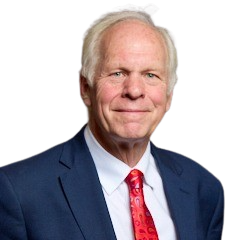
Sir Nicholas Dakin is the Labour MP for Scunthorpe.
Dakin was first elected to parliament at the 2010 general election but lost their seat nine years later in the 2019 election. He returned to parliament as the MP for Scunthorpe at the 2024 general election.
In the 2024 general election for the Scunthorpe constituency, Dakin received 15,484 votes, representing 39.7% of the vote share. The Conservative candidate, Holly Mumby-Croft, came second with 11,942 votes (30.6%), while the Reform UK candidate, Darren Haley, secured 8,163 votes (20.9%). Dakin was duly elected with a majority of 3,542.
The Scunthorpe constituency is located in North Lincolnshire.
The Scunthorpe seat was created in 1997. Since its creation, it has transitioned from a mostly safe Labour seat to a more marginal constituency. The immediate predecessor MP for the area was the Conservative Party’s Holly Mumby-Croft, who defeated Dakin in 2019 before losing the seat in 2024.
Dakin was knighted in the 2020 Birthday Honours for political service.
Political Career
Dakin currently serves as a parliamentary private secretary (PPS) in 10 Downing Street. A PPS acts as an unpaid parliamentary assistant, providing a link between the senior frontbencher and backbench MPs. Although they cannot speak for the government in debates, a PPS is bound by collective responsibility and becomes part of the so-called “payroll vote”, expected to support the official line in all divisions. Dakin was appointed to this role in July 2026, following the Labour leadership contest and Andy Burnham’s elevation as prime minister.
Dakin served as vice-chamberlain of the household (a government whip role) from September 2025 to July 2026.
Previously, Dakin served as parliamentary under-secretary of state for sentencing at the Ministry of Justice between July 2024 and September 2025. He held the position of junior lord of the Treasury (a whip role) across the same period.
Dakin held several frontbench positions during his previous stint in parliament. He was an opposition whip (2016-2019 and 2011 and 2015), shadow minister for schools (September 2015 – June 2016) and shadow deputy leader of the House of Commons (May – September 2015).
In June 2016, Dakin was among those to resign from the shadow frontbench in protest at Jeremy Corbyn’s leadership and his approach to the Brexit referendum.
In his resignation letter, Dakin wrote: “I have waited to see what you would choose to do after thinking through what you considered to be in the best interests of the Labour Party and the people who depend on us to be in power to have their best chance in life.”
He added: “It was agreed at the parliamentary Labour Party tonight that tomorrow will see a vote of confidence in your leadership. I am afraid you no longer have my confidence so I will not be able to support you. Consequently I am resigning from my post in your shadow team.”
Dakin lost his Scunthorpe seat at the 2019 general election. The Conservative candidate, Holly Mumby-Croft, secured 20,306 votes (53.8%) and a majority of 6,451 over Dakin in second place.
Dakin has sat as a member of the House of Commons procedure committee (2011-2019), the European statutory instruments committee (2018-2019) and the education committee (2010-2011).
Dakin delivered his maiden speech on 6 July 2010 during a debate on the Finance Bill.
In it, he said: “All of us, regardless of party or seniority, should have the humility to listen carefully to the people we seek to serve. The parties opposite are right when they say that Labour lost the election. We did, but let us be completely honest – no party won the election. Labour lost, the Conservatives lost and the Lib Dems lost.
“We all lost the election. Deals done behind closed doors put together the present ruling coalition, a coalition that – we were promised – would act in the national interest and be committed to protecting the vulnerable.”
He added: “We should all have the humility to recognise that there is no mandate for the budget proposals before us today, no mandate for fast and furious cuts and certainly no mandate for a huge rise in VAT or for the freezing of child benefit – measures at the heart of this unprincipled government’s approach.”
Before entering parliament, Dakin served as leader of North Lincolnshire Council from 1997 to 2003.
Political Views
Leadership elections and loyalty
Labour leadership 2015: Dakin nominated Yvette Cooper for the party’s leadership in June 2015. The election followed the resignation of Ed Miliband after the party’s defeat in the 2015 general election. It was the first contest held under the “one member, one vote” system, which replaced the previous electoral college.
Cooper, the shadow home secretary, secured 59 nominations from the Parliamentary Labour Party (PLP), comfortably exceeding the 35 required to reach the final ballot. She ultimately finished third in the contest with 17% of the vote.
Corbyn loyalty list: In March 2016, Dakin was labelled as “neutral but not hostile” by the Corbyn leadership in a leaked list which categorised Labour MPs by their perceived loyalty.
Labour leadership 2016: Dakin supported Angela Eagle for the party’s leadership in July 2016. The election was triggered by a challenge to Jeremy Corbyn following the EU referendum, which led to a wave of shadow cabinet resignations and a vote of no confidence supported by 172 MPs.
Eagle, the former shadow first secretary of state, was the first to formally launch a challenge against Corbyn. However, she withdrew from the race on 19 July after attracting fewer nominations than Owen Smith. Corbyn was ultimately re-elected with an increased mandate of 61.8% of the vote.
Dakin went on to support Smith’s candidacy. Smith, the former shadow work and pensions secretary, was ultimately defeated by Corbyn, who won with an increased mandate of 61.8% of the vote.
Factional identity and party tradition
Tribune group (2017): Dakin was listed among the supporters of the Tribune parliamentary group – a caucus generally described as representing the party’s “soft left”.
The Tribune group was initially formed in 1964 to support the newspaper of the same name. It served as a prominent forum for those parliamentarians situated on the left of the Labour Party – but it split over Tony Benn’s campaign for the deputy leadership in 1981. Benn’s supporters founded the Campaign group – which evolved into the Socialist Campaign Group (SCG). Today, the Bennite SCG is strongly associated with the Labour left tradition.
During the 1980s, the Tribune group emerged as a more natural home for those on Labour’s “soft left”.
In 2017, Efford officially re-launched the group with a new mission statement calling for “opportunity and aspiration” to be placed at the heart of the party’s programme. Efford said he had reformed the group to ensure that the centre-left of the Parliamentary Labour Party (PLP) “have a space in which to put forward ideas and debate which has not been there under successive leaders”.
He added: “The view of Labour MPs at the moment tends to be that too much are just Blairites who want to stab Jeremy Corbyn in the back. We want to show that is not where we are, and that we want to develop our own ideas that represent the centre-left of the party.”
Brexit and Europe
Brexit referendum: Dakin supported Remain in the 2016 Brexit referendum, and therefore disagreed with a majority of his constituents, 68.7% of whom voted to Leave.
Article 50: In February 2017, Dakin voted in favour of the European Union (Notification of Withdrawal) Bill. The legislation empowered the prime minister to notify the Council of the European Union of the UK’s intention to withdraw, formally triggering the process set out in Article 50 of the Treaty on European Union. MPs supported the bill by 498 votes to 114 at second reading.
Welfare
Welfare vote (July 2025): Dakin voted in favour of the government’s flagship welfare bill at second reading. The vote came after ministers agreed to significant concessions to avoid defeat via a mass rebellion of Labour MPs on 1 July 2025.
Assisted dying
Dakin voted in favour of the Terminally Ill Adults (End of Life) Bill, better known as the assisted dying bill, at second reading (November 2024) and third reading (June 2025).
Social values and conscience issues
Abortion decriminalisation (2025): Dakin voted in favour of a backbench amendment to the Crime and Policing Bill that sought to decriminalise abortion in England and Wales in June 2025. The amendment, which was passed by a majority of 242 votes, removed women from the threat of prosecution for ending a pregnancy at any stage. As an issue of conscience, MPs were allowed to vote according to their personal beliefs.
Same-sex marriage (2013): In February 2013, Dakin voted in favour of the Marriage (Same Sex Couples) Bill at its second reading. The landmark piece of legislation, which received its second reading by 400 votes to 175, legalised marriage for same-sex couples in England and Wales.
Foreign policy and security
Trident renewal (2016): Dakin voted in favour of a government motion calling for the renewal of the Trident nuclear deterrent system in July 2016. The motion, which was passed by 472 votes to 117, committed the UK to constructing a new fleet of submarines to carry the nation’s nuclear weapons. Labour was split over the issue with 140 of its 230 MPs going against leader Jeremy Corbyn and backing the motion.
Syria airstrikes (2015): Dakin voted against a government motion to extend UK airstrikes against Isis from Iraq into Syria in December 2015. The motion, which was passed by 397 votes to 223 after a ten-hour debate in the House of Commons, authorised the RAF to conduct strikes against Isis targets in Syria.
Syria airstrikes (2013): Dakin voted against the government’s motion on the principle of military intervention in Syria in August 2013. The government motion was defeated by 285 votes to 272, a move which effectively ruled out UK participation in any US-led military strikes.
Palestine
Palestinian recognition vote (2014): In October 2014, Dakin was one of 192 Labour MPs who voted in favour of recognising Palestine as a state. The motion, passed by 274 votes to 12, called on the government to “recognise the state of Palestine alongside the state of Israel as a contribution to securing a negotiated two-state solution”.
Before Politics
Born Nicholas Dakin on 10 July 1955, he grew up in Cossington, Leicestershire. He attended Cossington C of E Primary School.
Dakin studied at the University of Hull, graduating with a degree in history. He subsequently completed a postgraduate certificate in education (PGCE) at King’s College London.
Before pursuing a career in education, Dakin trained as an accountant.
Dakin taught English in Gävle, Sweden, before returning to the UK to teach at John Leggott College in Scunthorpe. He progressed to the role of vice principal and eventually served as principal of the college for three years prior to his election as an MP in 2010.
Outside of politics, Dakin has served as a trustee for Lindsey Lodge Hospice and Healthcare, and North Lincolnshire Mind. He was also a board member of the Hull and Humber Chamber of Commerce until March 2025.
Personal Life
Dakin’s mother worked as a nurse before retraining as a teacher. His uncle was Jack Lee, a footballer who played for Leicester City, Derby County and Coventry City. Lee won one cap for England.
Dakin married Audrey Balsom in Leicester in 1979. Dakin has three children, two daughters and a son.
Trivia
Dakin was appointed as a minister mere days after their return to parliament in 2024.
Nicholas Dakin has not written for Politics.co.uk.