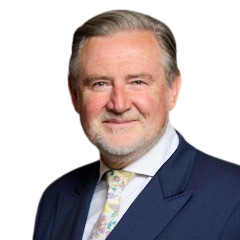
Barry Gardiner is the Labour MP for Brent West, having first been elected for the predecessor seat of Brent North at the 1997 general election.
In the 2024 general election, Gardiner won 17,258 votes, representing 41.7% of the vote. The Conservative candidate, Sushil Rapatwar, received 13,465 votes (32.5%), while the Liberal Democrat candidate, Paul Lorber, secured 3,013 votes (7.3%). Barry Gardiner was duly elected with a majority of 3,793 votes.
The Brent West constituency was newly created for the 2024 election, largely replacing the former Brent North seat. It covers areas of North West London including Wembley, Sudbury, and Alperton. The area has a large British Asian population and is considered a safe Labour seat.
Gardiner’s immediate predecessor as the MP for the old Brent North seat was Sir Rhodes Boyson of the Conservative Party, who represented the seat from 1974 to 1997.
Political Career
Gardiner is a member of the House of Commons environmental audit (since June 2020) – the commons select committee that acts as parliament’s primary cross-departmental watchdog on environmental issues. The EAC has a wide-ranging remit to examine how the policies and programmes of all government departments and public bodies impact environmental protection and sustainable development.
At the beginning of the parliament elected in 2024, Gardiner stood unsuccessfully for election as chair of the environmental audit committee. In the contest, the results of which were announced in September 2024, Gardiner secured 268 votes, placing second. They were ultimately defeated by Toby Perkins, who won the support of 285 colleagues.
In Jeremy Corbyn’s shadow cabinet, Gardiner was shadow secretary of state for international trade from July 2016 to April 2020. He served concurrently as shadow international climate change minister across the same period.
Gardiner served briefly as shadow secretary of state for energy and climate change from June 2016 to July 2016, and shadow energy and climate change minister from September 2015 to June 2016.
A pugnacious and enthusiastic media performer, Gardiner was seen as a reliable “shadow minister for the Today programme” across this period. A June 2017 PoliticsHome profile described Gardiner as “one of the stars” of the recent election campaign on account of his “no-nonsense TV appearances”.
During Ed Miliband’s tenure as Labour leader, Gardiner was shadow natural environment and fisheries minister from October 2013 to September 2015.
Between 2011 and 2013, Gardiner served as Miliband’s special envoy for environment and climate change.
Under the last Labour government, he served as parliamentary under-secretary of state for biodiversity, landscape and rural affairs at the Department for Environment, Food and Rural Affairs (DEFRA) from May 2006 to June 2007, parliamentary under-secretary of state for delivery and efficiency at the Department of Trade and Industry from from May 2005 to May 2006, and as parliamentary under-secretary of state at the Northern Ireland Office from April 2004 to May 2005.
Gardiner became parliamentary private secretary (PPS) to the minister of state at the Home Office, Beverley Hughes, in 2002. A PPS acts as an unpaid parliamentary assistant, providing a link between the senior frontbencher and backbench MPs. Upon leaving the government’s ministerial ranks in 2007, Gardiner once again served as a PPS – this time to the business secretary
Gardiner was also prime minister Gordon Brown’s special representative on forestry from 2007 until September 2008, a mainly symbolic role.
Gardiner left this role “by mutual consent” in September 2008 after joining other Labour MPs in declaring an MP should stand against Gordon Brown, the then prime minister, in a leadership election. Gardiner left government days after Labour vice chair Joan Ryan and junior whip Siobhain McDonagh were sacked for calling for a leadership challenge, and requested leadership nomination papers be sent out to all Labour MPs.
Gardiner accused Brown of “vacillation, loss of international credibility and timorous political manoeuvres that the public cannot understand”
In an article for the Sunday Times, Gardiner said that the cabinet contained “many other” politicians apart from Brown who possessed the sound judgment and vision that the country needed.
He wrote: “The public has stopped listening to Gordon Brown. He is not a popular prime minister, but he would continue to have my support if he showed sound judgment, international leadership and political vision.
“Instead we have vacillation, loss of international credibility and timorous political manoeuvres that the public cannot understand.”
Pressure had been mounting on Brown’s leadership for some months – a Guardian article penned by David Miliband in July 2008 had called for a “radical new phase” in government policy. It was interpreted as a direct challenge to Brown as prime minister, with Miliband heavily rumoured to be considering a leadership challenge. Gardiner went on to support Miliband’s candidacy in the 2010 Labour leadership election.
Some 10 years later in January 2020, just days before the close of nominations, Gardiner revealed that he was considering running for the Labour leadership. “I am considering running and will decide in the next 24 hours”, he told the Guardian. Reports suggested that Gardiner, then considered an ally of outgoing leader Jeremy Corbyn, had been urged to stand by MPs concerned that Labour left-winger Rebecca Long-Bailey’s campaign had got off to a shaky start.
https://x.com/lewis_goodall/status/1214978254471385091
Gardiner soon confirmed that he would not, after all, be running for leader. Under party rules, each candidate required the support of 22 MPs to secure entry into the succeeding rounds. In a statement, Gardiner said: “I want to thank all my colleagues as well as the party activists and members of the public who encouraged me to stand for the Labour leadership.
“I am now clear that at this late stage I cannot secure sufficient nominations to proceed to the next round. I have therefore decided not to stand for the leadership at this time.
“I will continue to serve the party loyally under whichever of my colleagues has the honour of leading our party forward to win the next general election.”
In both 2015 and 2024, Gardiner ran unsuccessfully for the post of environmental audit committee chair. On the former occasion, the Labour’s MP campaign literature consisted of a literal leaf with the message: “Leave Environmental Audit For… Barry Gardiner”.
Gardiner was proud of his “leaf-let” and shared a specimen on social media.
In June 2021, Barry Gardiner presented the Employment and Trade Union Rights (Dismissal and Re-engagement) Bill to parliament. Supported by the Labour frontbench, its primary purpose is to outlaw the practice commonly known as “fire and re-hire”, where an employer dismisses a portion of their workforce before offering them re-employment on new, less favourable terms and conditions.
https://x.com/AndyMcDonaldMP/status/1438102742422245382
Speaking at the bill’s second reading, Gardiner stated: “There is one final question, which concerns the politics surrounding this bill. Given all that ministers have said denigrating the practice of fire and rehire, it is remarkable that the government have imposed a three-line whip against it today.
“Why? In politics, it is rare to find something that absolutely everyone agrees on, yet all the way from [then general secretary of Unite the Union] Len McCluskey to the prime minister [Boris Johnson] himself, everyone agrees that fire and rehire is wrong, so why are the government determined to block this bill?”
Gardiner’s campaign included the release of a documentary, titled Stop Fire and Rehire. Of the documentary, Gardiner said at the time: “My film exposes the shameful practice of fire and rehire.
“We’re living in a cost of living crisis, with rocketing inflation, yet employers are threatening to sack their workforce unless huge cuts to pay and conditions are accepted.”
Gardiner is reported to have played a key role in the defection of former Conservative MP Christian Wakeford to the Labour Party. Wakeford had worked alongside Gardiner on his aforementioned campaign to try to outlaw the firing and rehiring of employees. Wakeford was the only Conservative MP to back Gardiner’s bill when it was put to a vote and told the commons: “This policy isn’t anti-business, it is anti-bad business leaders.”
In October 2021, ahead of the commons second reading debate, Gardiner spoke alongside Wakeford at a Conservative Party conference fringe event discussing his bill.
When Wakeford’s defection was unveiled, Gardiner told LabourList: “We’ve felt for a while that [this] was on the cards.”
In January 2022, MI5 issued an interference alert against Christine Lee – warning MPs that she was a suspected Chinese agent who had engaged in “political interference activities” on behalf of a branch of the Chinese Communist party (CCP). It was reported that Gardiner’s office had received over £500,000 in donations from Lee over a period of six years, primarily for staffing costs, and employed her son as his diary manager.
In a statement, Gardiner said he had been liaising with the security services for a number of years about his contacts with Lee. “They have always known, and been made fully aware by me, of her engagement with my office and the donations she made to fund researchers in my office in the past”, he commented.
“I have been assured by the security services that whilst they have definitively identified improper funding channelled through Christine Lee, this does not relate to any funding received by my office.”
In the security service interference alert (SSIA) sent to MPs and peers, MI5 said Lee “acted covertly” in co-ordination with the United Front Work Department (UFWD) of the Chinese Communist Party (CCP).
“The UFWD seeks to cultivate relationships with influential figures in order to ensure the UK political landscape is favourable to the CCP’s agenda and to challenge those that raise concerns about CCP activity, such as human rights”, it said.
“Lee has been engaged in the facilitation of financial donations to political parties, parliamentarians, aspiring parliamentarians, and individuals seeking political office in the UK, including facilitating donations to political entities on behalf of foreign nationals.”
Gardner was a member of the commons energy security and net zero committee from June 2023 to May 2024, the environment, food and rural affairs committee from December 2010 to November 2013, and again from June 2020 to May 2024, the public accounts committee from September 2020 to February 2022, the energy and climate change committee from November 2010 to November 2013, the public accounts committee from June 1999 to October 2002, and the procedure committee from July 1997 to January 2000.
Gardiner is listed as a member of the all-party parliamentary groups (APPGs) for climate, nature and security and international conservation.
Gardiner delivered his maiden speech on 4 July 1997. In it, he said: “I stand before you as the Labour Member for Brent, North. I shall say that again: I stand before you as the Labour Member for Brent, North. The a priori intrinsic probability that I should be here in that capacity is akin to two Brits making it to the quarter-finals at Wimbledon – but then, of course, that has happened…
“Is nothing impossible under a [Tony] Blair government?”
He added: “One of the other aspects of my constituency is that it experienced the great wave of immigration from east Africa, which enriched this country in the early 1970s. I am proud to say that Brent is the most multicultural borough not just in this country, but anywhere in Europe.”
Gardiner served as a Labour councillor on Cambridge City Council from 1988 to 1994, becoming the city’s youngest mayor in 800 years for the 1992-1993 term.
Political views
Gardiner describes himself as a “Christian democratic socialist” or “democratic Christian socialist”.
Gardiner was once secretary of the Scottish Christian Movement.
Speaking to PoliticsHome in 2017, Gardiner rejected the factional labels typically applied to Labour MPs. “My loyalty is to the party. I wasn’t a Blairite, I wasn’t a Brownite, I wasn’t a Milibandista and I wasn’t a Corbynite”, he said.
Gardiner’s concern for the environment and the impact of climate change is a clear constant across his political career. In July 2023, Gardiner said that the UK should be placed on a “war footing” to tackle climate change. Speaking to BBC’s Newsnight programme, he described the battle against rising global temperatures as a “war for survival”.
Gardiner argued that “if this were a war we wouldn’t be arguing about whether the Labour strategy or the Tory strategy were better, we would be working together to try and win”.
He said: “Well, it is a war. It is a war for survival and climate change threatens everything. It threatens our food security through drought and desertification, it threatens our homes and our cities through floods and coastal inundation.
“People, when they can’t afford to feed themselves, when they can’t actually find a place to live, they move. That causes a refugee crisis, it causes conflict.”
Leadership elections and loyalty
Starmer stand down: In May 2026, Gardiner publicly called for Keir Starmer, the prime minister, to step down/set out a timetable for his departure. The move followed the 2026 local elections and devolved elections to the Scottish Parliament and Senedd Cymru.
Labour deputy leadership 2025: Gardiner was one of 24 Labour MPs who nominated Bell Ribeiro-Addy for the party’s deputy leadership in September 2025. The election followed the resignation of Angela Rayner, who stepped down as deputy prime minister and deputy party leader after an investigation into her tax affairs. It marked the first time since 2007 that Labour had held a deputy leadership contest while in government.
Ribeiro-Addy, a member of the Socialist Campaign Group (SCG), was seen as the candidate on the left of the party. She secured only 24 nominations from the Parliamentary Labour Party (PLP), far short of the 80 required under rules introduced in 2021.
Labour leadership 2020: Gardiner was one of 33 Labour MPs who nominated Rebecca Long-Bailey for the party’s leadership in early 2020. The election was triggered by the resignation of Jeremy Corbyn following the party’s defeat in the 2019 general election, which resulted in Labour’s fewest seats in the House of Commons since 1935.
Long-Bailey, then the shadow business secretary, was widely regarded as the continuity candidate for the party’s left/Corbynite wing. Long-Bailey finished second with 27.6% of the vote, losing to Keir Starmer, who won a decisive victory in the first round with 56.2%.
Labour leadership 2015: Gardiner was one of 26 Labour MPs who did not nominate any candidate for the party’s leadership in June 2015. The election was triggered by the resignation of Ed Miliband following the 2015 general election defeat and was the first to be conducted under the “one member, one vote” system. The contest eventually saw Jeremy Corbyn, a veteran backbencher, win a landslide victory in the first round with 59.5% of the vote, defeating Andy Burnham, Yvette Cooper and Liz Kendall.
Corbyn loyalty list: In March 2016, Gardiner was labelled as “neutral but not hostile” by the Corbyn leadership in a leaked list which categorised Labour MPs by their perceived loyalty.
Labour leadership 2010: Gardiner was one of 81 Labour MPs who nominated David Miliband for the party’s leadership in May 2010. The election followed the resignation of Gordon Brown, who stepped down as prime minister and Labour leader after the 2010 general election.
Miliband, the former foreign secretary, was seen as closely aligned with the New Labour project – a Blairite figure. He secured 81 nominations from the Parliamentary Labour Party (PLP), comfortably exceeding the 33 required to reach the final ballot, but was narrowly defeated by his brother, Ed Miliband, in the final round by 50.7% to 49.3%.
Factional identity and party tradition
Socialism26: In May 2026, Gardiner was a signatory of Socialism26, a political initiative and pressure group launched by a coalition of Labour MPs and general secretaries from several major affiliated trade unions, including Unison, Aslef, the CWU, the TSSA and the FBU. The group described itself as advocating a “programme for change” intended to facilitate a “progressive political reset” within the Labour Party. It called for a return to traditional socialist values and greater internal party democracy.
The initiative was built upon a set of policy demands, including urging the government to “recognise the genocide in Gaza”, deliver full compensation for the “Waspi” women affected by state pension age changes, protect civil liberties and embrace intervention to lower energy bills.
Socialism26 described this programme as “the bare minimum to ensure that the public can see and feel the difference a socialist government makes to their lives.”
Brexit and Europe
Brexit referendum: Gardiner supported the Remain campaign in the 2016 referendum on Britain’s membership of the European Union (EU), and therefore agreed with a majority of his constituents, 57.4% of whom also voted to Remain.
Article 50: In February 2017, Gardiner voted in favour of the European Union (Notification of Withdrawal) Bill. The legislation empowered the prime minister to notify the Council of the European Union of the UK’s intention to withdraw, formally triggering the process set out in Article 50 of the Treaty on European Union. MPs supported the bill by 498 votes to 114 at second reading.
In April 2018, Gardiner referred to one of the Labour Party’s so-called “Brexit tests” as “bollocks”. Keir Starmer, then his party’s Brexit spokesperson, repeatedly demanded that any deal achieves “the exact same benefits” as the current relationship with the European Union.
In a leaked recording, Gardiner described that proposal as “bollocks – [it] always has been bollocks”.
He added: “We know very well that we cannot have the exact same benefits. And it would have made sense, because it was the Tories that said they were going to secure the exact same benefits, and our position should have been precisely to say: ‘They have said that they will secure the exact same benefits and we are going to hold them to that standard.’
The remarks were reported shortly after Gardiner apologised for branding the Good Friday Agreement a “shibboleth”.
In a March 2018 recording of a meeting in Brussels, Gardiner said the historic Northern Ireland power-sharing deal was being “played up for economic reasons”.
He remarked: “I think we must also recognise that there are real economic reasons why people have played up the issue of the Irish border and the need to have the shibboleth of the Good Friday Agreement.
“And that is because it is hugely in the Republic of Ireland’s economic interest to make sure that there is no tariff and no external border there.”
Gardiner later said he was “deeply sorry” that his “informal remarks” had “led to misunderstanding”.
He stated: “In particular, that my use of the word ‘shibboleth’ in its sense of ‘pass word’ or ‘test of membership’ gave the impression that I thought the Good Friday Agreement was in any way outdated or unimportant.
“I absolutely do not.”
In March 2019, Gardiner insisted that Labour is “not a remain party”.
He told BBC Radio 4’s today programme: “We would support a public vote [second referendum] to stop no-deal or to stop a bad deal, but not that we would allow a bad deal as long as the public had the opportunity to reject Brexit altogether.
“You see that implies that you’re a Remain party. The Labour Party is not a Remain party now. We’ve accepted the result of the referendum, and we’re trying to get a good deal.”
Brexit trade deal: In December 2020, Gardiner was among the 37 Labour MPs to rebel against the leadership’s position on the EU (Future Relationship) Bill – which enabled the government to implement and ratify its post-Brexit trade deal with the EU. Keir Starmer, the newly elected Labour leader, argued that while the trade deal negotiated by Boris Johnson’s government was “thin” and flawed, the only alternative at that late stage was a “no-deal” exit. To enforce the leadership’s position, a three-line whip was imposed. Gardiner abstained over the bill. One Labour MP, Bell Ribeiro-Addy, voted against the bill.
Welfare
Welfare vote (July 2025): Gardiner abstained over the government’s flagship welfare bill at second reading. The vote came after ministers agreed to significant concessions to avoid defeat via a mass rebellion of Labour MPs on 1 July 2025.
He had signed a letter warning the government that its proposed welfare cuts were “impossible to support” and calling for a change in direction.
The letter, signed by 42 Labour MPs, read: “The planned cuts of more than £7bn represent the biggest attack on the welfare state since George Osborne ushered in the years of austerity and over 3 million of our poorest and most disadvantaged will be affected.
“Whilst the government may have correctly diagnosed the problem of a broken benefits system and a lack of job opportunities for those who are able to work, they have come up with the wrong medicine. Cuts don’t create jobs, they just cause more hardship.”
Assisted dying
Gardiner voted against the Terminally Ill Adults (End of Life) Bill, better known as the assisted dying bill, at both second reading (November 2024) and third reading (June 2025).
Speaking during the bill’s second reading debate, Gardiner told the House: “In legislating, what we are saying if we pass the bill is that it is okay to take that choice – and there will be some people who have six months of their life to go who will then feel, ‘Ought I to do this? Is this something that I now should do?’
“That brings into play a whole set of considerations –”Is it better for my family? Is it financially better for my family?” – in ways that, at the moment, are out of scope. Rather than simply focusing on the individual suffering, which we all recognise is acute, we must broaden the debate to the impact that the legislation will have on society as a whole.”
Social values and conscience issues
Abortion decriminalisation (2025): Gardiner voted in favour of a backbench amendment to the Crime and Policing Bill that sought to decriminalise abortion in England and Wales in June 2025. The amendment, which was passed by a majority of 242 votes, removed women from the threat of prosecution for ending a pregnancy at any stage. As an issue of conscience, MPs were allowed to vote according to their personal beliefs.
Same-sex marriage (2013): In February 2013, Gardiner voted in favour of the Marriage (Same Sex Couples) Bill at its second reading. The landmark piece of legislation, which received its second reading by 400 votes to 175, legalised marriage for same-sex couples in England and Wales.
Spycops vote (2020): In October 2020, Gardiner was one of the 34 Labour MPs to break the party whip by voting against the covert Human Intelligence Sources (Criminal Conduct) Bill at its commons third reading. The proposed legislation, often referred to as the “spycops bill”, was introduced by the Conservative government to authorise undercover agents and informants to commit crimes while on operations. The Labour Party had whipped its representatives to abstain on the bill on the basis that the legislation is “far from perfect” yet “necessary” due to “the need to provide a clear lawful framework for the use of human intelligence sources”.
Foreign policy and security
Sanctioned (Russia): In April 2022, Gardiner was among the group of MPs placed on a sanctions list by the Russian government. The measure barred them from entering Russia and was presented by Moscow as a retaliatory response to the UK’s stance on the invasion of Ukraine.
Syria airstrikes (2015): Gardiner voted against a government motion to extend UK airstrikes against Isis from Iraq into Syria in December 2015. The motion, which was passed by 397 votes to 223 after a ten-hour debate in the House of Commons, authorised the RAF to conduct strikes against Isis targets in Syria.
Syria airstrikes (2013): Gardiner voted against the government’s motion on the principle of military intervention in Syria in August 2013. The government motion was defeated by 285 votes to 272, a move which effectively ruled out UK participation in any US-led military strikes.
Libya intervention (2011): Gardiner was one of only 13 MPs to vote against the government motion authorising UK military intervention in the Libyan civil war in March 2011. The House of Commons approved the action by 557 votes to 13. The government, with opposition frontbench support, argued the intervention was necessary and legal under UN Security Council Resolution to protect civilians from attack by forces loyal to Colonel Gaddafi.
Iraq War authorisation vote (2003): In March 2003, Gardiner voted in favour of the government motion authorising military action against Iraq. The vote, one of the most contentious in recent parliamentary history, gave the prime minister, Tony Blair, the authority to join the US-led invasion.
Palestine
LFPME: Gardiner has been listed as a member of Labour Friends of Palestine and the Middle East (LFPME). The organisation’s stated aim is to promote peace and justice in the region through the application of international law and respect for human rights.
Palestinian recognition letter (July 2025): In July 2025, Gardiner was among the over 254 MPs to sign a cross-party letter calling for the government to immediately recognise the state of Palestine. The letter called on the prime minister and foreign secretary to recognise Palestine at the UN Conference then taking place in New York.
Ceasefire vote (November 2023): Gardiner was among 56 Labour MPs to vote in favour of a Scottish National Party (SNP) amendment to the King’s Speech in the House of Commons calling for an “immediate ceasefire” in Gaza – defying the instruction set out by the party’s frontbench. Labour had tabled its own motion, making a more moderate appeal for a “humanitarian pause” in the conflict and ordered its representatives to support that stance.
Before Politics
Born Barry Strachan Gardiner in Glasgow on 10 March 1957, his father was an Olympic footballer and his mother trained as a surgeon and was the first woman to win a gold medal for surgery at the University of Glasgow. Both his parents died by the time he was seventeen from cancer.
He attended the High School of Glasgow and Haileybury and Imperial Service College in Hertfordshire.
He studied philosophy at the University of St Andrews and Divinity at Corpus Christi College, Cambridge. He won a John F Kennedy Memorial scholarship to study philosophy under John Rawls at Harvard University in 1983.
Before entering parliament, Gardiner worked in marine arbitration.
Personal Life
Gardiner married Caroline Smith in 1979. They have four children, three sons and one daughter.
One son, Jacob Gardiner-Smith, has played football professionally.
Trivia
Gardiner’s father, John, represented Great Britain in football at the 1936 Berlin Olympics.
As a young man, Gardiner had planned to become an Episcopal priest.
During his time at Harvard, Gardiner studied philosophy under John Rawls, the influential liberal thinker.
He can whistle.
https://x.com/BBCPolitics/status/968847729324683270
Barry Gardiner has not written for Politics.co.uk.