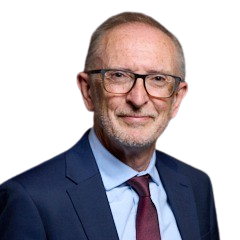
Paul Davies is the Labour MP for Colne Valley, having first been elected to parliament at the 2024 general election.
In the 2024 general election, Davies won 18,970 votes, representing 41.0% of the vote. The Conservative candidate, Jason McCartney, received 14,007 votes (30.3%), while the Reform UK candidate, Stuart Hale, secured 7,298 votes (15.8%). Davies was duly elected with a majority of 4,963.
The Colne Valley constituency is located in West Yorkshire. It has existed since 1885.
Since 1987, the seat has been held by either Labour or Conservative MPs, frequently with narrow majorities.
Davies’s immediate predecessor as the MP for Colne Valley was Jason McCartney of the Conservative Party. McCartney represented the seat from 2019 to 2024.
Political Career
Davies is a member of the House of Commons petitions committee (since January 2025) – the committee responsible for considering e-petitions submitted on parliament’s petitions website and public (paper) petitions presented to the commons.
Davies is also a member of the House of Commons finance committee (since March 2025). The finance committee is an internal body of the House of Commons responsible for overseeing the financial management of the House itself. Unlike a select committee, it does not scrutinise government departments. Instead, its remit is purely administrative and focused on the House’s own budget and expenditure.
In May 2026, Davies publicly called for Keir Starmer, the prime minister, to step down/set out a timetable for his departure. The move followed the 2026 local elections and devolved elections to the Scottish Parliament and Senedd Cymru.
In a statement, Davies said he did “not believe that the prime minister is the person who is able to rebuild trust with our citizens and lead the party and country in making these urgent changes.”
He added: “I have the utmost respect for the prime minister, but he must now listen to what the country has said in the recent elections. The message has been very clear and unequivocal.”
On 24 March 2025, Davies led a Westminster Hall on an e-petition relating to the UK rejoining the European Union.
Introducing the debate, he stated: “Many people would contend that there are several compelling arguments in favour of the UK rejoining the European Union, and I am sure that we will hear many of those during the debate.”
Davies is listed as a member of the all-party parliamentary groups (APPGs) for carbon monoxide (chair) and occupational safety and health (chair).
Davies delivered his maiden speech on 3 September 2024 in a debate on the Passenger Railway Services (Public Ownership) Bill.
In it, Davies described the proposed legislation as “a cornerstone in kick-starting economic growth” and “unlocking opportunities across the country… accelerating us towards net zero.”
He said: “Born in Wales and shaped by the Labour movement, I found purpose through education and global experiences during my professional career.”
Davies added: “Focusing beyond our immediate needs can be challenging when we are tired, lonely, hungry, distracted, or simply busy. Too many of our people are in that position; they find it impossible to get off the treadmill of looking to make ends meet…
“My values stem from the collective, and my unwavering commitment lies with my community. Those are the values and principles I will carry with me every day as I go to work in this place for the people of Colne Valley.”
Before entering parliament, Davies served as a Labour councillor on Kirklees Council from 2019 to 2024. He served as deputy leader from 2023 to 2024.
Political views
Leadership elections
Labour deputy leadership 2025: Davies was one of 117 Labour MPs who nominated Lucy Powell for the party’s deputy leadership in September 2025. The election followed the resignation of Angela Rayner, who stepped down as deputy prime minister and deputy party leader after an investigation into her tax affairs. It marked the first time since 2007 that Labour had held a deputy leadership contest while in government.
Powell, the former leader of the House of Commons, was seen as a candidate representing the party’s “soft left”; she was supported by leading soft left figures including Ed Miliband and Andy Burnham. She secured 117 nominations from the Parliamentary Labour Party (PLP), above the 80 required, and went on to win the election – defeating Bridget Phillipson with 54.3% of the vote.
Electoral reform
Electoral reform amendment: In May 2026, Davies was one of over 70 Labour MPs who signed an amendment to the Representation of the People Bill, calling on the government to establish a “national commission on electoral reform”. Tabled by Alex Sobel as chair of the fair elections APPG, the amendment aimed to force a rethink of the first past the post voting system.
At the time, Sobel described FPTP as “one of the biggest examples of a broken status quo in UK politics.” He invited colleagues to join this “common sense call to take a fresh look at how parliament is elected in modern Britain.”
Welfare
Welfare ‘reasoned amendment’ (June 2025): Davies was one of the over 120 Labour MPs to sign the reasoned amendment to the government’s flagship welfare bill which aimed to reject the proposed legislation.
The amendment, in the name of senior Labour MP Dame Meg Hillier, objected to the fact that the bill had not been subject to a “formal consultation with disabled people” and that “250,000 people will be pushed into poverty” as a result of it, according to a government impact assessment.
The motion also called on the government to wait for the publication of the review into the Personal Independence Payment (Pip), helmed by minister Sir Stephen Timms, and the independent review, conducted by Sir Charlie Mayfield, into how the employment of disabled people could be boosted.
Welfare vote (July 2025): Davies voted in favour of the government’s flagship welfare bill at second reading. The vote came after ministers agreed to significant concessions to avoid defeat via a mass rebellion of Labour MPs on 1 July 2025.
Assisted dying
Davies voted in favour of the Terminally Ill Adults (End of Life) Bill, better known as the assisted dying bill, at both second reading (November 2024) and third reading (June 2025).
Social values and conscience issues
Abortion decriminalisation (2025): Davies voted in favour of a backbench amendment to the Crime and Policing Bill that sought to decriminalise abortion in England and Wales in June 2025. The amendment, which was passed by a majority of 242 votes, removed women from the threat of prosecution for ending a pregnancy at any stage. As an issue of conscience, MPs were allowed to vote according to their personal beliefs.
Before Politics
Born in October 1957, Davies grew up in Caerau, Cardiff. He worked as a coal face electrician before undertaking a special diploma in social studies, politics and economics at Ruskin College, Oxford University (1981-1983). He undertook this placement on a trade union bursary.
He went on to study politics and economic history at Cardiff University (1983-1986).
He said in his maiden speech that working in the mines taught him the importance of supporting others: “Miners watched out for each other; their safety depended on it.”
After graduating, Davies worked in roles relating to teaching, human resources and operations management.
Personal Life
Davies is married to Leah Davies and lives in his Colne Valley constituency.
In August 2016, he was diagnosed with stage 3 bowel cancer.
Trivia
Davies studied at Oxford University on a trade union bursary.
Paul Davies has not written for Politics.co.uk.