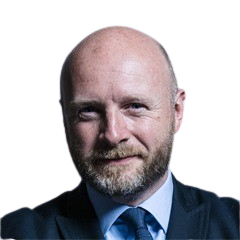
Liam Byrne is the Labour Party MP for Birmingham Hodge Hill and Solihull North, having frist been elected to parliament for the predecessor seat of Birmingham Hodge Hill in a by-election on 15 July 2004.
In the 2024 general election, Byrne received 10,655 votes in Birmingham Hodge Hill and Solihull North, representing 31.2% of the vote share. The Workers Party candidate, James Giles, received 9,089 votes (26.6%), while the Reform UK candidate, Jamie Pullin, secured 6,456 votes (18.9%). Liam Byrne was duly elected with a majority of 1,566 votes.
The Birmingham Hodge Hill and Solihull North constituency covers parts of East Birmingham (including Hodge Hill, Ward End, Shard End) and the northern part of the Metropolitan Borough of Solihull (Castle Bromwich, Smith’s Wood). The predecessor Hodge Hill seat was considered a Labour stronghold.
Political Career
Byrne was appointed as the chair of the business and trade select committee in October 2023. The committee scrutinises the work of the Department for Business and Trade.
By virtue of this role, Byrne sits on the liaison committee – the so-called “super committee” composed of the cross-party chairs of all the other commons select committees. It has a broad oversight role, but is best known for its questioning of the prime minister in sessions that take place two or three times a year.
Byrne held several senior positions in Gordon Brown’s Labour government (2007-2010). He was chief secretary to the Treasury from 2009 to 2010. Prior to this, he served as chancellor of the Duchy of Lancaster and minister for the Cabinet Office (2008-2009). His earlier positions included minister for borders and immigration at the Home Office (2006-2008), minister for the West Midlands (2007-2008), and parliamentary under-secretary of state at the Department of Health (2005-2006).
In May 2007, during his tenure as immigration minister, Byrne stated he was “trying to create a much more hostile environment in this country if you are here illegally.”
He added: “We have to make Britain much less of an attractive place if you are going to come here and break the rules.”
Upon leaving his post as chief secretary to the Treasury in May 2010, Byrne left a note for his successor David Laws stating, “Dear chief secretary, I’m afraid there is no money. Kind regards – and good luck! Liam.”
This note echoed chancellor Reginald Maudling’s note to James Callaghan, “Good luck, old cock … Sorry to leave it in such a mess”, after the Conservative Party’s defeat in the 1964 general election.
Byrne’s missive became famous and was frequently referenced by the incoming Conservative-Liberal Democrat coalition government.
David Cameron, the incumbent prime minister, brandished the now-infamous note during the final TV event of the 2015 general election campaign, the BBC’s Question Time leaders special. Cameron commented: “It takes a long time to fix the mess that I was left… We are half way through a building job.”
Byrne expressed regret for the note during the 2010-2015 parliament, acknowledging it was crass and offensive. In 2013, he told ITV News West Country that the message was “a very foolish thing to do” and attempted to save face, adding: “I left something else at the Treasury, which was a budget I’d drawn up with [ex-chancellor] Alistair Darling that would have halved our deficit over four years.”
In an article for the Guardian, published May 2015, Byrne said he was “burnt with… shame” over the note. He wrote: “I am so sorry. David Cameron’s daily flourish of my leaving note at the Treasury helped hurt the party I love. And offered sheer offence to so many of the people we want the chance to serve.”
In opposition, Byrne held several shadow cabinet posts under Ed Miliband and Harriet Harman (as interim leader), including shadow chief secretary to the Treasury (2010), shadow secretary of state for work and pensions (2011-2013), and shadow minister for higher education, skills and science (2013-2015).
During Jeremy Corbyn’s tenure as Labour leader, Byrne served as shadow digital minister (2017-2020).
Byrne stood unsuccessfully as the Labour candidate in the 2021 West Midlands mayoral election. He came second with 46% of the vote, losing to Conservative incumbent Andy Street. During the campaign, Byrne’s official campaign slogan was “A new future for the heart of Britain” – but he said that his unofficial slogan was “let’s just get s*** done”.
In an interview with LabourList, published November 2020, Byrne said: “We’re in this business to change things. If we have an unofficial slogan for our campaign, it’s: look, let’s just get s*** done.
“We’re just sick of what we see – we’re sick of people having to go to food banks, we’re sick of people dying homeless in the streets, we’re sick of the way that we’re falling behind the rest of the country, we’re just sick of it.
“We are kind of a coalition of people who have come together to just get shit done by pulling together in a Labour way. And so that’s our rocket fuel.”
In April 2022, Byrne was suspended from the House of Commons for two sitting days after the independent expert panel found he had bullied a former member of his staff. Byrne apologised, accepting he did not resolve the dispute correctly or fulfil his duties as an employer.
Byrne was a member of the commons foreign affairs committee from 2022 to 2023, the committee on arms export controls (2022), the international trade committee from 2016 to 2017 and the European scrutiny committee (2005).
Byrne is listed as a member of the all-party parliamentary groups (APPG) for children of alcoholics.
Byrne delivered his maiden speech on 22 July 2004. In it, he said: “There are of course great challenges in Hodge Hill. There are great concerns about teenage gangs who make life a misery for others. Too few people in Hodge Hill have the qualifications that they deserve.
“Half are without qualifications – one of the highest proportions in the country. Fewer than one in 10 have the chance to go on to higher education, one of the lowest proportions in the country. Some 42 per cent. of our children are entitled to free school meals.”
He added: “As I begin work, it is with two images in mind. The first is of a young mother and her child, whom I met on the second day of the campaign in a Sure Start facility. The mother was enjoying the new services and resources that have made a difference to her life and that of her child.
“The second image is of another mother, at a Shard End residents’ meeting, who talked about the fear in which she lived and her sense that when she called for help, nobody came…
“I am delighted to conclude my first contribution to the work of this House with that third image – of progress made, but great work ahead.”
Political Views
Leadership elections and loyalty
Labour deputy leadership 2025: Byrne was one of 175 Labour MPs who nominated Bridget Phillipson for the party’s deputy leadership in September 2025. The election followed the resignation of Angela Rayner, who stepped down as deputy prime minister and deputy party leader after an investigation into her tax affairs. It marked the first time since 2007 that Labour had held a deputy leadership contest while in government.
Phillipson, the serving education secretary, was widely viewed as the candidate favoured by Downing Street and the party leadership. She secured 175 nominations from the Parliamentary Labour Party (PLP), comfortably exceeding the 80 required to reach the final ballot. he was ultimately defeated by Lucy Powell.
Labour leadership 2020: Byrne was one of 21 Labour MPs who nominated Jess Phillips for the party’s leadership in early 2020. The election was triggered by the resignation of Jeremy Corbyn following the party’s defeat in the 2019 general election, which resulted in Labour’s fewest seats in the House of Commons since 1935.
Phillips, the MP for Birmingham Yardley, had been a prominent critic of Corbyn’s leadership of the Labour Party. She withdrew from the contest on 21 January 2020, suggesting that she could not “unite all parts of our movement”.
Labour leadership 2015: Byrne nominated Yvette Cooper for the party’s leadership in June 2015. The election followed the resignation of Ed Miliband after the party’s defeat in the 2015 general election. It was the first contest held under the “one member, one vote” system, which replaced the previous electoral college.
Cooper, the shadow home secretary, secured 59 nominations from the Parliamentary Labour Party (PLP), comfortably exceeding the 35 required to reach the final ballot. She ultimately finished third in the contest with 17% of the vote.
Corbyn loyalty list: In March 2016, Byrne was labelled as “core group negative” by the Corbyn leadership in a leaked list which categorised Labour MPs by their perceived loyalty. This label suggested the Corbyn leadership viewed Byrne as a critic but not openly hostile.
Labour leadership 2016: Byrne was one of 162 Labour MPs who nominated Owen Smith for the party’s leadership in July 2016. The election was triggered by a challenge to Corbyn following the EU referendum, which led to a wave of shadow cabinet resignations and a vote of no confidence supported by 172 MPs. Smith, the former shadow work and pensions secretary, was ultimately defeated by Corbyn, who won with an increased mandate of 61.8% of the vote.
Labour leadership 2010: Byrne was one of 81 Labour MPs who nominated David Miliband for the party’s leadership in May 2010. The election followed the resignation of Gordon Brown, who stepped down as prime minister and Labour leader after the 2010 general election.
Miliband, the former foreign secretary, was seen as closely aligned with the New Labour project – a Blairite figure. He secured 81 nominations from the Parliamentary Labour Party (PLP), comfortably exceeding the 33 required to reach the final ballot, but was narrowly defeated by his brother, Ed Miliband, in the final round by 50.7% to 49.3%.
Factional identity and party tradition
Common Endeavour: Byrne has been identified with the Common Endeavour group, a collective of Labour MPs from the party’s “broad centre” which set out a series of essays alongside the Fabian society focused on how “Labour can apply its values to the problems we face in the second quarter of the 21st century.”
The Fabian Society pamphlet, Common Endeavour: Building a Stronger Britain (April 2026), defined four generational challenges: “affordability, capacity, security, and solidarity.”
The group’s platform, set out in the essays, included calls for a fundamental reappraisal of the UK’s international alliances, reduced strategic dependence on the United States and the pursuit of a closer, Swiss-style relationship with the European Union, including an “emergency brake” on freedom of movement.
The essays were penned by the Labour MPs Anna Gelderd, Andrew Lewin, Luke Murphy, Anneliese Dodds, Alex Baker, Calvin Bailey and Jeevun Sandher, alongside Liam Byrne.
The introduction to the group of essays referred to the phrase used in Clause IV of the Labour Party constitution, which argues that the movement achieves more by “the strength of our common endeavour”.
In a New Statesman article, the MPs rejected the “embrace of ethnocratic division and plutocratic Thatcherism” by their political opponents.
The piece added: “Their values will make us weaker by dividing us ever further. They would have us draw away from like-minded allies in Europe and leave us more dependent on mad fossil fuel-obsessed dictators from abroad.
“And they’d indiscriminately deport our friends, neighbours, and those that sit by our relatives’ bedsides as they suffer. They’d make our nation weaker, because they do not think we achieve more together than we achieve alone.”
Living standards coalition: Byrne is a member of the living standards coalition. Established in July 2025, the group’s stated aim was to develop and promote policy ideas that directly reduce everyday costs for households, particularly in areas such as food, energy, housing and childcare. In an open letter published upon its founding, addressed to Keir Starmer, the MPs wrote: “Our constituents will ask one question at the next election: did this Labour government make me better off?”
They added: “To raise living standards, we support government interventions that will help to increase incomes and lower costs.”
https://x.com/JeevunSandher/status/1943203921557651754
Labour Growth Group: Byrne has been listed as a member of the Labour Growth Group (LGG) – a vocal faction of backbenchers committed to ensuring economic growth remains the central mission of the government. In an open letter addressed to Keir Starmer, issued upon the group’s founding in July 2024, LGG MPs said it was imperative that “the government grasps the nettle and goes for growth”.
https://x.com/PolitlcsUK/status/1817520557673381933
Fabian: Byrne is a member of the executive committee of the Fabian Society. The Fabian Society is a British socialist organisation, founded in 1884, that purpose of which is to advance the principles of democratic socialism via gradualist and reformist effort in democracies. It is one of the oldest left-leaning think tanks and is affiliated with the Labour Party. Today, the society functions as a forum for political debate and policy development, publishing research, hosting events and influencing political discourse.
Tribune group (2017): Byrne was listed among the supporters of the Tribune parliamentary group — a caucus generally described as representing the party’s “soft left”.
The Tribune group was initially formed in 1964 to support the newspaper of the same name. It served as a prominent forum for those parliamentarians situated on the left of the Labour Party – but it split over Tony Benn’s campaign for the deputy leadership in 1981. Benn’s supporters founded the Campaign group – which evolved into the Socialist Campaign Group (SCG). Today, the Bennite SCG is strongly associated with the Labour left tradition.
During the 1980s, the Tribune group emerged as a more natural home for those on Labour’s “soft left”.
In 2017, Efford officially re-launched the group with a new mission statement calling for “opportunity and aspiration” to be placed at the heart of the party’s programme. Efford said he had reformed the group to ensure that the centre-left of the Parliamentary Labour Party (PLP) “have a space in which to put forward ideas and debate which has not been there under successive leaders”.
He added: “The view of Labour MPs at the moment tends to be that too much are just Blairites who want to stab Jeremy Corbyn in the back. We want to show that is not where we are, and that we want to develop our own ideas that represent the centre-left of the party.”
Brexit and Europe
Brexit referendum: Byrne campaigned to remain in the 2016 referendum on Britain’s membership of the European Union (EU), and therefore disagreed with a majority of constituents, 51.5% of whom voted to leave.
Article 50: In February 2017, Byrne voted in favour of the European Union (Notification of Withdrawal) Bill. The legislation empowered the prime minister to notify the Council of the European Union of the UK’s intention to withdraw, formally triggering the process set out in Article 50 of the Treaty on European Union. MPs supported the bill by 498 votes to 114 at second reading.
Welfare
Welfare vote (July 2025): Byrne voted in favour of the government’s flagship welfare bill at second reading. The vote came after ministers agreed to significant concessions to avoid defeat via a mass rebellion of Labour MPs on 1 July 2025.
Assisted dying
Byrne voted against the Terminally Ill Adults (End of Life) Bill, better known as the assisted dying bill, at both second reading (November 2024) and third reading (June 2025).
In a statement setting out his position, Byrne said he believed in the “fundamental belief in the dignity and sanctity of human life.”
He added: “For many, this is rooted in religious teachings that regard life as sacred and a gift from God. But there is also a long philosophical tradition that underpins our legal system, teaching us to protect human life as a fundamental value.
“The question at the heart of [the] bill is: ‘In what circumstances should it be permissible to depart from these principles?’”
Social values and conscience issues
Same-sex marriage (2013): In February 2013, Byrne voted in favour of the Marriage (Same Sex Couples) Bill at its second reading. The landmark piece of legislation, which received its second reading by 400 votes to 175, legalised marriage for same-sex couples in England and Wales.
Foreign policy and security
Trident renewal (2016): Byrne voted in favour of a government motion calling for the renewal of the Trident nuclear deterrent system in July 2016. The motion, which was passed by 472 votes to 117, committed the UK to constructing a new fleet of submarines to carry the nation’s nuclear weapons. Labour was split over the issue with 140 of its 230 MPs going against leader Jeremy Corbyn and backing the motion.
Syria airstrikes (2015): Byrne voted against a government motion to extend UK airstrikes against Isis from Iraq into Syria in December 2015. The motion, which was passed by 397 votes to 223 after a ten-hour debate in the House of Commons, authorised the RAF to conduct strikes against Isis targets in Syria.
Syria airstrikes (2013): Byrne voted against the government’s motion on the principle of military intervention in Syria in August 2013. The government motion was defeated by 285 votes to 272, a move which effectively ruled out UK participation in any US-led military strikes.
Palestine
LFPME: Byrne has been listed as a member of Labour Friends of Palestine and the Middle East (LFPME). The organisation’s stated aim is to promote peace and justice in the region through the application of international law and respect for human rights.
Palestinian recognition letter (July 2025): In July 2025, Byrne was among the over 254 MPs to sign a cross-party letter calling for the government to immediately recognise the state of Palestine. The letter called on the prime minister and foreign secretary to recognise Palestine at the UN Conference then taking place in New York.
https://x.com/SarahChampionMP/status/1949769513123094568
Ceasefire vote (November 2023): Byrne was among 56 Labour MPs to vote in favour of a Scottish National Party (SNP) amendment to the King’s Speech in the House of Commons calling for an “immediate ceasefire” in the Israel-Hamas war – defying the instruction set out by the party’s frontbench. Labour had tabled its own motion, making a more moderate appeal for a “humanitarian pause” in the conflict and ordered its representatives to support that stance.
Palestinian recognition vote (2014): In October 2014, Byrne was one of 192 Labour MPs who voted in favour of recognising Palestine as a state. The motion, passed by 274 votes to 12, called on the government to “recognise the state of Palestine alongside the state of Israel as a contribution to securing a negotiated two-state solution”.
Before Politics
Born on 2 October 1970 in Warrington, Lancashire, Byrne’s first job was working part-time at McDonald’s. He attended Burnt Mill School in Harlow before completing his A-levels at the Hertfordshire and Essex High School in Bishop’s Stortford. He studied Politics and Modern History at the University of Manchester, graduating with First Class Honours and serving on the National Council of the National Union of Students (NUS).
He later attended Harvard Business School as a Fulbright Scholar, obtaining an MBA with honours.
Before entering politics, Byrne worked for the consulting firm Accenture and then at the merchant bank N M Rothschild & Sons. In 2000, he co-founded eGS Group, a venture-backed public sector e-procurement technology company.
He joined the Labour Party aged 15.
Personal Life
Byrne is married to Sarah Harnett and they have three children. They live in Birmingham. He is a member of the Unite trade union.
Trivia
Byrne has written books on topics including entrepreneurship (Dragons: Ten Entrepreneurs Who Built Britain), counter-extremism (Black Flag Down) and inequality (The Inequality of Wealth: Why It Matters and How We Fix It).
Byrne was 34 when he was elected to parliament in 2004 and landed his first government job nine months later.

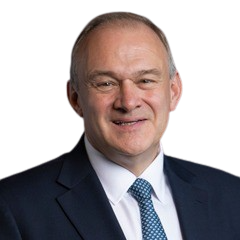
Liam Byrne: ‘How Britain can revive the wealth-owning democracy ideal — and secure our future’
18 January 2024