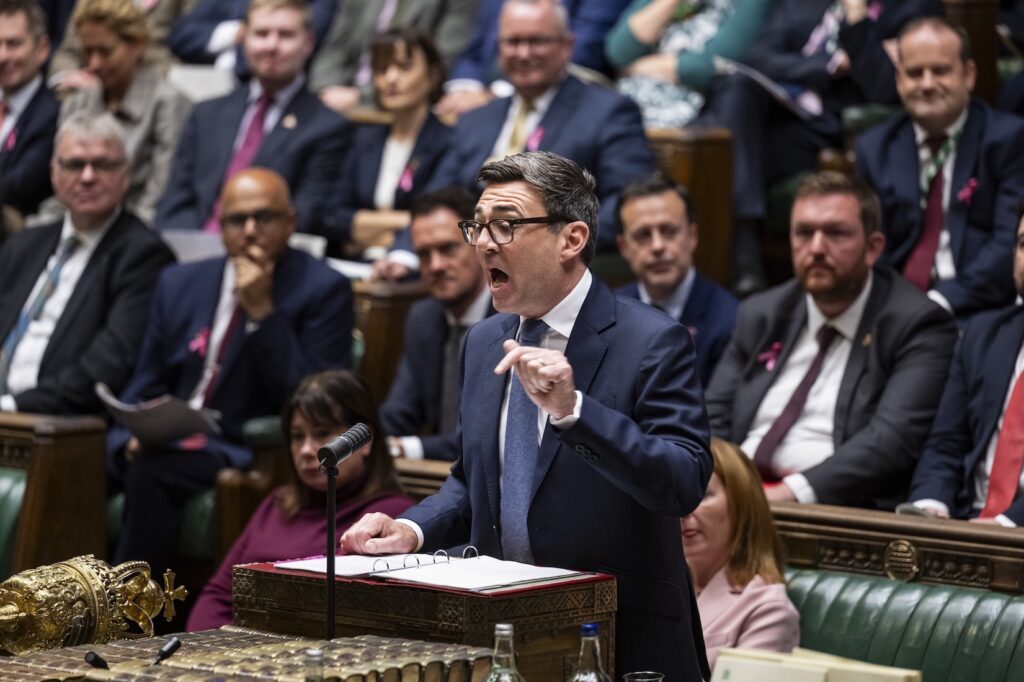
Andy Burnham was absolutely right to say he would fix our broken social care system, but he was wrong to argue that this should be funded by scrapping the state pension triple lock. Commentators across the political class often reach for what they think is such low-hanging fruit and decry the triple lock as some unnecessary, extravagant expenditure that simply props up wealthy pensioners who spend all their time on lavish cruises. The reality is somewhat different.
The UK still has 1.9 million older people living in poverty, and this figure has barely changed in recent years. Means-testing doesn’t work because for decades hundreds of thousands of pensioners (around 800,000) eligible for pension credit have never made a claim, and millions more have incomes just above the poverty level. Far from being job done, the triple lock is still a work in progress to address decades of struggle in retirement.
Burnham to change pension triple lock from 2030 to fund National Care Service
The proposed adjustment means that the state pension’s value will be frozen in 2030 at the level of its ratio to average earnings. Today, that is just 32%. But nowhere have we had a discussion about whether that is the appropriate level that the state pension should be – and what we should do if that isn’t enough. Regardless, the new triple lock will ensure that the state pension always remains at that ratio. As a replacement rate for earnings, that is extremely low.
What’s more is that future generations are going to rely on the state pension even more than their parents and grandparents do now. We know that the high-water mark of good, final salary occupational pensions is long gone. Auto-enrolled pensions do not provide anything close to a decent income in retirement because the contributions are so low. The impact of adjusting the triple lock to make it less generous will therefore fall most heavily on the pensioners of the future – today’s 30- and 40-year-olds – as over the decades the value of the state pension will reduce.
After all, ministers cannot claim that the new policy will save as much as £50 billion over the next 25 years and there be no pain. Someone has to pay, and it’s likely that in the future the decision to alter the triple lock will need to be reversed when the number of older people in poverty once again begins to rise.
It’s also wrong to say that the triple lock currently benefits everyone in the same way. The public often don’t realise that we have two state pensions – the old and the new. Anyone who retired after April 2016 is on the new pension which, goes up by the triple lock every year. But the majority of pensioners are not on this pension. That’s because they continue to receive an old basic state pension and a second state pension. What people don’t realise is that the second state pension doesn’t go up with the triple lock, and as a result the gap between the old and the new state pension is widening.
That’s why many older people don’t get anywhere near the level of pension income that is often trotted out. And let’s be honest – whichever state pension you receive, it still remains so low that it doesn’t even reach the tax threshold. Are we really saying that a state pension of less than £13,000 is too generous for a lifetime of paying national insurance in a country with the sixth-strongest economy in the world?
But most of all – why are we funding a new flagship policy on the backs of our oldest citizens? We don’t use such a method as a way of funding any other part of our welfare state. For example, we don’t ask only those with children to pay towards education. Why should social care be any different?
Ultimately, I want the Burnham government to succeed, yet the triple lock proposal could be as politically unpopular as Keir Starmer’s winter fuel debacle. That’s why I’m urging the PM to think again. Let’s fund a better care system by asking all of us to pay for it – not just pensioners.
Starmer forced into U-turn on welfare bill after major backbench rebellion