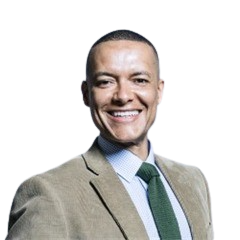
Clive Lewis is the Labour MP for Norwich South, and was first elected at the 2015 general election.
In the 2024 general election, Lewis received 21,484 votes, representing 47.6% of the vote share. The Green Party candidate, Jamie Osborn, received 8,245 votes (18.3%), while the Conservative candidate, David Thomas, secured 5,806 votes (12.9%). Lewis was duly elected with a majority of 13,239.
The Norwich South constituency is located in Norfolk, East of England. It covers the southern part of the city of Norwich, including the city centre, the University of East Anglia, and Norwich University of the Arts.
The seat is considered a Labour constituency, held by the party from 1987 until 2010. The Liberal Democrats held the seat between 2010 and 2015 (under Simon Wright), before Lewis won it for Labour. Charles Clarke, who served as home secretary under the Labour government led by Tony Blair, was MP for the area between 1997 and 2010.
Political Career
Lewis served in the shadow cabinet during Jeremy Corbyn’s tenure as Labour leader. He was appointed shadow secretary of state for defence in June 2016, moving to become shadow secretary of state for business, energy and industrial strategy in October 2016.
Lewis was previously a shadow energy and climate change minister from July 2015 to June 2016.
Lewis resigned from the shadow cabinet on 8 February 2017 after the Labour leader instructed its MPs to vote in favour of the European Union (Notification of Withdrawal) Bill at third reading. (He supported the bill at second reading.) The legislation empowered the prime minister to notify the Council of the European Union of the UK’s intention to withdraw, formally triggering the process set out in Article 50 of the Treaty on European Union.
In a statement, Lewis said he could not “in all good conscience, vote for something I believe will ultimately harm the city I have the honour to represent, love and call home.”
He added: “It is therefore with a heavy heart that I have decided to resign from the shadow cabinet.
“It has been a privilege to work with Jeremy Corbyn and be part of the shadow cabinet. I will continue to support our party and our leader from the backbenches to the very best of my ability.”
Corbyn thanked Lewis and responded that Labour had been “clear from the start that Labour will not frustrate the triggering of Article 50, which represents the start of the process for leaving the EU.”
Lewis later returned to the frontbench in January 2018 as shadow minister for sustainable economics in the shadow Treasury team, a role he held until April 2020.
Lewis stood as a candidate in the 2020 Labour Party leadership contest, triggered by the resignation of Jeremy Corbyn following the party’s defeat in the 2019 general election. He withdrew from the contest shortly before the deadline, having fallen well short of the 22 nominations required to reach the next stage.
Lewis campaigned on a radical platform, calling for wholesale constitutional reform. He argued that Labour should consider a referendum on the royal family.
He stated: “Why not have a referendum in this country on the future of the royal family? We’re a democracy. I’d rather see us as citizens than as subjects in the 21st century. Let’s talk about what a modern state looks like and what the role of the royal family would be in that.”
In September 2019, Lewis co-sponsored the Decarbonisation and Economic Strategy Bill, better known as the Green New Deal Bill, alongside Green MP Caroline Lucas. The bill aimed to “change the way the government manages the economy to enable extensive public and private investment in a green new deal”.
At the time, Lewis said: “The message from the young people, trades unionists and other concerned citizens striking today is clear: the time for dithering and procrastination on this existential question must now end.
“Our demands are quite clear and quite simple: we want a Green New Deal that will radically change how our economy works and for whom.
“It will mean the democratisation of our economy on a scale not seen since 1945 but done for the twenty-first century, so that it empowers people and communities not ever more powerful, unresponsive bureaucracies.
“The rapacious economic system, driven by rampant inequality, that has dominated these past 40 years and lead us to the brink of catastrophe, must now make way for a political economy based on the needs of people and planet first.”
During the 2017 Labour Party conference, footage emerged from a fringe event showing Lewis telling an attendee to “get on your knees, bitch”. Lewis issued an apology on social media, describing his language as “offensive and unacceptable”. He was ultimately cleared by a party panel following an allegation of groping at the same conference, which he denied.
Lewis is a member of the Parliamentary Black Caucus. The cross-party group, inspired by the US Congressional Black Caucus (CBC), was established in 2025 to advance racial equality and representation for Black and minority ethnic people within parliament and across the UK.
Lewis was a member of the House of Commons environmental audit committee (February 2022 – May 2024), the science, innovation and technology committee (September 2017 – March 2018), and the public accounts committee (July 2015 – October 2015).
Lewis is listed as a member of the all-party parliamentary groups (APPGs) for race and community, genocide prevention and Afrikan reparations.
Lewis delivered his maiden speech on 10 June 2015, during a debate on housing.
In it, he said: “Both Norwich and Norfolk have a long history of bearing radical sons and daughters. Take Robert Kett and his rebellion against the injustice of land enclosure in the 16th century. Kett led the poor and disfranchised of my city and beyond as they defied the wealthy who wished to take their land from them.
“Fast forward to today, and the robber barons are back. Take some of the academy chains operating in Norwich, such as the Inspiration Trust. Not content with taking over our schools and giving parents no say in their children’s education, it craves ever more power and wealth. Now it wants to take from the people of Norwich the Hewett local authority school and the £60 million of land it sits on – land that belongs to the people of my city.”
He added: “Half Grenadian, half English, I am proud of the rich heritage I have inherited from both sides of my working-class family. On my Grenadian side it was my father’s passion for trade unions and socialism that, it could be argued, ultimately led me to this place.
“On my mother’s English side, listening to the tales of my grandfather, a paratrooper who fought fascism in Normandy in the second world war, I developed an interest in the military – an interest that would ultimately lead me to become a reservist infantry officer, culminating in a tour of Afghanistan in 2009.”
Political Views
Leadership elections and loyalty
In November 2025, Lewis called for Keir Starmer to resign as prime minister – reportedly the first Labour MP to do so. He called for Andy Burnham, the mayor of Greater Manchester, to return to parliament and “step up and become the next prime minister”.
Lewis later suggested he would “give up” his seat for Burnham.
Asked whether he would stand aside for the Greater Manchester mayor, Lewis said: “It’s a question I’ve asked myself, and I’d have to obviously consult with my wife as well and family, but do you know what, if I’m going to sit here and say country before party, party before personal ambition, then yes, I have to say yes, don’t I.”
Lewis repeated his call for Starmer to step down following the 2026 local elections and devolved elections to the Scottish Parliament and Senedd Cymru.
Labour leadership 2015: Lewis was one of 36 Labour MPs who nominated Jeremy Corbyn for the party’s leadership in June 2015. The election followed the resignation of Ed Miliband after the party’s defeat in the 2015 general election. It was the first contest held under the “one member, one vote” system, which replaced the previous electoral college.
Corbyn, a veteran backbencher, secured the 36 nominations required – just one over the threshold – but only after several MPs lent him their support to ensure a broader ideological debate. His anti-austerity platform gained significant momentum, and he won a landslide victory in the first round with 59.5% of the vote.
Corbyn loyalty list: In March 2016, Lewis was labelled as “core group” by the Corbyn leadership in a leaked list which categorised Labour MPs by their perceived loyalty. This label suggested the Corbyn leadership viewed Lewis as among its closest allies, even as an inner circle member.
Labour leadership 2016: Lewis was one of the minority of Labour MPs who endorsed Jeremy Corbyn during his successful defence of the party leadership in September 2016. The election was triggered following a period of intense tension after the EU referendum, which saw a wave of shadow cabinet resignations and a vote of no confidence supported by 172 MPs.
Corbyn, who was automatically included on the ballot as the incumbent, was challenged by Owen Smith, the former shadow work and pensions secretary. Corbyn won the election with an increased mandate, securing 61.8% of the vote compared to 38.2% for Smith.
Factional identity and party tradition
Mainstream: Lewis is a member of Mainstream, a centre-left network within the Labour Party. The group was launched in September 2025 by the think tank Compass and the activist group Open Labour. It describes itself as a home for “Labour’s radical realists” and aims to influence the direction of the Labour government. It has called on the government to offer a “popular, principled and practical left politics for meaningful change.”
Compass has described the group as “an independent vehicle with the sole task of saving the Labour Party from its clear drift to the right and the unintended paving of the way to a Reform government.”
The group is backed by a number of senior Labour figures, including the mayor of Greater Manchester, Andy Burnham, and includes MPs and peers from various traditions within the party – from the left, soft left and the more progressive elements of New Labour.
Labour ‘reset’: In March 2026, Lewis was among dozens of Labour parliamentarians to co-sign a statement calling for a “reset” in the party’s internal culture and political direction. The statement, supported by an alliance of MPs from both the Mainstream (“soft-left”) and Momentum (left) wings of the party, condemned what it saw as the “insular, centralising approach” of the leadership. It called on Labour to rebuild “basic democracy, pluralism and fair process within our party.”
The intervention followed a series of by-election results in Gorton and Denton, Runcorn and Helsby and Caerphilly.
The statement said: “We stand against the insular, centralising approach of the current leadership that refuses to draw on the energy, talent and ideas of our whole movement, the continued underfunding of public services and local government, and the pandering to the talking points of the far right.”
It added: “We, the undersigned members from every section of the Labour Party – parliamentarians, councillors, internal election candidates, members and trade unionists, pledge to reset the Labour Party.”
Socialist Campaign Group: Lewis was previously listed as a member of the Socialist Campaign Group (SCG) – the standard-bearer of the left wing within the Parliamentary Labour Party (PLP). Founded in 1982 by followers of Tony Benn, the group has traditionally advocated policies such as widespread public ownership, wealth redistribution and strengthened trade union rights.
In early 2026, it was reported that Lewis had left the SCG to focus on Mainstream.
Corbyn suspension: In November 2020, Lewis was among the 32 SCG MPs to sign a statement declaring that they opposed the suspension of Jeremy Corbyn and calling for the disciplinary action to be “swiftly reversed”.
The statement read: “This decision and the division it causes severely undermines efforts to unite to defeat antisemitism and fully implement the EHRC [Equality and Human Rights Commission] recommendations and to challenge and defeat this disastrous Conservative government.”
Corbyn’s suspension came after he issued a response to the EHRC report, arguing “the scale of the [antisemitism] problem was also dramatically overstated for political reasons by our opponents”.
Momentum endorsement: Lewis was endorsed by the left-wing campaign group Momentum in the 2024 general election. Momentum was founded in 2015 to support the leadership of Jeremy Corbyn and to campaign for socialist policies within the Labour party.
Green new deal champion: Lewis is listed as one of activist group Green New Deal Rising’s “cross-party green new deal champions”. GNDR is a progressive campaign organisation which promotes rapid decarbonisation and the transformation of the UK economy with a “Green New Deal” – a long-term plan to tackle climate change with large-scale public investment in renewable energy, green infrastructure and public services.
Leader of the left letter: In May 2015, Lewis was among 10 newly elected Labour MPs who penned an open letter calling on the party to embrace a decisive break from New Labour. In the letter, the MPs called for a leader who will “challenge an agenda of cuts, take on the powerful vested interests of big business and will set out an alternative to austerity.”
Upon his election in 2015, Lewis declared in his victory speech that New Labour was “dead and buried.”
Spycops vote (2020): In October 2020, Lewis was one of the 34 Labour MPs to break the party whip by voting against the covert Human Intelligence Sources (Criminal Conduct) Bill at its commons third reading. The proposed legislation, often referred to as the “spycops bill”, was introduced by the Conservative government to authorise undercover agents and informants to commit crimes while on operations. The Labour Party had whipped its representatives to abstain on the bill on the basis that the legislation is “far from perfect” yet “necessary” due to “the need to provide a clear lawful framework for the use of human intelligence sources”.
Brexit and Europe
Brexit referendum: Lewis supported Remain in the 2016 Brexit referendum, and therefore agreed with a majority of his constituents, 59.5% of whom also voted to Remain.
Article 50: In February 2017, Lewis voted in favour of the European Union (Notification of Withdrawal) Bill. The legislation empowered the prime minister to notify the Council of the European Union of the UK’s intention to withdraw, formally triggering the process set out in Article 50 of the Treaty on European Union. MPs supported the bill by 498 votes to 114 at second reading.
Labour Campaign for Free Movement (2017): Lewis was a signatory to a 2017 statement issued by the Labour Campaign for Free Movement – a group established by Labour members and activists to advocate for the retention and extension of free movement rights following the UK’s vote to leave the European Union. At the time, Labour’s official position was that free movement would end at the point of Brexit in March 2019.
Left-wing ‘people’s vote’: In March 2019, Lewis was among 20 signatories to a cross-party letter published in the Guardian that called for a second referendum and rubbished Brexit as a “massive assault” on working-class people.
The letter read:“We are campaigning to transform society, not for the status quo. We are against Brexit because it is a massive assault on working-class people, on the environment, on migrants and on the communities that the left aims to represent.”
Remain pledge: During the 2019 general election campaign, Lewis was one of 193 Labour candidates to sign the anti-Brexit “Remain pledge”, drawn up by the campaign group Remain Labour.
It stated: “Labour is committed to a confirmatory referendum, to give you the final say on Brexit. If elected as your Labour MP, I pledge to campaign to Remain in the EU.”
Brexit trade deal: In December 2020, Lewis was among the 37 Labour MPs to rebel against the leadership’s position on the EU (Future Relationship) Bill – which enabled the government to implement and ratify its post-Brexit trade deal with the EU. Keir Starmer, the newly elected Labour leader, argued that while the trade deal negotiated by Boris Johnson’s government was “thin” and flawed, the only alternative at that late stage was a “no-deal” exit. To enforce the leadership’s position, a three-line whip was imposed. Lewis abstained over the bill. One Labour MP, Bell Ribeiro-Addy, voted against the bill.
Electoral reform
Fair elections APPG: Lewis is listed as a member of the all-party parliamentary group (APPG) for fair elections – a cross-party group of MPs and peers that campaigns for electoral reform. The group’s stated aims include replacing the first past the post (FPTP) voting system with a form of proportional representation, eliminating “dark money” and “undemocratic influence” from politics, and countering disinformation.
Electoral reform amendment: In May 2026, Lewis was one of over 70 Labour MPs who signed an amendment to the Representation of the People Bill, calling on the government to establish a “national commission on electoral reform”. Tabled by Alex Sobel as chair of the fair elections APPG, the amendment aimed to force a rethink of the first past the post voting system.
At the time, Sobel described FPTP as “one of the biggest examples of a broken status quo in UK politics.” He invited colleagues to join this “common sense call to take a fresh look at how parliament is elected in modern Britain.”
Proportional representation bill: In December 2024, Lewis voted in favour of the Elections (Proportional Representation) Bill – introduced by Liberal Democrat frontbencher Sarah Olney under the 10-minute rule procedure. The bill sought to “introduce a system of proportional representation for parliamentary elections and for local government elections in England”.
A total of 138 MPs supported the bill – with 136 opposed. Notably, 59 Labour MPs backed Olney’s bill.
Introducing the bill, Olney told the House: “First past the post is a broken and unfair system. This summer, the Labour party won a landslide election victory, securing 63% of seats in the House of Commons in return for just 34% of the vote.
“The system leaves millions of voices unheard and creates a divisive, adversarial political climate where collaboration is discouraged and accountability is often sidestepped.”
Welfare
Welfare ‘reasoned amendment’ (June 2025): Lewis was one of the over 120 Labour MPs to sign the reasoned amendment to the government’s flagship welfare bill which aimed to reject the proposed legislation.
The amendment, in the name of senior Labour MP Dame Meg Hillier, objected to the fact that the bill had not been subject to a “formal consultation with disabled people” and that “250,000 people will be pushed into poverty” as a result of it, according to a government impact assessment.
The motion also called on the government to wait for the publication of the review into the Personal Independence Payment (Pip), helmed by minister Sir Stephen Timms, and the independent review, conducted by Sir Charlie Mayfield, into how the employment of disabled people could be boosted.
Welfare vote (July 2025): Lewis went on to vote against the bill at second reading. The vote came after ministers agreed to significant concessions to avoid defeat via a mass rebellion of Labour MPs on 1 July 2025.
Winter fuel payment EDM: In September 2024, Lewis signed an early day motion (EDM) expressing concern over the government’s proposed changes to the winter fuel payment. The motion called on the government to “postpone the ending of winter fuel payments and establish a comprehensive strategy to tackle fuel poverty, health inequality and low incomes among older people.”
Welfare vote (July 2015): Alongside almost one quarter of his colleagues, Lewis voted against the Conservative government’s Welfare Reform and Work Bill at second reading – defying the party whip which instructed Labour MPs to abstain. This decision to abstain, taken by interim Labour leader Harriet Harman, caused a furious backlash within the party, particularly from its left wing. It became a defining issue in the ongoing leadership contest. Jeremy Corbyn was the only candidate to vote against the bill. Overall, 48 Labour MPs voted against the proposed legislation.
Assisted dying
Lewis voted in favour of the Terminally Ill Adults (End of Life) Bill, better known as the assisted dying bill, at both second reading (November 2024) and third reading (June 2025).
Social values and conscience issues
Abortion decriminalisation (2025): Lewis voted in favour of a backbench amendment to the Crime and Policing Bill that sought to decriminalise abortion in England and Wales in June 2025. The amendment, which was passed by a majority of 242 votes, removed women from the threat of prosecution for ending a pregnancy at any stage. As an issue of conscience, MPs were allowed to vote according to their personal beliefs.
Foreign policy and security
Syria airstrikes (2015): Lewis voted against a government motion to extend UK airstrikes against Isis from Iraq into Syria in December 2015. The motion, which was passed by 397 votes to 223 after a ten-hour debate in the House of Commons, authorised the RAF to conduct strikes against Isis targets in Syria.
Palestine
Palestinian recognition letter (July 2025): In July 2025, Lewis was among the over 254 MPs to sign a cross-party letter calling for the government to immediately recognise the state of Palestine. The letter called on the prime minister and foreign secretary to recognise Palestine at the UN Conference then taking place in New York.
Palestine Action vote: Also in July 2025, Lewis was one of 26 MPs to vote against the proscription of Palestine Action under the Terrorism Act 2000. The ban, passed by 385 votes to 26, came after the Home Office accused the group of “aggressive and intimidatory attacks against businesses, institutions and the public”. However, civil liberties organisations argued proscription represented an overreach of state power and a threat to the right to protest.
Ceasefire vote (November 2023): Lewis was among 56 Labour MPs to vote in favour of a Scottish National Party (SNP) amendment to the King’s Speech in the House of Commons calling for an “immediate ceasefire” in Gaza – defying the instruction set out by the party’s frontbench. Labour had tabled its own motion, making a more moderate appeal for a “humanitarian pause” in the conflict and ordered its representatives to support that stance.
Civil liberties
Covid passes campaign (2021): Lewis was one of over 70 MPs and peers who launched a cross-party campaign against the “divisive and discriminatory use” of Covid passes in April 2021. The campaign was triggered by government reviews into “vaccine passports”, which signatories argued would create a two-tier society and infringe upon fundamental civil liberties.
Covid passes vote (2021): Lewis was one of 126 MPs to vote against Covid passes in England in December 2021. The measure, introduced by Boris Johnson’s government, was carried by 369 votes to 126.
Before Politics
Born in 1971, Lewis grew up on a council estate in Northampton. He studied economics at the University of Bradford.
During his time at university, Lewis was elected president of the University of Bradford union of students. He later served as vice president of the National Union of Students (NUS).
Before entering parliament, Lewis worked as a journalist for the BBC. He completed the BBC News trainee scheme and worked as a broadcast journalist before becoming the main political reporter for BBC Look East on its Politics Show.
Lewis served as an infantry officer in the Territorial Army (now Army Reserve) with the Rifles regiment, having passed out from the Royal Military Academy Sandhurst in 2006. He completed a three-month tour of duty in Afghanistan in 2009.
Personal Life
Lewis is married to actress and school teacher Katy Steel. They married in 2017 and have one child.
Lewis is of mixed-race background. His father is from Grenada, and his mother is English.




Clive Lewis: ‘Robin Cook showed us politics at its most serious. Labour has lost that balance’
29 September 2025