
Irene Campbell is the Labour Party MP for North Ayrshire and Arran, having first been elected to parliament at the 2024 general election.
In the 2024 general election, Campbell won 16,821 votes, representing 39.8% of the vote. The Scottish National Party (SNP) candidate, Patricia Gibson, received 13,270 votes (31.4%). The Conservative candidate, Todd Ferguson, secured 5,954 votes (14.1%). Campbell was duly elected with a majority of 3,551.
The North Ayrshire and Arran constituency was held by Labour from its creation in 2005 until 2015, when it was gained by the SNP.
Campbell’s immediate predecessor as the MP for North Ayrshire and Arran was Patricia Gibson of the SNP. Gibson represented the seat from 2015 to 2024.
Political Career
Campbell is a member of the House of Commons petitions committee (since October 2024) – the committee responsible for considering e-petitions submitted on parliament’s petitions website and public (paper) petitions presented to the commons.
Campbell is also a member of the House of Commons finance committee (since November 2024). The finance committee is an internal body of the House of Commons responsible for overseeing the financial management of the House itself. Unlike a select committee, it does not scrutinise government departments. Instead, its remit is purely administrative and focused on the House’s own budget and expenditure.
In May 2026, Campbell publicly called for Keir Starmer, the prime minister, to step down/set out a timetable for his departure. The move followed the 2026 local elections and devolved elections to the Scottish Parliament and Senedd Cymru.
In a statement at the time, Campbell pointed to “many mistakes and U-turns, especially the winter fuel payment decision.”
She added: “I believe that the solution is likely to be a full and democratic contest to allow an orderly transition of leadership and for this to be achieved by the end of the year.”
In January 2026, Campbell was one of over 60 Labour MPs to sign a letter to the prime minister calling for the introduction of an Australia-style ban on social media access for children under the age of 16. Organised by Plymouth Moor View MP Fred Thomas, the initiative brought together a cross-factional coalition of backbenchers – spanning the Socialist Campaign Group, Tribune Group and Blue Labour – to demand action.
The letter called on Keir Starmer to “show leadership” by introducing a minimum age for social media access “to protect young people from the consequences of unregulated, addictive social media platforms”.
It stated: “We are all strong supporters of technology, and of this Labour government’s ambition to use tech to improve lives. But successive governments have done far too little to protect young people from the consequences of unregulated, addictive social media platforms.”
In March 2025, Campbell joined the Coastal Parliamentary Labour Party (PLP), a caucus of over 60 Labour MPs representing constituencies along the coastline of Great Britain – referred to as the “sea wall”. Established in 2025 and chaired by Polly Billington, the MP for East Thanet, the group was formed to ensure that the challenges facing seaside towns were prioritised within the Labour government’s policy agenda.
Upon the formation of the caucus, Billington said she was “pleased to be chairing this new coastal grouping of Labour MPs, who will make sure that the voices of communities like ours in East Thanet are being heard loud and clear in government”.
Significantly, the group has argued that the “sea wall” of seats is vulnerable to a challenge from Reform UK. In addition, the caucus has called for the creation of a cabinet-level minister for coastal communities to coordinate policy across departments.
Upon joining the group, Campbell said she was “keen to ensure that our local coastal towns do not lose out on investment and opportunities.”
Campbell is a prominent advocate for animal welfare in parliament. In 2025, she received the RSPCA Massingham Advocacy Award. The RSPCA described Campbell as a “tireless champion for animal welfare in Parliament through raising awareness and advocating for the phase out of animals used in science, ending trail hunting, leading animal welfare debates on improving the welfare of farmed animals and supporting vital legislation such as the Import of Dogs, Cats and Ferrets Bill.”
Campbell is listed as a member of the all-party parliamentary groups (APPGs) for phasing out animal experiments in medical research (chair), dog advisory welfare (chair) and animal welfare (vice-chair).
In a June 2025 article for Politics.co.uk, Campbell wrote: “Animal experimentation is wasting taxpayer funds and potentially delaying access to much-needed therapies, especially given the ever-growing collection of humane, advanced non-animal methods.”
Campbell delivered her maiden speech on 6 November 2024 in a debate on budget resolutions.
In it, she said: “North Ayrshire and Arran is a mix of towns – many of them post-industrial – villages, and rural and island communities. It has the best of both the countryside and the seaside, with two beautiful islands, but I will say more about that later.
“I have lived in the constituency for most of my life, although I started my working life in London in the 1980s. Jobs were scarce at that time in North Ayrshire and many other parts of Britain. Some may remember that unemployment was very high and to get a job people moved to cities.
“I arrived in London an enthusiastic young punk and not only got a job that I loved, but got to see a lot of bands, go to great art exhibitions, make some lifetime friends and generally have a great time, as most young people do.”
She added: “I first got interested in politics at a very young age. One of our neighbours, David Lambie, was the honourable member for Central Ayrshire from 1970 until 1983 and was very active in the area. That was my introduction to politics and to this place.
“I was fascinated by what was going on and how it all worked. I remember being in the gallery to see prime minister’s questions in the 1980s; I still cannot quite believe that I am now here sitting on the green benches.”
Political views
Leadership elections
Labour deputy leadership 2025: Campbell was one of 117 Labour MPs who nominated Lucy Powell for the party’s deputy leadership in September 2025. The election followed the resignation of Angela Rayner, who stepped down as deputy prime minister and deputy party leader after an investigation into her tax affairs. It marked the first time since 2007 that Labour had held a deputy leadership contest while in government.
Powell, the former leader of the House of Commons, was seen as a candidate representing the party’s “soft left”; she was supported by leading soft left figures including Ed Miliband and Andy Burnham. She secured 117 nominations from the Parliamentary Labour Party (PLP), above the 80 required, and went on to win the election – defeating Bridget Phillipson with 54.3% of the vote.
Factional identity and party tradition
Living Standards Coalition: Campbell is a member of the Living Standards Coalition. Established in July 2025, the group’s stated aim was to develop and promote policy ideas that directly reduce everyday costs for households, particularly in areas such as food, energy, housing and childcare. In an open letter published upon its founding, addressed to Keir Starmer, the MPs wrote: “Our constituents will ask one question at the next election: did this Labour government make me better off?”
They added: “To raise living standards, we support government interventions that will help to increase incomes and lower costs.”
Welfare
Welfare ‘reasoned amendment’ (June 2025): Campbell was one of the over 120 Labour MPs to sign the reasoned amendment to the government’s flagship welfare bill which aimed to reject the proposed legislation.
The amendment, in the name of senior Labour MP Dame Meg Hillier, objected to the fact that the bill had not been subject to a “formal consultation with disabled people” and that “250,000 people will be pushed into poverty” as a result of it, according to a government impact assessment.
The motion also called on the government to wait for the publication of the review into the Personal Independence Payment (Pip), helmed by minister Sir Stephen Timms, and the independent review, conducted by Sir Charlie Mayfield, into how the employment of disabled people could be boosted.
Welfare vote (July 2025): Campbell went on to vote against the bill at second reading. The vote came after ministers agreed to significant concessions to avoid defeat via a mass rebellion of Labour MPs on 1 July 2025.
Campbell was one of four Scottish Labour MPs to vote against the bill.
At the time, she told BBC Scotland News: “I really think we need to slow down with welfare reform and take a more measured approach.”
Assisted dying
Campbell voted in favour of the Terminally Ill Adults (End of Life) Bill, better known as the assisted dying bill, at both second reading (November 2024) and third reading (June 2025).
Social values and conscience issues
Abortion decriminalisation (2025): Campbell voted in favour of a backbench amendment to the Crime and Policing Bill that sought to decriminalise abortion in England and Wales in June 2025. The amendment, which was passed by a majority of 242 votes, removed women from the threat of prosecution for ending a pregnancy at any stage. As an issue of conscience, MPs were allowed to vote according to their personal beliefs.
Palestine
Palestinian recognition letter (July 2025): In July 2025, Campbell was among the over 254 MPs to sign a cross-party letter calling for the government to immediately recognise the state of Palestine. The letter called on the prime minister and foreign secretary to recognise Palestine at the UN Conference then taking place in New York.
Before Politics
Campbell started her working life in London in the 1980s.
Before entering politics, she worked as a senior manager in the NHS.
Personal Life
Campbell lives in Saltcoats, a small seaside town on the Firth of Clyde.
Trivia
In her 2024 maiden speech, Campbell told the House that her great-grandmother migrated from Sweden to Scotland to work for Alfred Nobel and the Nobel family. Nobel was a Swedish scientist who invented dynamite, after whom the Nobel prizes are named.
Campbell said: “Nobel lived locally during the start of the project, and my great-grandmother Clara came over from Sweden to work for the Nobel family. She never left Stevenston, as she met my great-grandfather and stayed, so I am obviously very grateful.”
Campbell has described herself as a “punk” in the 1980s.
She now says her dream dinner date would be with Leonard Cohen.

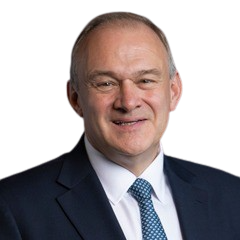

Irene Campbell: ‘It’s time to modernise research — that means leaving animals out of it’
13 June 2025