
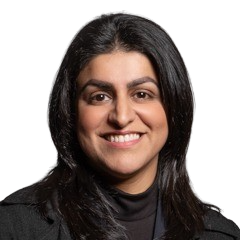
Yuan Yang is the Labour MP for Earley and Woodley, having first been elected to parliament at the 2024 general election.
In the 2024 election, Yuan Yang won 18,209 votes (representing 39.7% of the vote). The Conservative candidate, Pauline Jorgensen, received 17,361 votes (37.8%), while the Liberal Democrat candidate, Tahir Maher, secured 6,142 votes (13.4%). Yang was duly elected with a majority of 848.
The Earley and Woodley constituency was newly created ahead of the 2024 election, formed primarily from parts of the former Reading East and Wokingham constituencies. It is located in Berkshire, in the South East of England.
Political Career
Yang currently serves as a parliamentary private secretary (PPS) in HM Treasury. A PPS acts as an unpaid parliamentary assistant, providing a link between the senior frontbencher and backbench MPs. The role is widely regarded as the first step on the ministerial ladder. Although they cannot speak for the government in debates, a PPS is bound by collective responsibility and becomes part of the so-called “payroll vote”, expected to support the official line in all divisions. Yang was appointed to this role in July 2026, following the Labour leadership contest and Andy Burnham’s elevation as prime minister.
In May 2026, Yang was among the group of Labour MPs who publicly called for the prime minister, Keir Starmer, to resign or set out a clear timetable for his departure. The move followed the 2026 local elections and devolved elections to the Scottish Parliament and Senedd Cymru.
In a statement, Yang said: “I do not feel our current political direction is sustainable. I therefore believe the prime minister should set out a considered timeline for his departure.”
In January 2026, Yang was one of over 60 Labour MPs to sign a letter to the prime minister calling for the introduction of an Australia-style ban on social media access for children under the age of 16. Organised by Plymouth Moor View MP Fred Thomas, the initiative brought together a cross-factional coalition of backbenchers – spanning the Socialist Campaign Group, Tribune Group and Blue Labour – to demand action.
The letter called on Keir Starmer to “show leadership” by introducing a minimum age for social media access “to protect young people from the consequences of unregulated, addictive social media platforms”.
It stated: “We are all strong supporters of technology, and of this Labour government’s ambition to use tech to improve lives. But successive governments have done far too little to protect young people from the consequences of unregulated, addictive social media platforms.”
In November 2025, Yang was among the seven Labour MPs who set out to revive the parliamentary Tribune Group – an influential caucus representing the party’s “soft left”. Led by Louise Haigh and Vicky Foxcroft, the group was relaunched to provide an organised voice for the centre-left wing of the parliamentary Labour Party (PLP).
The Tribune group was initially formed in 1964 to support the newspaper of the same name. It served as a prominent forum for those parliamentarians situated on the left of the Labour Party – but it split over Tony Benn’s campaign for the deputy leadership in 1981. Benn’s supporters founded the Campaign group – which evolved into the Socialist Campaign Group (SCG). Today, the Bennite SCG is strongly associated with the Labour left tradition. During the 1980s, the Tribune group emerged as a more natural home for those on Labour’s “soft left”.
In 2017, the group was relaunched by veteran Labour MP Clive Efford with a mission statement calling for “opportunity and aspiration” to be placed at the heart of the party’s programme. Efford said he had reformed the group to ensure that the centre-left would “have a space in which to put forward ideas and debate which has not been there under successive leaders”.
Among the group’s leading figures in November 2025, upon its relaunch, were Haigh, Foxcroft, Debbie Abrahams, Justin Madders, Sarah Owen and Yuan Yang. Cooper and Yang were the only MPs involved in reviving the group that were elected in 2024.
In a January 2026 article for LabourList, co-written by this collective, the MPs argued that the party leadership had not “clarified who we stand for, clarity is just as often gained by who we stand against.”
The article added: “So what does a centre-left economic vision look like in practice? First, an economy that serves people, communities, and the common good. That’s why measures like bringing our railways back into public ownership matter.
“When we own essential natural monopolies such as these, we can demand the service we deserve and protect ourselves from predatory practices…
“Labour wins when – as the Tribunes of Rome were charged with doing – it protects and leads the people. We are here to help the Party to remember that mission and to deliver on it.”
In January 2026, Yang told PoliticsHome: “We have to be a group where we can discuss the big existential problems. If we can’t do that, then we’re not meeting our responsibility as a group.”
Yang was appointed as a government “business champion” for economics and financial journalism in the South East – a role established in February 2025 to facilitate engagement between the Labour administration and the private sector. The position was part of a network of approximately 40 MPs appointed by the Department for Business and Trade to act as conduits for industry views on government policy. The grouping operated under the oversight of Dan Tomlinson, the national “mission champion” for growth.
The selection of champions was designed to leverage the professional expertise of the 2024 intake of MPs, and the role was seen as an early step on the Westminster ladder. However, the scheme was reportedly scrapped in July 2025 following a meeting at 10 Downing Street. According to a Guido Fawkes report, the business champions were told that their services were no longer required.
In June 2025, Yang was one of 22 newly elected Labour MPs who co-signed a letter to the leader of the House of Commons, Lucy Powell, and the Independent Parliamentary Standards Authority (Ipsa) calling for improved paternity leave for parliamentary staff. The letter, organised in collaboration with the campaign group The Dad Shift, argued that the current provision of two weeks’ paid leave was “unfair” and left parliament trailing behind leading private and public sector employers.
The letter said current rules meant MPs were “unable to support our staff appropriately at some of the most important times of their lives”.
They added: “Dads in our offices get just two weeks off, a situation that is unfair and puts parliament many steps behind top employers across the country.”
In response, a government spokesperson told PoliticsHome: “We are committed to making sure parents receive the best possible support to balance their work and home lives as part of our Plan to Make Work Pay.”
In April 2025, Yang alongside fellow Labour MP Abtisam Mohamed were detained and barred from entry to Israel in what was the first time British MPs had been banned from the country.
In a statement to the commons after the incident, Foreign Office minister Hamish Falconer said that this was the “first time a British MP has been barred from entering Israel.”
He added: “That decision appears to have been taken on the basis of comments made in this chamber… It is no way to treat democratically elected representatives of a close partner nation, and we have made this clear at the highest levels in Israel.”
Addressing the commons, Yang said: “I hope the minister will be able to work with his counterparts in Israel to prevent this happening again so that we can continue to act in good faith to shed light on what is happening.”
Yang has sat as a member of the House of Commons Treasury select committee (2024-2026).
Yang has been listed as a member of the all-party parliamentary group (APPG) for social science and policy (chair).
Yang delivered her maiden speech on 30 July 2024 during a debate on the Budget Responsibility Bill.
Yang stated: “I was born in 1990 in China, a country without the right to vote. Three decades later, another crackdown on democracy has led to hundreds of thousands of Hongkongers seeking refuge in the UK. It is never easy to leave your home or to move countries.
“I came here with my parents as a four-year-old and it took them many years to find stable work. I still remember my mother, the evening before I started secondary school, telling me, ‘Don’t compare yourself to the other kids. Their families have money and connections. We don’t and we don’t know anyone in this country.’
“As a 10-year-old, I did not know what having connections meant, but I did learn not to compare myself to the other kids, and I think that my mother’s advice has stood me in good stead.”
She added: “Our democracy has to be renewed through reform – through empowering our communities, widening participation in democracy and ending the corrupting influence of money in politics. Our democracy also has to be renewed through delivery – through building a fair economy that can support people. It is my greatest honour to be part of a government that will do both.”
Political Views
Leadership elections
Labour deputy leadership 2025: Yang was one of 117 Labour MPs who nominated Lucy Powell for the party’s deputy leadership in September 2025. The election followed the resignation of Angela Rayner, who stepped down as deputy prime minister and deputy party leader after an investigation into her tax affairs. It marked the first time since 2007 that Labour had held a deputy leadership contest while in government.
Powell, the former leader of the House of Commons, was seen as a candidate representing the party’s “soft left”; she was supported by leading soft left figures including Ed Miliband and Andy Burnham. She secured 117 nominations from the Parliamentary Labour Party (PLP), above the 80 required, and went on to win the election – defeating Bridget Phillipson with 54.3% of the vote.
Factional identity and party tradition
Living Standards Coalition: Yang is a member of the Living Standards Coalition’s organising committee. Established in July 2025, the group’s stated aim was to develop and promote policy ideas that directly reduce everyday costs for households, particularly in areas such as food, energy, housing and childcare. In an open letter published upon its founding, addressed to Keir Starmer, the MPs wrote: “Our constituents will ask one question at the next election: did this Labour government make me better off?”
They added: “To raise living standards, we support government interventions that will help to increase incomes and lower costs.”
Electoral reform
Electoral reform amendment: In May 2026, Yang was one of over 70 Labour MPs who signed an amendment to the Representation of the People Bill, calling on the government to establish a “national commission on electoral reform”. Tabled by Alex Sobel as chair of the fair elections APPG, the amendment aimed to force a rethink of the first past the post voting system.
At the time, Sobel described FPTP as “one of the biggest examples of a broken status quo in UK politics.” He invited colleagues to join this “common sense call to take a fresh look at how parliament is elected in modern Britain.”
Proportional representation bill: In December 2024, Yang voted in favour of the Elections (Proportional Representation) Bill – introduced by Liberal Democrat frontbencher Sarah Olney under the 10-minute rule procedure. The bill sought to “introduce a system of proportional representation for parliamentary elections and for local government elections in England”.
A total of 138 MPs supported the bill – with 136 opposed. Notably, 59 Labour MPs backed Olney’s bill.
Introducing the bill, Olney told the House: “First past the post is a broken and unfair system. This summer, the Labour party won a landslide election victory, securing 63% of seats in the House of Commons in return for just 34% of the vote.
“The system leaves millions of voices unheard and creates a divisive, adversarial political climate where collaboration is discouraged and accountability is often sidestepped.”
Welfare
Welfare ‘reasoned amendment’ (June 2025): Yang was one of the over 120 Labour MPs to sign the reasoned amendment to the government’s flagship welfare bill which aimed to reject the proposed legislation.
The amendment, in the name of senior Labour MP Dame Meg Hillier, objected to the fact that the bill had not been subject to a “formal consultation with disabled people” and that “250,000 people will be pushed into poverty” as a result of it, according to a government impact assessment.
The motion also called on the government to wait for the publication of the review into the Personal Independence Payment (Pip), helmed by minister Sir Stephen Timms, and the independent review, conducted by Sir Charlie Mayfield, into how the employment of disabled people could be boosted.
Welfare vote (July 2025): Yang voted in favour of the government’s flagship welfare bill at second reading. The vote came after ministers agreed to significant concessions to avoid defeat via a mass rebellion of Labour MPs on 1 July 2025.
Assisted dying
Yang voted in favour of the Terminally Ill Adults (End of Life) Bill, better known as the assisted dying bill, at second reading (November 2024). However, they went on to vote against the bill at third reading (June 2025). Yang was one of 14 MPs to oppose the bill at third reading having supported it at second reading.
Social values and conscience issues
Abortion decriminalisation (2025): Yang voted in favour of a backbench amendment to the Crime and Policing Bill that sought to decriminalise abortion in England and Wales in June 2025. The amendment, which was passed by a majority of 242 votes, removed women from the threat of prosecution for ending a pregnancy at any stage. As an issue of conscience, MPs were allowed to vote according to their personal beliefs.
Labour For Trans Rights: Yang attended a rally organised by Labour for Trans Rights, a pressure group within the Labour party, during the party’s annual conference in September 2025. The event was described as a “Trans Solidarity Rally” and was intended to affirm the place of transgender people and their allies within the Labour movement.
Palestine
Palestinian recognition letter (July 2025): In July 2025, Yang was among the over 254 MPs to sign a cross-party letter calling for the government to immediately recognise the state of Palestine. The letter called on the prime minister and foreign secretary to recognise Palestine at the UN Conference then taking place in New York.
Before Politics
Yuan Yang (杨缘) was born in Ningbo, China, in 1990. She initially grew up in the Sichuan province before moving to the UK with her parents aged four, living in Manchester and Leeds. Yang attended Bradford Grammar School.
Yang studied philosophy, politics and economics at Balliol College, University of Oxford, graduating in 2011. She obtained a master’s degree in economics from the London School of Economics in 2013.
In 2013, Yang founded Rethinking Economics, a UK-registered charity aiming to make economics education more accessible.
Yang’s career before entering parliament centred primarily on economics journalism. She worked for the Financial Times for eight years, serving as a correspondent in China and most recently as a Europe-China correspondent.
Yang authored Private Revolutions: Coming of Age in a New China (2024).
Personal Life
Yang is a Quaker.
Trivia
Yang is the first person born in China to be elected to the House of Commons.


Yuan Yang: ‘To fix football, we need a strong and independent regulator’
6 March 2025