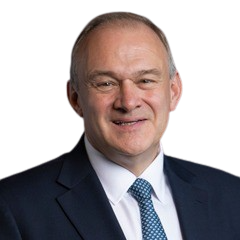
Tulip Siddiq is the Labour MP for Hampstead and Highgate, having first been elected to parliament for the predecessor seat of Hampstead and Kilburn at the 2015 general election.
In the 2024 general election, Siddiq won 23,432 votes, representing 48.3% of the vote. The Conservative candidate, Don Williams, received 8,462 votes (17.4%), while the Green Party candidate, Lorna Russell, secured 6,630 votes (13.7%). Siddiq was duly elected with a majority of 14,970 votes.
The Hampstead and Highgate constituency was newly created for the 2024 election, formed from parts of the abolished Hampstead and Kilburn, Holborn and St Pancras, and Hornsey and Wood Green seats in North London. The area is considered a safe Labour seat.
Political Career
Siddiq served as economic secretary to the Treasury (also known as city minister) from July 2024 to January 2025. She resigned following allegations of misconduct related to her family ties in Bangladesh and an investigation into whether she had fully declared relevant interests.
The independent adviser on ministers’ interests said he had “not identified evidence of improprieties” but it was “regrettable” that Siddiq had not been more alert to the “potential reputational risks”.
In her resignation statement, addressed to the prime minister, Siddiq said continuing in her role would be “a distraction” for the government but maintained she had done nothing wrong.
She wrote: “My family connections are a matter of public record, and when I became a minister I provided the full details of my relationships and private interests to the government.
“After extensive consultation with officials, I was advised to state in my declaration of interests that my aunt is the former prime minister of Bangladesh and to recuse myself from matters relating to Bangladesh to avoid any perception of a conflict of interest.
“I want to assure you that I acted and have continued to act with full transparency and on the advice of officials on these matters.”
Siddiq added: “However, it is clear that continuing in my role as economic secretary to the Treasury is likely to be a distraction from the work of the government.
“My loyalty is and always will be to this Labour government and the programme of national renewal and transformation it has embarked upon. I have therefore decided to resign from my ministerial position.”
In response, Keir Starmer said he accepted her resignation “with sadness” and thanked her for her “commitment” during her time in the role.
Prior to the 2024 general election, which saw Labour returned to power after 14 years in opposition, Siddiq served as shadow economic secretary to the treasury (2021-2024) and shadow minister for children and early years (2020-2021 and 2016-2017).
In January 2017, Siddiq resigned from Jeremy Corbyn’s frontbench, arguing she could not “reconcile” herself to the leadership’s three-line whip to vote for the European Union (Notification of Withdrawal) Bill. This legislation empowered the prime minister to notify the Council of the European Union of the UK’s intention to withdraw, formally triggering the process set out in Article 50 of the Treaty on European Union. MPs supported the bill by 498 votes to 114 at second reading. In voting against the bill, Siddiq defied the party whip – one of 47 Labour MPs to do so.
In her resignation statement, Siddiq wrote: “I have always been clear – I do not represent Westminster in Hampstead and Kilburn, I represent Hampstead and Kilburn in Westminster. I feel that the most effective place for me to counter Theresa May’s hard Brexit is from the backbenches.”
She added: “I do not support the triggering of article 50 and cannot reconcile myself to the frontbench position.”
Siddiq was at the forefront of the campaign for the release of her constituent Nazanin Zaghari-Ratcliffe.
In March 2022, Siddiq met Zaghari-Ratcliffe for the first time after campaigning some six years for her release. She later described the meeting as “surreal”.
She said at the time: “We knew we were going to meet each other and she had called me to say that I was one of the first people she wanted to see.
“So she came to West Hampstead and we hugged each other for ages and we were both quite tearful and it was quite emotional meeting her.
“She knew so much about me and I knew so much about her and she did thank me profusely but I said to her ‘it wasn’t me, this was a shared victory and everyone here in this community campaigned for you and, obviously, full credit to Richard [Zaghari-Ratcliffe’s husband] – he was the one who was relentless in his campaigning’.”
Siddiq was vocal during Richard Ratcliffe’s hunger strike outside the Foreign Office in central London in October and November 2021.
Siddiq was a member of the House of Commons public administration and constitutional affairs committee (2018-2019) and the women and equalities committee (2015 and 2017-2019).
Siddiq delivered her maiden speech on 16 June 2015 during a debate on housing.
In it, she said: “What can I say about my constituency, with its deep history and its intellectuals – the melting pot of cultures and ethnicities that is Hampstead and Kilburn? I do not believe that any other constituency has the radical background that we have in the arts, social awareness, politics, architecture and poetry.”
She added: “My mother came to Britain because this was a safe haven for her. Her story tells us that immigration is not simply an economic phenomenon. Britain has been seen for many years as a safe haven for political freedom.
“We must not let that slip away. An ill-conceived net migration target that includes refugees and asylum seekers is, frankly speaking, immoral, and it should put us to shame.”
Before entering parliament, Siddiq served as a Labour councillor for Regent’s Park ward on Camden London Borough Council from 2010 to 2014.
Political views
Leadership elections and loyalty
Oppose leadership election: In May 2026, Siddiq was among the over 100 Labour MPs who signed a joint statement insisting it was “no time for a leadership contest.” The letter was an intervention in the political crisis engulfing Keir Starmer’s premiership, after Labour suffered heavy losses in the 2026 local elections and devolved elections to the Scottish Parliament and Senedd Cymru. It was organised as a counterweight to a mounting rebellion that had seen high-profile figures, including some ministers, call for Starmer’s resignation.
The statement read: “Last week we had a devastatingly tough set of election results. It shows we have a hard job ahead to win back trust from the electorate.
“That job needs to start today – with all of us working together to deliver the change the country needs.
“We must focus on that. This is no time for a leadership contest.”
Labour deputy leadership 2025: Siddiq was one of 175 Labour MPs who nominated Bridget Phillipson for the party’s deputy leadership in September 2025. The election followed the resignation of Angela Rayner, who stepped down as deputy prime minister and deputy party leader after an investigation into her tax affairs. It marked the first time since 2007 that Labour had held a deputy leadership contest while in government.
Phillipson, the serving education secretary, was widely viewed as the candidate favoured by Downing Street and the party leadership. She secured 175 nominations from the Parliamentary Labour Party (PLP), comfortably exceeding the 80 required to reach the final ballot. She was ultimately defeated by Lucy Powell.
Labour leadership 2020: Siddiq was one of 82 Labour MPs who nominated Keir Starmer for the party’s leadership in early 2020. The election was triggered by the resignation of Jeremy Corbyn following the party’s defeat in the 2019 general election, which resulted in Labour’s fewest seats in the House of Commons since 1935.
Starmer’s 82 nominations were the highest of any candidate. The shadow Brexit secretary won a decisive victory in the first round with 56.2% of the vote, defeating Rebecca Long-Bailey and Lisa Nandy.
Labour leadership 2015: Siddiq was one of 10 Labour MPs who nominated Mary Creagh for the party’s leadership in June 2015. The election followed the resignation of Ed Miliband after the party’s defeat in the 2015 general election and was the first to be held under a “one member, one vote” system.
Creagh, the shadow international development secretary, withdrew from the contest on 12 June after securing only 10 nominations from the Parliamentary Labour Party (PLP) – far short of the 35 required to reach the final ballot.
Siddiq went on to join a group of MPs who lent their nominations to ensure Corbyn, a veteran backbencher, reached the threshold of 35 required to appear on the ballot, intending to “broaden the debate.” Following Corbyn’s landslide victory with 59.5% of the vote, several of these MPs expressed regret.
Siddiq later stated: “I never thought Jeremy would win. But I nominated him because my constituency nominated him, and I owe everything to them. And to broaden the debate. Which it did.”
During the main campaign period, Siddiq supported Andy Burnham’s candidacy. Burnham ultimately finished second in the contest with 19% of the vote, losing to Corbyn in the first round.
Corbyn loyalty list: In March 2016, Siddiq was labelled as “neutral but not hostile” by the Corbyn leadership in a leaked list which categorised Labour MPs by their perceived loyalty.
Factional identity and party tradition
Labour Campaign for Free Movement (2017): Siddiq was a signatory to a 2017 statement issued by the Labour Campaign for Free Movement – a group established by Labour members and activists to advocate for the retention and extension of free movement rights following the UK’s vote to leave the European Union. At the time, Labour’s official position was that free movement would end at the point of Brexit in March 2019.
Brexit and Europe
Brexit referendum: Siddiq supported Remain in the 2016 Brexit referendum, and therefore agreed with the overwhelming majority of her constituents, 76.3% of whom also voted to Remain
People’s vote support (2019): Siddiq signed a January 2019 statement by Labour MPs calling for a “people’s vote” or second referendum. The statement, signed by 71 Labour MPs, read: “Defeat of the Tory [Brexit] deal in a public vote would give us all a chance to campaign for the anti-austerity policies and a Labour government that deals with the true causes of the Brexit vote, and a reformed Europe that works for all people.”
Remain pledge: During the 2019 general election campaign, Siddiq was one of 193 Labour candidates to sign the anti-Brexit “Remain pledge”, drawn up by the campaign group Remain Labour.
It stated: “Labour is committed to a confirmatory referendum, to give you the final say on Brexit. If elected as your Labour MP, I pledge to campaign to Remain in the EU.”
Welfare
Welfare vote (July 2025): Siddiq voted in favour of the government’s flagship welfare bill at second reading. The vote came after ministers agreed to significant concessions to avoid defeat via a mass rebellion of Labour MPs on 1 July 2025.
Welfare vote (July 2015): Alongside almost one quarter of her colleagues, Siddiq voted against the Conservative government’s Welfare Reform and Work Bill at second reading – defying the party whip which instructed Labour MPs to abstain. This decision to abstain, taken by interim Labour leader Harriet Harman, caused a furious backlash within the party, particularly from its left wing. It became a defining issue in the ongoing leadership contest. Jeremy Corbyn was the only candidate to vote against the bill. Overall, 48 Labour MPs voted against the proposed legislation.
Assisted dying
Siddiq voted in favour of the Terminally Ill Adults (End of Life) Bill, better known as the assisted dying bill, at both second reading (November 2024) and third reading (June 2025).
Social values and conscience issues
Abortion decriminalisation (2025): Siddiq voted in favour of a backbench amendment to the Crime and Policing Bill that sought to decriminalise abortion in England and Wales in June 2025. The amendment, which was passed by a majority of 242 votes, removed women from the threat of prosecution for ending a pregnancy at any stage. As an issue of conscience, MPs were allowed to vote according to their personal beliefs.
Foreign policy and security
Trident renewal (2016): Siddiq voted against a government motion calling for the renewal of the Trident nuclear deterrent system in July 2016. The motion, which was passed by 472 votes to 117, committed the UK to constructing a new fleet of submarines to carry the nation’s nuclear weapons. Labour was split over the issue with 140 of its 230 MPs going against leader Jeremy Corbyn and backing the motion.
Syria airstrikes (2015): Siddiq voted against a government motion to extend UK airstrikes against Isis from Iraq into Syria in December 2015. The motion, which was passed by 397 votes to 223 after a ten-hour debate in the House of Commons, authorised the RAF to conduct strikes against Isis targets in Syria.
Before Politics
Tulip Rizwana Siddiq was born in Sutton, London on 16 September 1982.
Her father is a former university professor and her mother, Sheikh Rehana, gained political asylum in the UK as a teenager.
Her maternal grandfather was Sheikh Mujibur Rahman, the first President of Bangladesh, who was assassinated along with most of his family in 1975. Her maternal aunt is Sheikh Hasina, the former prime minister of Bangladesh. Hasina was ousted from her 15-year rule in a mass uprising in August 2024.
She attended various schools including in Dhaka, The Royal School, Hampstead, and Mill Hill School. She studied English literature at University College London and gained master’s degrees from King’s College London.
Before entering politics full-time, she worked for organisations including Amnesty International, the Greater London Authority, Philip Gould Associates, Save the Children and Brunswick Group. She also served as a special adviser to Tessa Jowell.
Siddiq joined the Labour Party aged 16.
Personal Life
Siddiq married Christian Percy, a strategy consultant, in 2013. They have two children, a daughter and a son.
She was raised Muslim.
She is 4ft 11in.
In April 2025, a judge in Bangladesh reportedly issued an arrest warrant for Siddiq along with more than 50 others including her mother, Sheikh Rehana, and her brother, Radwan Siddiq.
Siddiq said the charges were “a completely politically motivated smear campaign, trying to harass me.”
She told reporters: “There is no evidence that I’ve done anything wrong.”
In December 2025, Siddiq was sentenced to two years in prison in Bangladesh after being put on trial in her absence. She responded that the process had been “flawed and farcical from the beginning to the end”.
In January 2019, she delayed the scheduled Caesarean birth of her son to attend and vote against Theresa May’s Brexit deal.
Trivia
Siddiq was the first MP granted a proxy vote on 29 January 2019.
The House of Commons official record stated: “The Speaker has certified, under the terms of the temporary Standing Order on voting by proxy for parental absence and the Resolution of the House of 28 January, that Tulip Siddiq is is eligible to have a proxy vote cast on her behalf, starting from Thursday 17 January 2019 and finishing on Tuesday 16 July 2019. The nominated proxy is Vicky Foxcroft.”
Siddiq reportedly met Mother Teresa when she was a child.
Tulip Siddiq has not written for Politics.co.uk.