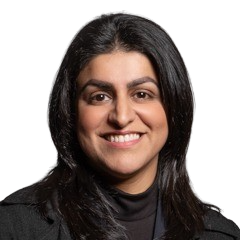
Pat McFadden is the Labour MP for Wolverhampton South East, having first been elected to parliament at the 2005 general election.
In the 2024 general election, McFadden won 16,800 votes, representing 50.3% of the vote. The Reform UK candidate, Carl Hardwick, received 7,612 votes (22.8%), while the Conservative candidate, Victoria Wilson, secured 5,654 votes (16.9%). McFadden was duly elected with a majority of 9,188 votes.
The Wolverhampton South East constituency covers parts of the City of Wolverhampton as well as Willenhall, Darlaston and Bilston in the West. It has been held by Labour since its creation in 1974.
Political Career
McFadden was appointed to the post of secretary of state for work and pensions in the September 2025 ministerial reshuffle. He was retained in this role following the July 2026 cabinet reshuffle conducted by Andy Burnham upon his appointment as prime minister.
McFadden served as chancellor of the Duchy of Lancaster from July 2024 to September 2025.
Prior to the 2024 general election, McFadden served as Labour’s national campaign coordinator and shadow chancellor of the Duchy of Lancaster from September 2023 to July 2024.
McFadden was previously shadow chief secretary to the Treasury (2021-2023), shadow economic secretary to the treasury (2020-2021), shadow minister for foreign and commonwealth affairs (2014-2016) and shadow secretary of state for business, innovation and skills (2010).
In January 2016, McFadden was dismissed as a shadow Europe minister for what Labour sources said were displays of “incompetence and disloyalty”.
In a statement, McFadden said he had accepted the post because the EU issue was of “crucial importance” with the Brexit referendum looming.
He stated: “Tonight Mr Corbyn has told me he does not want me to continue to serve on his frontbench, in particular because of questions I asked about terrorism and national security in the commons statement following the Paris terrorist attacks.”
He added: “It is his prerogative to decide his frontbench team and I will continue to support and work for Labour in any way I can. I hope Labour retains its strong and clear position to campaign for the United Kingdom to remain in the EU.”
In the House of Commons, McFadden had asked the prime minister, David Cameron, to “reject the view that sees terrorist acts as always being a response or a reaction to what we in the west do”.
He added: “Does he agree that such an approach risks infantilising the terrorists and treating them like children, when the truth is that they are adults who are entirely responsible for what they do?”
Cameron responded at the time: “It is that sort of moral and intellectual clarity that is necessary in dealing with terrorists.”
McFadden’s dismissal triggered the resignation of Stephen Doughty, who also held a frontbench post in the shadow Foreign Office team. Doughty resigned during a live television interview, accusing then-leader Jeremy Corbyn’s team of dishonesty over McFadden’s sacking.
Doughty claimed McFadden was dismissed for his stance on terrorism and national security, views he fully endorsed, stating: “When an individual has been singled out for a sacking for words that I completely agree with, I think it’s only the honourable thing for me to do to also tender my resignation.”
Jonathan Reynolds, meanwhile, resigned as shadow rail minister. Reynolds said McFadden’s dismissal “pushed him over the edge”.
Cameron also seized on McFadden’s dismissal, telling the commons during a session of prime minster’s questions (PMQs) that condemning terrorist attacks should be “an essential component” of aspiring to high office.
McFadden held several ministerial positions under the last Labour government. He was minister of state at the department for business, innovation and skills (2009-2010), minister of state at the department for business, enterprise and regulatory reform (2007-2009), and parliamentary secretary at the Cabinet Office (2006-2007).
McFadden was a member of the business and trade committee (2020), the panel of chairs (2020), the committee on the future relationship with the European Union (2016-2019) and the Treasury committee (2011-2014).
McFadden delivered his maiden speech on 25 May 2005.
In it, he said: “Over the years, Wolverhampton has welcomed immigrants from every corner of Britain and, indeed, from across the world. Today, my constituency is a diverse community, with almost 30 per cent. of its population made up of ethnic minorities.
“The vast majority of that population are Sikhs, but there are also many Hindus and Muslims. Out of many communities has emerged one, made richer by its different strands, which combine to make the city a better place – not person against person, or community against community, but one community living and working together.”
He added: “During the election, I had the privilege of taking part in the celebrations to mark the Sikh festival of Vasaikhi in the city’s West park. It was a wonderful open-air event attended by thousands of people.
“This annual event has become a vital part of the city’s cultural life, and is testament to the warm bonds between people of different faiths and cultures in Wolverhampton.”
Political views
Leadership elections and loyalty
Labour deputy leadership 2025: McFadden was one of 175 Labour MPs who nominated Bridget Phillipson for the party’s deputy leadership in September 2025. The election followed the resignation of Angela Rayner, who stepped down as deputy prime minister and deputy party leader after an investigation into her tax affairs. It marked the first time since 2007 that Labour had held a deputy leadership contest while in government.
Phillipson, the serving education secretary, was widely viewed as the candidate favoured by Downing Street and the party leadership. She secured 175 nominations from the Parliamentary Labour Party (PLP), comfortably exceeding the 80 required to reach the final ballot. She was ultimately defeated by Lucy Powell.
Labour leadership 2020: McFadden was one of 21 Labour MPs who nominated Jess Phillips for the party’s leadership in early 2020. The election was triggered by the resignation of Jeremy Corbyn following the party’s defeat in the 2019 general election, which resulted in Labour’s fewest seats in the House of Commons since 1935.
Phillips, the MP for Birmingham Yardley, had been a prominent critic of Corbyn’s leadership of the Labour Party. She withdrew from the contest on 21 January 2020, suggesting that she could not “unite all parts of our movement”.
Labour leadership 2015: McFadden was one of 41 Labour MPs who nominated Liz Kendall for the party’s leadership in June 2015. The election followed the resignation of Ed Miliband after the party’s defeat in the 2015 general election. It was the first contest held under the “one member, one vote” system, which replaced the previous electoral college.
Kendall, the shadow minister for care and older people, was viewed as the “Blairite” candidate in the race. She secured 41 nominations from the Parliamentary Labour Party (PLP), exceeding the 35 required to reach the final ballot. She ultimately finished fourth in the contest with 4.5% of the vote.
Corbyn loyalty list: In March 2016, McFadden was labelled as “hostile group” by the Corbyn leadership in a leaked list which categorised Labour MPs by their perceived loyalty. This label suggested the Corbyn leadership viewed McFadden as actively and openly antagonistic.
Labour leadership 2016: McFadden supported Angela Eagle for the party’s leadership in July 2016. The election was triggered by a challenge to Jeremy Corbyn following the EU referendum, which led to a wave of shadow cabinet resignations and a vote of no confidence supported by 172 MPs.
Eagle, the former shadow first secretary of state, was the first to formally launch a challenge against Corbyn. However, she withdrew from the race on 19 July after attracting fewer nominations than Owen Smith.
McFadden subsequently shifted his support to Smith’s candidacy. Smith, the former shadow work and pensions secretary, was ultimately defeated by Corbyn, who won with an increased mandate of 61.8% of the vote.
Labour leadership 2010: McFadden was one of 81 Labour MPs who nominated David Miliband for the party’s leadership in May 2010. The election followed the resignation of Gordon Brown, who stepped down as prime minister and Labour leader after the 2010 general election.
Miliband, the former foreign secretary, was seen as closely aligned with the New Labour project – a Blairite figure. He secured 81 nominations from the Parliamentary Labour Party (PLP), comfortably exceeding the 33 required to reach the final ballot, but was narrowly defeated by his brother, Ed Miliband, in the final round by 50.7% to 49.3%.
Brexit and Europe
Brexit referendum: McFadden supported Remain in the 2016 Brexit referendum, and therefore disagreed with a majority of his constituents, 68.1% of whom voted to Leave.
Article 50: In February 2017, McFadden voted in favour of the European Union (Notification of Withdrawal) Bill. The legislation empowered the prime minister to notify the Council of the European Union of the UK’s intention to withdraw, formally triggering the process set out in Article 50 of the Treaty on European Union. MPs supported the bill by 498 votes to 114 at second reading.
People’s vote support (2019): McFadden signed a January 2019 statement by Labour MPs calling for a “people’s vote” or second referendum. The statement, signed by 71 Labour MPs, read: “Defeat of the Tory [Brexit] deal in a public vote would give us all a chance to campaign for the anti-austerity policies and a Labour government that deals with the true causes of the Brexit vote, and a reformed Europe that works for all people.”
Welfare
Welfare vote (July 2025): McFadden voted in favour of the government’s flagship welfare bill at second reading. The vote came after ministers agreed to significant concessions to avoid defeat via a mass rebellion of Labour MPs on 1 July 2025.
Assisted dying
McFadden voted in favour of the Terminally Ill Adults (End of Life) Bill, better known as the assisted dying bill, at both second reading (November 2024) and third reading (June 2025).
Social values and conscience issues
Abortion decriminalisation (2025): McFadden voted in favour of a backbench amendment to the Crime and Policing Bill that sought to decriminalise abortion in England and Wales in June 2025. The amendment, which was passed by a majority of 242 votes, removed women from the threat of prosecution for ending a pregnancy at any stage. As an issue of conscience, MPs were allowed to vote according to their personal beliefs.
Same-sex marriage (2013): In February 2013, McFadden voted in favour of the Marriage (Same Sex Couples) Bill at its second reading. The landmark piece of legislation, which received its second reading by 400 votes to 175, legalised marriage for same-sex couples in England and Wales.
Foreign policy and security
Trident renewal (2016): McFadden voted in favour of a government motion calling for the renewal of the Trident nuclear deterrent system in July 2016. The motion, which was passed by 472 votes to 117, committed the UK to constructing a new fleet of submarines to carry the nation’s nuclear weapons. Labour was split over the issue with 140 of its 230 MPs going against leader Jeremy Corbyn and backing the motion.
Syria airstrikes (2015): McFadden voted in favour of a government motion to extend UK airstrikes against Isis from Iraq into Syria in December 2015. The motion, which was passed by 397 votes to 223 after a 10-hour debate in the House of Commons, authorised the RAF to conduct strikes against Isis targets in Syria.
Syria airstrikes (2013): McFadden voted against the government’s motion on the principle of military intervention in Syria in August 2013. The government motion was defeated by 285 votes to 272, a move which effectively ruled out UK participation in any US-led military strikes.
Before Politics
Born Patrick Bosco McFadden in Paisley, Renfrewshire on 26 March 1965, he grew up in Glasgow. His parents were native Irish speakers from County Donegal.
He attended Holyrood secondary school in Glasgow and studied politics at the university of Edinburgh, graduating in 1987.
Before entering parliament, McFadden worked in several advisory roles to Tony Blair, including political secretary to the prime minister from 2002 to 2005.
He also worked as an adviser to John Smith as Labour leader and Donald Dewar as shadow secretary of state for Scotland.
Personal Life
McFadden is married to Marianna McFadden. They have one son and one daughter.
Trivia
McFadden is a supporter of Celtic F.C.
Pat McFadden has not written for Politics.co.uk.