SDLP
The Social Democratic and Labour Party (SDLP) is a social democratic and Irish nationalist political party in Northern Ireland.
Founded during the early years of the Troubles, the party is committed to achieving a united Ireland through exclusively peaceful and constitutional means. It was a leading architect of the 1998 Good Friday Agreement, a role for which its then-leader, John Hume, was a joint recipient of the Nobel Peace Prize.
Historically the largest nationalist party in Northern Ireland, the SDLP has since become the smaller of the two main nationalist parties, behind Sinn Féin.
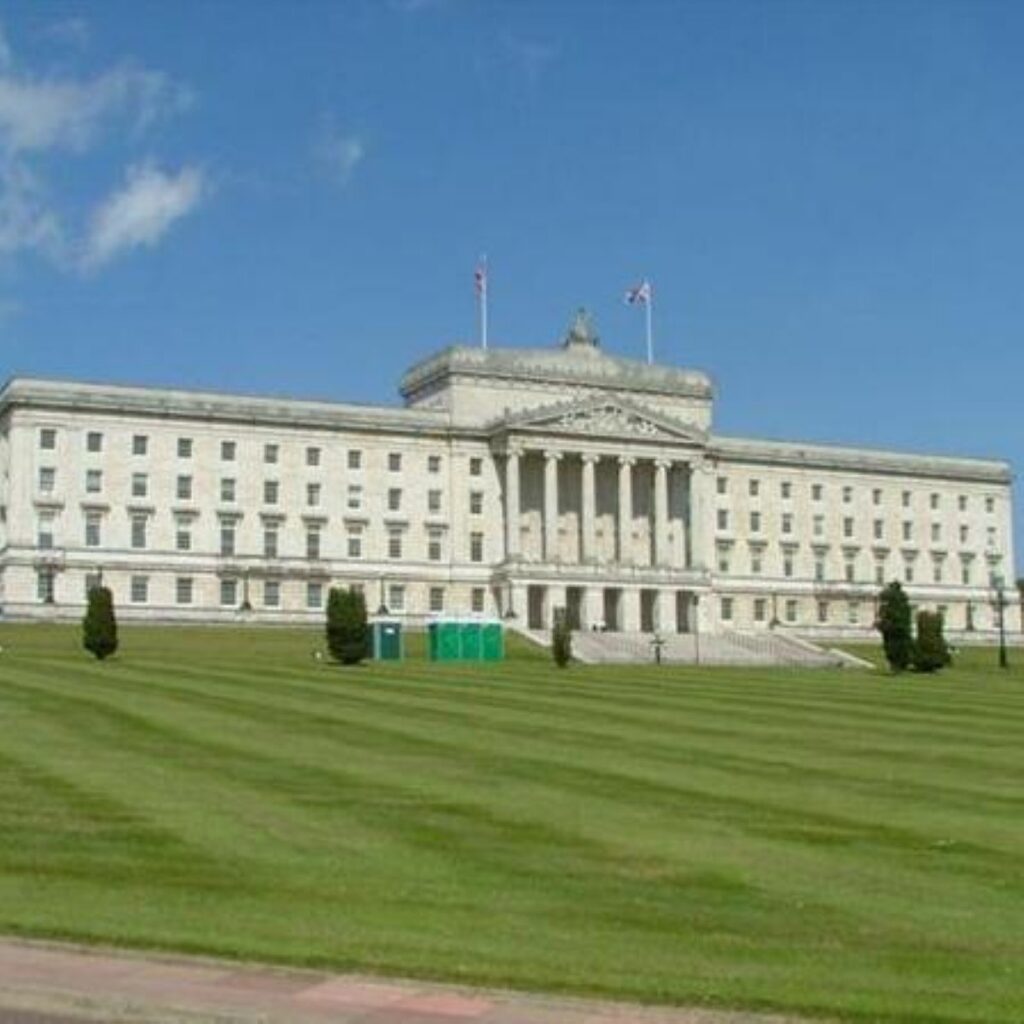
Following the 2022 Northern Ireland Assembly election, the party declined to take a seat in the power-sharing Executive, instead forming the official opposition at Stormont for the first time. The SDLP is aligned with the Labour Party, which does not contest elections in Northern Ireland.
House of Commons representation: The SDLP won two out of Northern Ireland’s 18 parliamentary constituencies and 11.1% of the vote in the 2024 UK general election.
House of Lords representation: There are two SDLP peers in the House of Lords.
Northern Ireland Assembly: The SDLP won eight out of 90 seats and 11.9% of the vote in the 2022 NI assembly election.
Local government representation: The SDLP won 39 councillors across Northern Ireland’s 11 councils in the May 2023 local government elections, making it the fifth largest party at local government level.
Who is the leader of the SDLP?
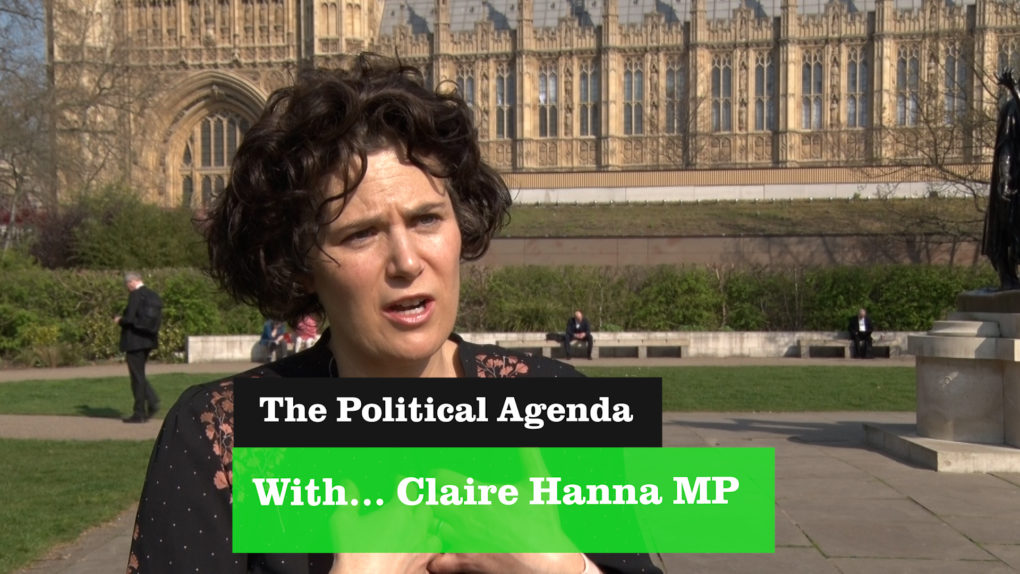
Claire Hanna was elected leader of the SDLP in October 2024, succeeding Colum Eastwood. The leadership election was uncontested and Hanna secured Eastwood’s endorsement. In her victory speech, Hanna stated she refuses to believe Stormont (the Northern Ireland Assembly) is “as good as it gets”.
She argued that Irish unity “isn’t a magic wand” but it “takes us closer to a connected, dynamic economy”.
Hanna serves in the House of Commons as the MP for Belfast South and Mid Down, having first been elected to parliament in 2019. Before her election to Westminster, she was an MLA for Belfast South from 2015 to 2019 and a Belfast City councillor from 2011 to 2015.
Matthew O’Toole is the SDLP’s most senior figure in the Northern Ireland Assembly, where he serves as the leader of the opposition. O’Toole has represented Belfast South since 2020.
Eastwood served as SDLP leader from 2015 to 2024. He announced his intention to resign as SDLP leader in August 2024, declaring that now was the time to “give someone else a chance” to re-energise the party.
Only sitting MPs and MLAs are eligible to stand for the SDLP leadership.
The process for electing the party leader involves nominations from the party’s elected representatives. In a contested election, the leader is elected by a vote of party members.
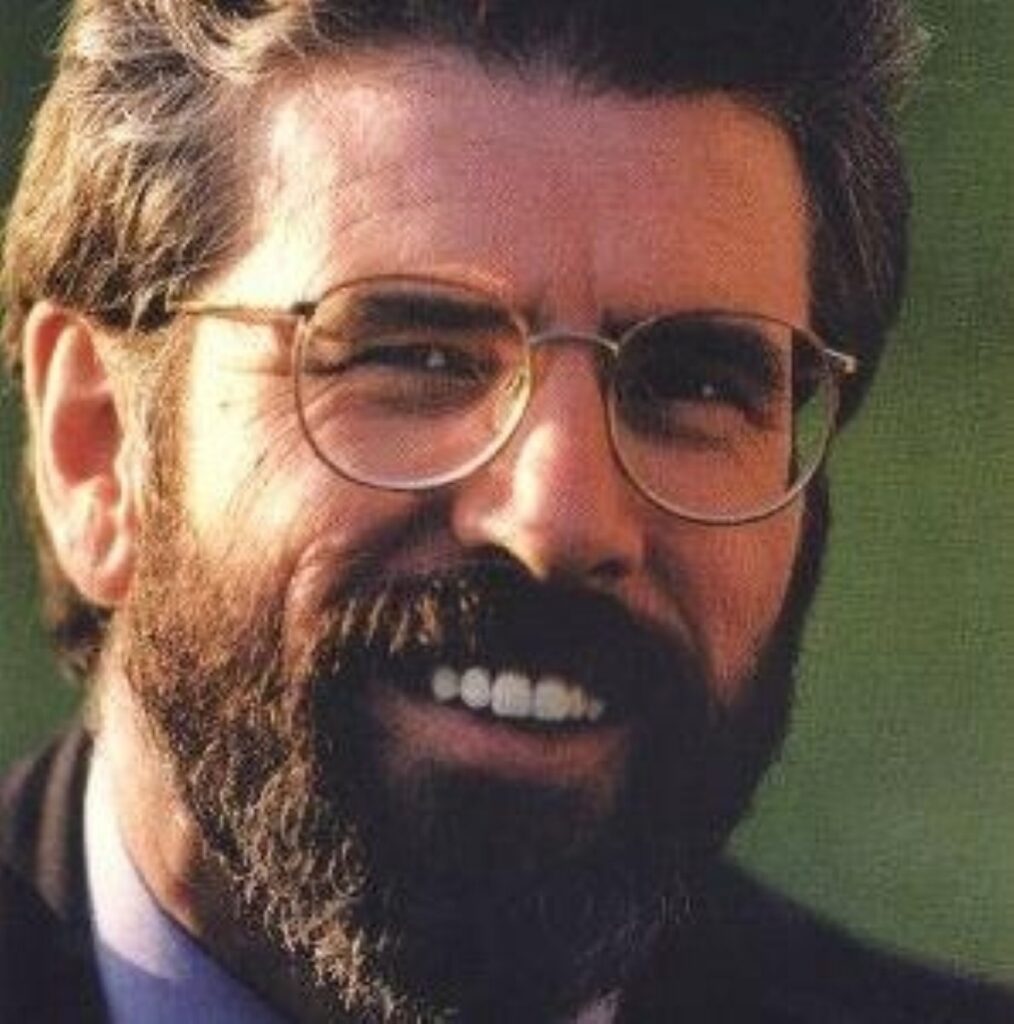
SDLP co-founder Gerry Fitt led the party from 1970 to 1979. But the party is most closely associated with John Hume, who led from 1979 to 2001 and was a central figure in the peace process.
Eastwood’s leadership, infighting and electoral setbacks
Eastwood’s leadership of the SDLP was not marked with sustained electoral success. In 2019, Eastwood won the Foyle constituency with a large majority of 17,110 votes over the incumbent MP, Elisha McCallion of Sinn Féin. Meanwhile, Hanna won the seat of Belfast South on a majority of 15,401 (over DUP candidate Emma Little-Pengelly). The victories saw the SDLP increase its representation at Westminster from zero to two.
However, the 2022 Northern Ireland Assembly election was bruising for the party. It lost four seats to finish with eight – meaning it had to go into opposition at Stormont. The 2023 council elections in Northern Ireland were similarly challenging. The SDLP lost 20 seats, dropping to 39 overall.
At the 2024 general election, Eastwood’s majority in Foyle was reduced from around 17,000 to just over 4,000.
In February 2019, Hanna resigned the SDLP party whip in protest after the party agreed to form an electoral alliance with Fianna Fáil. The SDLP membership had voted in favour of forming a partnership with Fianna Fáil, passing a motion by 121 votes to 53 at a special party conference.
“I believe strongly in the values of the SDLP and the new Ireland it embodies and I don’t think putting all those eggs in the Fianna Fáil basket is consistent with that”, Hanna said at the time. “I have no problem working with Fianna Fáil but I don’t see why we have to repudiate our links with Labour and Fine Gael.”
In August 2024, Hanna told the BBC’s Red Lines podcast that she and SDLP colleagues had discussed forming a new party in 2019, due to their disagreement over the electoral alliance and its possible result.
She said: “At that time, in those few months, I did think my time in elected political life was possibly coming to an end if that [partnership] had gone in the trajectory we and others thought it was going to.
“I thought deeply about where I fitted. I didn’t think that I fitted into any of the existing political vehicles that were around.”
It was speculated that the SDLP-Fianna Fáil electoral alliance – spearheaded by Eastwood, Hanna’s predecessor as leader – could have been a precursor to a formal merger between the two parties. In 2019, Hanna said she would never be a Fianna Fáil MLA, adding: “I am not a box of cereal, I can’t suddenly become a different brand.”
Further to this, Hanna said in 2024: “I genuinely think that something like the SDLP, a party with a history, values and a heritage, should exist…
“It was the wrong thing to do but I think Colum Eastwood was trying to do something. It was the route that he thought possibly would take the party out of the place it was in.”
What does the SDLP stand for?
The SDLP is a social democratic party committed to the Irish nationalist tradition.
Its foundational aim is the unification of Ireland by consent, achieved through partnership and reconciliation between the two main traditions in Northern Ireland. The SDLP differs from Sinn Féin in its longstanding commitment to constitutional nationalism and policy of attending the parliament based in Westminster. Unlike the SDLP, which takes up its seat in the commons, Sinn Féin pursues an abstentionist policy.
In the foreword to the SDLP’s 2024 general election manifesto, Eastwood said the election could “send a message against failed policies of austerity and ever-hardening Tory nationalism”.
Eastwood said that he and Hanna had been the “strongest opponents of the blank cheque written by the British prime minister and the American president for the onslaught against the Palestinian people.”
The manifesto said the party would use its “strong relationships with our counterparts in the Labour Party” to secure positive outcomes for “all the people of the North”.
When the Labour Party is in power, SDLP MPs traditionally sit on the government backbenches; however, SDLP MPs do not take the Labour whip at Westminster.
In a March 2025 session of prime minister’s questions, Eastwood asked “what was the point” of replacing the Conservative Party with Labour at the 2024 general election in light of the government’s welfare measures.
The SDLP manifesto for the 2022 assembly election was framed around “five pledges” centred on the cost of living. The party proposed payments of at least £200 to every household, with families with two children on free school meals receiving £1200, alongside £1 billion in additional health funding and a 6% pay rise for nurses to reduce waiting lists.
In the 2021-2022 parliamentary session, Eastwood presented the Climate Change Bill to parliament, which sought to place a duty on the government to declare a “climate emergency”.
The party was strongly opposed to Brexit and advocates for the closest possible relationship between the UK and the European Union.
The party’s foreign policy is internationalist and pro-European. It maintains formal links with the UK Labour Party and the Irish Labour Party and is a member of the Party of European Socialists and the Socialist International.
While SDLP policy means its representatives attend the parliament at Westminster, the party is uncomfortable with many of the conventions and rules observed in the House of Commons.
In July 2024, Eastwood described the affirmation and oath of allegiance to the king, which all MPs are required to deliver upon their election and/or at the beginning of a new parliament, as an “empty formula”.
Taking part in the compulsory swearing-in ceremony, historically an awkward and contentious moment for nationalist politicians, Eastwood told the House: “I read out this empty formula in order to represent my constituents, but it’s under protest.”
Who votes for the SDLP? (Demographics of support)
The following data is drawn from the 2022 Northern Ireland Life and Times (NILT) survey conducted by ARK, regarding first preference votes in the 2022 assembly election.
Age: The SDLP won 9% of the vote among those aged over 65 at the 2022 NI 2022 assembly election. The party won 7% of the vote among 18-24 year olds. Support for the party was relatively uniform across all age groups.
Gender: The SDLP won 8% of the vote among women and 7% of the vote among men at the 2022 NI Assembly election, according to the NILT survey.
Religion: The SDLP draws its strongest support from the Catholic community in Northern Ireland, winning an estimated 16% of this demographic in 2022.
According to the NILT survey, the SDLP placed third among Catholics, behind both Sinn Féin (47%) and the non-aligned Alliance Party (22%).
The SDLP won 4% of the vote among both Protestants and those identifying with no religion.
History of the SDLP and emergence as a major force
On 21 August 1970, the Social Democratic and Labour Party was formed in Belfast. The party was founded as a new political force dedicated to advancing Irish nationalism through constitutional means, while advocating socioeconomic justice and civil rights.
The SDLP emerged from a coalition of nationalist politicians, socialists and civil rights activists. It brought together six Stormont MPs, including Gerry Fitt (formerly Republican Labour), John Hume, Ivan Cooper, Paddy Devlin, Austin Currie and one senator.
Fitt, the MP for West Belfast at Westminster, became the party’s first leader. Hume served as his deputy.
At the party’s inaugural press conference, Fitt recognised the “need in Northern Ireland for a strong political alternative to the Unionist Party”.
He added: “We recognise that many people have been frustrated over many years, and we will set about immediately to stomp the country to involve particularly the younger people in our community. We want direct popular participation in the policies which we put before you today.”
The formation of the SDLP marked a significant development, consolidating moderate, constitutional nationalism into a single party structure. It was committed to working through parliamentary institutions and campaigning against discrimination faced by Catholic/nationalist communities.
Hume had proposed that the party be known as the “Social Democratic Party”. But Fitt and Devlin had insisted on the inclusion of the word “Labour”.
The SDLP quickly became the dominant electoral representative for the nationalist community, displacing the older, abstentionist Nationalist Party.
But the radicalisation of nationalist thinking in Northern Ireland in the early to mid 1970s raised questions about the SDLP’s positioning. The party had initially sought to privilege socioeconomic policy over and above the constitutional question.
In 1971, SDLP MPs withdrew from the Northern Ireland parliament in response to the shooting dead of Seamus Cusack and Desmond Beattie in Derry on 8 July. On 15 August, following the introduction of internment, the party promoted a civil disobedience campaign.
The SDLP held its first annual conference on 23 October. Its constitution, therein adopted, committed its leaders to “organise and maintain in Northern Ireland a socialist party… to co-operate with the Irish Congress of Trade Unions in joint political or other action… to promote the cause of Irish Unity based on the consent of the majority of people in Northern Ireland”.
The SDLP played a crucial role in subsequent political developments, participating in the short-lived Sunningdale power-sharing executive in 1974. The Sunningdale scheme proposed a power-sharing executive between nationalists, represented by the SDLP, and unionists, primarily represented by the Ulster Unionist Party (UUP).
Fitt served as deputy chief executive, while Hume was appointed as minister for commerce.
Central to the agreement was a cross-border Council of Ireland, which would have provided for North-South co-operation. The agreement was championed by pro-agreement unionists in the UUP, including its leader, Brian Faulkner, as well as the SDLP. However, this cross-border element was fiercely opposed by loyalists and hardline unionist politicians, led by Harry West, Ian Paisley and William Craig, who viewed it as a step towards a united Ireland.
The SDLP faced its first Westminster election in February 1974. Fitt was the only pro-power-sharing MP returned, with the unionists having formed an anti-Sunningdale electoral alliance. Fitt retained his seat in the October 1974 election.
Hume took over the leadership of the party in May 1979 – though he had arguably established himself as the party’s predominant figure sometime before. He was elected as the MP for Foyle in 1983.
Hume is generally seen to have led the SDLP in a ‘greener’ direction. Fitt’s political profile, meanwhile, was associated with Northern Ireland’s labourite and socialist traditions.
The SDLP founder left the party in 1979, standing as an independent socialist at the 1983 general election. Gerry Adams of Sinn Féin secured his Belfast West seat ahead of both Fitt and the SDLP candidate.
On 10 April 1998, Good Friday, after marathon all-party talks in Belfast, a historic peace accord for Northern Ireland was finally reached. The Good Friday Agreement, also known as the Belfast Agreement, established a new political framework designed to end 30 years of violent conflict and create a lasting and inclusive settlement. Its central pillar was the creation of a new, devolved Northern Ireland Assembly and a power-sharing executive, inviting unionists and nationalists to govern together.
In Northern Ireland, the agreement was spearheaded by the UUP leader, David Trimble, and Hume. The two leaders jointly won the 1998 Nobel Peace Prize.
At the time of the agreement, Hume remarked: “The agreement that we are celebrating today goes right to the heart of our problem in that it creates the institutions with the North and between North and South which are shared by both sections of our people.”
The deal was subsequently endorsed in referendums in both Northern Ireland and the Republic of Ireland. It was endorsed by 71% of the vote in Northern Ireland and 94% in the Republic.
In the first election to the new NI assembly, the SDLP placed second behind the UUP, winning 24 seats. The assembly met for the first time on 1 July 1998; Trimble and SDLP deputy leader Seamus Mallon were elected as first minister and deputy first minister respectively.
In the years following the Belfast Agreement, the DUP and Sinn Féin steadily eroded the dominance of the more moderate parties. They surpassed the UUP and SDLP respectively in the 2003 Northern Ireland Assembly election.