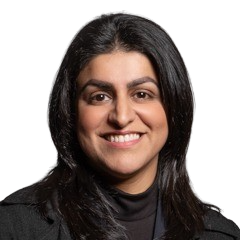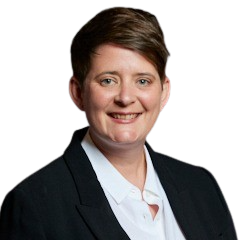
Olivia Bailey is the Labour Party MP for Reading West and Mid Berkshire, having first been elected to parliament at the 2024 general election.
In the 2024 general election, Bailey won 16,273 votes, representing 35.0% of the vote. The Conservative candidate, Ross Mackinnon, received 14,912 votes (32.0%). The Reform UK candidate, Kathrin Bosley, received 6,260 votes (13.4%). Bailey was duly elected with a majority of 1,361 votes.
The Reading West and Mid Berkshire constituency was newly created for the 2024 general election. It largely replaced the former Reading West constituency.
Bailey succeeded Alok Sharma of the Conservative Party as the MP for the area. Sharma served in the cabinet under Boris Johnson.
Political Career
Bailey served as parliamentary under-secretary of state for equalities and for early education from September 2025 to July 2026. She left government as part of the July 2026 reshuffle conducted by Andy Burnham upon his appointment as prime minister.
Bailey is a patron of LGBT+ Labour – a socialist society formally affiliated with the Labour Party.
Bailey delivered her maiden speech on 12 September 2024.
In it, she said: “My political passion was sparked in the corridors of my school, where government policy in section 28 told me that I should be ashamed of who I was.”
She added: “It was political progress that enabled my wife and I to marry and to build our own family. My political flame, sparked at school, burns now for my two boys and for all young people still in our care system. It burns most fiercely as I hold the hand of my mum, being taken from me by Alzheimer’s while being let down by the state.”
Before entering parliament, Bailey served as chair of the Labour Women’s Network and deputy general secretary of the Fabian Society.
Bailey also worked as a senior aide to Keir Starmer before becoming an MP. She was head of domestic policy. She left this post to become director of social policy for Public First.
Bailey stood unsuccessfully as the Labour candidate for the predecessor Reading West constituency in the 2017 general election, losing to Sharma, the Conservative incumbent.
Political views
Leadership elections and loyalty
Labour deputy leadership 2025: Bailey was one of 175 Labour MPs who nominated Bridget Phillipson for the party’s deputy leadership in September 2025. The election followed the resignation of Angela Rayner, who stepped down as deputy prime minister and deputy party leader after an investigation into her tax affairs. It marked the first time since 2007 that Labour had held a deputy leadership contest while in government.
Phillipson, the serving education secretary, was widely viewed as the candidate favoured by Downing Street and the party leadership. She secured 175 nominations from the Parliamentary Labour Party (PLP), comfortably exceeding the 80 required to reach the final ballot. She was ultimately defeated by Lucy Powell.
Welfare
Welfare vote (July 2025): Bailey voted in favour of the government’s flagship welfare bill at second reading. The vote came after ministers agreed to significant concessions to avoid defeat via a mass rebellion of Labour MPs on 1 July 2025.
Assisted dying
Bailey voted against the Terminally Ill Adults (End of Life) Bill, better known as the assisted dying bill, at both second reading (November 2024) and third reading (June 2025).
In a letter to constituents setting out her position, issued shortly before the bill’s second reading, Bailey said: “I have listened very carefully to the views of many disability rights campaigners who have argued that this bill could be the thin end of a wedge.
“They point to examples of other countries where assisted dying legislation has been broadened to include people not at the end of their life but those experiencing pain and suffering.”
Social values and conscience issues
Abortion decriminalisation (2025): Bailey voted in favour of a backbench amendment to the Crime and Policing Bill that sought to decriminalise abortion in England and Wales in June 2025. The amendment, which was passed by a majority of 242 votes, removed women from the threat of prosecution for ending a pregnancy at any stage. As an issue of conscience, MPs were allowed to vote according to their personal beliefs.
Before Politics
Olivia Joanna Bailey was born in Reading in 1986 and attended Ranelagh School in Bracknell. Her mother was a teacher and her father a police officer.
Bailey graduated from St Hilda’s College, Oxford in 2008 with a degree in modern history and Politics.
During her time as a student, Bailey was chair of Labour Students and served as women’s officer of the National Union of Students (NUS).
Personal Life
Bailey is married to Finn McGoldrick. They have two children.
In 2024, PinkNews listed Bailey among a number of out LGBTQ+ parliamentarians.
Trivia
During her tenure as women’s officer of the National Union of Students (NUS), Bailey was reportedly an architect of the “Vote for Students” pledge campaign.
The vow stated: “I pledge to vote against any increase in fees in the next parliament and to pressure the government to introduce a fairer alternative.”
Among the signatories of the vow was Nick Clegg, the leader of the Liberal Democrats.
In December 2010, Clegg was among 27 Liberal Democrat MPs who voted to triple maximum tuition fees in England from £3,000 to £9,000 per year. (21 Lib Dem MPs voted against the proposals at the time, including former leaders Charles Kennedy and Menzies Campbell.)
Clegg faced significant criticism for failing to keep his promise.
The episode triggered student protests – as well as a catastrophic collapse in the Liberal Democrats standing in the polls.
Clegg ultimately resolved on a strategy of maximum contrition.
In a 2012 broadcast, Clegg argued that, as the junior partner of a coalition government, the Liberal Democrats were forced to make unpalatable compromises. He apologised for making a “promise we were not absolutely sure we could deliver”.
The apology, an ill-fated attempt to draw a line under the most damaging episode of his time in government, began: “There’s no easy way to say this: we made a pledge, we didn’t stick to it and for that I am sorry.”
Olivia Bailey has not written for Politics.co.uk.