
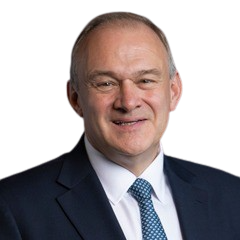
Andrew Ranger is the Labour MP for Wrexham, having first been elected to parliament at the 2024 general election.
In the 2024 general election, Ranger won 15,836 votes, representing 39.2% of the vote. The Conservative Party incumbent, Sarah Atherton, received 9,888 votes (24.5%), while the Reform UK candidate, Charles Dodman, secured 6,915 votes (17.1%). Ranger was duly elected with a majority of 5,948.
The Wrexham constituency is located in North Wales and was created in 1918. Labour held the seat from 1935 to 2019, when it was won for the first time by the Conservative Party. Ranger’s immediate predecessor as the MP for Wrexham was Sarah Atherton of the Conservative Party.
Political Career
Ranger is a member of the House of Commons Welsh affairs select committee (since October 2024) – the committee that examines the UK government’s policy and spending as it relates to Wales. Its primary role is to scrutinise the work of the secretary of state for Wales and the Wales Office.
In May 2026, Ranger was among the group of Labour MPs who publicly called for the prime minister, Keir Starmer, to resign or set out a clear timetable for his departure. The move followed the 2026 local elections and devolved elections to the Scottish Parliament and Senedd Cymru.
In a statement, Ranger said that he had “reached the conclusion that new leadership is needed”.
He added: “I am not calling for an immediate resignation. I am not calling for chaos, for a rushed contest, or for the kind of destructive internal warfare that serves nobody, least of all the communities we are here to represent…
“What I am calling for is for the prime minister to lead this transition with the same sense of order and purpose that he has brought in all matters previously. He has shown he is a serious, steady leader.”
Ranger introduced the Licensing Hours Extensions Act 2026 as a private members’ bill (PMB). He introduced the proposed legislation after placing tenth in the PMB ballot at the start of parliamentary session in 2024.
Ranger’s bill amended the Licensing Act 2003 to reform the procedure for extending licensing hours for occasions of “exceptional international, national, or local significance”. Under the act, the secretary state can issue licensing hours orders under the negative resolution statutory instrument procedure. This ensures that such measures can be enacted efficiently even during parliamentary recesses.
Addressing the commons during the bill’s second reading debate, Ranger noted that there “have been times when the government have not been able to extend licensing hours for significant occasions, because the required secondary legislation is subject to the affirmative procedure, which means that both Houses of Parliament need to approve the measure following a debate.”
He added: “A recent instance of that was when the Lionesses reached the final of the world cup in August 2023, during a parliamentary recess. That meant it was not possible for the government to extend the hours for that momentous match…
“I believe that the bill speaks for itself… It is a simple but significant measure, and I am grateful to all colleagues for their support today and in the lead-up to this debate.
“Let us raise a glass to our pubs and hospitality industry.”
In January 2026, Ranger was one of over 60 Labour MPs to sign a letter to the prime minister calling for the introduction of an Australia-style ban on social media access for children under the age of 16. Organised by Plymouth Moor View MP Fred Thomas, the initiative brought together a cross-factional coalition of backbenchers – spanning the Socialist Campaign Group, Tribune Group and Blue Labour – to demand action.
The letter called on Keir Starmer to “show leadership” by introducing a minimum age for social media access “to protect young people from the consequences of unregulated, addictive social media platforms”.
It stated: “We are all strong supporters of technology, and of this Labour government’s ambition to use tech to improve lives. But successive governments have done far too little to protect young people from the consequences of unregulated, addictive social media platforms.”
Ranger was appointed as a government “business champion” for accounting in Wales – a role established in February 2025 to facilitate engagement between the Labour administration and the private sector. The position was part of a network of approximately 40 MPs appointed by the Department for Business and Trade to act as conduits for industry views on government policy. The grouping operated under the oversight of Dan Tomlinson, the national “mission champion” for growth.
The selection of champions was designed to leverage the professional expertise of the 2024 intake of MPs, and the role was seen as an early step on the Westminster ladder. However, the scheme was reportedly scrapped in July 2025 following a meeting at 10 Downing Street. According to a Guido Fawkes report, the business champions were told that their services were no longer required.
Ranger is listed as a member of the all-party parliamentary groups (APPGs) for children in Wales (chair) and debt and financial inclusion.
Ranger delivered his maiden speech on 4 November 2024 during a debate on the budget.
In it, he said: “The first Labour budget for nearly 15 years is a major part of how this Government will put the interests of the people of Wrexham, Wales and the UK first.
“It is fixing the foundations of the economy and the public services that we all rely on; increasing pay for thousands of workers in Wrexham; making long-awaited improvements to workers’ rights; providing more support for carers and struggling families; addressing historical injustices such as the mineworkers’ pension scheme and the infected blood scandal; and ensuring the safety of coal tips in Wales.”
He added: “As someone who has both run my own business and helped others to start up and run theirs, I know that most of all they want stability and the ability to plan ahead.”
Political views
Leadership elections
Labour deputy leadership 2025: Ranger was one of 117 Labour MPs who nominated Lucy Powell for the party’s deputy leadership in September 2025. The election followed the resignation of Angela Rayner, who stepped down as deputy prime minister and deputy party leader after an investigation into her tax affairs. It marked the first time since 2007 that Labour had held a deputy leadership contest while in government.
Powell, the former leader of the House of Commons, was seen as a candidate representing the party’s “soft left”; she was supported by leading soft left figures including Ed Miliband and Andy Burnham. She secured 117 nominations from the Parliamentary Labour Party (PLP), above the 80 required, and went on to win the election – defeating Bridget Phillipson with 54.3% of the vote.
Factional identity and party tradition
Living Standards Coalition: Ranger is a member of the Living Standards Coalition. Established in July 2025, the group’s stated aim was to develop and promote policy ideas that directly reduce everyday costs for households, particularly in areas such as food, energy, housing and childcare. In an open letter published upon its founding, addressed to Keir Starmer, the MPs wrote: “Our constituents will ask one question at the next election: did this Labour government make me better off?”
They added: “To raise living standards, we support government interventions that will help to increase incomes and lower costs.”
Electoral reform
Fair elections APPG: Ranger is listed as a supporter of the all-party parliamentary group (APPG) for fair elections – a cross-party group of MPs and peers that campaigns for electoral reform. The group’s stated aims include replacing the first past the post (FPTP) voting system with a form of proportional representation, eliminating “dark money” and “undemocratic influence” from politics, and countering disinformation.
Electoral reform amendment: In May 2026, Ranger was one of over 70 Labour MPs who signed an amendment to the Representation of the People Bill, calling on the government to establish a “national commission on electoral reform”. Tabled by Alex Sobel as chair of the fair elections APPG, the amendment aimed to force a rethink of the first past the post voting system.
At the time, Sobel described FPTP as “one of the biggest examples of a broken status quo in UK politics.” He invited colleagues to join this “common sense call to take a fresh look at how parliament is elected in modern Britain.”
Proportional representation bill: In December 2024, Ranger voted in favour of the Elections (Proportional Representation) Bill – introduced by Liberal Democrat frontbencher Sarah Olney under the 10-minute rule procedure. The bill sought to “introduce a system of proportional representation for parliamentary elections and for local government elections in England”.
A total of 138 MPs supported the bill – with 136 opposed. Notably, 59 Labour MPs backed Olney’s bill.
Introducing the bill, Olney told the House: “First past the post is a broken and unfair system. This summer, the Labour party won a landslide election victory, securing 63% of seats in the House of Commons in return for just 34% of the vote.
“The system leaves millions of voices unheard and creates a divisive, adversarial political climate where collaboration is discouraged and accountability is often sidestepped.”
Welfare
Welfare ‘reasoned amendment’ (June 2025): Ranger was one of the over 120 Labour MPs to sign the reasoned amendment to the government’s flagship welfare bill which aimed to reject the proposed legislation.
The amendment, in the name of senior Labour MP Dame Meg Hillier, objected to the fact that the bill had not been subject to a “formal consultation with disabled people” and that “250,000 people will be pushed into poverty” as a result of it, according to a government impact assessment.
The motion also called on the government to wait for the publication of the review into the Personal Independence Payment (Pip), helmed by minister Sir Stephen Timms, and the independent review, conducted by Sir Charlie Mayfield, into how the employment of disabled people could be boosted.
In May 2025, Ranger had signed a letter warning the government that the cuts were “impossible to support” and calling for a change in direction.
The letter, signed by 42 Labour MPs, read: “The planned cuts of more than £7bn represent the biggest attack on the welfare state since George Osborne ushered in the years of austerity and over 3 million of our poorest and most disadvantaged will be affected.
“Whilst the government may have correctly diagnosed the problem of a broken benefits system and a lack of job opportunities for those who are able to work, they have come up with the wrong medicine. Cuts don’t create jobs, they just cause more hardship.”
Welfare vote (July 2025): Ranger voted in favour of the government’s flagship welfare bill at second reading. The vote came after ministers agreed to significant concessions to avoid defeat via a mass rebellion of Labour MPs on 1 July 2025.
Assisted dying
Ranger voted in favour of the Terminally Ill Adults (End of Life) Bill, better known as the assisted dying bill, at both second reading (November 2024) and third reading (June 2025).
Social values and conscience issues
Abortion decriminalisation (2025): Ranger voted in favour of a backbench amendment to the Crime and Policing Bill that sought to decriminalise abortion in England and Wales in June 2025. The amendment, which was passed by a majority of 242 votes, removed women from the threat of prosecution for ending a pregnancy at any stage. As an issue of conscience, MPs were allowed to vote according to their personal beliefs.
Before Politics
Andrew Steven Ranger was born in Nantwich, Cheshire,.
He studied microelectronics and software engineering at Newcastle University, graduating in 1992. He obtained a postgraduate degree in hotel, catering and tourism management from Manchester Metropolitan University (1993).
Ranger spent the majority of his career – a total of 27 years – working in the hotel industry, starting as a kitchen porter and progressing to the role of hotel general manager.
Before entering parliament, Ranger worked as a freelance accountant and business consultant.
Personal Life
Ranger has lived in Wrexham since 1999.
Trivia
Ranger joined the Labour Party in 2011.

Andrew Ranger: ‘Change takes time — but Labour will deliver’
7 April 2025