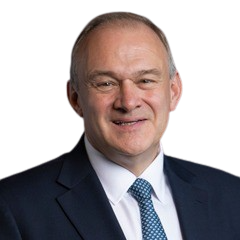
Kim Johnson is the Labour MP for Liverpool Riverside, having first been elected to parliament at the 2019 general election.
In the 2024 general election, Johnson won 20,039 votes, representing 61.9% of the vote. The Green candidate 5,246 votes (16.2%), while the Reform UK candidate secured 3,272 votes (10.1%). Johnson was duly elected with a majority of 14,793 votes.
The Liverpool Riverside constituency covers central and southern parts of the city, including areas like Anfield, Central, Everton, Kirkdale, and Princes Park. It is considered the most deprived constituency in England (as of 2024) and is one of Labour’s safest seats, held by the party continuously since 1964.
Political Career
Johnson resigned as parliamentary private secretary (PPS) to the deputy leader of the Labour Party, Angela Rayner, in October 2020 to vote against the Covert Human Intelligence Sources (Criminal Conduct) Bill, defying the Labour whip to abstain. A PPS acts as an unpaid parliamentary assistant, providing a link between the senior frontbencher and backbench MPs. The role is widely regarded as the first step on the ministerial ladder.
Johnson was one of the 34 Labour MPs to break the party whip by voting against the covert Human Intelligence Sources (Criminal Conduct) Bill at its commons third reading. The proposed legislation, often referred to as the “spycops bill”, was introduced by the Conservative government to authorise undercover agents and informants to commit crimes while on operations. The Labour Party whipped its representatives to abstain on the bill on the basis that the legislation is “far from perfect” yet “necessary” due to “the need to provide a clear lawful framework for the use of human intelligence sources”.
In a social media post, Johnson said: “I resigned today as a PPS to Angela Rayner in order that I could vote against the [Covert Human Intelligence Sources (Criminal Conduct) Bill] in line with my conscience and to stop the abuses that took place against Stephen Lawrence’s family and friends, against the Hillsborough fight for justice, against trade unionists.”
Johnson is a member of the Parliamentary Black Caucus. The cross-party group, inspired by the US Congressional Black Caucus (CBC), was established in 2025 to advance racial equality and representation for Black and minority ethnic people within parliament and across the UK.
In 2021, Johnson accused the Metropolitan police of institutional racism after she and her family were stopped by officers in central London during the midst of the European football championships.
Johnson said: “There were loads of Scottish football supporters, who were involved in antisocial behaviour – being leery – in the same vicinity as us, but these police officers just targeted in on us.”
In February 2023, Johnson described the Israeli government as “fascist” during prime minister’s questions. It came as she asked Rishi Sunak about “human rights violations” against Palestinians. Johnson subsequently apologised by being asked to by the party leadership.
She later said: “While there are far-right elements in the government, I recognise that the use of the term in this context was wrong.”
Johnson is listed as a member of the all-party parliamentary groups (APPGs) for child of the north, Cuba, miscarriages of justice, race and community and Somaliland.
Johnson has served on several House of Commons committees, including the women and equalities committee (2020-2024), the education committee (2020-2024) and the home affairs committee (2023-2024).
Johnson delivered her maiden speech on 11 March 2020 during a debate on budget resolutions. In it, she said: “Liverpool is a port city and has a long-established diverse population, with the oldest black community in the UK and the oldest Chinese community in Europe. Black people continue to be significantly under-represented across the public and private sectors—in education, health and housing, and at all levels of political and civic engagement.”
She added: “We have suffered as a result of managed decline during the Thatcher years. The city has been ravaged by 10 years of draconian austerity measures; we have had 64% of our budget stolen from us, equating to a loss of £450 million, with more people now reliant on food banks, greater levels of in-work poverty, and children going hungry during school holidays.”
Political views
Leadership elections and loyalty
Starmer stand down: In May 2026, Johnson publicly called for Keir Starmer, the prime minister, to step down/set out a timetable for his departure. The move followed the 2026 local elections and devolved elections to the Scottish Parliament and Senedd Cymru.
Labour deputy leadership 2025: Johnson was one of 24 Labour MPs who nominated Bell Ribeiro-Addy for the party’s deputy leadership in September 2025. The election followed the resignation of Angela Rayner, who stepped down as deputy prime minister and deputy party leader after an investigation into her tax affairs. It marked the first time since 2007 that Labour had held a deputy leadership contest while in government.
Ribeiro-Addy, a member of the Socialist Campaign Group (SCG), was seen as the candidate on the left of the party. She secured only 24 nominations from the Parliamentary Labour Party (PLP), far short of the 80 required under rules introduced in 2021.
Labour leadership 2020: Johnson was one of 33 Labour MPs who nominated Rebecca Long-Bailey for the party’s leadership in early 2020. The election was triggered by the resignation of Jeremy Corbyn following the party’s defeat in the 2019 general election, which resulted in Labour’s fewest seats in the House of Commons since 1935.
Long-Bailey, then the shadow business secretary, was widely regarded as the continuity candidate for the party’s left/Corbynite wing. Long-Bailey finished second with 27.6% of the vote, losing to Keir Starmer, who won a decisive victory in the first round with 56.2%.
Johnson has been critical of the Labour leadership under Starmer. She called his treatment of Angela Rayner during a 2021 shadow cabinet reshuffle a “despicable act of cowardice”.
Factional identity and party tradition
Socialism26: In May 2026, Johnson was a signatory of Socialism26, a political initiative and pressure group launched by a coalition of Labour MPs and general secretaries from several major affiliated trade unions, including Unison, Aslef, the CWU, the TSSA and the FBU. The group described itself as advocating a “programme for change” intended to facilitate a “progressive political reset” within the Labour Party. It called for a return to traditional socialist values and greater internal party democracy.
The initiative was built upon a set of policy demands, including urging the government to “recognise the genocide in Gaza”, deliver full compensation for the “Waspi” women affected by state pension age changes, protect civil liberties and embrace intervention to lower energy bills.
Socialism26 described this programme as “the bare minimum to ensure that the public can see and feel the difference a socialist government makes to their lives.”
Socialist Campaign Group: Johnson has been listed as a member of the Socialist Campaign Group – the standard-bearer of the left wing within the Parliamentary Labour Party (PLP). Founded in 1982 by followers of Tony Benn, the group has traditionally advocated policies such as widespread public ownership, wealth redistribution and strengthened trade union rights.
Labour ‘reset’: In March 2026, Johnson was among dozens of Labour parliamentarians to co-sign a statement calling for a “reset” in the party’s internal culture and political direction. The statement, supported by an alliance of MPs from both the Mainstream (“soft-left”) and Momentum (left) wings of the party, condemned what it saw as the “insular, centralising approach” of the leadership. It called on Labour to rebuild “basic democracy, pluralism and fair process within our party.”
The intervention followed a series of by-election results in Gorton and Denton, Runcorn and Helsby and Caerphilly.
The statement said: “We stand against the insular, centralising approach of the current leadership that refuses to draw on the energy, talent and ideas of our whole movement, the continued underfunding of public services and local government, and the pandering to the talking points of the far right.”
It added: “We, the undersigned members from every section of the Labour Party – parliamentarians, councillors, internal election candidates, members and trade unionists, pledge to reset the Labour Party.”
Corbyn suspension: In November 2020, Johnson was among the 32 SCG MPs to sign a statement declaring that they opposed the suspension of Jeremy Corbyn and calling for the disciplinary action to be “swiftly reversed”.
The statement read: “This decision and the division it causes severely undermines efforts to unite to defeat antisemitism and fully implement the EHRC [Equality and Human Rights Commission] recommendations and to challenge and defeat this disastrous Conservative government.”
Corbyn’s suspension came after he issued a response to the EHRC report, arguing “the scale of the [antisemitism] problem was also dramatically overstated for political reasons by our opponents”.
Momentum endorsement: Johnson was endorsed by the left-wing campaign group Momentum in the 2024 general election. Momentum was founded in 2015 to support the leadership of Jeremy Corbyn and to campaign for socialist policies within the Labour party.
Trade Union Group: Johnson is a member of the Trade Union Group of Labour MPs. This long-standing group, founded in 1926, serves as a link between the Labour party and the trade union movement, aiming to ensure that the voices of working people and their unions are represented in parliament.
Welfare
Welfare ‘reasoned amendment’ (June 2025): Johnson was one of the over 120 Labour MPs to sign the reasoned amendment to the government’s flagship welfare bill which aimed to reject the proposed legislation.
The amendment, in the name of senior Labour MP Dame Meg Hillier, objected to the fact that the bill had not been subject to a “formal consultation with disabled people” and that “250,000 people will be pushed into poverty” as a result of it, according to a government impact assessment.
The motion also called on the government to wait for the publication of the review into the Personal Independence Payment (Pip), helmed by minister Sir Stephen Timms, and the independent review, conducted by Sir Charlie Mayfield, into how the employment of disabled people could be boosted.
Welfare vote (July 2025): Johnson went on to vote against the bill at second reading. The vote came after ministers agreed to significant concessions to avoid defeat via a mass rebellion of Labour MPs on 1 July 2025.
Winter fuel payment EDM: In September 2024, Johnson signed an early day motion (EDM) expressing concern over the government’s proposed changes to the winter fuel payment. The motion called on the government to “postpone the ending of winter fuel payments and establish a comprehensive strategy to tackle fuel poverty, health inequality and low incomes among older people.”
Assisted dying
Johnson voted in favour of the Terminally Ill Adults (End of Life) Bill, better known as the assisted dying bill, at both second reading (November 2024) and third reading (June 2025).
Social policy and conscience issues
Lying amendment: In January 2026, Johnson was listed as a supporter of an amendment to the Public Office (Accountability) Bill, often referred to as the “Hillsborough Law”, that would extend the proposed criminal offence of misleading the public to include MPs and peers. Luke Myer, the Labour MP behind the proposal, argued that his amendment would mean “no-one in parliament would be above the law”, adding: “If politicians deliberately lie to the public, there should be consequences.”
Myer stated: “This amendment is a proportionate, carefully safeguarded response to a real democratic risk. It is not about stifling debate or political disagreement, it is about ensuring that those who seek or hold public office cannot deliberately and knowingly mislead the public without consequence.
“The polling shows that voters across the political spectrum expect parliament to act.”
Myer’s amendment won the support of 30 cross-party MPs.
Palestine
LFPME: Johnson has been listed as a member of Labour Friends of Palestine and the Middle East (LFPME). The organisation’s stated aim is to promote peace and justice in the region through the application of international law and respect for human rights.
Palestinian recognition letter (July 2025): In July 2025, Johnson was among the over 254 MPs to sign a cross-party letter calling for the government to immediately recognise the state of Palestine. The letter called on the prime minister and foreign secretary to recognise Palestine at the UN Conference then taking place in New York.
Palestine Action vote: Also in July 2025, Johnson was one of 26 MPs to vote against the proscription of Palestine Action under the Terrorism Act 2000. The ban, passed by 385 votes to 26, came after the Home Office accused the group of “aggressive and intimidatory attacks against businesses, institutions and the public”. However, civil liberties organisations argued proscription represented an overreach of state power and a threat to the right to protest.
Before Politics
Born Kim Marie Johnson in Liverpool on 25 August 1966, the daughter of Joseph and Kathleen Johnson.
She holds a Diploma in Youth and Community Work, a BA in Social Studies, and a Postgraduate Certificate.
Prior to becoming an MP, she worked in community development and adult social care. She held a role as creative diversity manager for Liverpool’s Capital of Culture bid team. She was an active trade unionist, serving as a shop steward for UNISON and as a lay member of its Black Members’ Regional and National Committees.
Since 2015, she has been Chairperson of Squash Liverpool, a community interest company focused on food, arts, and health.
Personal Life
Johnson is the granddaughter of immigrants from West Africa and Dublin.
She has two children, Kyle and Layla, who are twins
Trivia
Johnson was the first Black person to be elected as an MP in Liverpool.
Kim Johnson has not written for Politics.co.uk.