
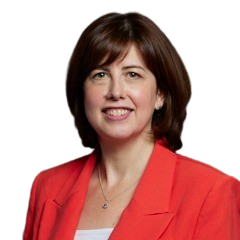
Alex Mayer is the Labour MP for Dunstable and Leighton Buzzard, having first been elected to parliament at the 2024 general election.
In the 2024 general election, Mayer won 14,976 votes, representing 32.5% of the vote. The Conservative candidate, Andrew Selous, received 14,309 votes (31.1%), while the Reform UK candidate, Harry Palmer, secured 8,071 votes (17.5%). Mayer was duly elected with a majority of 667 votes.
The Dunstable and Leighton Buzzard constituency, newly created ahead of the 2024 election, is located in Bedfordshire, in the East of England. It was formed primarily from the former South West Bedfordshire constituency, which had been held by the Conservatives since 2001.
Political Career
Mayer is a member of the House of Commons transport select committee (since October 2024) – the committee responsible for the scrutiny of the Department for Transport and its associated public bodies. Its remit covers all aspects of transport policy in England, as well as UK-wide issues such as aviation and maritime policy.
In May 2026, Mayer was among the over 100 Labour MPs who signed a joint statement insisting it was “no time for a leadership contest.” The letter was an intervention in the political crisis engulfing Keir Starmer’s premiership, after Labour suffered heavy losses in the 2026 local elections and devolved elections to the Scottish Parliament and Senedd Cymru. It was organised as a counterweight to a mounting rebellion that had seen high-profile figures, including some ministers, call for Starmer’s resignation.
The statement read: “Last week we had a devastatingly tough set of election results. It shows we have a hard job ahead to win back trust from the electorate.
“That job needs to start today – with all of us working together to deliver the change the country needs.
“We must focus on that. This is no time for a leadership contest.”
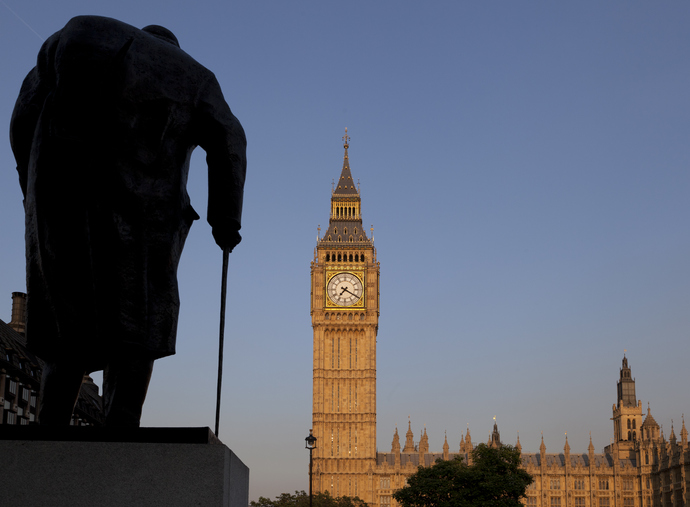
In March 2025, Mayer secured an adjournment debate on “doubled British summer time” in which she urged the government to resurrect wartime “Churchill time” and set clocks one hour ahead of Greenwich Mean Time (GMT) in winter and two hours ahead in summer – to maximise natural daylight.
Mayer argued that shifting daylight to the afternoon and evening would allow households and businesses to delay turning on lights and heating, easing demand on the national grid.
She told the House: “As Britain faced peril, Winston Churchill took the decision to move the clocks two hours in advance of Greenwich Mean Time in the summer and one hour in advance of GMT during the winter months.
“Why? To save energy. The crisis at the time meant that bold ideas were required. We needed to think outside the box.”
She added: “Today we face a different emergency – the climate crisis – but one for which the same prescription could really help.”
In a subsequent article for Politics.co.uk, Mayer wrote: “Then there is safety. Every year, road collisions increase after the clocks go back… Churchill Time would reduce pressure on our NHS.”
Mayer is listed as a member of the all-party parliamentary groups (APPGs) for bus and coach, micromobility (chair) and woods and trees (chair).
Mayer delivered her maiden speech on 5 December 2024, during a debate on improving public transport.
In it she said: “History shows us how rarely change comes for these communities, yet change is desperately needed: on shop- lifting, as I have met workers who have been spat at, threatened with needles and even a gun; on the lack of healthcare facilities, including in Houghton Regis and Leighton-Linslade; on sewage polluting our waterways; and on transport.”
She added: “We need governance that is fit for the 21st century, with the right delegated functions being granted to a passenger transport executive or equivalent, the establishment of an executive function to speed up decision making and delivery that makes the difference.”
Before entering the parliament at Westminster, Mayer served as a member of the European Parliament (MEP) for the East of England region from 2016 to 2019.
In 2018, Mayer went to the United Nations with Cruelty Free International with a petition signed by 8 million people, calling for a global ban on animal testing for cosmetics. It was reportedly the biggest petition in history against animal testing.
Political Views
Leadership elections
Labour deputy leadership 2025: Mayer was one of 117 Labour MPs who nominated Lucy Powell for the party’s deputy leadership in September 2025. The election followed the resignation of Angela Rayner, who stepped down as deputy prime minister and deputy party leader after an investigation into her tax affairs. It marked the first time since 2007 that Labour had held a deputy leadership contest while in government.
Powell, the former leader of the House of Commons, was seen as a candidate representing the party’s “soft left”; she was supported by leading soft left figures including Ed Miliband and Andy Burnham. She secured 117 nominations from the Parliamentary Labour Party (PLP), above the 80 required, and went on to win the election – defeating Bridget Phillipson with 54.3% of the vote.
Factional identity and party tradition
SERA: Mayer has been listed as a member of the Socialist Environment and Resources Association (SERA) – a socialist society affiliated with the Labour Party. Founded in 1973, SERA is the party’s official environmental campaign group. The organisation campaigns on a wide range of issues, including renewable energy, biodiversity, air quality and the transition to a green economy. SERA describes its member MPs as “champions for the environment”.
Welfare
Welfare vote (July 2025): Mayer voted in favour of the government’s flagship welfare bill at second reading. The vote came after ministers agreed to significant concessions to avoid defeat via a mass rebellion of Labour MPs on 1 July 2025.
Assisted dying
Mayer voted in favour of the Terminally Ill Adults (End of Life) Bill, better known as the assisted dying bill, at both second reading (November 2024) and third reading (June 2025).
Social values and conscience issues
Abortion decriminalisation (2025): Mayer voted in favour of a backbench amendment to the Crime and Policing Bill that sought to decriminalise abortion in England and Wales in June 2025. The amendment, which was passed by a majority of 242 votes, removed women from the threat of prosecution for ending a pregnancy at any stage. As an issue of conscience, MPs were allowed to vote according to their personal beliefs.
Before Politics
Born in High Wycombe, Buckinghamshire on 2 June 1981, Mayer grew up in Crawley, West Sussex.
She studied history at the University of Exeter, graduating in 2002. She later obtained a master’s degree in politics and parliamentary studies from the University of Leeds (2003).
Mayer worked in the parliamentary office of Labour MP Anne Campbell from 2003 to 2007 as chief staff to Labour MP Daniel Zeichner from 2015 to 2024.
She was a special adviser to Dan Norris as mayor of the West of England (2021-2024).
Personal Life
Mayer lives in her Dunstable and Leighton Buzzard constituency.
Trivia
Mayer is the first woman and first Labour MP to represent the Dunstable and Leighton Buzzard area in over 50 years.
Mayer was named Cruelty Free international’s MP of the year in 2025 “for her commitment to animal protection and the phase-out of animal testing.”

Alex Mayer: ‘Coaches drive opportunity, growth and net zero — Labour can back them’
16 May 2025