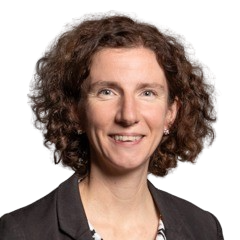
Dame Anneliese Dodds is the Labour and Co-operative MP for Oxford East, having first been elected to parliament at the 2017 general election.
In the 2024 general election for the Oxford East constituency, Dodds received 19,541 votes, representing 49.7% of the vote share. The Green Party candidate, Sushila Dhall, came second with 5,076 votes (12.9%), while the Conservative candidate, Louise Brown, secured 4,739 votes (12.0%). Dodds was duly elected with a majority of 14,465.
Dodds received a damehood in 2026 after featuring on the New Years Honours List.
Political Career
Dodds served as minister of state for development in the Foreign, Commonwealth and Development Office from July 2024 to February 2025. She was also minister of state for women and equalities at the Department for Education across the same period. In these capacities, Dodds attended cabinet.
Dodds resigned from this post after Keir Starmer, the prime minister, unveiled plans to raise defence spending to 2.5% of GDP from April 2027, funded by cuts to overseas aid. At the time, Starmer referred to the decision to cut the aid budget as a “hard choice” but one that would fully fund “our increased investment in defence.”
The announcement was timed to precede a crucial meeting between the prime minister and the new US president, Donald Trump. The move was welcomed by Trump and contributed to a roundly well-mannered meeting in the White House. However, the aid budget cut precipitated Dodds’ resignation. Dodds’ resignation was deferred to avoid distracting from Starmer’s stateside visit.
In a letter to the prime minister, Dodds said the cuts to international aid would “remove food and healthcare from desperate people – deeply harming the UK’s reputation.”
Dodds, who served as shadow chancellor from 2020 to 2021, said she had delayed her resignation until after Starmer’s meeting with the US president.
The Labour MP stated: “I know you have been clear that you are not ideologically opposed to international development. But the reality is that this decision is already being portrayed as following in President Trump’s slipstream of cuts to USAID.”
She added: “The effect will be far greater than presented, even if assumptions made about reducing asylum costs hold true.
“The cut will also likely lead to a UK pull-out from numerous African, Caribbean and Western Balkan nations at a time when Russia has been aggressively increasing its global presence.”
Conservative MP Andrew Mitchell, a former international development secretary, said Dodds had “done the right thing”.
He posted on X: “Labour’s disgraceful and cynical actions demean the Labour Party’s reputation as they balance the books on the backs of the poorest people in the world.
“Shame on them and kudos to a politician of decency and principle.”
On 3 April 2025, Dodds delivered her first speech from the backbenches since 2017 and her election as an MP. Her resignation in February 2025 broke an eight-year stint on the frontbench.
She told the House: “The new government entered office at a time of unprecedented geopolitical and economic flux. There is no muscle memory in government, or indeed in politics, for the instability we are currently seeing, and as democracy backslides globally, instability is the new normal.”
Dodds went on to address looming threats to the UK’s democratic norms. She referenced the Southport riots of summer 2024 and the “appalling scenes when racist thugs set fire to hotels knowing that people remained inside”.
She said: “Now, I believe that we need the same strategic, not tactical approach when it comes to the protection of our democracy. Last summer saw the worst racist riots in our country since the Second World War.”
Dodds’ remarks and criticism of the government reflect her standing on the so-called “soft left” of the Labour Party.
Prior to the 2024 general election, which saw Labour returned to power after 14 years in opposition, Dodds held a series of shadow ministerial positions. Most notably, she was shadow chancellor the exchequer from April 2020 to May 2021 and the first woman to hold the post. Dodds lost her role as shadow chancellor during the 2021 shadow cabinet reshuffle when she was replaced by Rachel Reeves. The reshuffle followed a poor set of results at the 2021 local elections.
Subsequently, Dodds served as shadow secretary of state for women and equalities from September 2021 to May 2024 and concurrently as chair of the Labour Party. She also served as shadow financial secretary to the Treasury from July 2017 to April 2020 on Jeremy Corbyn’s frontbench.
Dodds delivered her maiden speech on 11 July 2017 during a debate on contaminated blood.
In her speech, she remarked: “Oxford East could be imagined as a constituency filled only with gleaming spires, detectives driving Aston Martins, and mysterious university dons.
“But while Oxford East boasts two excellent universities and bustles with students during term time, Oxford also has an impressive industrial heritage, and enormous further industrial potential, with the right infrastructure investment and support.”
She added: “Oxford East and its incredible people have so much potential, but too often, I feel, they are being held back. As their MP, I am ambitious for our city and its people, and I will devote the time they have given me in this place to ensure a better, brighter and fairer future for them, and for people like them, across this country.”
Before entering parliament, Dodds served as a member of the European Parliament (MEP) for South East England from 2014 to 2017. During her time as an MEP, Dodds was a member of the European Parliament’s committee on economic and monetary affairs.
Dodds contested the constituencies of Billericay and Reading East at the 2005 and 2010 general elections respectively, losing to the Conservative candidates on both occasions.
Political Views
Leadership elections and loyalty
Labour leadership 2020: Dodds was one of 82 Labour MPs who nominated Keir Starmer for the party’s leadership in early 2020. The election was triggered by the resignation of Jeremy Corbyn following the party’s defeat in the 2019 general election, which resulted in Labour’s fewest seats in the House of Commons since 1935.
Starmer’s 82 nominations were the highest of any candidate. The shadow Brexit secretary won a decisive victory in the first round with 56.2% of the vote, defeating Rebecca Long-Bailey and Lisa Nandy.
During the campaign, Dodds said Starmer had a “proven ability to communicate and empathise with people right across the UK. He’s determined to tackle our unfair, unsustainable economy.”
Factional identity and party tradition
Common Endeavour: Dodds has been identified with the Common Endeavour group, a collective of Labour MPs from the party’s “broad centre” which set out a series of essays alongside the Fabian society focused on how “Labour can apply its values to the problems we face in the second quarter of the 21st century.”
The Fabian Society pamphlet, Common Endeavour: Building a Stronger Britain (April 2026), defined four generational challenges: “affordability, capacity, security, and solidarity.”
The group’s platform, set out in the essays, included calls for a fundamental reappraisal of the UK’s international alliances, reduced strategic dependence on the United States and the pursuit of a closer, Swiss-style relationship with the European Union, including an “emergency brake” on freedom of movement.
The essays were penned by the Labour MPs Liam Byrne, Anna Gelderd, Andrew Lewin, Luke Murphy, Alex Baker, Calvin Bailey and Jeevun Sandher, alongside Dodds.
The introduction to the group of essays referred to the phrase used in Clause IV of the Labour Party constitution, which argues that the movement achieves more by “the strength of our common endeavour”.
In a New Statesman article, the MPs rejected the “embrace of ethnocratic division and plutocratic Thatcherism” by their political opponents.
The piece added: “Their values will make us weaker by dividing us ever further. They would have us draw away from like-minded allies in Europe and leave us more dependent on mad fossil fuel-obsessed dictators from abroad.
“And they’d indiscriminately deport our friends, neighbours, and those that sit by our relatives’ bedsides as they suffer. They’d make our nation weaker, because they do not think we achieve more together than we achieve alone.”
Tribune group (2017): Dodds was listed among the supporters of the Tribune parliamentary group – a caucus generally described as representing the party’s “soft left”.
The Tribune group was initially formed in 1964 to support the newspaper of the same name. It served as a prominent forum for those parliamentarians situated on the left of the Labour Party – but it split over Tony Benn’s campaign for the deputy leadership in 1981. Benn’s supporters founded the Campaign group – which evolved into the Socialist Campaign Group (SCG). Today, the Bennite SCG is strongly associated with the Labour left tradition.
During the 1980s, the Tribune group emerged as a more natural home for those on Labour’s “soft left”.
In 2017, Efford officially re-launched the group with a new mission statement calling for “opportunity and aspiration” to be placed at the heart of the party’s programme. Efford said he had reformed the group to ensure that the centre-left of the Parliamentary Labour Party (PLP) “have a space in which to put forward ideas and debate which has not been there under successive leaders”.
He added: “The view of Labour MPs at the moment tends to be that too much are just Blairites who want to stab Jeremy Corbyn in the back. We want to show that is not where we are, and that we want to develop our own ideas that represent the centre-left of the party.”
Brexit and Europe
Brexit referendum: Dodds supported Remain in the 2016 Brexit referendum, and therefore agreed with a majority of constituents, 67.5% of whom voted to Remain.
Remain pledge: During the 2019 general election campaign, Dodds was one of 193 Labour candidates to sign the anti-Brexit “Remain pledge”, drawn up by the campaign group Remain Labour.
It stated: “Labour is committed to a confirmatory referendum, to give you the final say on Brexit. If elected as your Labour MP, I pledge to campaign to Remain in the EU.”
Welfare
Welfare vote (July 2025): Dodds voted in favour of the government’s flagship welfare bill at second reading. The vote came after ministers agreed to significant concessions to avoid defeat via a mass rebellion of Labour MPs on 1 July 2025.
Assisted dying
Dodds voted against the Terminally Ill Adults (End of Life) Bill, better known as the assisted dying bill, at both second reading (November 2024) and third reading (June 2025).
In a statement setting out her position, issued shortly before the bill’s second reading, Dodds said she was “deeply disturbed about the potential impact of this Bill on those suffering from mental ill-health.”
She wrote: “This is not from religious conviction – while I respect those of faith, I am an atheist. Nor is it because of the manner in which the Bill has been presented; I have listened to many constituents’ views on this, but do not agree with those who have suggested that a private member’s bill cannot be used for these purposes…
“I know that this decision will be deeply disappointing for many of my constituents, especially for those who have campaigned for assisted dying for a long time. repeat that know you are motivated by compassion and a determination to reduce suffering.”
Social values and conscience issues
Abortion decriminalisation (2025): Dodds voted in favour of a backbench amendment to the Crime and Policing Bill that sought to decriminalise abortion in England and Wales in June 2025. The amendment, which was passed by a majority of 242 votes, removed women from the threat of prosecution for ending a pregnancy at any stage. As an issue of conscience, MPs were allowed to vote according to their personal beliefs.
Before Politics
Born in Aberdeen in 1978, Dodds was educated at Robert Gordon’s College, a private school in the city. She went on to study philosophy, politics and economics (PPE) at St Hilda’s College, Oxford, graduating with a first-class degree.
Dodds subsequently obtained a master’s degree in social policy from the University of Edinburgh and a PhD in government from the London School of Economics, where she also held a postdoctoral fellowship.
Before entering parliamentary politics, Dodds worked as an academic, lecturing in public policy at King’s College London from 2007 to 2010, and then as a senior lecturer in public policy at Aston University from 2010 to 2014.
Personal Life
Dodds is married to Ed Turner, who has served as the deputy leader of Oxford City Council. The couple reside in Rose Hill, Oxfordshire, and have two children, a son and a daughter.
Dodds’s late father worked as a chartered accountant. In a 2020 interview with the Daily Mirror newspaper, Dodds mentioned his passion for countering fraud.
Trivia
During her time at Oxford University, Dodds was actively involved in student politics. She served as president of the Oxford University Student Union (OUSU) from 1999 to 2000. During her campaign for the presidency in 1998, she was fined £75 by OUSU for breaching election rules by using email to canvas support.
Dodds joined the Labour Party around 1996.
Her PhD thesis, completed at the LSE in 2006, focused on the impact of liberalisation on higher education policies in France and the UK.
Anneliese Dodds has not written for Politics.co.uk.