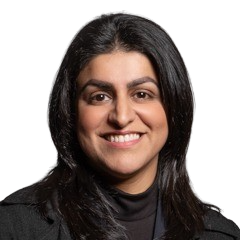
Abtisam Mohamed is the Labour MP for Sheffield Central, having first been elected to parliament at the 2024 general election.
In the 2024 general election, Mohamed won 16,569 votes, representing 52.1% of the vote. The Green Party candidate, Angela Argenzio, received 8,283 votes (26.0%), while the Conservative candidate, Lucy Stephenson, secured 2,339 votes (7.4%). Mohamed was duly elected with a majority of 8,286.
The Sheffield Central constituency is located in South Yorkshire. It is considered a safe Labour seat, having been held continuously by the party since its creation in 1983.
Political Career
Mohamed is a member of the House of Commons foreign affairs select committee (since October 2024) – the committee responsible for examining the expenditure, administration and policy of the Foreign, Commonwealth and Development Office (FCDO) and other associated bodies.
In May 2026, Mohamed was among the group of Labour MPs who publicly called for the prime minister, Keir Starmer, to resign or set out a clear timetable for his departure. The move followed the 2026 local elections and devolved elections to the Scottish Parliament and Senedd Cymru.
In a statement, Mohamed said: “We need leadership that brings people together. The prime minister should now agree a clear transition and timeline for new leadership that can do that.”
She added: “We need real Labour values: opportunity for young people, support for small businesses, defending the right to protest and jury trials, standing up for international law consistently and speaking plainly about war crimes being committed in Gaza and the West Bank, and rejecting rhetoric that scapegoats migrants instead of solving problems.
“I came into politics to fight for real change and that hasn’t changed, but I won’t follow blindly.”
In February 2026, Mohamed expressed criticisms about the government’s proposed overhaul of indefinite leave to remain (ILR) guidelines in a Westminster Hall debate. The session, which was triggered by two public petitions signed by over 330,000 people, focused on Home Office proposals to replace the established five-year pathway to permanent residency (also known as indefinite leave to remain or settlement) with a 10-year baseline under an “earned settlement” model.
In the debate, Mohamed argued that the policy risked recreating a hostile environment and represented “a road to insecurity and division”.
She stated: “Retrospective application of this policy would be not only deeply unfair, but entirely unjustified…
“I know that the proposals are under consultation, but we must be clear about the direction of travel. They risk recreating the very conditions that defined the hostile environment: long-term uncertainty, barriers to stability, and communities living with the constant fear that the rules could change again.”
In April 2025, Mohamed alongside fellow Labour MP Yuan Yang were detained and barred from entry to Israel in what was the first time British MPs had been banned from the country.
In a statement to the commons after the incident, Foreign Office minister Hamish Falconer said that this was “first time a British MP has been barred from entering Israel.”
He added: “That decision appears to have been taken on the basis of comments made in this chamber… It is no way to treat democratically elected representatives of a close partner nation, and we have made this clear at the highest levels in Israel.”
Addressing the commons, Mohamed reflected on a “challenging few days”.
She said: “What happened to myself and the MP Earley and Woodley [Yang] has been unprecedented. We were denied entry based on our legitimate political opinions, which are firmly aligned with international law.
“No state, however powerful, should be beyond criticism.”
Mohamed is listed as a member of the all-party parliamentary groups (APPGs) for international students, (chair) Palestine, Somaliland and students (chair).
Mohamed delivered her maiden speech on 3 September 2024 during a debate on the Passenger Railway Services (Public Ownership) Bill.
In it, she said: “I recognise that there are many priorities in politics, but building strong communities will always be at the heart of mine.
“I will champion localism, ensuring that local authorities and, equally, community organisations and charities get the support they need to deliver the best in early years, youth work and mental health support, creating local jobs and services for those who need them the most.
“I will press on the urgency of our commitment on climate action, where we work for the best interests of our planet rather than the interests of oil and gas companies.”
She added: “I will also use my platform to strongly advocate for cohesion in society. I am driven by the belief that fairness and inclusion are core values that must be embodied in all that we do.
“I will do everything in my power to promote multiculturalism in our brilliant country and will reject the tired populism of blame, exclusion and hate.
“Our unity is our strength.”
Before entering parliament, Mohamed was elected as a Labour councillor on Sheffield City Council in May 2016. She stood down from the council in 2024.
Political Views
Factional identity and party tradition
Living Standards Coalition: Mohamed is a member of the Living Standards Coalition. Established in July 2025, the group’s stated aim was to develop and promote policy ideas that directly reduce everyday costs for households, particularly in areas such as food, energy, housing and childcare. In an open letter published upon its founding, addressed to Keir Starmer, the MPs wrote: “Our constituents will ask one question at the next election: did this Labour government make me better off?”
They added: “To raise living standards, we support government interventions that will help to increase incomes and lower costs.”
Labour Movement for Europe: Mohamed was endorsed by the Labour Movement for Europe (LME) in the 2024 general election. Founded in 1981, LME is a pro-European socialist society affiliated with the Labour Party. It campaigns for a close relationship between the United Kingdom and the European Union. The organisation refers to itself as the “home of the pro-Europeans in the Labour and trade union movement”.
Electoral reform
Fair elections APPG: Mohamed is listed as a supporter of the all-party parliamentary group (APPG) for fair elections – a cross-party group of MPs and peers that campaigns for electoral reform. The group’s stated aims include replacing the first past the post (FPTP) voting system with a form of proportional representation, eliminating “dark money” and “undemocratic influence” from politics, and countering disinformation.
Electoral reform amendment: In May 2026, Mohamed was one of over 70 Labour MPs who signed an amendment to the Representation of the People Bill, calling on the government to establish “national commission on electoral reform”. Tabled by Alex Sobel as chair of the fair elections APPG, the amendment aimed to force a rethink of the first past the post voting system.
At the time, Sobel described FPTP as “one of the biggest examples of a broken status quo in UK politics.” He invited colleagues to join this “common sense call to take a fresh look at how parliament is elected in modern Britain.”
Proportional representation bill: In December 2024, Mohamed voted in favour of the Elections (Proportional Representation) Bill – introduced by Liberal Democrat frontbencher Sarah Olney under the 10-minute rule procedure. The bill sought to “introduce a system of proportional representation for parliamentary elections and for local government elections in England”.
A total of 138 MPs supported the bill – with 136 opposed. Notably, 59 Labour MPs backed Olney’s bill.
Introducing the bill, Olney told the House: “First past the post is a broken and unfair system. This summer, the Labour party won a landslide election victory, securing 63% of seats in the House of Commons in return for just 34% of the vote.
“The system leaves millions of voices unheard and creates a divisive, adversarial political climate where collaboration is discouraged and accountability is often sidestepped.”
Welfare
Welfare ‘reasoned amendment’ (June 2025): Mohamed was one of the over 120 Labour MPs to sign the reasoned amendment to the government’s flagship welfare bill which aimed to reject the proposed legislation.
The amendment, in the name of senior Labour MP Dame Meg Hillier, objected to the fact that the bill had not been subject to a “formal consultation with disabled people” and that “250,000 people will be pushed into poverty” as a result of it, according to a government impact assessment.
The motion also called on the government to wait for the publication of the review into the Personal Independence Payment (Pip), helmed by minister Sir Stephen Timms, and the independent review, conducted by Sir Charlie Mayfield, into how the employment of disabled people could be boosted.
In May 2025, Mohamed had signed a letter warning the government that the cuts were “impossible to support” and calling for a change in direction.
The letter, signed by 42 Labour MPs, read: “The planned cuts of more than £7bn represent the biggest attack on the welfare state since George Osborne ushered in the years of austerity and over 3 million of our poorest and most disadvantaged will be affected.
“Whilst the government may have correctly diagnosed the problem of a broken benefits system and a lack of job opportunities for those who are able to work, they have come up with the wrong medicine. Cuts don’t create jobs, they just cause more hardship.”
Welfare vote (July 2025): Mohamed went on to vote against the bill at second reading. The vote came after ministers agreed to significant concessions to avoid defeat via a mass rebellion of Labour MPs on 1 July 2025.
Assisted dying
Mohamed voted against the Terminally Ill Adults (End of Life) Bill, better known as the assisted dying bill, at both second reading (November 2024) and third reading (June 2025).
In a statement issued at the time of the bill’s third reading, Mohamed said: “Having worked for many years to challenge structural inequalities, I am still not convinced that this Bill is safe, especially as crucial safeguards such as a sign-off from a high court judge have been dropped.”
Social values and conscience issues
Abortion decriminalisation (2025): Mohamed voted in favour of a backbench amendment to the Crime and Policing Bill that sought to decriminalise abortion in England and Wales in June 2025. The amendment, which was passed by a majority of 242 votes, removed women from the threat of prosecution for ending a pregnancy at any stage. As an issue of conscience, MPs were allowed to vote according to their personal beliefs.
Palestine
Palestinian recognition letter (July 2025): In July 2025, Mohamed was among the over 254 MPs to sign a cross-party letter calling for the government to immediately recognise the state of Palestine. The letter called on the prime minister and foreign secretary to recognise Palestine at the UN Conference then taking place in New York.
Before Politics
Born in Yemen in May 1980, Mohamed moved to the UK with her family in 1982, joining her father and grandfather who worked in Sheffield’s steel industry.
Mohamed left school with four GCSEs.
Mohamed studied education at Sheffield Hallam University and later obtained a master’s in law from the University of Sheffield.
In her 2024 maiden speech, Mohamed told the House: “I grew up in some of the most deprived parts of Sheffield and attended some of the most underachieving schools.”
Mohamed worked initially as a teacher and community worker before becoming a solicitor. In 2014, she founded her own legal practice, Crater Law Solicitors Ltd.
Personal Life
Mohamed is the second oldest of eight children.
Trivia
Mohamed is the first person of Yemeni heritage and the first British Arab woman to be elected as an MP.
In her maiden speech, she stated: “I am immensely proud of that honour, and I feel privileged to represent not just my constituency, but every person who has ever hoped for a better future.
“I have climbed personal mountains and faced many personal barriers and hurdles that have come my way, and not only have I had to overcome them, but I have fought for and helped many others along the way.”
Abtisam Mohamed has not written for Politics.co.uk.