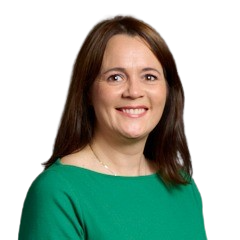
Linsey Farnsworth is the Labour MP for Amber Valley, having first been elected to parliament at the 2024 general election.
In the 2024 general election, Farnsworth received 15,746 votes (37.0%). The Reform UK candidate, Alex Stevenson, placed second with 12,192 votes (28.7%), while the Conservative candidate, Nigel Mills, polled 10,725 votes (25.2%). Farnsworth was elected with a majority of 3,554.
The Amber Valley constituency is located in Derbyshire in the East Midlands region. Since its creation in 1983, the seat has been regarded as a bellwether, having been won by the party that formed the government at each general election.
Farnsworth’s immediate predecessor as the MP for Amber Valley was Nigel Mills of the Conservative Party. Mills represented the seat from 2010 to 2024.
Political Career
Farnsworth serves as a parliamentary private secretary (PPS) in the Ministry of Justice (since May 2026). A PPS acts as an unpaid parliamentary assistant, providing a link between the senior frontbencher and backbench MPs. The role is widely regarded as the first step on the ministerial ladder. Although they cannot speak for the government in debates, a PPS is bound by collective responsibility and becomes part of the so-called “payroll vote”, expected to support the official line in all divisions.
Farnsworth’s appointment to this PPS role was part of a targeted reshuffle designed to stabilise Keir Starmer’s position as prime minister after a series of resignations. At least four PPSs stepped down calling for Starmer to resign or set out a timetable for his departure. The move followed the 2026 local elections and devolved elections to the Scottish Parliament and Senedd Cymru. Conversely, Farnsworth’s appointment signalled their support for the prime minister.
As such, Farnsworth was among the over 100 Labour MPs who signed the May 2026 joint statement insisting it was “no time for a leadership contest.”
The statement read: “Last week we had a devastatingly tough set of election results. It shows we have a hard job ahead to win back trust from the electorate.
“That job needs to start today – with all of us working together to deliver the change the country needs.
“We must focus on that. This is no time for a leadership contest.”
Farnsworth was retained as a MoJ PPS following the Labour leadership contest and Andy Burnham’s elevation as prime minister.
In the wake of the 2024 general election, which saw Labour returned to power after 14 years in opposition, Farnsworth was appointed by 10 Downing Street as a national “mission champion” for crime – a role intended to cut across departmental boundaries and support Labour’s programme for “national renewal”. These “missions”, first set out in 2023 and subsequently given less prominence, included boosting economic growth, reducing NHS waiting times, tackling crime, establishing a publicly owned clean energy company and expanding educational opportunity.
Farnsworth introduced the Unauthorised Entry to Football Matches Act 2026 as a private member’s bill (PMB). The legislation, which received royal assent in March 2026, represents a crackdown on football fans who try to enter grounds without a ticket. Farnsworth introduced the legislation after being selected in the 2024 PMB ballot.
Commenting after the bill received royal assent, Farnsworth said: “I am incredibly proud to share that my private member’s bill has received royal assent. This is a massive win for fans, born out of a mission to make our national game safer for everyone.”
Farnsworth has sat as a member of the House of Commons justice select committee (2024-2026)
Farnsworth delivered her maiden speech on 20 November 2024 in a debate on the Financial Assistance to Ukraine Bill.
In it, she said: “The Labour Party was formed to give ordinary people a voice and to improve lives… There has been much debate about what a working person is, but I know it when I see it: it is my dad. Originally a coalminer, like so many others he went into the dark so that his children’s lights would shine…
“My goal to combat injustice extends particularly to the people of Ukraine. I visited Ukraine in September with fellow Labour MPs. We saw the human suffering of war: the homes destroyed, the children’s cardiology hospital bombed while young children were on the operating table, the cellar of a school where civilians were held captive by Russian troops in the most appalling conditions.
“Ukraine is defending herself, but she is also defending us, our values and our freedoms.”
She added: “We must deliver on our promises to rebuild trust in politics and show that it can be a force for good.”
Before entering parliament, Farnsworth was elected as a Labour councillor to Amber Valley Borough Council in May 2023. She stood down from this role in 2025.
Political Views
Leadership elections and loyalty
Labour deputy leadership 2025: Farnsworth was one of 117 Labour MPs who nominated Lucy Powell for the party’s deputy leadership in September 2025. The election followed the resignation of Angela Rayner, who stepped down as deputy prime minister and deputy party leader after an investigation into her tax affairs. It marked the first time since 2007 that Labour had held a deputy leadership contest while in government.
Powell, the former leader of the House of Commons, was seen as a candidate representing the party’s “soft left”; she was supported by leading soft left figures including Ed Miliband and Andy Burnham. She secured 117 nominations from the Parliamentary Labour Party (PLP), above the 80 required, and went on to win the election – defeating Bridget Phillipson with 54.3% of the vote.
Assisted dying
Farnsworth voted in favour of the Terminally Ill Adults (End of Life) Bill, better known as the assisted dying bill, at both second reading (November 2024) and third reading (June 2025).
In a statement issued after the bill’s second reading, Farnsworth said: “A change in the law would allow those who found themselves in the limited situation as described in the bill, to have the death of their choosing. I feel that I cannot in good conscience vote against allowing people that possibility.”
Social values and conscience issues
Abortion decriminalisation (2025): Farnsworth voted against a backbench amendment to the Crime and Policing Bill that sought to decriminalise abortion in England and Wales in June 2025. The amendment, which was passed by a majority of 242 votes, removed women from the threat of prosecution for ending a pregnancy at any stage. As an issue of conscience, MPs were allowed to vote according to their personal beliefs.
Farnsworth was one of 25 Labour MPs to vote against the amendment.
Before Politics
Farnsworth was raised in Erewash, Derbyshire, and was the first person in her family to attend university.
Her father worked as a coal miner before retraining as a bricklayer following mine closures. Her stepmother was a nurse.
Farnsworth qualified as a solicitor in 2001. For over 20 years prior to entering politics, Farnsworth worked for the Crown Prosecution Service (CPS) as a criminal solicitor.
Personal Life
Farnsworth is married and has children.
Trivia
Farnsworth was appointed as a PPS during the May 2026 government crisis.
Linsey Farnsworth has not written for Politics.co.uk.