How many police are there in the UK?
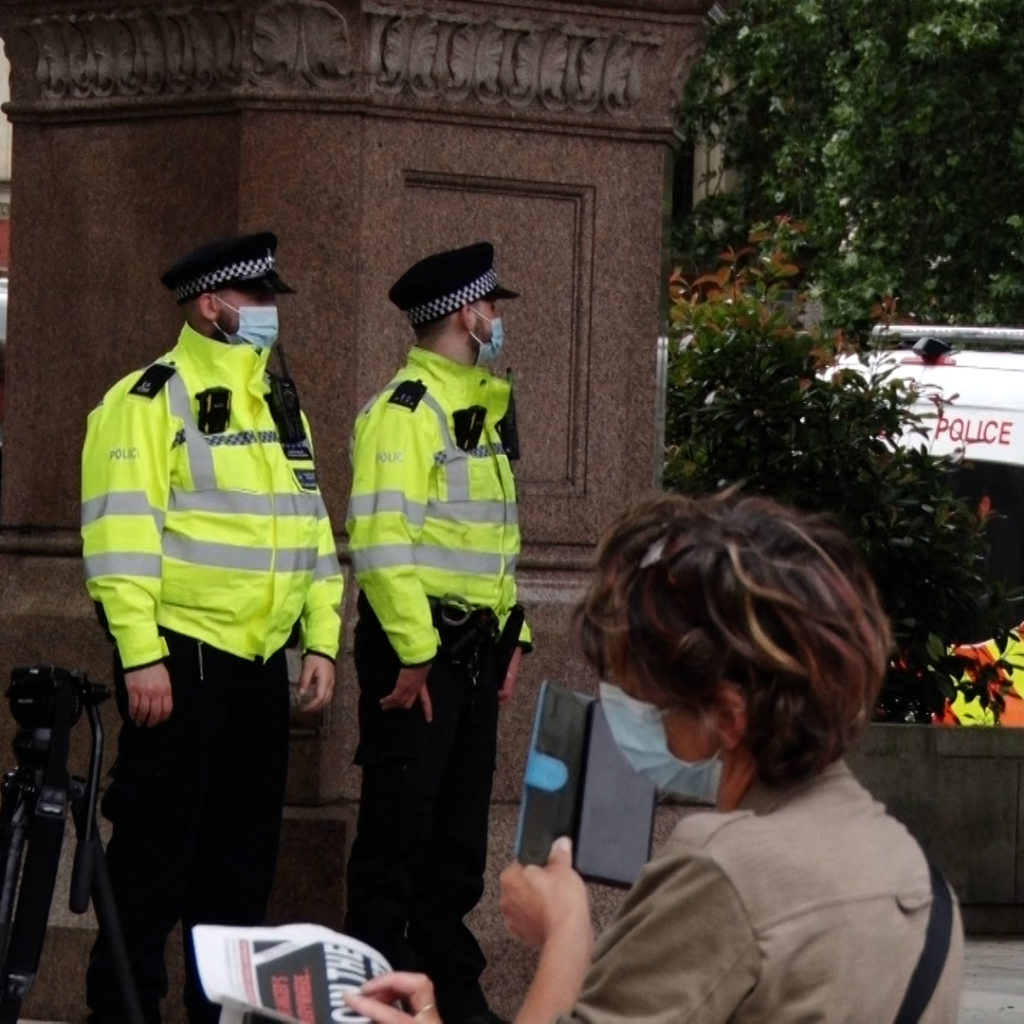
On 31st March 2021,there were 135.301 police officers in England and Wales, from a total police staff base of 220,519.
Across the United Kingdom as a whole, there were some 160,000 police officers, an increase of 10,000 on the low point of 2017, but down from some 172,000 back in 2009.
In addition there was a further 9,571 Special Constables (part-time, volunteer officers) in the United Kingdom, and 2,964 British Transport Police Officers. The number of fixed-term police community support officers (PCSO) was recorded at 9,180. All of these categories were also recorded as showing small decreases in recent years.
In 2019, Boris Johnson announced plans to recruit an additional 20,000 police officers. By April 2021, the number of police officers had risen by 8,771, suggesting the government was close to half way en route to their recruitment plan.


The government has claimed that 139,000 people have actually applied to join the police since it started its recent recruitment drive.
Police numbers in the UK Compared with Europe
Per 100,000 of the population, police numbers in England and Wales are among the lowest in Europe. In 2018, England and Wales recorded a rate of 207 police officers per 100,000 people. This was the 5th lowest among all countries providing data, ahead of only Sweden, Denmark, Iceland, and Finland.
At the other end of the spectrum, the strongest numerical police force was recorded in Montenegro, with 660 per 100,000, three times that of England and Wales. This was followed by Cyprus at 570 per 100,000, and Greece at 495 per 100,000.
Are police numbers rising?
During the early years of the Twenty First Century, police officer numbers increased at a consistent rate.
Despite widespread claims of plummeting police numbers, data gathered from recent years has suggested that there has recently been an assured increase in officer strength. Research conducted by the Home Office shows police officer strength across all 43 forces rose between 2013 and 2020.
Having dipped in the first half of the decade, figures reveal increases in all police authorities other than Hampshire (-0.2%) and Lincolnshire (-2.6%) from 2019-2020. The most significant increases were recorded in Warwickshire (+26.7%), West Mercia (+11.6%) and Cleveland (+10.6%).
However, the actual figure for police numbers remains a subject of fierce political debate.
Arguments over whether police officers are rising or falling has until recently depended on which year was being taken as the comparison base year.
Uncertainty surrounding police numbers is also fueled by varying classification criteria. Some sources will report figures for the total police workforce (combining officers of various ranks, support staff, PCSOs and police traffic wardens); others report only officer numbers.
Moreover, there is a widespread tendency to perceive ‘police officers’ as those operating on the front line – those most visible to the public eye. Within individual police forces, however, it is not uncommon for staff to be redeployed from frontline to non-frontline roles, and vice versa. Such restructuring is driven by the specific needs of a local area. Different regions also operate with different base rates of staff employed on the frontline. In 2016, for instance, Staffordshire Police had 96% of their officers on the frontline, compared to 90% for Greater Manchester.
Likewise, what constitutes the ‘frontline’ has varied throughout time. In data published by Her Majesty’s Inspectorate of Constabulary and Fire & Rescue Services, the term ‘frontline officers’ variously includes officers (response teams neighbourhood policing etc.), frontline support officers (intelligence) and business support officers (training staff).
The relationship between police numbers and crime
In 2019, Prime Minister Boris Johnson announced plans to recruit 20,000 police officers across England and Wales. Introducing the recruitment campaign, Mr Johnson said: “my job as Prime Minister is to make our streets safer.”
The government has been particularly concerned by the recent surges in knife crime. In 2019, rates of London knife crime reached a record high of over 15,000 cases, with nationwide incidents of knife crime said to have risen 8% from the previous year.
The decision to increase police numbers was welcomed by the national police force, which had been subject to increasing pressure following a reduction of police officers earlier in the decade. That earlier reduction coincided with the UK government’s ‘austerity’ approach after the 2008 financial crisis.
The implications of declining police numbers were said to have been exacerbated the UK’s rising crime rates. According to the Office for National Statistics, having fallen by 7% between 2009/10 and 2013/14, the number of crimes recorded by the police rose to 6.0 million in 2018/19, a figure that was 37% higher than the 2009/10 figure of 4.3 million.
Although the level of crime has risen, there is though a fierce debate as to the extent to which this can be attributed to dwindling police numbers. Some point to how, despite police numbers being at a national high of 160,000 in 2008, the number of knife deaths among minors was still higher than it had been for the previous decade.
Others point out to a range of other factors that may influence levels of crime. It is instead suggested that resources should be allocated in other ways to best tackle crime, for example in early intervention and crime prevention measures.
To curb drug crime for example, some MPs have called on the government to introduce Supervised Injection Facilities (SIF), as have been legalised in Scotland. Data from the Home Office has suggested that between a third and a half of all acquisitive crime is committed by offenders who use heroin, cocaine or crack cocaine.
Police Diversity
In 1999 there was a drive to increase the number of police officers recruited from ethnic minorities. This followed the racist murder of the black London teenager, Stephen Lawrence, in April 1993, and the subsequent inquiry by Sir William Macpherson into his death.
The Macpherson report published in February 1999 concluded that the police handling of the murder investigation had been marred by “institutional racism” and called, amongst other things, for targets to be set to increase the recruitment and retention of ethnic minority officers.
A decade later, numbers of the number of minority ethnic officers had increased and accounted for around 4.4 per cent of the total police force. However, this was still far short of the 7 per cent target figure set by the Home Office to reflect the proportion of ethnic minorities in the population as a whole at that time.
In February 2009 it was decided to drop the central target and replace it with individual targets for each police force to reflect the ethnic make-up of their particular local communities.
As of 31st March 2020, 7% of police officers (9,174) identified as being from an ethnic minority. This was an increase of 3% from 2007. Among the 9,174 officers, 30% were of mixed ethnicity, 17% from Black or Black British backgrounds, 42% were from Asian or Asian British backgrounds, and 11% were from Chinese or “other” ethnicities.
However, although this number continues to increase, it remains substantially lower than the proportion of the national population who identified as being from ethnic minority backgrounds (16%).
According to the House of Commons library, officers from ethnic minority backgrounds were also likewise under-represented at senior levels, accounting for 4% of officers at the rank of Chief Inspector or above.
- Between 2007 and 2020, the percentage of police officers from every ethnic minority group increased, with the biggest rise being amongst Asian police officers (from 1.5 to 3.1%).
Police recruitment and retention
Police officers are recruited from all sections of society, but applicants must be either a British citizen, a citizen of the EU or other states in the EEA, or a Commonwealth citizen or foreign national with indefinite leave to remain in the UK.
The minimum age for applicants is 18 and there is no upper age limit, although police constables and sergeants normally retire around the age of 60. All recruits, regardless of age, must undertake a two-year probationary period.
There are no longer minimum height requirements, but applicants must be both physically and mentally suitable for the role. Although there are no formal educational requirements, written tests are set during the recruitment process.
The starting salary for a police officer is around £21,000 per annum. Additional benefits include a pension plan, paid overtime, fully paid sick leave and a minimum of 23 days annual leave.
A special constable has to meet the same basic eligibility requirements as the regular police force. As they are volunteers, special constables are not paid, but a uniform is provided and expenses reimbursed.
Each year, the Police Federation invites its members to take part in a ‘Pay and Morale Survey’ to gauge worker satisfaction rates and improve conditions within the police force. Responses gathered in the survey are submitted to the Police Remuneration Review Body (PRRB), which advises police pay rates.
In 2020 the PRRB agreed to a pay rise of 2.5% for all officers despite the economic uncertainty under the coronavirus pandemic. This came just two years after the government had announced the biggest rise in police funding since 2010 – some of which was being channeled directly into police recruitment initiatives.
Quotes
“Getting more police on our streets is an absolute priority and I’m delighted our recruitment campaign for 20,000 new officers is now under way. I have been clear from day one I will give the police the resources they need and I am delivering on that commitment. They have my full support and together we will cut crime, get criminals off the streets and keep people safe.” – Boris Johnson, 2019
“This substantial growth in police officers will ease the pressure on our people and help us to reduce crime and improve outcomes for victims. It is also an incredible opportunity to accelerate our plans to increase diversity in policing.” – National Police Chiefs’ Council chair, Martin Hewitt, 2019
“Boris Johnson has shown a cavalier disregard for the police in promising to recruit 20,000 extra police officers over the next three years. This has nothing to do with what struggling forces want or need.” – Marian Fitzgerald, former principal researcher in the Home Office research and statistics directorate, 2019
Statistics
When asked how they would like extra funding to be spent in their local area, 39% of respondents responded that they would prioritise funding for more police officers. (YouGov, 2020)
A 2020 survey conducted by the Police Federation revealed that:86% of respondents did not feel fairly paid in relation to the stresses and strains of the job, 65% felt that the COVID-19 crisis has had a negative impact on their morale, and 76% felt unfairly paid for the risks & responsibilities of their job during the pandemic. (Police Federation, 2020)
An estimated 5.7 million incidents of crime had been reported in the year ending March 2020 (excluding fraud and computer misuse). This was a 12% decrease compared with the previous year.(Crime Survey for England and Wales).
The Sainsbury Centre for Mental Health has suggested that mental health incidents account for 15% of police time.