‘Heavy handed’ police misuse terror laws
By Laura Miller
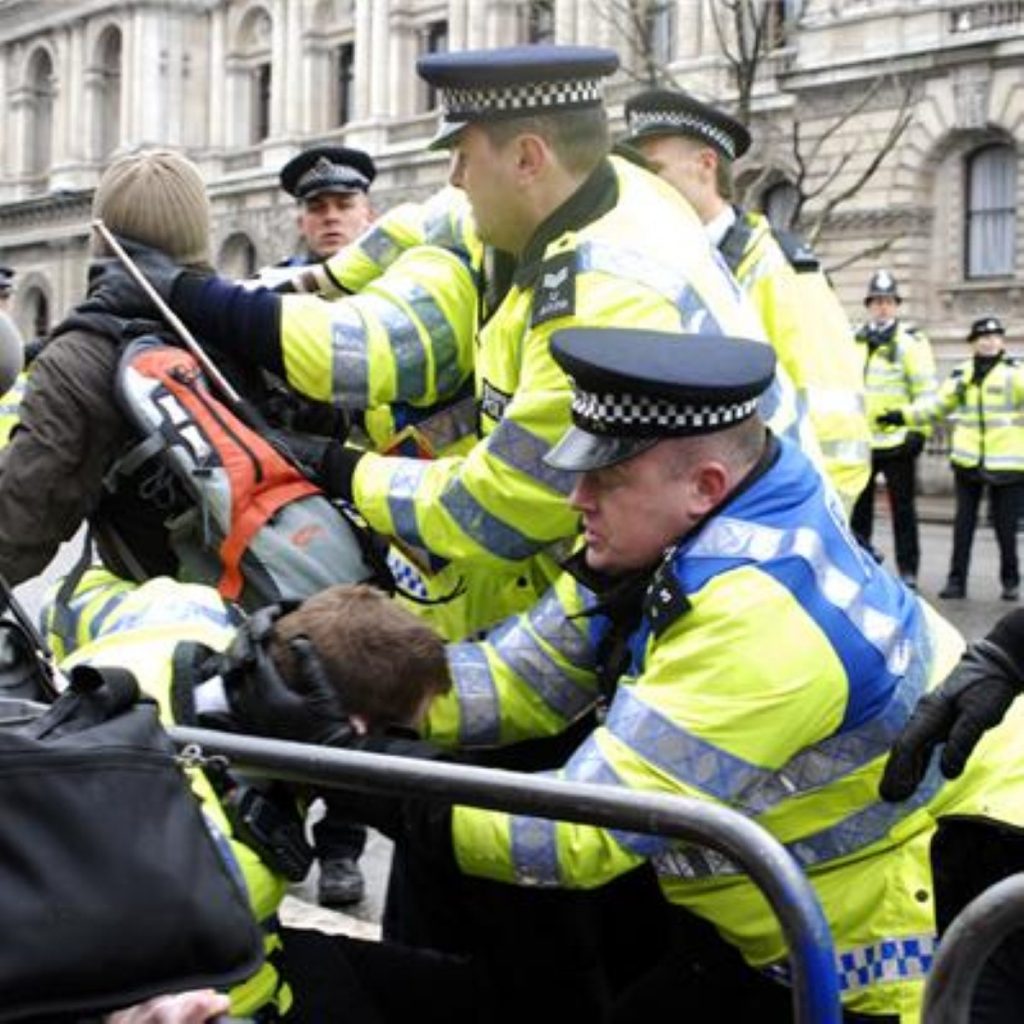
‘Heavy handed’ police are using powers meant to stop terrorists and other serious criminals against peaceful protestors and journalists, a report released today has said.
The highly critical report by the Joint Select Committee on Human Rights raises concerns about the ability of the police to distinguish when it is appropriate to use the powers at their disposal.
Andrew Dismore, Labour MP for Hendon and chair of the committee, said: “The right to protest is a fundamental democratic right and one that the state and police have a duty to protect and facilitate.”


The committee heard damning testimony from protestors and human rights groups that police had become more autocratic in recent years.
Of particular concern to the Human Rights committee were accounts of anti-terrorism legislation being used against peaceful protests, and the “overboard and disproportionate application” of the Protection from Harassment Act 1997.
Witnesses accused officers of using techniques such as penning in protestors and trying to force them to give up their names and addresses to intimidate and deter protest.
In assessing current rules preventing protest, the committee said broad laws should be changed so that sites on which protest is not allowed are designated by the Home Secretary, and only where it is necessary to do so.
“Of course there is a balance to be struck between the rights of protestors, the police and the public (including protest targets),” said Mr Dismore.
“But the state must not impose restrictions unless it is necessary, and proportionate, to do so. That is a high threshold.”
“The presumption is in favour of protest without state interference. We believe there are changes to the law and practice that are needed to make that presumption a reality.”
The Associations of Chief Police Officers’ (ACPO) lead on public order and public safety, deputy chief constable, Sue Sim, said: “The vast majority of protests around the country take place without any conditions imposed on them by police and the British approach to policing of protests is recognised as among the best in the world.”
Earlier this month, a Lib Dem report, ‘Policing of the Kingsnorth Climate Camp: Preventing Disorder or Preventing Protest?’, also heavily criticised Kent police for its use of strong-arm tactics.
Observers accused Kent Constabulary of false massing of police and vans, preventing legal rights advisors near protestors during police body searches, and playing loud music such as the Clash track “I Fought The Law and The Law Won” early in the morning.
Defending Kent police’s handling of the Kingsnorth protest, Home Office minister Vernon Croaker argued 70 of its officers had sustained injuries in clashes with protestors.
But, following an FOI request by the Lib Dems, it was disclosed no officers had been injured during the Climate Camp event.
Lib Dem MP David Taylor told the Commons: “When people expressed concerns about the vigour shown, and resources devoted, by the police in relation to the Kingsnorth climate camp, we were told that it was justified because dozens of injuries were incurred.”
“We have now found that those injuries were of a more prosaic origin-they were due to things such as insect stings and sunstroke.
“Unless the protesters are to be held responsible for wasps and the weather, are we not to conclude that the justification used at the time was wholly bogus and vacuous?”
In compiling today’s report the committee also heard from representatives of the National Union of Journalists (NUJ), who told how the police conducted surveillance of journalists, denied them reasonable access to protests, refused to recognise press cards, and even assaulted some members of the press.
The committee described as “unacceptable” a situation where individual journalists “are left with no option but to take court action against officers who unlawfully interfere with their work”.
It called on police forces to take steps to deal with officers who do not follow the guidelines agreed by the Association of Chief Police Officers (ACPO) and the NUJ.