What is NATO?
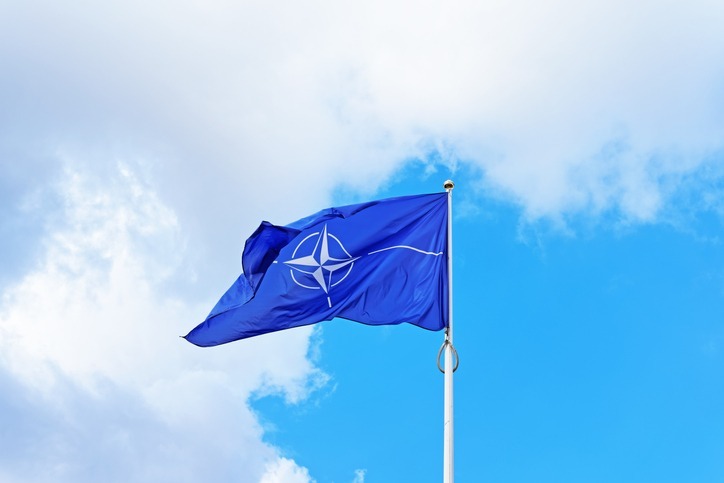
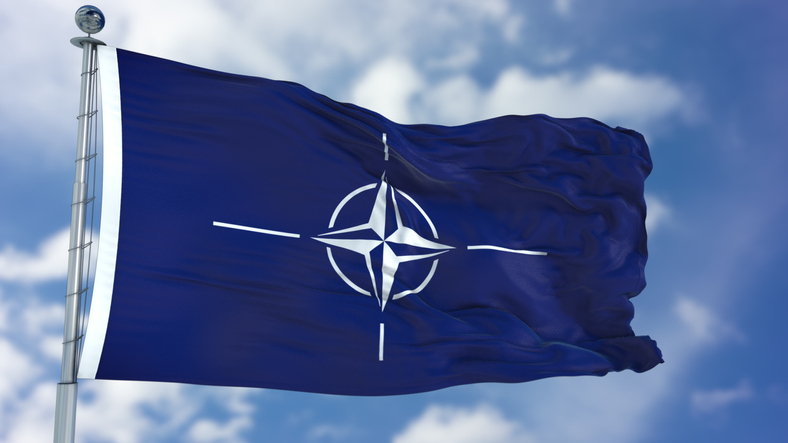
The North Atlantic Treaty Organisation (NATO) is a multilateral military and political alliance designed to secure the peace and security of its member states.
NATO comprises 30 members from Europe and North America, which are militarily committed to defend one another in the event of an attack.
NATO was formed in 1949 as a collective security organisation, promising the assistance of the US in the event of a Soviet-led invasion of Western Europe and latterly in the event of nuclear or other war between the superpowers.
NATO’s 30 members are said to account for 70% of global defence spending.
All member countries that participate in the military aspect of the Alliance contribute forces and equipment, which together constitute the integrated military structure of the Alliance. These forces and assets remain under national command and control until a time when they are required by NATO for a specific purpose.


As well as collective security, NATO is committed to undertaking peacekeeping and crisis management operations. According to its own figures, the civilian and military budget for NATO in 2019 was £1.43 Billion.
At the Wales NATO summit of 2014, member States agreed that their aim was to reach or maintain the target defense spending of at least 2% of GDP by 2024.
At the start of 2021, 10 NATO countries were spending 2% on defence, up from 3 countries in 2014.
According to NATO figures the combined military spending of all NATO members on defence in 2020 was said to be $1.092 trillion. Some $784 Billion of this was expected to be contributed by the US (71%). Spending by NATO countries on defence accounted for around 61% of the $1.774 trillion said to be spent globally on defence.
Background
NATO was formed in 1949 under the terms of the North Atlantic Treaty, also known as the ‘Washington Treaty’. The Soviet bloc responded to the formation of a Western alliance by forming the Warsaw Pact in 1955.
Throughout the Cold War, NATO and the Warsaw Pact countries faced each other across the ‘Iron Curtain’, each committed to deterring a nuclear attack from the other by the threat of Mutually Assured Destruction.
NATO expanded during the Cold War: Greece and Turkey joined in 1952; West Germany and Italy joined in 1955; and Spain joined in 1982. The Alliance underwent a crisis in 1966, when France, under General de Gaulle, withdrew French troops from the integrated command structure, complaining that NATO was overly dominated by US commanders. France did not rejoin the joint command until 1993. Greece also withdrew its forces in 1974, but rejoined in 1980. However, the demise of Communism and the Warsaw Pact has since changed the purpose of NATO dramatically.
NATO launched the Partnership for Peace in 1994, allowing non-alliance countries to participate in information-sharing, joint exercises and peacekeeping operations. In a landmark move, Russia joined the Partnership in 1995, co-operating in defence matters with its old enemy. This was developed further in 1997, when NATO signed an agreement with Russia to co-operate and work together to ensure regional stability and security. This commitment was formalised further in 2002 with the establishment of the NATO-Russia Council, which recognised Russia as an equal partner in respect of counter-terrorism work and other security threats.
NATO conducted its first ever military operation in 1995, when it launched a series of air strikes against Bosnian Serb positions in Bosnia-Herzegovina to try to force a peace settlement. The Alliance subsequently deployed troops in the former Yugoslavia (IFOR) to monitor and enforce the ceasefire. Russian forces joined IFOR in 1996. Since then, NATO has intervened in Kosovo and Macedonia.
NATO did not play a military role in the Gulf War, or the 2002 war in Afghanistan or the 2003 war in Iraq.
Since the terrorist attacks of September 11 2001, NATO has undergone a further period of transformation. The attack was deemed to justify the invoking of Article 5 for the first time, and NATO’s work has turned to focus more closely on intelligence and counter-terrorism.
Controversies
Role after the Cold War
The end of the Cold War changed the position of NATO irrevocably. During the Cold War, many feared that the USA would not come to Europe’s rescue in the event of a Soviet attack – doubts that led to the UK and France developing their own nuclear weapons. There were also sizeable and enduring campaigns throughout the Cold War against nuclear weapons, and by extension against NATO, whose strategic doctrine was based on their use.
Although NATO’s intervention in Bosnia heightened tensions with the traditionally pro-Serb Russia, it was the 11-week bombing campaign in Kosovo in 1999 that was NATO’s most controversial action. The UN, without Russian or Chinese support, could not act against ethnic cleansing by the Serbian Army in Kosovo. NATO decided to act against the Serbian Army – in the face of UN, Russian and Chinese protests – in the name of ‘humanitarian intervention’.
It was argued that NATO’s campaign was contrary to international law, as it lacked UN backing. NATO maintained that it had the support of the Security Council, as it had the support of 12 of the 15 members and was only thwarted by the vetoes wielded by Russia and China. Eventually, the action was legally justified by UNSCR 1244.
NATO’s conduct during the campaign was also questioned. The sole use of air power, without the controversial commitment of ground troops, was seen to result in large numbers of civilian casualties, in both Kosovo and Serbia.
The intervention in Kosovo had serious implications for international law, as it was one of the first major military interventions of the post-war era carried out without UN support.
Between the end of the Cold War and the September 11 attacks, there was considerable discussion about NATO’s purpose. During this period, the EU worked to develop a distinctive European Security and Defence Identity (ESDI).
Although it was insisted that ESDI would be developed within NATO, contradictory signals came from different member states. The concept has been accommodated within NATO, which has made room for EU-led operations using NATO resources in its strategic doctrine, but many in Europe – principally France – continue to argue that Europe should be more of a distinctive bloc to the US rather than part of its alliance. The US, in turn, has expressed many concerns about ESDI.
NATO enlargement has also been a source of controversy. While the Alliance officially has an open door policy, its expansion into the former Warsaw Pact countries was highly controversial, with many arguing that it would alarm Russia or negate NATO’s purpose by including its former enemies.
In 2007 Russia suspended its participation in the Conventional Forces in Europe (CFE) Treaty citing concerns about national military security and in November 2008 Russia reportedly threatened to pull out of the CFE Treaty altogether if Ukraine and Georgia were granted NATO Membership Action Plans (MAP).
The original CFE Treaty of 1990 imposed limits on the holding of certain arms and equipment in Europe (from the Atlantic to the Urals) and was signed by NATO and the Warsaw Treaty members. Following the collapse of the Warsaw Pact, the Adapted CFE Treaty was agreed in 1999 but has yet to come into force.
Russia’s continued refusal to participate in the Adapted CFE Treaty of 1999 has resulted in other NATO countries, including the UK and the US, ceasing implementation of certain obligations under the Treaty in relation to Russia, including sharing of data and allowing Russian inspections of bases. Moscow is reported to believe that politicising the regime of conventional arms control in Europe makes it impossible to launch serious negotiations on a new CFE Treaty.
Funding and the role of the US
During the Presidency of Donald Trump, the United States administration had an uneasy relationship with NATO. President Trump was unhappy that America was contributing 22% towards the administrative cost of NATO, compared to 14.8% by Germany, and 10.5% each by the UK and France.
President Trump was also critical of the amount that NATO countries spent on defence. Despite the 2% target in terms of spending on defence, which itself was only being met by 8 NATO countries at the time, at the 2018 NATO Summit President Trump called for NATO countries to increase their spending to 4% on defence. The US was spending 3.4% of GDP on defence under President Trump.
Quotes
“You may ask: What has NATO done for me lately? My answer is one word: Freedom. The NATO Alliance is defined not by the threats we face, but by the values we share, and by our shared vision of the future we desire”…”All 28 Allies are united by the same fundamental values of liberty, democracy, the rule of law, and respect for human rights. We believe that the freedom of the individual is essential to achieving peace among humankind. We are all prepared to defend that freedom. And to fight for it, if we have to.” From a speech by NATO Secretary General Anders Fogh Rasmussen at the City College of New York – September 2012