Proxy war in Syria: Can Britain stay out?
By Ian Dunt Follow @IanDunt
Britain could find itself being dragged into a proxy war in Syria, despite strong public opposition.
Analysts fear the conflict in Syria will become a testing ground for disputes between the international community and regional powers, after Russia and China vetoed an Arab League-backed effort to broker a transfer of power.
"There is no question that there will be international involvement, the only question is when and how," Michael Weiss, Syrian expert at the Henry Jackson Society, told politics.co.uk.


"The US, in league with European countries – either under the Nato umbrella or a new coalition of the willing – will bail out Syria."
"You can't allow lynchpin state of the Middle East to become failed state."
Russia, China and Iran support president Bashar al-Assad's regime while Saudi Arabia,Qatar, France, Britain and the US are ranged against it.
The pressure towards greater international involvement in the conflict comes despite clear polling showing a majority of Britons oppose military intervention.
A YouGov poll released yesterday showed 55% oppose arming civilian rebel groups. Sixty per cent oppose sending British troops in to protect civilians and 66% oppose using them to overthrow the president.
There was support for the creation of a no-fly zone, however, with 60% backing the move.
The issue of a no-fly zone is controversial. On the one hand it would do little to stop the street-by-street killing taking place in the country. On the other, it could encourage soldiers to switch sides if combined with the creation of a humanitarian corridor and a safe haven area for the rebels.
The British government remains wary of another military engagement in the Middle East, however.
"[Foreign secretary William] Hague was very prosaic and semi-informed in the Commons," Mr Weiss added.
"I don't see the Cameron government wanting to replay Libya until Syria becomes such a humanitarian catastrophe that he, [French president Nicolas] Sarkozy and [US president Barack] Obama have no choice."
In Washington, the Pentagon's Central Command has begun a preliminary internal review of US military capabilities in the region which one official described as a "scoping exercise". The results would provide options for the president if he decided on action.
Some figures in Washington, including senior Republican John McCain, have called for the country to start arming the rebels of the Free Syrian Army.
In the UK, human rights activists are demanding a more robust response from the government.
Peter Tatchell demanded the expulsion of the Syrian ambassador and an internationalcriminal court (ICC) warrant for the arrest of the Syrian president.
"Acting on the authority of an ICC arrest warrant, a snatch squad should seize Assad and take him to the Hague, where he should be put on trial," the campaigner said.
"The mass killing and torture of civilians must not go unpunished. Inaction is collusion with tyranny."
Other states are already heavily involved in the conflict.
"Fighters are already flooding in from Lebanon," Mr Weiss said.
"People are fleeing the country to Jordan, Lebanon, Turkey and then making their way to Egypt.
"Iran and Hizbullah are already in the country. You won't find Saudis on the ground but they'll be arming the rebels."
Russian foreign minister Sergei Lavrov failed to deny reports his government was offering weapons to Syria during a tense telephone call with Mr Hague yesterday afternoon.
"The foreign secretary raised reports that Russia was selling arms to the Syrian regime," a Foreign Office spokesperson said.
"Mr Lavrov said that such sales were not illegal."
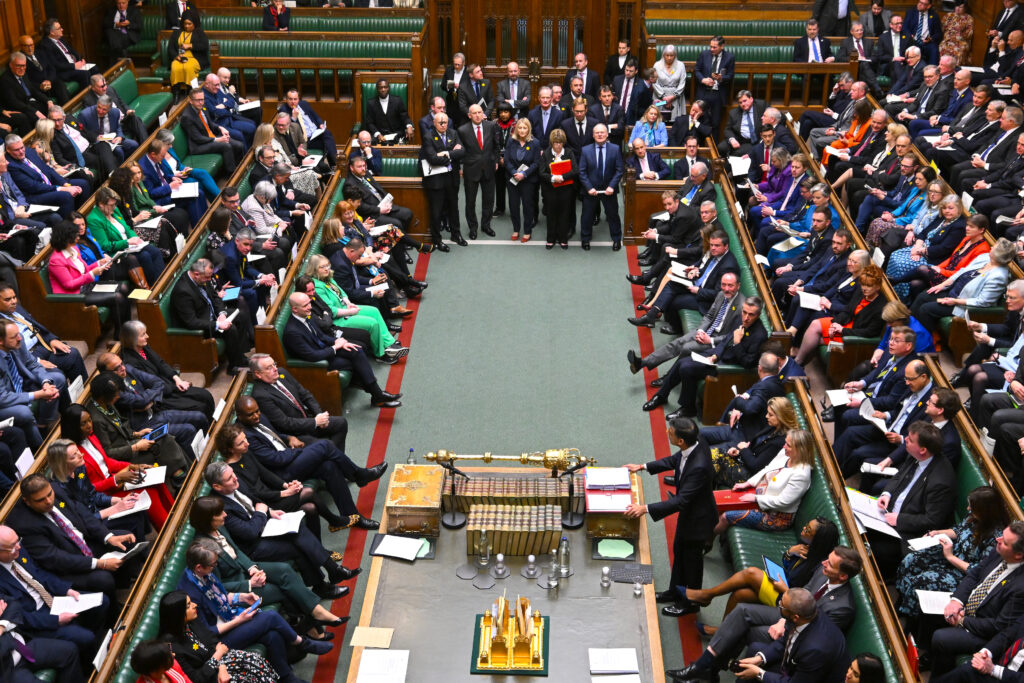
British anger at the Russian veto at the UN has sent relations between the two countries to a new low. Speaking in the Commons yesterday, David Cameron said: "The bloodshed is absolutely appalling.
"The Russians have to look at their consciences and think about what they have done."
In a phone call to Mr Sarkozy last night, Russian president Dmitry Medvedev urged the West "to avoid hasty unilateral steps" in Syria.
Russia is concerned at the domino effect of Middle East uprisings, particularly given the unprecedented level of street protests which met their latest election results at home.
It also feels bruised by the UN vote on Libya, which it felt was pushed to its absolute limits by the campaign there.
UN chief Ban Ki-moon was equally scathing about the Russian veto, branding it "disastrous" and an encouragement to Damascus to "step up its war on its own people".
Speaking at the UN, Mr Ban said: "I fear that the appalling brutality we are witnessing in Homs, with heavy weapons firing into civilian neighbourhoods, is a grim harbinger of worse to come."
He said Arab League chief Nabil el-Arabi has contacted him to start planning a new Arab League monitoring mission in Syria, after the last effort fell apart in disarray.
Turkish foreign minister Ahmet Davutoglu has said that if the UN cannot protect civilians then it is up to other countries to get involved.
He is due to hold talks with US secretary of state Hillary Clinton next week, but has already called for an international conference "as soon as possible" to discuss options.
He denied reports that talks about military strategy were already underway with the US.
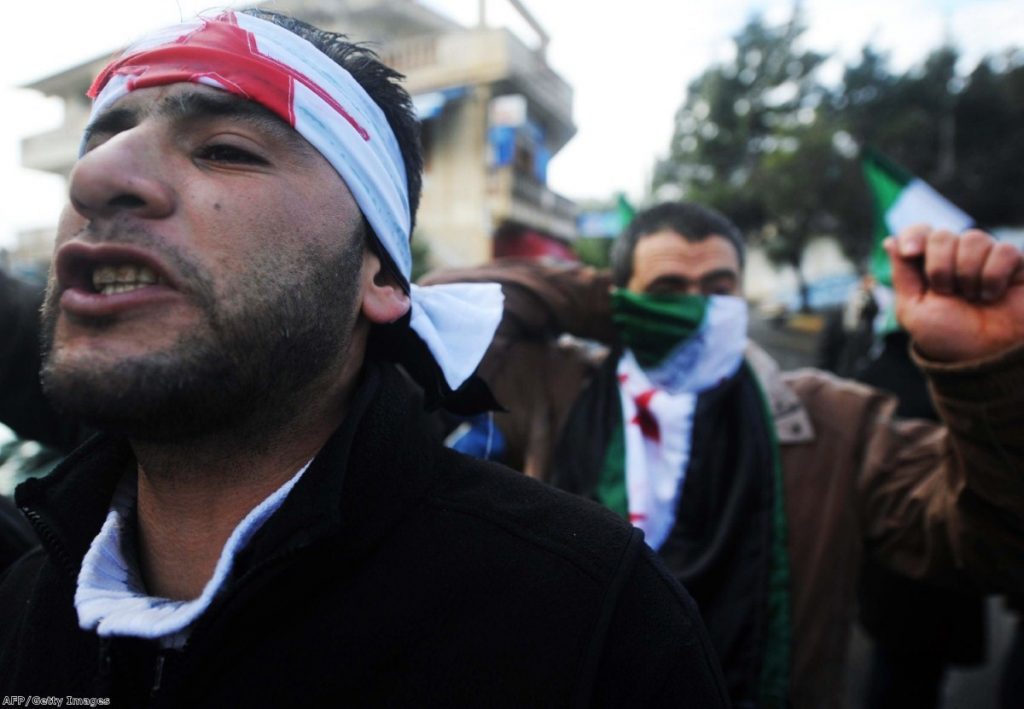
Meanwhile, the bloodshed in Homs, Syria's third largest city, continues.
Over 50 people are known to have died since Wednesday, according to the UK-based Syrian Observatory for Human Rights.
Among them were at least 18 premature babies, who were killed when power was cut to Homs' Al-Walid hospital, and three entire families.