What are average speed cameras?
Speed cameras are operated by local police forces as a means of enforcing speed limits and reducing accidents on dangerous roads. Speed cameras are one of several measures in place in the UK to maintain and improve road safety.
Average speed cameras are “speed-over-distance cameras”. They operate in pairs to detect the speed of vehicles passing between them. They are generally used on longer stretches of road like a motorway or dual carriageway.
Figures recently released to the House of Commons suggested there are around 6,000 speed camera sites across the UK.
Do speed cameras work?
Existing research draws a positive correlation between speed cameras and reduced road speeds. Supporters of speed cameras point to the large body of evidence which suggests that the presence of speed cameras disincentives dangerous driving. It is argued that cameras reduce excessive speed and make the UK’s roads safer.


A study conducted by the London School of Economics found that from 1992 to 2016, traffic enforcement cameras reduced accidents by between 17% and 39%, while reducing fatalities by between 58% and 68%.
Similarly, an RAC Foundation report found that the number of serious collisions near 551 fixed speed cameras reduced by 27% after the cameras were put into action.
The perceived success of traffic speed cameras has been attributed to two primary psychological factors.
The first of these is situational compliance, whereby the driver is aware that speed cameras are in place, and adjusts his or her speed accordingly.
The second is the random uncertainty of speed cameras. The argument being that once drivers are aware that cameras are dotted sporadically across the UK road network, they are more inclined to respect speed limits given the uncertainty of when a camera may appear.
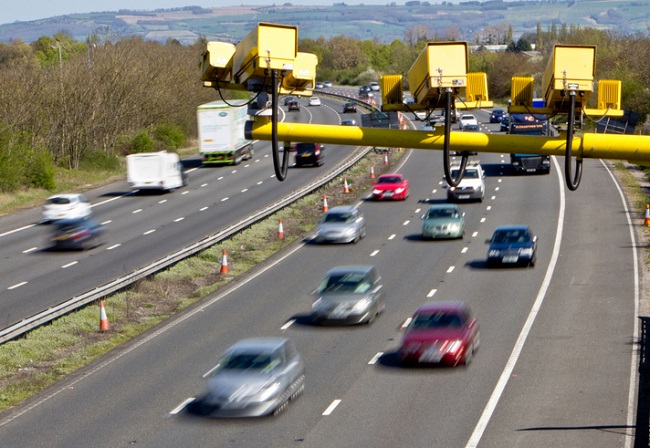
Polling by the AA has suggested that 8 out of 10 people think speed cameras are an appropriate way to detect speeders.
The government argue that in reducing speeds at accident blackspot sites, cameras are having a positive impact, given that accident mortality is directly related to higher speeds.
Road safety campaigners have called for the government to go further on speed cameras.
They criticise the current guidelines which state that a location has to have already experienced a number of serious accidents before a camera can be located, and suggest this is an unreasonable concession to the motoring lobby.
Similarly, the requirement that cameras be made visible is controversial, insofar as it is alleged to make it easier to speed, once driving away from the camera. It is also suggested the visibility of cameras encourages dangerous heavy braking immediately before entering a covered area.
Opposition to speed cameras
The largest criticism of speed cameras typically tends to revolve around concerns that they are not being installed as a means of increasing road safety, but as a device to raise revenue from the road user.
Since 2017, revenue gathered from driving offences (including speeding) has been paid into the government’s Consolidated Fund. This is the government’s central account, which contributes towards general government expenditures. Speeding ticket fines are not ring-fenced for specific spending purposes, for example on road safety projects.
It has been argued that cameras are typically placed on high volume main roads that have the best chance of generating revenue, rather than for example on low traffic residential streets, where high speed may actually be more dangerous.
In the UK, some motoring groups have pointed to how recent data has showed accidents increasing at a small proportion of speed camera sites. The reason for these increases could be simple anomalies or, possibly, collisions caused by rapid deceleration on seeing a speed camera.
The undiscriminating character of speed cameras is also criticised as cameras take no account of the reasons why a driver might be exceeding the speed limit, reasons that a human police officer would at least listen to.
In America, the National Motorist Association have criticised speed cameras arguing that radar can generate false readings and that speed cameras fail to identify the driver of the vehicle.
How do speed cameras work?
Speed cameras record the speed of passing vehicles by applying radar technology, or working in conjunction with sensors beneath the road surface.
If the speed is detected as being higher than the designated speed limit, the camera takes a photo of the vehicle which is stored in an electronic database. The registration plate is identified from the image and is used to locate the vehicle’s registered address from the DVLA database. A speeding ticket is then sent to the vehicle’s address with details of the offence and a penalty.
Many UK speed cameras have a ‘buffer zone’, in which the speed limit may be broken and no penalty awarded. While some local authorities have declined to publish data, it is commonly speculated most cameras are thought to have a tolerance of 10% above the speed limit. This tolerance has been justified as a means of preventing further accidents which may arise as a result of drivers being too focused on their speedometers, or feeling unable to accelerate to avoid genuine road risks.
Types of speed camera
There are four main types of speed cameras.
A Fixed speed camera is an unmanned camera that photographs vehicles breaking the speed limit on busy or accident-prone roads.
Speed-over-distance cameras (often referred to as an average speed camera system) are also unmanned, and operate in pairs to detect the speed of vehicles passing between them. These are generally used on longer stretches of road like a motorway or dual carriageway.
Mobile speed cameras are controlled by humans. A mobile camera may be hand-held or positioned inside a police vehicle, and are used to conduct ad-hoc speed checks.
A Red light camera is positioned at traffic light junctions to photograph vehicles which drive through red lights.
Within the UK, the three most common speed camera systems are the Gatso camera (rear facing, radar operated), the Truvelo camera (front facing, sensors beneath road surfaces) and SPECS (front facing, speed-over-distance). Each of these have been approved by the UK Home Office.
The past decade has seen the increasing use of illegal ‘speed camera laser jammers’. These are electronic devices used by a small number of motorists to block the laser signal emitted by speed cameras to prevent a vehicle’s speed from being detected. Laser jammers are often disguised as parking sensors or garage door openers. If a driver is caught using such these sorts of devices, they face prosecutions for perverting the course of justice or obstructing a police officer. These can be punished by imprisonment.
History of speed cameras in the UK
1990s – The emergence of speed cameras
Traffic enforcement cameras were first permitted in the UK by the Road Traffic Act 1991.
The first speed camera to be used in the UK was a Gatso, which was installed on Twickenham Bridge in 1992.
Speed cameras were quickly deemed to be a success, with a Home Office study in 1996 claiming that areas covered by the cameras had seen a 28 per cent reduction in injury related crashes at speed camera sites and an 18 per cent reduction in injury crashes at traffic lights.
However, the Home Office warned that the further roll-out of the system was being hampered by a lack of funding. At that time, all revenues from fines imposed were returned to the Treasury. In 1998, the Government stated that it would be sympathetic to proposals for schemes allowing police forces to keep funds from speed camera fines
2000s – A surge in speed cameras
In March 2000, the Government published the White Paper, ” Tomorrow’s Roads – Safer for Everyone”, which promised to achieve considerable reductions in road accident injuries by 2010.
A month later, the Blair Government introduced a pilot scheme that would permit cost recovery in eight areas – Cleveland, Essex, Lincolnshire, Northamptonshire, Nottinghamshire, Thames Valley, South Wales and Strathclyde – in order to fund the expansion of the camera programme.
The measures were quickly proven to have had a significant impact on road safety in the covered areas: in Northamptonshire in 2001, accidents fell at fixed camera sites by 50 per cent and the number of people killed and seriously injured dropped by 67 per cen. In the whole county there was a 30 per cent reduction in the number killed and seriously injured compared with the 1994 to 1998 average. Across the eight areas, prosecutions rose eighteen-fold.
The pilots had been scheduled to last for two years, but the evidence was so compelling that the Government decided to roll the scheme out nationally after just a year. The general permission for approved local safety camera partnerships to recover costs – known as the National Safety Camera Scheme – was included in the Vehicles (Crimes) Act 2001.
In 2002, new government guidelines were issued around the deployment of cameras, in response to the massive roll-out seen in the preceding months and the corresponding outcry from motorists, who were suddenly being hit with a huge number of fines. Aa number of senior police officers warned that the system was turning otherwise law-abiding drivers against the police and the Government.
The new 2002 rules required that cameras be painted yellow and not hidden behind trees and road furniture to now increase their visibility. Areas covered by cameras now needed to be clearly signed. Camera sites now needed to be locations where four people or more had been killed or seriously injured in accidents, or eight personal injury accidents had taken place in the last three years.
In February 2004, Conservative leader Michael Howard promised to remove any speed cameras found to have been sited to raise money rather than improve safety. The next month, a DfT report found that none of the 6,000 cameras across England and Wales were sited for improper reasons, and an independent report published in June found that 100 lives per year were being saved as a result of cameras.
On 15 December 2005 the Transport Secretary announced the ending of the National Safety Camera Programme and netting-off funding arrangement for cameras in England and Wales. Camera funding, activities and partnerships were integrated into the wider road safety delivery process from 1 April 2007.
2010- : A slight slowing down on Speed Cameras
Upon being elected in May 2010 the new Coalition government pledged to “stop central government funding for new fixed speed cameras and switch to more effective ways of making our roads safer”. They announced new speed camera “transparency rules”.
For the first time local authorities would be required to publish the number of accidents and casualties at camera sites, both before and after cameras were installed. Police forces would in future publish the number of speeding prosecutions arising from each camera in their area, as well as force-wide information about whether offenders were fined, completed a speed awareness course or were taken to court.
Transport Minister Mike Penning said the measures would help to show what impact cameras were having on road safety and also how the police were dealing with offenders.
Nevertheless, the RAC Foundation discovered in July 2012, following a Freedom of Information request, that despite funding cuts, speed cameras were continuing to be used in most areas of England. As of 2018, they were perceived as being a central part of the government’s strategy to reducing road casualties. Their efficacy has been aligned with widespread support for traffic enforcement cameras on both a local and national scale.
Quotes
“You must not drive faster than the speed limit for the type of road and your type of vehicle. The speed limit is the absolute maximum – it doesn’t mean it’s safe to drive at this speed in all conditions.” – GOV.UK
“Speed management needs to employ a range of measures that will include enforcement, engineering and education. The more widespread the measures, particularly enforcement, and the greater the range, severity and implementation of sanctions against speeding, the more compliance will result – World Health Organization, 2008
“The RAC Foundation’s best evidence is that if all speed cameras were turned off around 80 more people would be killed on the roads each year with 700 others seriously injured. Therefore we welcome these figures which suggest the majority of fixed cameras have been retained and housings are being kept in place to act as a deterrent.” – Professor Stephen Glaister, director of the RAC Foundation (2012)
Statistics
- In June 2019, an average of 8 out of 10 of those surveyed considered it acceptable to use speed cameras to identify vehicles involved in speeding offences. (Source: The AA)
- 54%of drivers think that speed cameras deter people from breaking speed limits and speed camera fines should be higher.43%of drivers think there should be more speed cameras on our roads(Source: Brake.org)
- The Home Office and the Department for Transport quote research showing that numbers of people killed orseriously injured are reduced by 35% at camera sites. (Source: Parliamentary Office for Science and Technology, 2018)
- 78% motorists questioned approved of speed cameras, although a “strong suspicion” remained that the cameras were not installed purely for safety reasons. – Institute of Advanced Motorists survey, February 2008