What is the national living wage?
The national living wage is the minimum hourly wage rate which adult workers in the UK, aged over 23, must be paid.
In the November 2023 autumn statement, the Chancellor announced that the national living wage was to rise by 10.4% to £11.44 per hours from 1st April 2023.
From 1st April 2024, the national minimum wage is to be £8.60 for those aged 18-20, and £6.40 for those aged 16-17. There was then an additional apprentice rate of £6.40.
It has been the government’s intention to see the national living wage rise further in future years, reaching 66% of median earnings by 2024. Given median earnings (the mid point of UK salaries) were circa £30,800 in 2020, this represented a commitment to see minimum salaries in the UK rise above £20,000 per year by 2024.


The national living wage came into effect in 2016 as a higher version of the previous national minimum wage for most adult workers. The national minimum wage is now a terminology that officially just refers to those under the age of 23.
How is the national living wage set?
The government has set a target for the national living wage to reach 66% of median earnings by 2024. This comes on the back of previous government plans for the national living wage to reach 60% of median earnings by 2020.
Ahead of each subsequent tax year, the government receives a report in October from the Low Pay Commission. The Low Pay Commission is an independent body comprised of 9 Low Pay commissioners drawn from a mixture of employee and employer groups, and from academia.
The Low Pay Commission is charged with monitoring and evaluating economic conditions in the context of the national living wage. Following the 2020/21 coronavirus pandemic, the government has asked the Commission to advise as to whether progress to the 66% target should be slowed so to allow the ‘lowest-paid workers to continue to see pay rises without significant risks to their employment prospects’.
The Low Commission was previously an highly integral part of the minimum wage policy.
However, with the government now setting long termer targets for the national living wage, the role of the Low Pay Commission has diminished. With the government having already set the destination, it can now be considered simply more of advisor on the overall speed of travel.
How is the national living wage enforced?
The national living wage applies to full time workers, part time workers, and those doing training essential for any particular job. It applies to all employers regardless of their size. It also applies to home workers, agency workers, workers paid by commission, and workers paid by the number of items they make (so called piece workers).
The National living wage is enforced by HM Revenue and Customs (HMRC). Workers who believe they are being paid below the minimum wage can complain to HMRC Customs. The organization ACAS also runs a confidential ACAS helpline to which people can call for advice.
Employers are required to keep records to show that they have met the required hourly payment levels. If HMRC finds that an employer has breached the national living wage, they issue a notice for arrears and a fine. HMRC can also take employers to court if there is still a failure to pay. Those organizations breaching the National living wage also risk being publicly named and shamed by the government.
In September 2015, the penalties for non compliance with the new national living wage were doubled, increasing from 100% to 200% of arrears, and reaching a maximum of £20,000 per worker. The government also doubled HMRC’s enforcement budget, and provided the courts with new powers to disqualify relevant directors for periods up to 15 years.
History of minimum statutory wage levels in the UK
The Blair government and the introduction of the national minimum wage
Prior to the union reforms of the early 1980s, wages in many areas of the economy were controlled by government incomes policies and wages councils. However by the 1990s most of the remaining wage councils had been abolished.
Throughout its period in opposition, the Labour Party was committed to introducing a minimum wage as a means of combating poverty. In 1997, the party’s General election manifesto pledged to introduce a minimum wage at the earliest opportunity.
In July 1997, the new Labour government set up the Low Pay Commission with a remit to advise on the rate of the National minimum wage.
Following the establishment of the National Minimum Wage Act in 1998, the national minimum wage came into force on 1st April 1999, at the rate of £3.60 per hour, with a reduced rate of £3 for younger workers.
The National minimum wage then rose steadily between 1997 and 2010. By 2010, the national minimum wage rate had reached the level of £5.80 per hour, with a lower rate of £4.83 for those aged between 18 and 21.
During the period 2010-15, the Conservative-Liberal Democrat Coalition government continued to oversee a rise in the national minimum wage.
By 2015, the national minimum wage had reached £6.70 per hour, with a lower rate of £5.30 for those aged between 18 and 21. In October 2010, the coalition also introduced a new band of minimum wage for those on apprenticeships.
George Osborne and the introduction of the national living wage
The Conservative Party had previously come to reverse their opposition to the national minimum wage in 2000.
Now, following the Conservative Party’s victory in the 2015 General Election, the Chancellor of the Exchequer, George Osborne, announced plans for a national living wage in his July 2015 budget.
Boris Johnson warns Osborne’s ‘living wage’ will damage campaign for higher wages
The national living wage represented a more considerable increase compared to the previous national minimum wage, and now came with the target of reaching 60% of median earnings by 2020. The proposal was subsequently implemented via an amendment to the original 1998 National minimum wage Act.
The Treasury initially estimated that 2.7 million workers would benefit from the Conservative government’s new national living wage, with the potential for that number to reach to 6 million workers by the time the National living wage reached £9 per hour. T
he Resolution Foundation indicated the change would immediately equate to a pay increase for those on the minimum wage by 10.8%.
At the time of this change, the government also increased National Insurance discounts for smaller employees in order to help them mitigate the new higher costs of the national living wage.
In political terms, the introduction of the national living wage was significant for a number of different reasons.
The Conservative proposals for raising the national living wage to £9 for low paid workers by 2020 were well in excess of the £8 being proposed at the time by the Labour Party. Allied to the substantial increases in the personal allowance that the government was also introducing, the Conservatives had grounds to actively claim that they had out-trumped the Labour Party in their policies in relation to low paid workers.
There is a debate as to the extent to which the party has though been successful in feeding that message through to public perception.
On a deeper level, the introduction of the national living wage showed the extent to which the public and political mood had changed on this issue.
In 1992, the Labour Party’s General Election manifesto had contained a commitment to introduce a minimum wage at the rate of 50% of median incomes. At the time, the proposals pursued by Neil Kinnock were considered by many to have been something of an electoral albatross.
And yet two decades later, here were the Conservatives, who had previously lampooned those proposals, not only championing the same policy, but introducing them at the higher level of 60% of median earnings.
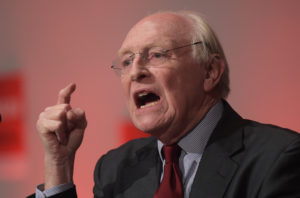
The current national living wage now goes further than Neil Kinnock’s 1992 plans.
The National living wage since 2020
Since being introduced in 2016, the rate of the national living wage rate has continued to increase, rising from £7.20 in 2016 to £8.91 in 2020/21.
In the 2019 General Election the Conservative Party’s manifesto committed the party to raising the national living wage further, to a new target of 66% of median earnings by 2024. Following the party’s election victory, this now constitutes a pathway under which the national living wage will rise further during the course of this Parliament.
As of 1st April 2021, the age threshold of the national living wage which had previously only applied to those over 25, was extended to apply to all those over 23.
In late 2022, the national living wage was increased by its largest ever amount of 9.7% to mirror the high levels of inflation being experienced in the UK at that point.
Controversies
Today, the concept of a statutory minimum wage level is broadly accepted as a political and economic fact of life.
Although the original proposals for the national minimum wage in 1997, and the subsequent national living wage in 2015, prompted some to warn about an associated large rise in unemployment, on neither occasion this appeared to materialize.
The policy has had the greatest effect in those sectors that were historically low-paid. And with a number of these sectors, such as retail, hospitality, cleaning, security, social and child care, employing a greater proportion of women, the policy is attributed to having reduced gender wage differentials at the low end of the income scale.
A number of controversies do though still exist around this policy area. In particular, the national approach to the national living wage is a source of controversy. The costs of living vary widely across the UK. In some more expensive and potentially better off areas, the national living wage is considered far less of an effective living wage. Whilst conversely, in other poorer areas, the policy is presented as something of a much heavier burden for employers.
Other campaigners, notably the Living Wage Foundation, argue that the national living wage levels at 66% of median earnings still fall short of what ‘people need to live on’. They base this on a calculation of a basket of household goods and services designed to reflect living costs, of which increasing housing costs remain an important component. In November 2021, the Foundation argued that the real living wage equates to £9.90, with the London living wage being £11.05, and they separately encourage private sector employers to voluntarily set their starting wage rates at these higher levels.
There should be greater caution in setting minimum wages, says think tank
Nearly half of minimum wage rise will be lost to tax hike, claim Lib Dems
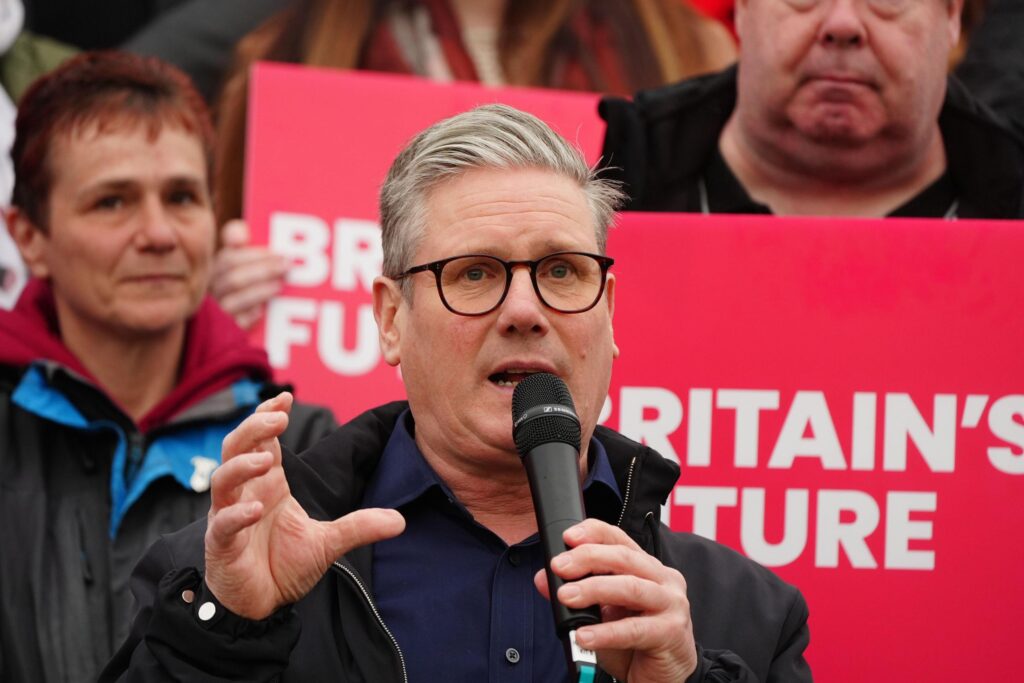
Starmer outlines an end to zero hour contracts and plans for £10 minimum wage at the TUC