What is Bank of England independence?
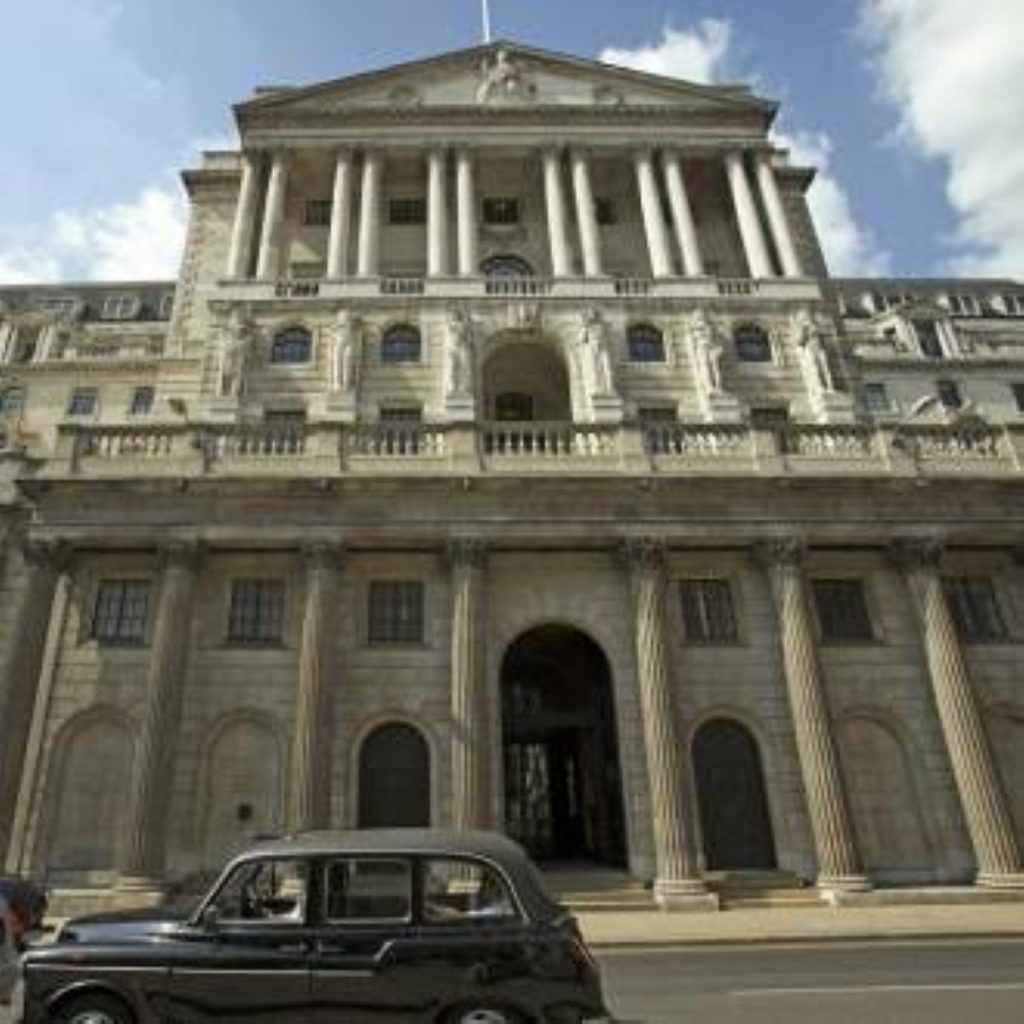
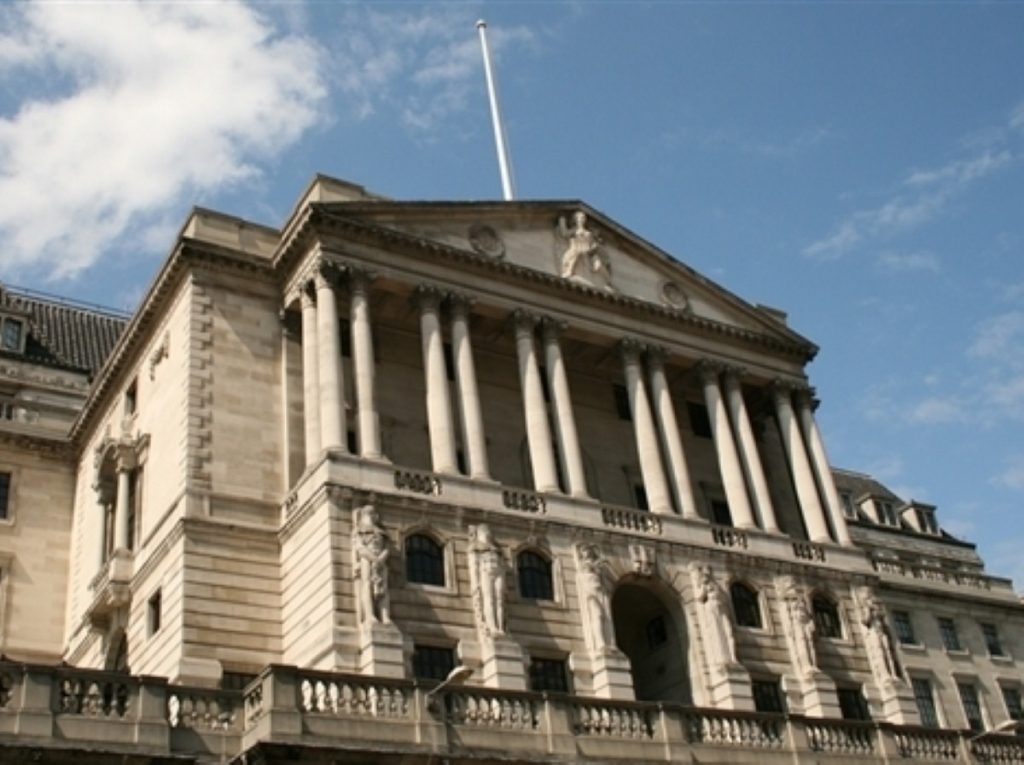
The Bank of England is the UK’s central bank and is owned by the UK government. The UK government appoint all of the bank’s senior officials including its Governor.
However since a reform in 1997, the Bank of England has been independent from government in terms of how it carries out its responsibilities.
The Bank currently has responsibility for financial stability, the regulation of banks and insurance companies, and for monetary policy.
Monetary policy is the action taken by a country to determine how much money is in the economy and how much it costs to borrow. There are two principle monetary policy tools: the interest rate (the rate the banks other charge to borrow money from the Central Bank), and the creation of money to support the purchase of corporate or government bonds which is otherwise known as quantitative easing.


Monetary policy has a significant impact on the functioning of the economy as a whole, influencing growth, exchange rates, inflation, asset prices and the expectations and confidence of the market.
In 2022, with inflation rising to levels not seen for a generation and with the Bank of England raising interest rates, fresh attention was being directed towards the political accountability of the Bank.
What is the Monetary Policy Committee?
The Bank of England’s Monetary Policy Committee (MPC) is a specialised economic advisory panel that is responsible for setting the UK’s short-term base interest rate.
The framework under which the Committee sets monetary policy is laid down by a remit letter sent annually by the Chancellor of the Exchequer to the Governor of the Bank of England..
There are nine MPC members: the Bank’s Governor, the two Deputy Governors, the Chief Economist, the Executive Director for Market Operations and four external members appointed by the Chancellor of the Exchequer. Each member has expertise in the field of economics and monetary policy. A Treasury representative attends meetings to ensure that the MPC is fully briefed on fiscal policy.
The MPC convenes and announces policy eight times a year (every 6 weeks). It considers a broad range of economic data before publicly announcing its revised decisions on interest rates. It can take as long as two years for monetary policy to feed through into the behavior in the economy so MPC members consider the economic outlook for the forthcoming years. Decisions are taken on the basis of a majority vote. The MPC also publishes a quarterly inflation report detailing prospects for the inflation rate in relation to the budget target.
The full minutes of each meeting of the Monetary Policy Committee are published, and a full press conference is held after each meeting. Members of the MPC are also regularly called to give evidence in front of the House of Commons Treasury Select Committee.
History of Bank of England Independence
Prior to 1946, the Bank of England had existed as a private bank owned by a number of private shareholders.
After the Second World War, the Bank was nationalised by the government. For the ensuing half a century, the government was directly involved in the Bank’s operations and the Chancellor of the Exchequer set UK interest rates.
In 1997, the new Labour Government announced the independence of the Bank of England. This move gave the Bank of England the power to set interest rates itself.
The move followed a period of high interest rates in the early 1980s, and again in the early 1990s when interest rates peaked at 15 per cent. The Blair government felt that Ministerial control over interest rates was not conducive to long-term economic stability, as multiple political factors had long clouded economic judgments about what monetary policy should be used for.
The creation of an independent Bank of England and the separation of monetary and fiscal policy control caused a great deal of controversy when the plans were first announced. The move came during a period when a number of central banks around the world were gaining greater independence.
As part of the reform, the Treasury set a new inflation target, and it would be the Bank’s duty to use its power to adhere to that target.
This new power was formalised by the Bank of England Act 1998, which also created the Monetary Policy Committee on a statutory basis, requiring the Bank to “maintain price stability, and, subject to that, to support the economic policy of HM Government including its objectives for growth and employment.”
The Chancellor restates the inflation target each year. It remained at 2.5 per cent, based on the RPIX measure of inflation, from 1997 until December 2003, when it was changed to 2.0 per cent, based on the new harmonised Consumer Price Index measure of inflation. If the actual rate of inflation misses the target by more than one per cent, the Bank must provide an explanation.
The decision to vest power in the Bank of England’s Monetary Policy Committee was a major reform, as centrally held control of such monetary policy was historically vested in the elected body and was traditionally a major feature of Governmental power.
To temper any concerns about the transfer of this power, the Government retained ultimate sovereignty over the setting of the rate and granted only operational control over the attainment of a centrally determined inflation target.
The debate around Bank of England independence
Over the years there has been a broad degree of consensus that the Monetary Policy Committee has been a success, exemplified by the subsequent period of consistently low interest rates. The incoming coalition government in 2010 accepted the new status quo of an independent Bank of England.
Those critical of an independent Bank of England nonetheless point out that the Bank’s success in controlling interest rates and inflation, has occurred during a wider period in which most advanced economies have all exuded low and stable inflation despite varying degrees of central bank independence.
Those initially supportive of Bank of England independence pointed to academic evidence which suggested that independent central banks better protected the currency from politically engineered business cycles, and over time would better overcome inconsistency problems (Barro and Gordon 1983, Rogoff 1985). Independence was seen as a way of allowing the Bank of England to focus more effectively on the technical task of achieving a low inflation target, free from political interference or other populist influences.
Opponents claimed that it would lead to a poorly co-ordinated economic policy, and would potentially lead to conflict between fiscal and monetary policy in which the two policies could be pulling in different directions. In response, the Government highlighted the role the Treasury plays in keeping the MPC informed of fiscal management policy and stressed the Treasury’s ultimate veto if it feels rates should be set at a different level.
Those who remain opposed to the independence of the Bank of England criticize the power that the move provides to central bankers who are unelected, and argue that the lack of political oversight is undemocratic.
Some critics further suggest that the policy could lead to policy failures that might otherwise be prevented by political oversight. Professor Jacqueline Best of the School of Political Studies at the University of Ottawa had described the role of independent central banks in modern liberal democracies as paradoxical, saying, “Their work is highly technical, yet the consequences of their actions are inevitably political, producing big winners and losers.”
Others critics have pointed to how recent Governors of the Bank of England, in particular Mark Carney, have also become drawn into the political debate, and that the independence of the Bank has somehow increased their freedom to do so. These criticisms were at their strongest during the debate around Britain’s membership of the European Union, with pro Brexit supporters attacking comments made by the Governor of the Bank, which they construed as him becoming involved in politics.
There have also been complaints about the willingness of lenders and banks to respond to the cuts in base rates being made by the Bank of England’s Monetary Policy Committee. This results in the benefits of reductions not being passed on to borrowers. In November 2008 when the global economic crisis led to an unprecedented 1.5 percentage points cut in the base rate, banks such as HBOS, Lloyd’s TSB and Abbey all passed on the full 1.5% cut to borrowers with standard variable rate (SVR) mortgages. But banks were then said to have warned that following this unexpectedly high reduction, any further cuts would not be passed on in full. Bank interest rates remain considerably above the base rate.
Quotes
“Moving to a world of steady growth, inflation close to our 2% target, and a more normal level of interest rates, will take time. There is a limit to what monetary policy can achieve when real adjustments are required. But with falling inflation, and the prospect of an end to the squeeze in real incomes leading to a recovery in growth, we are moving in the right direction” – Governor Sir Mervyn King; Inflation report press conference – February 2012
“It’s becoming clear that monetary policy has impacts that are of enormous political significance, and it isn’t being closely scrutinised by [the UK] parliament.” – Fran Boait, Executive Director of campaign group Positive Money
“Independence means that we can promote the good of the people of the UK by maintaining monetary and financial stability, free from political influence” – Bank of England website.