Exclusive: US cooperation may drive up Trident cost
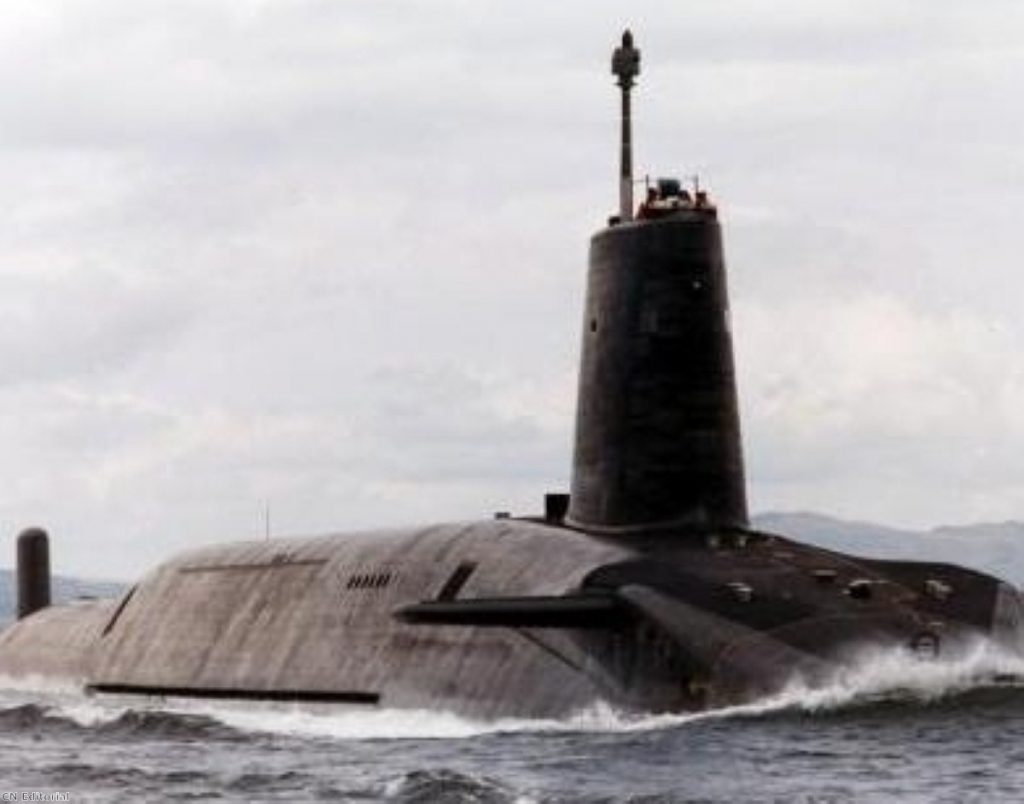
The UK could be forced to build larger nuclear submarines than planned, pushing the Trident bill up further.
Britain’s successor nuclear submarines will only have eight missiles onboard, but last week the Ministry of Defence announced that it is to build submarines which have the capacity for 12 tubes.
Negotiations over the number of missiles to be included in the common missile compartment (CMC), being developed jointly by the US and the UK to save costs, are understood to be ongoing.


The MoD’s submarine initial gate parliamentary report published last week stated: “It is clear from work to date that the cost of the missile compartment will be minimised by keeping as much of the design as possible common with the US.
“The baseline design for the CMC is a 12-tube unit and work is ongoing with the US to look at how best to include our requirement for eight operational missiles into this design.”
Paul Ingram, executive director of the British American Security Information Council (Basic), said installing a 12-tube CMC would mean having to increase the size of Britain’s next-generation submarines, however.
“We’re going to have to have to build a bigger submarine than we really need to,” he told politics.co.uk.
“They’ve already gone for the expensive version of the nuclear reactor, and yet they say they’re going to stick within the £15 to £20 billion bracket – which is frankly extremely unlikely.”
A larger submarine is likely to be more vulnerable as well as more costly, because smaller submarines are faster, more agile and better at evading detection.
Defence secretary Liam Fox insisted in the Commons that the overall Trident bill would not rise above the £20 billion budget originally announced in 2006.
But Mr Ingram estimated that the submarines could feasibly cost between £18 billion and £20 billion by themselves, far above the original £11 billion estimate – with the new warheads and missile upgrades adding extra costs.
The Americans recently said they would cut the number of missiles on their submarines from 24 to 16.
The MoD’s announcement that Britain will use a 12-tube unit is thought to be the first public acknowledgement of its kind. Mr Ingram suggested Britain and the US had compromised between their respective preferences – eight and 16 missiles – with the 12-tube unit figure.
It could spark outrage among Republican members of Congress, who expressed concern about the negative impact cutting the number of missiles on board America’s submarines from 24 to 16 could have on the US’ national security.
The MoD refused to confirm whether a compromise had taken place, or whether the UK would have to increase the size of the new submarines as a result.
“Discussions with the US are ongoing,” a spokesperson said.
The US’ Ohio-class submarine fleet entered service a few years before Britain’s current Trident submarines – but they have a 40-year lifetime, compared to the 30-year lifetime of Britain’s nuclear submarines.
After Britain decided to delay the introduction of its next-generation Trident submarines from 2024 to 2028 the two new nuclear programmes will be completed at roughly the same time, making cooperation over the CMC possible.
Mr Fox told MPs on Wednesday last week: “Agreement with the United States on the major parameters of the jointly developed common missile compartment design, which will be capable of carrying the Trident D5 missiles and any replacement once the D5 reaches the end of its life in the 2040s, has been a major part of our cost containment during the process.”