Comment: Biased BBC should face funding questions
The British Broadcasting Corporation used to be the jewel in our crown. Things are very different now.
By David Amess MP
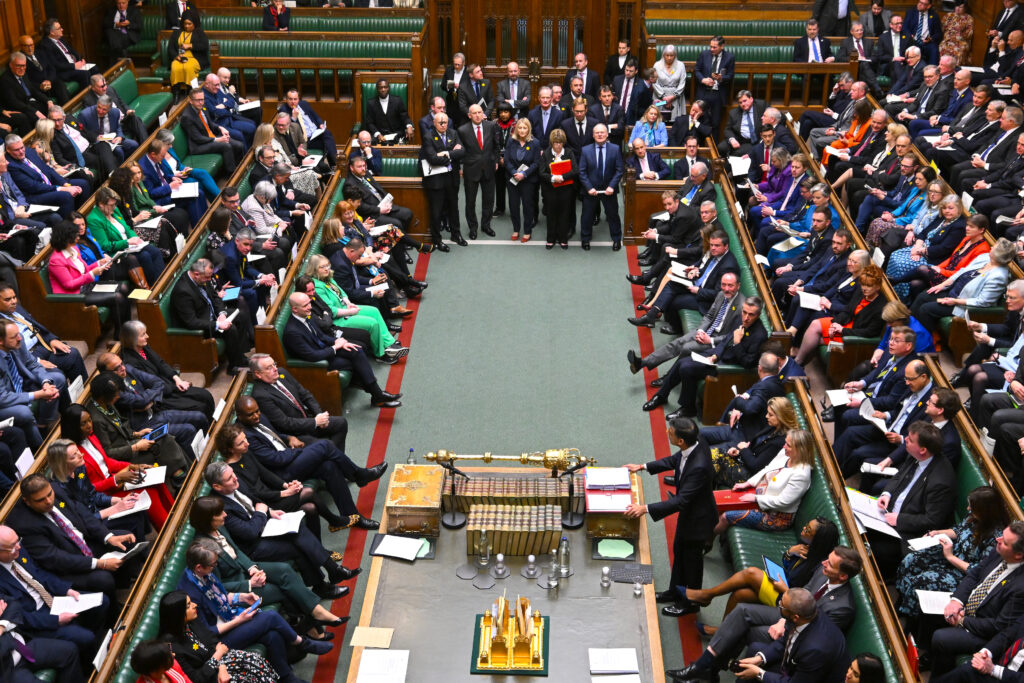
It was a childhood ambition of mine, at the age of 11, to become a member of parliament, and I was fortunate enough to be elected in 1983. I remember, as if it were yesterday, first arriving here and being told that this is the “mother of parliaments”, that we are sovereign, that this is where laws are made and that parliament existed to support parliamentarians with their duties. An enormous number of changes have taken place since I was first elected, and I have various question marks over the way in which this place is run these days. However, yesterday I was delighted to have the opportunity to raise an important issue that we take for granted—the British Broadcasting Corporation.
The BBC is a blue-chip company of which we can be very proud. Its first transmission was from the roof of Selfridges in 1922. The first royal address was broadcast in 1924, and in 1932 we had the first Christmas address from His Majesty, the then King. Some people may remember 1940, when Churchill made his rousing speeches, but the BBC also deserves credit for those. In 1945, there were the reports about the terrible happenings in Belsen concentration camp by the wonderful Dimbleby. We have the Olympics next year and in 1948, the BBC broadcast the Olympic Games. Then, 1960 saw the construction of Television Centre, the first purpose-built TV centre in the world. We then go on to 1982 and Brian Hanrahan’s unforgettable news reporting of the Falklands war, and in 1990 we saw the proceedings of the House of Commons televised.


The BBC had an exceptional global reputation for being an excellent source of unbiased and impartial news. Indeed, it was groundbreaking and it was known for having remarkably high journalistic integrity in its reports.
However things are very different now. The BBC is “institutionally biased to the left” and that is a “mindset”. Those are not my words, but those of Peter Sissons, the former long-time BBC news presenter, in an article in one of our newspapers this year. He said that there were “basic journalistic mistakes – wrong dates, times and numbers… and basic political or geographical facts” were wrong. The BBC tends to run positive stories in favour of the UN and the European Union, and when it comes to reports relating to Israel, it only ever tells half the story, favouring stories that show Israel in a poor light and failing to report the rest of the facts – I think in a highly disproportionate manner. For instance, there is an humanitarian disaster waiting to happen in Camp Ashraf, so why do we hear nothing about it?
The BBC also uses the term “independence” – I am still citing Peter Sissons – to mask the fact that it positions itself to serve its own best interests. For example, preference was given to Tony Blair’s party conference speech in 1995. Alastair Campbell berated the BBC editor to give the story precedence above all others based on the speech’s proximity to the next general election, and that is exactly what happened.
Furthermore, the BBC consistently gives left-wing politicians and figures a platform to spout policy and denounce the government. Examples include the differing treatment of guests from different ends of the political spectrum on shows such as the Today programme. How politicians allow themselves to be treated so badly on the Newsnight programme, and on Question Time and so on, I do not know.
One thing, though, that is particularly unforgivable is the constant practice of presenting the opinion of BBC correspondents as fact, as summed up by Sissons in an article earlier this year. He said that “the increasing tendency” at the BBC is “to interview its own reporters on air… Instead of concentrating on interviewing the leading players in a story or spreading the net wide for a range of views… it is a format intended to help clarify the facts, but which often invites the expression of opinion. When that happens, instead of hearing both sides of a story, the audience at home gets what is, in effect, the BBC’s view presented as fact.”
The problems at the BBC go beyond its “mindset”. I want to focus on the salaries of executives, because I now realise, as a member of parliament, that it is not the workers who are at fault in so many sectors of life but the management. The salaries that the management of the BBC are paid are absolutely ludicrous. The director-general is paid £838,000 – this is madness. Other directors’ pay, as of March 2011, are: £488,000; £517,000; £467,000; and £452,000 -not to mention what the financial controller gets. At March 31st 2011, 13 executive directors had cost us, the British people, £4,792,000.
I now move on to the presenters. I do not know whether we have brilliant presenters. I would just say that I find it slightly annoying that when one or two female presenters are presenting the news on a very serious subject, they smile. But their salaries, which we are paying for, are worth looking at. The highest paid stars’ earnings from the BBC cost 1.55% of the £3.49 billion that the licence fee brings in. That is huge. The seven high-profile presenters involved in this year’s coverage of the Glastonbury music festival for the BBC were not only paid lots of money for going, but given complimentary tickets. Why did the BBC send 400 journalists to the Glastonbury festival? All this goes unquestioned.
We are concentrating now on phone-hacking and so on, but if parliament was as it used to be, we could properly scrutinise these things. The completion of the digital switchover in 2012 would be a good time to think once again about how the BBC is funded.
The British Broadcasting Corporation is a jewel in our crown, but only so long as it is well-run and managed.
David Amess has been a Conservative MP since 1983, first for Basildon and then from 1997 for Southend West.
The opinions in politics.co.uk’s Comment and Analysis section are those of the author and are no reflection of the views of the website or its owners.