PMQs sketch: On the wrong foot
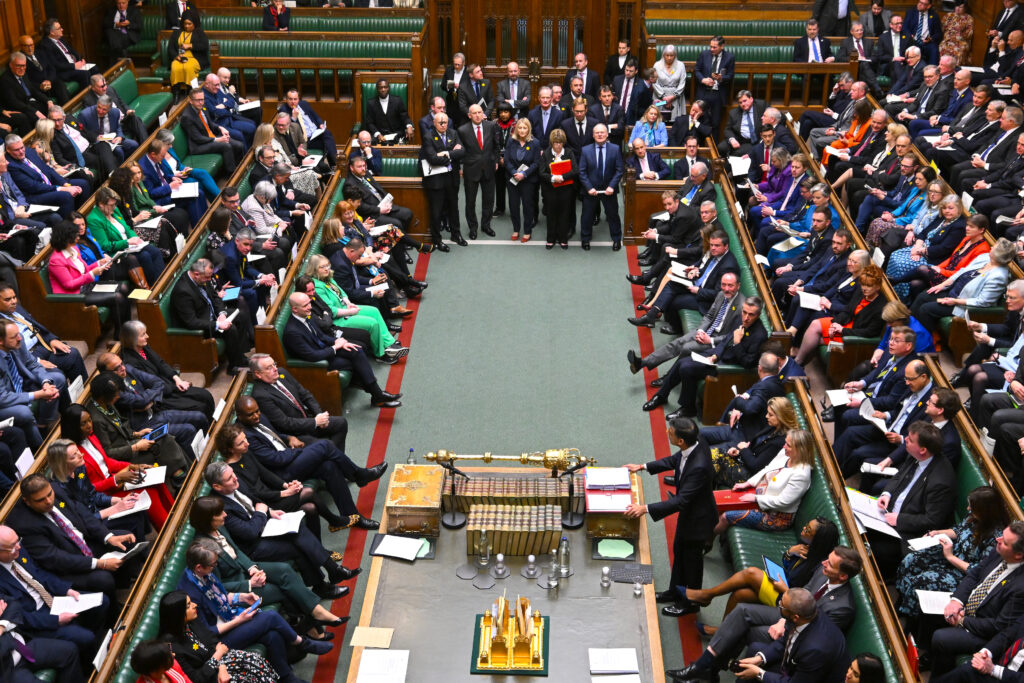
Usually by this time on a parliamentary Wednesday the party leaders are relaxing after their weekly Commons ordeal. Perhaps this was why this week’s prime minister’s questions was a choppy, queasy affair.
The sense of unease was palpable after the morning’s service in Westminster Abbey, which forced this week’s PMQs into its unusual afternoon slot. MPs quivered in nervous silence as the party leaders repeated their usual condolences about the latest war dead. The care with which Gordon Brown strove to correctly pronounce the names of those fallen – a mistake would have been utterly disastrous for the prime minister after his spelling errors – underlined the tension.
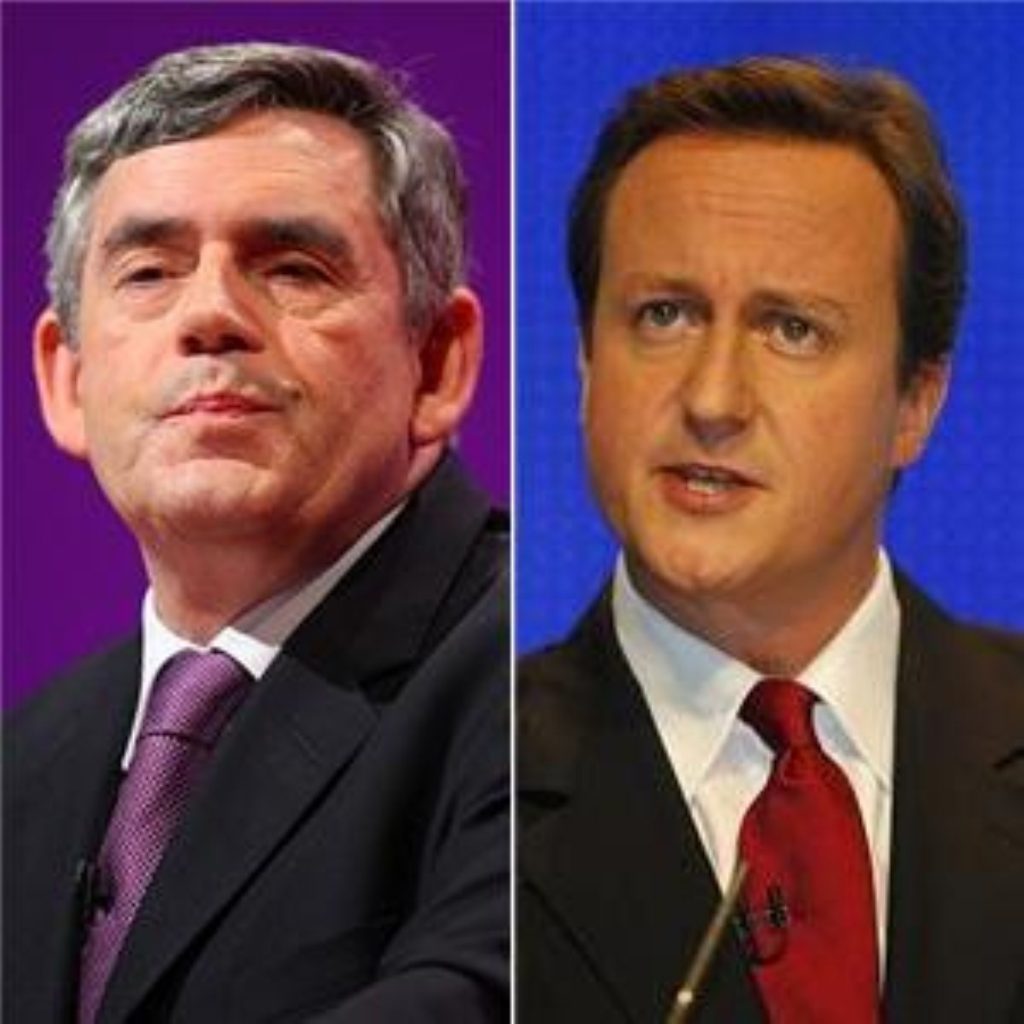
Cameron whistled through his easily enough, before slowly easing up the pressure on the prime minister. After some opening skirmishes based on today’s miserable unemployment figures he went on the offensive, by announcing in grandiose terms a leaked memo from the business department. Brown’s ears pricked up, alert to danger, like a rabbit in the headlights of the oncoming Tory juggernaut. He leapt up from the green benches and stooped low in an apparent bid to prevent anyone noticing him as he scrabbled for his emergency documents. “It was sent to Peter Mandelson, it must be important,” Cameron crowed, as Brown cowered in front of him.


He and Straw exchanged a panicked glance as Cameron revealed the government’s spending cuts plans. The justice secretary’s facial expression, which held for perhaps a quarter of a second, combined confusion and bemusement with scorn and panic. Brown appeared capable only of sending the Tory benches into fits of uncontrollable laughter, but he struggled on.
Soon it was Cameron who found himself on the back foot. This was a volatile PMQs, with the momentum shifting from moment to moment, but it was the Tory leader who found himself reeling against the ropes most consistently as things heated up. Brown pummelled him with his favourite rhetorical device, the semi-list, which enables him to conserve energy and think about other things while he drones on landing blow after blow. “He was wrong on the recession,” Brown barked in conclusion. The Tory leader’s expression, which held for perhaps a quarter of a second, combined confusion and bemusement with scorn and panic. It seems this particular trait was rather infectious.
His attempts to come up with his own version didn’t quite work out and his final supposedly scathing send-off – that Brown has “neither courage nor convictions” was utterly limp. Labour MPs cheered and cheered as Brown leapt on his feet, attacking the Tories’ “cast-iron” commitments to Europe, the NHS and young people. “He cannot match what we are doing,” Brown boasted.
In this rather restless and unpredictable session something else unusual happened: a sterling performance from the Liberal Democrats’ Nick Clegg. Brown has had the upper hand in their brief exchanges in recent weeks, but today the prime minister found himself as comprehensively outmanoeuvred as Cameron had been at his own hands minutes earlier.
Clegg’s initial question was very, very effective. It was so artfully constructed its actual topic in question – local housing allowances – was only revealed close to its end, leaving Brown very little time to think up an answer. The PM only had time for a quick, baffled word with David Miliband before having to stand up. His expression, you will not be surprised to learn, combined confusion and bemusement with scorn and panic. His mutterings about the government having “done more” were nowhere near sufficient. “This response beggars belief,” Clegg sniffed. How right he was.
Both Brown and Cameron remained on edge until the end of the session. Tory troublemaker Andrew Pelling asked Brown for a referendum on Europe at the next general election, straying dangerously away from his own party’s policy. Cameron shuffled uncomfortably in his seat.
Then shadow defence minister Gerald Howarth asked a question about an email he had received from the friend of a dead soldier. “We are winning in the job we are doing out here,” the soldier had said. Why wasn’t the message getting across?
Brown rose, explaining yet again about the threat of terror from Afghanistan and Pakistan. His response lacked passion; for a strange moment he appeared tired and listless. It summed up a strange, awkward session, which will not be remembered for very long.