Overview
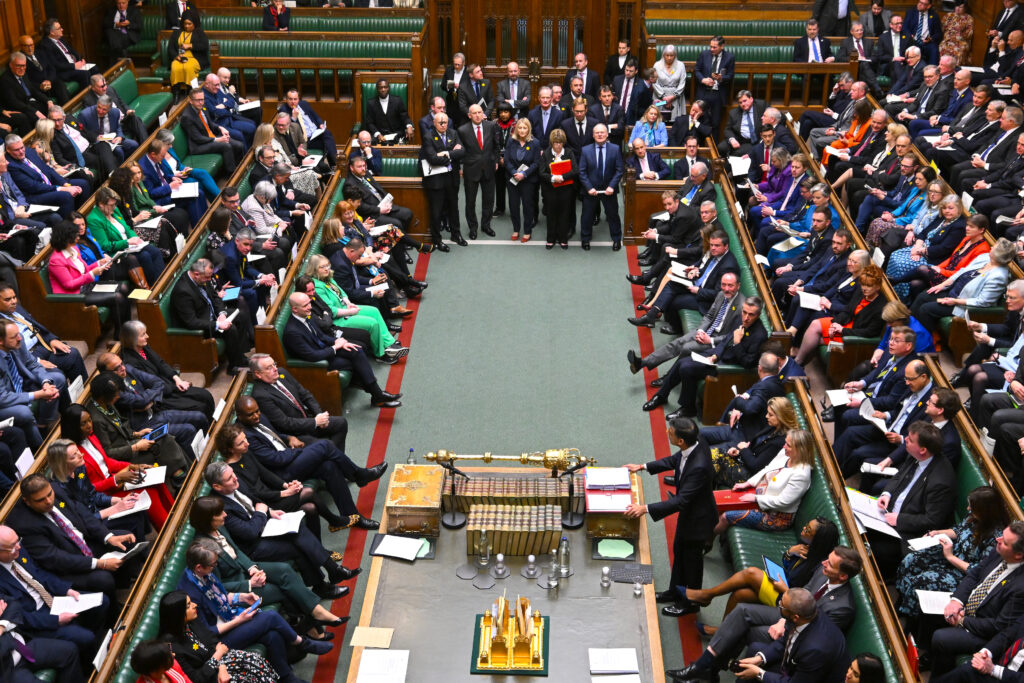
The House of Commons is made up of 650 elected Members of Parliament, known as MPs. Each Member of Parliament represents a specific geographic area within the United Kingdom. These areas are known as Parliamentary constituencies.
Parliamentary Constituencies
In 2017, the average constituency was comprised of 56,000 voters in Wales, 68,300 voters in Northern Ireland, 67,200 voters in Scotland, and 72,200 votes in England. The largest constituency by population was the Isle of Wight (110,683).
The Boundary Commission is currently working on proposals to better standardise the electoral numbers within the UK’s 650 constituencies.
By area, the largest constituency is Ross, Skye and Lochaber in North West Scotland (918,319 hectares). The smallest by area is Islington North in London (727 hectares).
Within each constituency, Members of Parliament are elected by the first-past-the-post system, which is also known as the plural majority system. Simply put, this means the candidate with the highest number of votes wins.
Who can stand for election
Anyone over the age of 18, who is a British, Irish or Commonwealth citizen can stand for election to Parliament. The only exceptions are Peers, Bishops, undischarged bankrupts, prisoners and certain officeholders including judges, military personnel, police officers and other civil servants (persons holding offices of profit under the Crown).
People convicted of certain corruption offences and members of non-Commonwealth legislatures may not stand.
Election Cycles
Parliamentary elections must be held at least every five years. Unless they have lost a vote of no confidence in the House of Commons, the date for post war British elections within that period has typically been chosen by the Prime Minister. The sitting Prime Minister asks the Monarch to dissolve Parliament.
This convention was briefly interrupted by the introduction of the Fixed Term Parliament’s Act in 2010, albeit in both 2017 and 2019, the Parliament’s did not last the planed five year term. This has led to the Fixed Term Parliament’s Act coming under review.
The word ‘Parliament’ is used to refer to the time between two general elections.
Each Parliament is made up of Sessions, which normally last about a year from November to October. A Session runs from the State Opening of Parliament (the Queen’s Speech) until prorogation or dissolution.
After an election, the Monarch opens Parliament in the normal way through the State Opening of Parliament. Typically, the first Session after an election is normally longer than a year, running through to the October of the following year.
Election Length
There are certain rules governing the timetable for elections themselves.
A session of Parliament is prorogued on the day scheduled and dissolution normally follows on the same day, although it does not have to. It is normally accompanied by the proclamation calling a new Parliament. The election must normally then take place 17 days after this proclamation (not including weekends and public or bank holidays).
Election campaigns – the time between dissolution and the election – normally last about three or four weeks.
What is a by-election
If a Member of Parliament resigns or dies, then a by-election is held to elect a replacement in that constituency.
The date for the by-election is chosen by the Government but it is announced by the Speaker of House of Commons.