In the summer of 2025, over 120 MPs defied Keir Starmer by signing a rebel amendment to the government’s flagship welfare bill. Led by a group of senior Labour figures, including committee chairs Meg Hillier and Debbie Abrahams and former cabinet minister Louise Haigh, the rebellion suggested that more than a quarter of the parliamentary Labour Party (PLP) was prepared to vote against the government at second reading.
The last time a government had faced a rebellion of this scale at second reading was in 1986, when Margaret Thatcher’s Conservative government was defeated over legislation to deregulate Sunday shopping in England and Wales.
At first, Starmer appeared oblivious to the scale of the discontent. He dismissed the growing rebellion as “noises off” – a remark that brought his political judgement under renewed scrutiny.
What followed was days of negotiations with rebel MPs, culminating in a tortured government climbdown.
Plans to tighten eligibility for personal independence payments (Pip) and universal credit (UC), intended to deliver £5 billion in annual savings, were first watered down. Then, just 90 minutes before MPs were due to vote on 1 July 2025, the commons was told that proposed changes to restrict Pip would be delayed pending a review of the disability benefit.
Despite the concessions, 49 Labour MPs voted against the revised bill, with one rebel blaming the “incoherent and shambolic nature of the process.”
Starmer forced into U-turn on welfare bill after major backbench rebellion
The debacle has been described as the “beginning of the end” of Starmer’s premiership.
Four of the rebels subsequently had the Labour whip suspended for several months. But the damage inflicted by the welfare saga left Starmer politically weakened as he confronted further challenges, including the rise of the Greens and the fallout from the Mandelson affair.
Several of the 2025 welfare rebels played pivotal roles in preparing Andy Burnham’s path to Downing Street. Two signatories of the reasoned amendment, Louise Haigh and Anneliese Midgley, are now members of his cabinet. The pair, described as the government’s “northern queens”, helped manage Burnham’s succession in Makerfield; Midgley flanked the presumed prime minister as he was introduced to parliament on the day of Starmer’s resignation.
One reasoned amendment signatory, Florence Eshalomi, is now a minister of state (at the Ministry of Housing, Communities and Local Government). Four other rebels were appointed parliamentary under-secretaries of state, including Vicky Foxcroft, who resigned as a government whip under Starmer over the welfare bill.
Where the June/July 2025 welfare rebels now sit in the Labour hierarchy (reasoned amendment signatories) https://t.co/5KLDTUVuut
— Josh Self (@Josh_Self_) November 17, 2026
Another rebel, Laurence Turner, now serves as a government whip, while 13 are parliamentary private secretaries (PPSs), the lowest rung of the ministerial ladder. Among them is Marie Tidball, who spoke movingly against the government’s welfare bill and voted against it in July 2025, although she did not sign the reasoned amendment.
In total, 128 Labour MPs signed the reasoned amendment and/or voted against the bill, including John McDonnell and Apsana Begum, who were sitting as independents at the time but have since had the Labour whip restored.
On Tuesday afternoon, MPs from across parliament responded to the publication of the Milburn review into young people and work. The review, led by former health secretary Alan Milburn, was commissioned in November 2025 to “understand the drivers of the increase in the number of young people who are Not in Education, Employment or Training (NEET)” and to “investigate the root causes of this rise in economic inactivity among disabled young people and those with health conditions.”
Its publication on Tuesday morning followed months of well-informed speculation. The fairly wholesale briefing of its recommendations was designed, in part, to prepare the ground for Milburn’s proposals as ministers sought to head off a renewed rebellion. As expected, the recommendations that have drawn the most attention concern welfare reform, with the report proposing “an entirely new benefit system for young people.”
Under Milburn’s plan, a new youth allowance would replace the universal credit health element for under-25s, removing the need for the work capability assessment for young people. For young disabled people, Pip would be replaced by an additional cost allowance, targeted at “significant, established and ongoing” costs. The report says eligibility for this “would be more closely targeted at those with demonstrable extra costs for functional needs that are long term and enduring.”
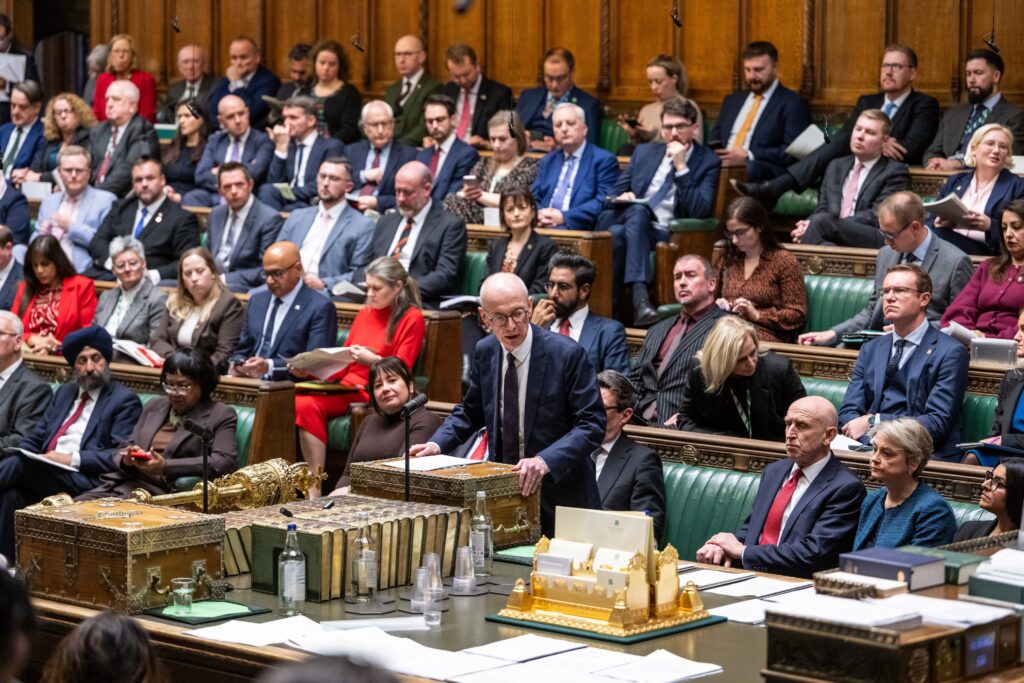
In his statement to MPs, work and pensions secretary Pat McFadden said a white paper on reform would come in the new year, with legislation to follow.
Thirty-two 2025 welfare rebels spoke in the commons on Tuesday in response to McFadden’s statement. Two of the 32, Tidball and Amanda Hack, are now PPSs. Twelve who spoke voted against Starmer’s bill in July 2025.
The mood in the chamber was largely supportive, with most of the 32 welcoming the review, several of them warmly.
The strongest reservations came from MPs who had voted against the 2025 bill. According to Politics.co.uk analysis, eight of the 12 who voted against the bill and spoke expressed reservations about the proposed reforms. None of the 20 who signed the reasoned amendment but did not vote against the bill raised comparable concerns.
Abrahams, who helped lead negotiations for the rebels before ultimately voting for the revised bill in July 2025, called the report’s publication “an opportunity of a generation”. She went on to raise questions about the sequencing of the proposals and their evidence base.
Josh Fenton-Glynn, who signed the amendment and voted for the bill, said he had objected to the previous reforms because he thought “they were cuts dressed up as reforms”. He added: “This is not that.”
Patrick Hurley, who signed the amendment and voted for the bill, said the plan was “precisely the welfare reform for which the country has been crying out for years. Its moral clarity and plan of action is worthy of the best Labour governments of the past.”
Among those who voted against the bill in 2025, Ian Lavery welcomed the review’s “totally fresh approach”. He said: “Only 18 months ago we had a sledgehammer approach, which failed miserably.”
Rachael Maskell, who voted against the 2025 bill after fronting the rebellion following Starmer’s initial U-turns, said she welcomed “the proposition before us today”.
Tidball welcomed the government’s “significant shift in approach” and Milburn’s emphasis “that there will not be crude cuts to benefits”. McFadden thanked Tidball for her question and the “many conversations we have had over the past year” – a nod to the apparently extensive outreach undertaken by ministers to help alleviate concerns among Labour MPs.
There was some dissent. Richard Burgon, who voted against the 2025 bill, said he was “deeply concerned” that disabled young people would be “forced into poverty by the removal of Pip and the universal credit health element.”
But Burgon did say that there was “some really welcome stuff” in the report.
Brian Leishman, who voted against the 2025 bill, warned that the review “will consign some people to destitution”.
Leishman was among four MPs, including Maskell, who had the Labour whip suspended under Starmer over their role in the 2025 rebellion.
The following extracts illustrate how the 32 welfare rebels responded to the Milburn review. Those who signed the reasoned amendment and did not vote against the 2025 bill come first, followed by those who voted against it. The latter group is divided between those who expressed reservations about the proposed reforms and those who did not.
Signed reasoned amendment and did not vote against 2025 welfare bill (20)
- Josh Fenton-Glynn (Calder Valley)
“I signed the reasoned amendment to the last welfare reforms because I thought they were cuts dressed up as reforms, but this is not that; this is a serious attempt to get people back into work.”
- Patrick Hurley (Southport)
“It is paramount to me that government members do not write off yet another generation of young people. To that end, this is precisely the welfare reform for which the country has been crying out for years. Its moral clarity and plan of action is worthy of the best Labour governments of the past.”
- Lauren Edwards (Rochester and Strood)
“I welcome the secretary of state’s statement, and particularly the focus on getting the welfare bill down by giving more support to young people and providing them with opportunities.”
- Josh Newbury (Cannock Chase)
“For far too long our young people have been thrown on the scrapheap. Giving them the skills, confidence and opportunities to succeed and get off welfare is the credible reform that Labour stands for. My constituents in Cannock Chase want to know that this support will be a requirement and that those who refuse to engage for no good reason will face consequences.”
- Debbie Abrahams (Oldham East and Saddleworth)
“I absolutely agree with him that this is an opportunity of a generation and that we must change the status quo…
“I particularly welcome the very rigorous analysis of the causal evidence of what has led to the increase in the number of young people not in education, employment or training…
“I have questions for my right honourable friend, particularly about the sequencing of some of the interventions and the evidence base.”
- Helen Hayes (Dulwich and West Norwood)
“I welcome the whole-system approach set out by Alan Milburn, from the early years to post-16 opportunities.”
- Clive Betts (Sheffield South East)
“My right honourable friend’s statement today is both visionary for the country and potentially life-changing for so many young people.”
- Jen Craft (Thurrock)
“I very much welcome this statement and the opportunity it might give to our young people, who have been so badly let down in the past.”
- Josh Dean (Hertford and Stortford)
“This report recognises something that a generation of young people—my generation—has felt for a long time: that too often, this place has forgotten them. I agree with the secretary of state that this issue requires a new settlement.”
- Sam Rushworth (Bishop Auckland)
“The measures outlined in the report have the potential to give hope to the community I represent, which has never really recovered since the closure of the wagon works, pits and foundries.”
- Martin Rhodes (Glasgow North)
“I welcome the commitment of the secretary of state to devolving decision making, delivery and support through these reforms.”
- Andrew Ranger (Wrexham)
“I strongly welcome the report’s recommendation of local delivery by further education colleges, schools, employers, local authorities and others working together.”
- David Williams (Stoke-on-Trent North)
“Young people need the right scaffolding around them to help them get into work and thrive. Does the secretary of state agree that Labour members understand the need to invest now in our young people to save in the longer term?”
- Ruth Cadbury (Brentford and Isleworth)
“Many young people live in households without access to a private car, let alone their own car, and many live in areas without a decent, or even any, bus service…
“What work is the secretary of state doing with not only the transport secretary but the secretary of state for housing, communities and local government and the chancellor, all of whom are vital in this area?”
- Daniel Francis (Bexleyheath and Crayford)
“Will the secretary of state commit to looking at how we work with our voluntary sector on innovative schemes such as that to ensure that disabled people are back in work as they should be?”
- Amanda Hack (North West Leicestershire) – PPS in the Department for Business, Innovation, Science and Trade
“I welcome the statement from the secretary of state…
“One point in Alan Milburn’s report is about trust in jobcentres. How will he ensure that our jobcentres and youth hubs… become enablers for our young people, rather than the barriers that they have often become?”
- Jonathan Brash (Hartlepool)
“A life on benefits instead of in work, when a person is capable of working, is no life at all. We do not want that for our young people and our young people do not want it for themselves.”
Brash did not record a vote on the Universal Credit and Personal Independence Payment Bill (July 2025).
- Mohammad Yasin (Bedford)
“The social contract with too many young people has broken down, and I welcome the government’s determination to put that right.”
Yasin did not record a vote on the Universal Credit and Personal Independence Payment Bill (July 2025).
- Naz Shah (Bradford West)
“I also associate myself with the words of thanks from the secretary of state to Alan Milburn and his team, and I welcome my right honourable friend’s statement.”
Shah did not record a vote on the Universal Credit and Personal Independence Payment Bill (July 2025).
- Sarah Hall (Warrington South)
“I was particularly pleased that the report recognised the value of a stronger nurture offer in schools as part of early intervention.”
Hall did not record a vote on the Universal Credit and Personal Independence Payment Bill (July 2025).
Voted against 2025 welfare bill: expressed reservations about proposed reforms (8)
- Brian Leishman (Alloa and Grangemouth)
“The secretary of state is right: the system is broken and it absolutely does need to change. There are many excellent things in the Milburn review that are to be welcomed, but the idea that taking away from one group of people is going to get another group of people into work is not one of them.
“The Milburn review will consign some people to destitution. The author himself has said that it will not be pain free. How can we think that withdrawing benefits from disabled people and putting them into poverty is acceptable?”
- John McDonnell (Hayes and Harlington)
“It is a huge breakthrough to have a government who recognise the plight of young people in our country and will provide them with that extra support. However, receipt of the personal independence payment and universal credit health elements keeps 120,000 young people out of poverty.
“The question remains: if benefit cuts go ahead, why is it that young people are forced to pay for the new system? Why are we not taxing wealth?”
McDonnell was sitting as an independent at the time of the June/July welfare saga, and has since had the Labour whip restored.
- Richard Burgon (Leeds East)
“There is some really welcome stuff in the Milburn report and in the secretary of state’s statement in relation to extra opportunity and extra support, but I want to press the secretary of state on one thing. I am deeply concerned that a large number of disabled and sick young people are going to be forced into poverty by the removal of Pip and the universal credit health element.
“Can the secretary of state commit to ensuring that this does not happen while we pursue the many welcome recommendations in the report?”
- Apsana Begum (Poplar and Limehouse)
“The review recommends paring back benefits for most young people, with only those with the most severe or complex conditions receiving additional support. Work capability assessments have been riddled with administrative errors and failures in safeguarding, leading to hundreds of suicides, so how will the government ensure that any new eligibility criteria do not reproduce those harms for young disabled people in my constituency and elsewhere?”
Begum was sitting as an independent at the time of the June/July welfare saga, and has since had the Labour whip restored.
- Nadia Whittome (Nottingham East)
“The prime minister rightly recognises that the youth unemployment crisis is not young people’s fault, but the result of decisions made here. I welcome many of Milburn’s recommendations, but if they are funded by cutting disability benefits, the government will push young people into poverty, undermine their own aims and repeat the very mistakes that they identify as having caused the crisis in the first place.
“Surely it is not the government’s view that disabled and sick people between the ages of 16 and 24 are less in need of Pip and the universal credit health element than anyone else.”
- Emma Lewell (South Shields)
“I know personally the despair that comes from being young, unemployed and desperate to work…
“Does my right honourable friend understand how anxious young disabled people are right now, because although the tone has changed, and that is welcome, we do not have all the details? Can he please confirm that the government’s plans will not leave these young people financially worse off?”
- Chris Webb (Blackpool South)
“As the secretary of state will know from his engagement with me since he has been in this role – I thank him for that – my concern has always been about changes that make more young people vulnerable and poorer before mental health and job support is accessed…
“How will we ensure that the recommendations and policies that the government are bringing forward will reflect local needs, reach people before any financial support is withdrawn, and be delivered alongside trusted local organisations, including charities, to help young people in education to get mental health support, training and work?”
- Neil Duncan-Jordan (Poole)
“The Milburn review rightly identifies that poverty and inequality are at the core of the NEET crisis. Will the secretary of state offer assurances that these proposals will not lower living standards before support is put in place?”
Voted against 2025 welfare bill: did not express reservations about proposed reforms (4)
- Marie Tidball (Penistone and Stocksbridge) – PPS in the Department for Business, Innovation, Science and Trade
“I welcome the government’s significant shift in approach and the Milburn report’s emphasis that there will not be crude cuts to benefits.
“Instead, reforms to fundamentally change our welfare system will focus on increasing the participation of young disabled people in society to ensure that they can fulfil their potential.
“I am particularly pleased that Alan Milburn recommends the government set a target to close the employment gap for young disabled people – that is in paragraph 693 – for which I have argued for nearly two years in this chamber. It is vital that Milburn’s proposed reforms work in lockstep with the bold action that the government have set out in other public service areas.”
- Rachael Maskell (York Central)
“No young person should be held back, and that is why I welcome the proposition before us today, but what is really important is that employers do not discriminate against young people, stopping them from securing a job – not least young people who experience severe anxiety or mental health challenges.
“Can the secretary of state tell us what steps the government will take to ensure that employers are accommodating of the needs of young people?”
- Ian Lavery (Blyth and Ashington)
“The North East has the highest rate of NEETs in the country, and I really welcome this totally fresh approach from the ministerial team, because only 18 months ago we had a sledgehammer approach, which failed miserably.
“We need to look at the hidden NEETs. There are 300,000 people among the 900,000 to 1 million NEETs that we cannot find because they are not claiming benefits. Can the secretary of state say what steps the government will take to reach out to those hidden people, who probably need more support than most?”
- Clive Efford (Eltham and Chislehurst)
“I very much welcome Alan Milburn’s report and the government’s response, as far as it goes. It seems to be a very complex interconnecting set of recommendations.
“The secretary of state has not been able to answer on all of them today, but can he confirm that the government accept all the recommendations? If not, will he undertake to provide a written response, so that we can understand where the government differ?
“I accept that we will have to set up a cross-departmental scheme, but there are rumours that some departments are not fully on board.”
Tracker: the Labour MPs opposed to Rosebank oilfield as rebellion mounts